Results by title
4 books match the query 'Edible'
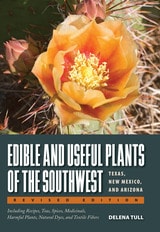
Edible and Useful Plants of the Southwest
Texas, New Mexico, and ArizonaBy Delena Tull
University of Texas Press, 2013
All around us there are wild plants useful for food, medicine, and clothing, but most of us don’t know how to identify or use them. Delena Tull amply supplies that knowledge in this book, which she has now expanded to more thoroughly address plants found in New Mexico and Arizona, as well as Texas.
Extensively illustrated with black-and-white drawings and color photos, this book includes the following special features:
- Recipes for foods made from edible wild plants
- Wild teas and spices
- Wild plant dyes, with instructions for preparing the plants and dying wool, cotton, and other materials
- Instructions for preparing fibers for use in making baskets, textiles, and paper
- Information on wild plants used for making rubber, wax, oil, and soap
- Information on medicinal uses of plants
- Details on hay fever plants and plants that cause rashes
- Instructions for distinguishing edible from poisonous berries
- Detailed information on poisonous plants, including poison ivy, oak, and sumac, as well as herbal treatments for their rashes
[more]
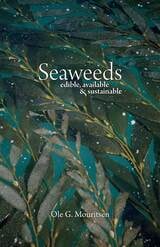
Seaweeds
Edible, Available, and SustainableOle G. Mouritsen
University of Chicago Press, 2013
Until recently, seaweed for most Americans was nothing but a nuisance, clinging to us as we swim in the ocean and stinking up the beach as it rots in the sun. With the ever-growing popularity of sushi restaurants across the country, however, seaweed is becoming a substantial part of our total food intake. And even as we dine with delight on maki, miso soup, and seaweed salads, very few of us have any idea of the nutritional value of seaweed. Here celebrated scientist Ole G. Mouritsen, drawing on his fascination with and enthusiasm for Japanese cuisine, champions seaweed as a staple food while simultaneously explaining its biology, ecology, cultural history, and gastronomy.
Mouritsen takes readers on a comprehensive tour of seaweed, describing what seaweeds actually are (algae, not plants) and how people of different cultures have utilized them since prehistoric times for a whole array of purposes—as food and fodder, for the production of salt, in medicine and cosmetics, as fertilizer, in construction, and for a number of industrial end uses, to name just a few. He reveals the vast abundance of minerals, trace elements, proteins, vitamins, dietary fiber, and precious polyunsaturated fatty acids found in seaweeds, and provides instructions and recipes on how to prepare a variety of dishes that incorporate raw and processed seaweeds. Approaching the subject from not only a gastronomic but also a scientific point of view, Mouritsen sets out to examine the past and present uses of this sustainable resource, keeping in mind how it could be exploited for the future. Because seaweeds can be cultivated in large quantities in the ocean in highly sustainable ways, they are ideal for battling hunger and obesity alike.
With hundreds of delectable illustrations depicting the wealth of species, colors, and shapes of seaweed, Seaweeds: Edible, Available, and Sustainable makes a strong case for granting these “vegetables from the sea” a prominent place in our kitchens.
[more]

The Edible and the Endangered
Animals, Empire, ExtinctionJohn Levi Barnard
Duke University Press, 2027
In The Edible and the Endangered, John Levi Barnard traces the entwined histories of US imperialism, the industrial food system, and global ecological calamity. Interrogating conventional distinctions between the animals we eat and those we protect, Barnard reveals the tangled relations between a mainstream environmentalism concerned with the preservation of endangered species and the industrial animal food system that drives their endangerment. Through a rich and eclectic archive of literary and cultural productions, Barnard shows how foods ranging from the Thanksgiving turkey to the Chicken McNugget have come to be viewed as essential to both material existence and national identity in the United States, even as they have contributed significantly to a planetary ecological emergency. Despite the grim realities of climate change and mass extinction, The Edible and the Endangered holds out hope for a better world, demonstrating how understanding the historical emergence of these human-animal relations can help bring about a just and sustainable future for humans and animals alike.
[more]
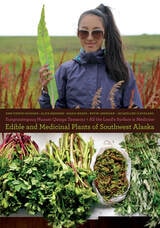
Yungcautnguuq Nunam Qainga Tamarmi/All the Land's Surface is Medicine
Edible and Medicinal Plants of Southwest AlaskaAnn Fienup-Riordan
University of Alaska Press, 2020
In this book, close to one hundred men and women from all over southwest Alaska share knowledge of their homeland and the plants that grow there. They speak eloquently about time spent gathering and storing plants and plant material during snow-free months, including gathering greens during spring, picking berries each summer, harvesting tubers from the caches of tundra voles, and gathering a variety of medicinal plants. The book is intended as a guide to the identification and use of edible and medicinal plants in southwest Alaska, but also as an enduring record of what Yup’ik men and women know and value about plants and the roles plants continue to play in Yup’ik lives.
[more]