Results by title
12 books match the query 'Education, Secondary'
Basic Principles of Curriculum and Instruction
Ralph W. Tyler
University of Chicago Press, 2013
Basic Principles of Curriculum and Instruction has been the standard in the field for decades, and it continues to be the leading guide to curriculum development today. Ralph W. Tyler presents here the concept that curriculum should be dynamic, a program under constant evaluation and revision. Before the publication of this book, curriculum had generally been thought of as a static, set program, and in an era preoccupied with student testing, he offered the innovative idea that teachers and administrators should spend as much time evaluating their plans as they do assessing their students.
Although not a strict how-to guide, the book shows how educators can critically approach curriculum planning, studying progress and retooling when needed. Its four sections focus on setting objectives, selecting learning experiences, organizing instruction, and evaluating progress. Readers will come away with a firm understanding of how to formulate educational objectives and how to analyze and adjust their plans so that students meet the objectives. Tyler also explains that curriculum planning is a continuous, cyclical process, an instrument of education that needs to be fine-tuned.
This emphasis on thoughtful evaluation has kept Basic Principles of Curriculum and Instruction a relevant, trusted companion for decades. Even as the educational landscape changes and teachers and administrators have to adjust to new developments in testing, student engagement, regulation, and more, the core principles animating this book remain as valid and effective as ever. And with school districts across the nation working to align their curriculum with Common Core standards, Tyler's straightforward recommendations are sound and effective tools for educators working to create a curriculum that integrates national objectives with their students' needs.
Beautiful Struggle
How One American High School Took on Systemic RacismSharon M. Chubbuck and Cynthia M. Ellwood
University of Chicago Press, 2026
An in-depth look at how one high school addressed racial inequality head-on.
The new superintendent stood before the faculty of “Oakmont High,” a large, diverse public school, and spoke a cold truth about American education. He described seeing the vibrant mix of students in the school’s hallways disperse into racially segregated classrooms when the bell rang. The fact was that students were sorted into tracks—supposedly race-neutral, “ability-based” pathways—that led to sharply unequal experiences and opportunities throughout high school and often their whole lives. “Why is it fair for white kids to have a better education than Black kids?” the superintendent asked his faculty. “It’s racism pure and simple, and it’s going to stop!”
Racial inequality persists because racism is systemic, baked into countless interlacing beliefs, practices, and structures that make up the way we do school. Tracking is one of many such practices. In Beautiful Struggle, Sharon M. Chubbuck and Cynthia M. Ellwood examine eleven years of transformation by administrators, teachers, students, and others as they tackled systemic racism head-on, starting with tracking. The people of OHS encountered intense resistance and made extraordinary inroads. They fought inequality with hard conversations and concrete steps. They dramatically increased Black and brown students’ access to rich, rigorous learning from the moment students entered as freshmen. They questioned and restructured the interconnected web of policy and practices in every aspect of the school. Students themselves propelled major changes in academic opportunity and the very culture of the school.
Chubbuck and Ellwood argue that taking on racial inequality requires an unrelenting focus on racial justice, challenging systems on every front, broad collective leadership across race and role, and the will to navigate difference and conflict. The story within Beautiful Struggle offers a hopeful though sobering path forward.
Betting on Education
The Costs of Schooling for Cambodian YouthJennifer Estes
Rutgers University Press, 2025
Educational credentials are one of the most reliable tickets to a middle-class livelihood across the globe today. But as the costs of schooling rise, young people increasingly wonder whether their investment will pay off. Betting on Education: The Costs of Schooling for Cambodian Youth follows the experiences of rural secondary school students navigating Cambodia’s semiprivatized state education system. It reveals that when students are compelled to speculate about the value of their education, the “winners” of this gamble are the ones already most securely part of the middle class. The rest are left behind. In the process, the very meaning of education is transformed, as schooling becomes less about learning and more about its potential financial returns. By situating these stories in the wider global logics of neoliberal capitalism, Betting on Education challenges readers to consider what is at stake when young people must wager so much on the promise of schooling.
Brothers in Grief
The Hidden Toll of Gun Violence on Black Boys and Their SchoolsNora Gross
University of Chicago Press, 2024
JahSun, a dependable, much-loved senior at Boys’ Prep was just hitting his stride in the fall of 2017. He had finally earned a starting position on the varsity football team and was already weighing two college acceptances. Then, over Thanksgiving, tragedy struck. An altercation at his older sister’s home escalated into violence, killing the unarmed teenager in a hail of bullets. JahSun’s untimely death overwhelmed his entire community, sending his family, friends, and school into seemingly insurmountable grief. Worse yet, that spring two additional Boys’ Prep students would be shot to death in their neighborhood. JahSun and his peers are not alone in suffering the toll of gun violence, as every year in the United States teenagers die by gunfire in epidemic numbers, with Black boys most deeply affected.
Brothers in Grief closely attends to the neglected victims of youth gun violence: the suffering friends and classmates who must cope, mostly out of public view, with lasting grief and hidden anguish. Set at an ambitious urban high school for boys during the heartbreaking year following the death of JahSun, the book chronicles the consequences of untimely death on Black teen boys and on a school community struggling to recover. Sociologist Nora Gross tells the story of students attempting to grapple with unthinkable loss, inviting readers in to observe how they move through their days at school and on social media in the aftermath of their friends’ and classmates’ deaths. Gross highlights the discrepancy between their school’s educational mission and teachers’ and administrators’ fraught attempts to care for students’ emotional wellbeing. In the end, the school did not provide adequate space for grief, making it more difficult for students to heal, reengage with school, and imagine hopeful futures. Even so, supportive relationships deepened among students and formed across generations, offering promising examples of productive efforts to channel student grief into positive community change.
A searing testimony of our collective failure to understand the inner lives of our children in crisis, Brothers in Grief invites us all to wrestle with the hidden costs of gun violence on racial and educational inequity.
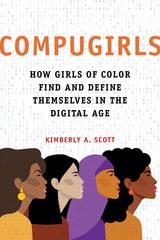
COMPUGIRLS
How Girls of Color Find and Define Themselves in the Digital AgeKimberly A. Scott
University of Illinois Press, 2021
Kimberly A. Scott explores this question and others as she details the National Science Foundation-funded enrichment project COMPUGIRLS. This groundbreaking initiative teaches tech skills to adolescent girls of color but, as importantly, offers a setting that emphasizes empowerment, community advancement, and self-discovery. Scott draws on her experience as an architect of COMPUGIRLS to detail the difficulties of translating participants' lives into a digital context while tracing how the program evolved. The dramatic stories of the participants show them blending newly developed technical and communication skills in ways designed to spark effective action and bring about important change.
A compelling merger of theory and storytelling, COMPUGIRLS provides a much-needed roadmap for understanding how girls of color can find and define their selves in today's digital age.

Class Warfare
Class, Race, and College Admissions in Top-Tier Secondary SchoolsLois Weis, Kristin Cipollone, and Heather Jenkins
University of Chicago Press, 2014
Drawing on deep and sustained contact with students, parents, teachers, and administrators at three iconic secondary schools in the United States, the authors unveil a formidable process of class positioning at the heart of the college admissions process. They detail the ways students and parents exploit every opportunity and employ every bit of cultural, social, and economic capital they can in order to gain admission into a “Most Competitive” or “Highly Competitive Plus” university. Moreover, they show how admissions into these schools—with their attendant rankings—are used to lock in or improve class standing for the next generation. It’s a story of class warfare within a given class, the substrata of which—whether economically, racially, or socially determined—are fiercely negotiated through the college admissions process.
In a historic moment marked by deep economic uncertainty, anxieties over socioeconomic standing are at their highest. Class, as this book shows, must be won, and the collateral damage of this aggressive pursuit may just be education itself, flattened into a mere victory banner.

Making a Mass Institution
Indianapolis and the American High SchoolKyle P. Steele
Rutgers University Press, 2020
Professional Communities and the Work of High School Teaching
Milbrey W. McLaughlin and Joan E. Talbert
University of Chicago Press, 2001
With wide-ranging implications for educational practice and policy, this unprecedented look into teacher communities is essential reading for educators, administrators, and all those concerned with U. S. High Schools.
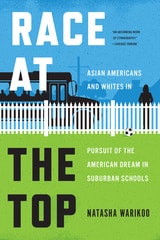
Race at the Top
Asian Americans and Whites in Pursuit of the American Dream in Suburban SchoolsNatasha Warikoo
University of Chicago Press, 2022
The American suburb conjures an image of picturesque privilege: manicured lawns, quiet streets, and—most important to parents—high-quality schools. These elite enclaves are also historically white, allowing many white Americans to safeguard their privileges by using public schools to help their children enter top colleges. That’s changing, however, as Asian American professionals increasingly move into wealthy suburban areas to give their kids that same leg up for their college applications and future careers.
As Natasha Warikoo shows in Race at the Top, white and Asian parents alike will do anything to help their children get to the top of the achievement pile. She takes us into the affluent suburban East Coast school she calls “Woodcrest High,” with a student body about one-half white and one-third Asian American. As increasing numbers of Woodcrest’s Asian American students earn star-pupil status, many whites feel displaced from the top of the academic hierarchy, and their frustrations grow. To maintain their children’s edge, some white parents complain to the school that schoolwork has become too rigorous. They also emphasize excellence in extracurriculars like sports and theater, which maintains their children’s advantage.
Warikoo reveals how, even when they are bested, white families in Woodcrest work to change the rules in their favor so they can remain the winners of the meritocracy game. Along the way, Warikoo explores urgent issues of racial and economic inequality that play out in affluent suburban American high schools. Caught in a race for power and privilege at the very top of society, what families in towns like Woodcrest fail to see is that everyone in their race is getting a medal—the children who actually lose are those living beyond their town’s boundaries.
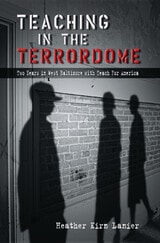
Teaching in the Terrordome
Two Years in West Baltimore with Teach for AmericaHeather Kirn Lanier
University of Missouri Press, 2012

The Color of Strangers, the Color of Friends
Alan Peshkin
University of Chicago Press, 1991
"Peshkin strikes a hopeful chord, revealing what social encounters among ethnic groups—at their best—can be like in America."—Education Digest
We Are All Equal
Student Culture and Identity at a Mexican Secondary School, 1988–1998Bradley A. U. Levinson
Duke University Press, 2001
Exploring how students develop a cultural “game of equality” that enables them to identify—across typical class and social boundaries—with their peers, the school, and the nation, Levinson considers such issues as the organizational and discursive resources that students draw on to maintain this culture. He also engages cultural studies, media studies, and globalization theory to examine the impact of television, music, and homelife on the students and thereby better comprehend—and problematize—the educational project of the state. Finding that an ethic of solidarity is sometimes used to condemn students defined as different or uncooperative and that little attention is paid to accommodating the varied backgrounds of the students—including their connection to indigenous, peasant, or working class identities—Levinson reveals that their “schooled identity” often collapses in the context of migration to the United States or economic crisis in Mexico. Finally, he extends his study to trace whether the cultural game is reinforced or eroded after graduation as well as its influence relative to the forces of family, traditional gender roles, church, and global youth culture.
We Are All Equal will be of particular interest to educators, sociologists, Latin Americanists, and anthropologists.