Results by title
42 books match the query 'Education & Training'
101 Tips to Getting the Residency You Want
A Guide for Medical StudentsJohn Canady, M.D.
University of Iowa Press, 2008
Each year, more than 15,000 U.S. medical students—along with more than 18,000 graduates of foreign medical schools and schools of osteopathic medicine—take part in the National Residency Matching Program, vying for a small number of positions in the United States. In this keenly competitive environment, they seek every advantage they can get. Based on more than two decades of experience preparing candidates for residency programs, John Canady has developed a concise practical guide to making one’s way through the maze of residency applications and interviews.
Guiding residency applicants past the pitfalls in all aspects of the process, 101 Tips to Getting the Residency You Want includes sections on tried-and-true methods for senior year planning, the importance of networking, tips for interviewing, practical advice for carefree travel, and guidelines for follow-up to out-of-town rotations and interviews. This guide covers the do’s and don’ts that will maximize each applicant’s chances and exposes the common blunders that can ruin an application in spite of the best grades and test scores.
A Heart for the Work
Journeys through an African Medical SchoolClaire L. Wendland
University of Chicago Press, 2010
Burnout is common among doctors in the West, so one might assume that a medical career in Malawi, one of the poorest countries in the world, would place far greater strain on the idealism that drives many doctors. But, as A Heart for the Work makes clear, Malawian medical students learn to confront poverty creatively, experiencing fatigue and frustration but also joy and commitment on their way to becoming physicians. The first ethnography of medical training in the global South, Claire L. Wendland’s book is a moving and perceptive look at medicine in a world where the transnational movement of people and ideas creates both devastation and possibility.
Wendland, a physician anthropologist, conducted extensive interviews and worked in wards, clinics, and operating theaters alongside the student doctors whose stories she relates. From the relative calm of Malawi’s College of Medicine to the turbulence of training at hospitals with gravely ill patients and dramatically inadequate supplies, staff, and technology, Wendland’s work reveals the way these young doctors engage the contradictions of their circumstances, shedding new light on debates about the effects of medical training, the impact of traditional healing, and the purposes of medicine.
Becoming Gods
Medical Training in Mexican HospitalsVania Smith-Oka
Rutgers University Press, 2021
Blacks, Medical Schools, and Society
James L. Curtis, M.D.
University of Michigan Press, 1971
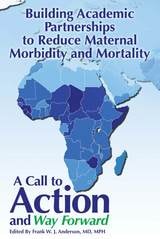
Building Academic Partnerships to Reduce Maternal Morbidity and Mortality
A Call to Action and Way ForwardFrank W.J. Anderson
Michigan Publishing Services, 2014
This book presents the collective wisdom of a group of Obstetrician/Gynecologists (OB/GYNs) from around the world brought together at the 2012 meeting of the International Federation of Gynecology and Obstetrics (FIGO) to contribute their ideas and expertise in an effort to reduce maternal and neonatal morbidity and mortality and obstetric fistula in sub Saharan Africa (SSA). The discussions focused on how to increase human capacity in the field of obstetrics and gynecology. The meeting was hosted by the University of Michigan Department of Obstetrics and Gynecology Global Initiatives program and was supported through a grant from the Flora Family Foundation.
Within the pages of this document, the current status of women’s health and OB/GYN training programs in 10 sub-Saharan African countries are described, with a Call to Action and Way Forward to training new OBGYNs in country. These are the words of obstetricians in the field, some who work as lone faculty in fledgling OB/GYN departments. These committed people are charged with the task of not only teaching the next generation, but may be the only OBGYN per 500,000 population or more. Their tireless pursuits are recognized, and their yearning for collegial support is palpable.
Every country should have a cadre of highly trained OB/GYNs to teach the next generation, contribute to policy development and advocate for progressive legislation, conduct the research needed to solve local clinical problems, and contribute to the field of women’s health in general. But most of all, it must be recognized that women across the globe have the right to access a full scope and high quality obstetrical and gynecological care when and where they need it. These pages bring to light successes achieved and shared, and lessons learned that have already spurred new programs and given hope to those eager for a new way forward.
Doctors in the Making
Memoirs and Medical EducationSuzanne Poirier
University of Iowa Press, 2009
Through close readings of these accounts, Poirier draws attention to the complex nature of power in medicine, the rewards and hazards of professional and interpersonal relationships in all aspects of physicians’ lives, and the benefits to and threats from the vulnerability that medical students and residents experience.
Although most students emerge from medical education as well-trained, well-prepared professionals, few of them will claim that they survived the process unscathed. The authors of these accounts document—for better or for worse—the ways in which they have been changed. Based on their stories, Poirier recommends that medical education should make room for the central importance of personal relationships, the profound sense of isolation and powerlessness that can threaten the wellbeing of patients and physicians alike, and the physical and moral vulnerability that are part of every physician’s life.
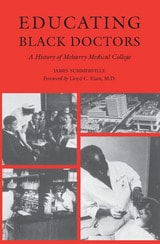
Educating Black Doctors
A History of Meharry Medical CollegeJames Summerville
University of Alabama Press, 1984
Fr one hundred years, Meharry has provided opportunity to thousands of Black Americans and some others, but the history of the institution is told, not by the changes in the futures of those fortunate men and women who became graduates, but by the action of a few in each generation with the vision to attack the vestiges of slavery, poverty, and excess morbidity through the building and operation of a medical college.
The college was conceived just after the Civil War when many thought the problem of the ex-slaves would soon disappear because their death rate was so great and the absence of health care was not a focus. The institution would be national, but its setting was a bankrupt city that had the fourth worst health statistics in the world. It was started by a missionary who had no money or medical experience at a time when there were more who objected to this work than applauded it. However, the desire of those students who begged that a medical school be started and the future of the many people who would be touched by its services were enough to motivate the founders to embark on this venture.
A number of documents have existed chronicling the events of the institution, but when requested by an academic society to provide one book that gave the most accurate history of the institution, I knew that no recent such book had been written. This book satisfies the need for such facts to be available. It also provides a journalistic, well-documented account of the varying approaches to providing opportunity and improving health for Black Americans.
Educating For Professionalism
Creating A Culture Of Humanism In Medical EducationDelese Wear
University of Iowa Press, 2000
The thirteen essays in Educating for Professionalism examine the often conflicting ethical, social, emotional, and intellectual messages that medical institutions send to students about what it means to be a doctor. Because this disconnection between what medical educators profess and what students experience is partly to blame for the current crisis in medical professionalism, the authors offer timely, reflective analyses of the work and opportunities facing medical education if doctors are to win public trust.
In their drive to improve medical professionalism within the world of academic medicine, editors Delese Wear and Janet Bickel have assembled thought-provoking essays that elucidate the many facets of teaching, valuing, and maintaining medical professionalism in the middle of the myriad challenges facing medicine at the dawn of the twenty-first century.
The collection traces how the values of altruism and service can influence not only mission statements and admission policies but also the content of medical school ethics courses, student-led task forces, and mentoring programs, along with larger environmental issues in medical schools and the communities they serve.
Stanley Joel Reiser
Jack Coulehan
Peter C. Williams
Frederic W. Hafferty
Richard Martinez
Judith Andre
Jake Foglio
Howard Brody
Sheila Woods
Sue Fosson
Lois Margaret Nora
Mary Anne C. Johnston
Tana A. Grady-Weliky
Cynthia N. Kettyle
Edward M. Hundert
Norma E. Wagoner
Frederick A. Miller
William D. Mellon
Howard Waitzkin
Donald Wasylenki
Niall Byrne
Barbara McRobb
Edward J. Eckenfels
Lucy Wolf Tuton
Claudia H. Siegel
Timothy B. Campbell

Evaluating Public Health Interventions
Edited by Tim Colbourn and James Hargreaves
University College London, 2026
An authoritative student guide for how to evaluate complex public health interventions.
Public health interventions include any effort or policy that attempts to improve the well-being of individuals or an entire population. They can be run by governmental health departments or non-governmental organizations and can include educational programs, screening programs, vaccination programs, environmental improvements, and health promotion campaigns. Interventions that include multiple independent or interacting components are referred to as complex. Evaluating and predicting the efficacy of any public health intervention, as well as calculating the cost effectiveness, is essential. Using examples from multiple published studies conducted around the world, this textbook shows readers how to evaluate public health interventions in real-world settings. It will enable readers to understand how to investigate whether a public health intervention works, for whom, when, where, how, and why. It provides a comprehensive introduction to key areas of evaluation, including understanding complex interventions, developing program theories, community engagement in evaluation, and the main methods used in process, impact, and economic evaluation. It explains how different methods can be used individually and in combination to answer different kinds of evaluation questions and at different phases in an evaluation cycle and considers how the results of evaluations can be brought together to inform action.
Faculty of Color in the Health Professions
Stories of Survival and SuccessDena Hassouneh
Dartmouth College Press, 2017

Foundation of Urology at the University of Michigan
Emergence of a Medical Specialty, 1919–1970David A. Bloom
Michigan Publishing Services, 2027
In 1919, urology came to the University of Michigan when Hugh Cabot arrived from Boston, attracted by the fulltime position of surgery chair. The celebrity urologist created a multi-specialty surgery department and, two years later, became the Dean of the Medical School. He trained Reed Nesbit who became the Chief of Urology in 1930; Nesbit made Ann Arbor an epicenter of international urological practice, education, and research until his retirement in 1967. In this history of urology at the university, David Bloom recounts Cabot and Nesbit’s careers, the introduction of hemodialysis to Michigan, and the role of the Ann Arbor Sarns corporation in worldwide hemodialysis technology.
From Skepticism to Competence
How American Psychiatrists Learn PsychotherapyMariana Craciun
University of Chicago Press, 2024
While many medical professionals can physically examine the body to identify and understand its troubles—a cardiologist can take a scan of the heart, an endocrinologist can measure hormone levels, an oncologist can locate a tumor—psychiatrists have a much harder time unlocking the inner workings of the brain or its metaphysical counterpart, the mind.
In From Skepticism to Competence, sociologist Mariana Craciun delves into the radical uncertainty of psychiatric work by following medical residents in the field as they learn about psychotherapeutic methods. Most are skeptical at the start. While they are well equipped to treat brain diseases through prescription drugs, they must set their expectations aside and learn how to navigate their patients’ minds. Their instructors, experienced psychotherapists, help the budding psychiatrists navigate this new professional terrain by revealing the inner workings of talk and behavioral interventions and stressing their utility in a world dominated by pharmaceutical treatments. In the process, the residents examine their own doctoring assumptions and develop new competencies in psychotherapy. Exploring the world of contemporary psychiatric training, Craciun illuminates novice physicians’ struggles to understand the nature and meaning of mental illness and, with it, their own growing medical expertise.
Generalism in Clinical Practice and Education
Edited by Sophie Park and Kay Leedham-Green
University College London, 2024
Generalism is a key approach to healthcare organization and delivery that enables person-centered, dynamic, and cost-effective patient care. With its emphasis on adaptability, generalism requires expansive, nurturing, and personalized approaches to clinical education in which a generalist attends to and explores patient priorities.
Generalism in Clinical Practice and Education outlines a generalist philosophy of practice, which is brought to life through interleaved examples. Written by a range of international clinicians, patients, and academics this book does not prescribe a single way to do generalism properly. Rather, it seeks to inspire readers’ future engagement with generalism in practice and education through sharing underpinning concepts, values, and principles. This ‘big picture’ attention to generalism across public health, social determinants of health, and clinical care is at the heart of sustainable and efficient use of resources to prioritize those in need. The book explores four key principles that aim to achieve creative, inclusive, and agile approaches to clinical care. Its goal is to support generalism in clinical practice and education and to produce clinical practitioners and learners who enjoy, embrace, and enhance future clinical care.
Health Humanities Reader
Jones, Therese
Rutgers University Press, 2014
In Health Humanities Reader, editors Therese Jones, Delese Wear, and Lester D. Friedman have assembled fifty-four leading scholars, educators, artists, and clinicians to survey the rich body of work that has already emerged from the field—and to imagine fresh approaches to the health humanities in these original essays. The collection’s contributors reflect the extraordinary diversity of the field, including scholars from the disciplines of disability studies, history, literature, nursing, religion, narrative medicine, philosophy, bioethics, medicine, and the social sciences.
With warmth and humor, critical acumen and ethical insight, Health Humanities Reader truly humanizes the field of medicine. Its accessible language and broad scope offers something for everyone from the experienced medical professional to a reader interested in health and illness.
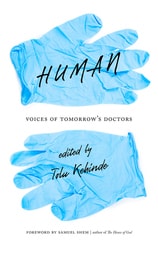
Human
Voices of Tomorrow’s DoctorsEdited by Tolu Kehinde
Dartmouth College Press, 2019
Integrating Family Planning Training into Medical Education
A Case Study of St. Paul's Hospital Millennium Medical CollegeLia T. Gebremedhin
Michigan Publishing Services, 2017
The innovative approach, founded on the values of sustainable capacity building through academic partnership and centered on improving access to dignified women’s reproductive health care through effective pre-service training, has the potential for expansion to other countries with high rates of maternal mortality and morbidity. In this case study, we spell out the best practices, which we hope will inspire academic medical centers in the Global South, global health departments/centers internationally, and the reproductive health community at large.
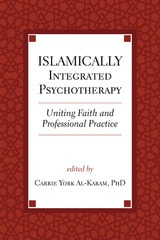
Islamically Integrated Psychotherapy
Uniting Faith and Professional PracticeCarrie York Al-Karam
Templeton Press, 2018
Integrating the Islamic faith with modern psychotherapy is at the forefront of the spiritually integrated psychotherapy movement. To bring this work to wider attention and to promote its continuation, Dr. Carrie York Al-Karam has brought together the present volume of nine essays, each of which is written by a Muslim clinician who practices Islamically integrated psychotherapy (IIP)—a modern approach that unites the teachings, principles, and interventions of the faith with Western therapeutic approaches.
As delineated in the Introduction, IIP has emerged from a variety of domains including the psychology of religion and spirituality, multicultural psychology and counseling, transpersonal psychology, Muslim Mental Health, and Islamic Psychology. The individual chapters then describe a variety of ways IIP is practiced by Muslim clinicians in their service provision with Muslim clients.
The contributors discuss a wide range of topics, such as how Islam can be viewed as a system for psychological wellbeing, or a “science of the soul”; what marital counseling can look like from an Islamically-integrated perspective; Prophet Mohammed as a psycho-spiritual exemplar in a new approach called The HEART Method; the use of Quranic stories in family therapy; as well as using Islamic teachings when working with Muslim children and adolescents.
A description of the various approaches is supplemented with discussions of their theoretical underpinnings as well as research-based recommendations for advancing clinical application. What emerges is a vital resource for Muslim and non-Muslim clinicians alike as well as the lay Muslim reader wanting to know more about how the Islamic faith and psychotherapy are engaging with each other in a modern clinical context.
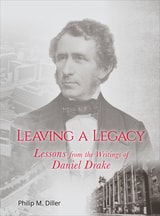
Leaving a Legacy
Lessons from the Writings of Daniel DrakePhilip Diller
University of Minnesota Press, 2019
Leaving a Legacy: Lessons from the Writings of Daniel Drake is a selective collection of excerpts from the vast writings from the nineteenth-century doctor and medical pioneer Daniel Drake. From Drake’s life, documented here in his own words from excerpts of lectures, personal journal entries, presentations, speeches, books, and letters to his children, readers learn about the scope of his accomplishments in medicine, contributions to his community, and dedication to his family. Diller goes beyond biography to contextualize Drake’s life choices and what made him a role model for today’s physicians. Diller selected one hundred and eighty thematically arranged excerpts, which he paired with original reflection questions to guide the reader through thought-provoking prompts. In doing so, Diller presents the lessons from Drake’s remarkable life and work as a guide for others who wish to build an enduring legacy.

Mathematical Models in the Health Sciences
A Computer-Aided ApproachEugene Ackerman
University of Minnesota Press, 1979
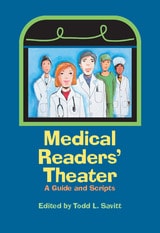
Medical Readers' Theater
A Guide and ScriptsTodd L. Savitt
University of Iowa Press, 2002
Medicine at Michigan
A History of the University of Michigan Medical School at the BicentennialDea H. Boster and Joel D. Howell
University of Michigan Press, 2017
Paths to Excellence
The Dell Medical School and Medical Education in TexasKenneth I. Shine and Amy Shaw Thomas
University of Texas Press, 2021
This book tells in detail and for the first time the story of how this change came about: how dedicated administrators, alumni, business leaders, community organizers, doctors, legislators, professors, and researchers joined forces, overcame considerable resistance, and raised the funds to build a new medical school without any direct state monies. Funding was secured in large part by the unique willingness of the local community to tax itself to pay for the financial operations of the school. Kenneth I. Shine and Amy Shaw Thomas, who witnessed this process from their unique vantages as past and present vice chancellors for health affairs in the University of Texas System, offer a working model that will enable other leaders to more effectively seek solutions, avoid pitfalls, and build for the future.
Patient Listening
A Doctor's GuideLoreen Herwaldt
University of Iowa Press, 2008
Herwaldt skillfully pares each narrative down to its most basic elements, rendering them into powerful found poems that she has used successfully in her role as a teacher and in her own practice. Drawing from narratives by writers who are both emerging and well known, including Oliver Sacks, Richard Selzer, and Mary Swander, each poem reveals the experience of illness and treatment from the patient's perspective. Patient Listening includes a detailed general introduction and a how-to guide that will prove invaluable in the classroom and in clinical practice.
This book will inspire thoughtfulness in everyone who reads it. It is also designed to foster discussions about all aspects of the patient experience from ethics to stigmatization to health insurance. Patient Listening is not just about bedside manner but also about how health care providers can gain the most from their interactions with patients and in turn offer more appropriate treatments, develop more cooperative and responsive relationships with their patients, and thus become better doctors.
Physician Communication with Patients
Research Findings and ChallengesJon B. Christianson, PhD, Louise H. Warrick, DrPH, Michael Finch, PhD, and Wayne Jonas, MD
University of Michigan Press, 2012
We all have a good idea of how we want things to go when we visit a physician. We expect to be able to explain why we are there, and we hope the physician will listen and possibly ask questions that help us clarify our thoughts. Most of us hope that the physician will provide some expression of empathy, offer a clear, nontechnical assessment of our problem, and describe "next steps" in a way that is easy to understand. Ideally, we would like to be asked about our ability to follow treatment recommendations. Some experts say that these expectations are not only reasonable but even necessary if patients are to get the care they need. Yet there is a growing body of research that suggests the reality of physician communication with patients often falls short of this ideal in many respects.
A careful analysis of the findings of this research can provide guidance to physician educators, health care administrators, and health policy makers interested in understanding the role that improved physician communication can play in improving quality of care and patient outcomes. Physician Communication with Patients summarizes findings from the academic literature pertaining to various aspects of this question, discussing those findings in the context of current pressures for change in the organization and delivery of medical services.
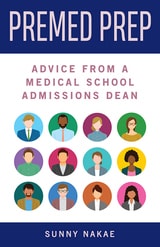
Premed Prep
Advice from a Medical School Admissions DeanSunny Nakae
Rutgers University Press, 2021
Premed Prep answers all these questions and more, with detailed case studies and insider tips that can help premed students authentically prepare and enjoy the journey from the very beginning. Sunny Nakae draws from her many years of experience as a medical school admissions dean to offer wise and compassionate advice that can help premed students of all backgrounds. She also has specific tips for students who are first-generation, minority, non-traditional, and undocumented.
Both forthright and supportive, Nakae’s advice is offered in a keep-it-real style that gives premed students a unique window into how admissions committees view and assess them. Premed Prep covers how to approach preparation with a focus on exploration and growth, and how to stop obsessing over med school application checklists. This book will do more than help you get a seat in medical school; it will start you on the process of becoming a successful future physician.

Primary Care
More Poems by PhysiciansAngela Belli
University of Iowa Press, 2006
Southwestern Medical Dictionary
Spanish-English, English-SpanishMargarita Artschwager Kay
University of Arizona Press, 2001
A staple of southwestern health care for more than twenty years, this dictionary can make a difference in patient care. Now available in a revised edition, it focuses on vocabulary used in health contexts by Spanish-speaking people in order to help patients tell their stories and medical practitioners to understand them. Unlike other bilingual dictionaries that emphasize scientific terms, this one focuses on standard Spanish terms as well as regional expressions peculiar to Mexican Spanish—language encountered in Chicago as easily as in Phoenix.
In the Spanish-to-English section, Spanish terms are followed by English translations and sample sentences to help health care practitioners understand how a patient might use them:
acedías, heartburn, pain in lower esophagus perceived as in the heart. Uno tiene la tendencia a sufrir de acedías después de comer chile. One has a tendency to suffer heartburn after eating chile. (syn: acidez, agruras del estómago)
In the English-to-Spanish section, English words are translated into simple Spanish terms along with English synonyms.
Now available in a revised edition, this handy reference features:
• more than 3,000 entries
• new entries that reflect current health problems and treatments
• inclusion of cognates
• Spanish definitions of English words
• anatomical drawings with bilingual labels
• more material on medicinal plants, including an appendix of poisonous and non-poisonous plants
• lists of food items and kinship terms
This book is an indispensable reference for all health care professionals who see patients of Mexican origin. Combining idiomatic precision with technical accuracy, it can help break down language barriers on either side of the border.
Spirituality In Patient Care
Why, How, When, and WhatHarold Koenig
Templeton Press, 2002
This book is intended as a guide for practicing physicians, medical students, and residents to help identify and address the spiritual needs of patients. Those who will benefit most will be physicians who wish to know how to integrate spirituality into clinical practice in an effective and sensitive manner. Other professionals, such as nurses and chaplains, may use this book as they interact with doctors, other health professionals, and hospital administrators.
Spirituality in Patient Care
Why, How, When, and WhatHarold G Koenig
Templeton Press, 2007
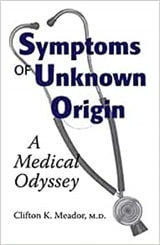
Symptoms of Unknown Origin
A Medical OdysseyClifton K. Meador
Vanderbilt University Press, 2005
Recounting a series of fascinating case studies, Meador shows in this book how he came to reject a strict adherence to the prevailing biomolecular model of disease and its separation of mind and body. He studied other theories and approaches—George Engel's biopsychosocial model of disease, Michael Balint's study of physicians as pharmacological agents—and adjusted his practice accordingly to treat what he called "nondisease." He had to retool, learn new and more in-depth interviewing and listening techniques, and undergo what Balint termed a "slight but significant change in personality."
In chapters like "The Woman Who Believed She Was a Man" and "The Diarrhea of Agnes," Meador reveals both the considerable harm that can result from wrong diagnoses of nonexistent diseases and the methods he developed to help patients with chronic symptoms not defined by a medical disease. Throughout the book, he recommends subsequent studies to test his observations, and he urges full application of the scientific method to the doctor-patient relationship, pointing out that few objective studies of these all-important interactions have ever been done.

Symptoms of Unknown Origin
A Medical OdysseyClifton K. Meador
Vanderbilt University Press, 2005
Recounting a series of fascinating case studies, Meador shows in this book how he came to reject a strict adherence to the prevailing biomolecular model of disease and its separation of mind and body. He studied other theories and approaches--George Engel's biopsychosocial model of disease, Michael Balint's study of physicians as pharmacological agents--and adjusted his practice accordingly to treat what he called "nondisease." He had to retool, learn new and more in-depth interviewing and listening techniques, and undergo what Balint termed a "slight but significant change in personality."
In chapters like "The Woman Who Believed She Was a Man" and "The Diarrhea of Agnes," Meador reveals both the considerable harm that can result from wrong diagnoses of nonexistent diseases and the methods he developed to help patients with chronic symptoms not defined by a medical disease. Throughout the book, he recommends subsequent studies to test his observations, and he urges full application of the scientific method to the doctor-patient relationship, pointing out that few objective studies of these all-important interactions have ever been done.
The Future of Medical Education
William G. Anlyan, M.D.
Duke University Press, 1973
The Hidden Curriculum in Health Professional Education
Edited by Frederic W. Hafferty
Dartmouth College Press, 2015
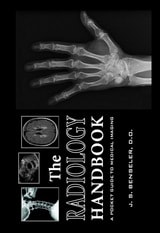
The Radiology Handbook
A Pocket Guide to Medical ImagingJ. S. Benseler
Ohio University Press, 2006
Designed for busy medical students, The Radiology Handbook is a quick and easy reference for any practitioner who needs information on ordering or interpreting images.
The book is divided into three parts:
- Part I presents a table, organized from head to toe, with recommended imaging tests for common clinical conditions.
- Part II is organized in a question and answer format that covers the following topics: how each major imaging modality works to create an image; what the basic precepts of image interpretation in each body system are; and where to find information and resources for continued learning.
- Part III is an imaging quiz beginning at the head and ending at the foot. Sixty images are provided to self-test knowledge about normal imaging anatomy and common imaging pathology.
Published in collaboration with the Ohio University College of Osteopathic Medicine, The Radiology Handbook is a convenient pocket-sized resource designed for medical students and non radiologists.
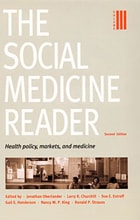
The Social Medicine Reader, Second Edition
Volume 3: Health Policy, Markets, and MedicineJonathan Oberlander, Larry R. Churchill, Sue E. Estroff, Gail E. Henderson, Nancy M. P. King, and Ronald P. Strauss, eds.
Duke University Press, 2005
Praise for the 3-volume second edition of The Social Medicine Reader:
“A superb collection of essays that illuminate the role of medicine in modern society. Students and general readers are not likely to find anything better.”—Arnold S. Relman, Professor Emeritus of Medicine and Social Medicine, Harvard Medical School
Praise for the first edition:
“This reviewer strongly recommends The Social Medicine Reader to the attention of medical educators.”—Samuel W. Bloom, JAMA: The Journal of the American Medical Association
Volume 3:
Over the past four decades the American health care system has witnessed dramatic changes in private health insurance, campaigns to enact national health insurance, and the rise (and perhaps fall) of managed care. Bringing together seventeen pieces new to this second edition of The Social Medicine Reader and four pieces from the first edition, Health Policy, Markets, and Medicine draws on a broad range of disciplinary perspectives—including political science, economics, history, and bioethics—to consider changes in health care and the future of U.S. health policy. Contributors analyze the historical and moral foundation of today’s policy debates, examine why health care spending is so hard to control in the United States, and explain the political dynamics of Medicare and Medicaid. Selections address the rise of managed care, its impact on patients and physicians, and the ethical implications of applying a business ethos to medical care; they also compare the U.S. health care system to the systems in European countries, Canada, and Japan. Additional readings probe contemporary policy issues, including the emergence of consumer-driven health care, efforts to move quality of care to the top of the policy agenda, and the implications of the aging of America for public policy.
Contributors: Henry J. Aaron, Drew E. Altman, George J. Annas, Robert H. Binstock, Thomas Bodenheimer, Troyen A. Brennan, Robert H. Brook, Lawrence D. Brown, Daniel Callahan, Jafna L. Cox, Victor R. Fuchs, Kevin Grumbach, Rudolf Klein, Robert Kuttner, Larry Levitt, Donald L. Madison, Wendy K. Mariner, Elizabeth A. McGlynn, Jonathan Oberlander, Geov Parrish, Sharon Redmayne, Uwe E. Reinhardt, Michael S. Sparer, Deborah Stone

The Social Medicine Reader, Second Edition
Volume One: Patients, Doctors, and IllnessNancy M. P. King, Ronald P. Strauss, Larry R. Churchill, Sue E. Estroff, Gail E. Henderson, and Jonathan Oberlander, eds.
Duke University Press, 2005
Praise for the 3-volume second edition of The Social Medicine Reader:
“A superb collection of essays that illuminate the role of medicine in modern society. Students and general readers are not likely to find anything better.”—Arnold S. Relman, Professor Emeritus of Medicine and Social Medicine, Harvard Medical School
Praise for the first edition:
“This reviewer strongly recommends The Social Medicine Reader to the attention of medical educators.”—Samuel W. Bloom, JAMA: The Journal of the American Medical Association
Volume 1:
A woman with what is quite probably a terminal illness must choose between courses of treatment based on contradictory diagnoses. A medical student causes acute pain in his patients as he learns to insert a central line. One doctor wonders how to react when a patient asks him to pray with her; another struggles to come to terms with his mistakes. A physician writes in a prominent medical journal about facilitating a dying woman’s wish to end her life on her own terms; letters to the editor reflect passionate responses both in support of and in opposition to his actions. These experiences and many more are vividly rendered in Patients, Doctors, and Illness, which brings together nineteen pieces that appeared in the first edition of The Social Medicine Reader and eighteen pieces new to this edition. This volume examines the roles and training of health care professionals and their relationship with patients, ethics in health care, and end-of-life experiences and decisions. It includes fiction and nonfiction narratives and poetry; definitions and case-based discussions of moral precepts in health care, such as truth telling, informed consent, privacy, and autonomy; and readings that provide legal, ethical, and practical perspectives on many familiar but persistent ethical and social questions raised by illness and care.
Contributors: Yehuda Amichai, Marcia Angell, George J. Annas, Marc D. Basson, Doris Betts, Amy Bloom, Abenaa Brewster, Raymond Carver, Eric J. Cassell, Larry R. Churchill, James Dickey, Gerald Dworkin, James Dwyer, Miles J. Edwards, Charles R. Feldstein, Chris Feudtner, Leonard Fleck, Arthur Frank, Benjamin Freedman, Atul Gawande, Jerome Groopman, Lawrence D. Grouse, David Hilfiker, Nancy M. P. King, Perri Klass, Melvin Konner, Bobbie Ann Mason, Steven H. Miles, Sharon Olds, Katha Pollitt, Timothy E. Quill, David Schenck, Daniel Shapiro, Susan W. Tolle, Alice Stewart Trillin, William Carlos Williams
The Social Medicine Reader, Second Edition
Volume Two: Social and Cultural Contributions to Health, Difference, and InequalityGail E. Henderson, Sue E. Estroff, Larry R. Churchill, Nancy M. P. King, Jonathan Oberlander, and Ronald P. Strauss, eds.
Duke University Press, 2005
Praise for the 3-volume second edition of The Social Medicine Reader:
“A superb collection of essays that illuminate the role of medicine in modern society. Students and general readers are not likely to find anything better.”—Arnold S. Relman, Professor Emeritus of Medicine and Social Medicine, Harvard Medical School
Praise for the first edition:
“This reviewer strongly recommends The Social Medicine Reader to the attention of medical educators.”—Samuel W. Bloom, JAMA: The Journal of the American Medical Association
Volume 2:
Ranging from a historical look at eugenics to an ethnographic description of parents receiving the news that their child has Down syndrome, from analyses of inequalities in the delivery of health services to an examination of the meaning of race in genomics research, and from a meditation on the loneliness of the long-term caregiver to a reflection on what children owe their elderly parents, this volume explores health and illness. Social and Cultural Contributions to Health, Difference, and Inequality brings together seventeen pieces new to this edition of The Social Medicine Reader and five pieces that appeared in the first edition. It focuses on how difference and disability are defined and experienced in contemporary America, how the social categories commonly used to predict disease outcomes—such as gender, race and ethnicity, and social class—have become contested terrain, and why some groups have more limited access to health care services than others. Juxtaposing first-person narratives with empirical and conceptual studies, this compelling collection draws on several disciplines, including cultural and medical anthropology, sociology, and the history of medicine.
Contributors: Laurie K. Abraham, Raj Bhopal, Ami S. Brodoff, Daniel Callahan, David Diamond, Liam Donaldson, Alice Dreger, Sue E. Estroff, Paul Farmer, Anne Fausto-Sterling, Jerome Groopman, Gail E. Henderson, Linda M. Hunt, Barbara A. Koenig, Donald R. Lannin, Sandra Soo-Jin Lee, Carol Levine, Judith Lorber, Nancy Mairs, Holly F. Mathews, James P. Mitchell, Joanna Mountain, Alan R. Nelson, Martin S. Pernick, Rayna Rapp, Sally L. Satel, Robert S. Schwartz, Brian D. Smedley, Adrienne Y. Stith, Sharon Sytsma, Gordon Weaver, Bruce Wilson, Irving Kenneth Zola
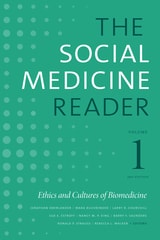
The Social Medicine Reader, Volume I, Third Edition
Ethics and Cultures of BiomedicineJonathan Oberlander, Mara Buchbinder, Larry R. Churchill, Sue E. Estroff, Nancy M. King, Barry F. Saunders, Ronald P. Strauss, and Rebecca L. Walker, editors
Duke University Press, 2019
Volume 1, Ethics and Cultures of Biomedicine, contains essays, case studies, narratives, fiction, and poems that focus on the experiences of illness and of clinician-patient relationships. Among other topics the contributors examine the roles and training of professionals alongside the broader cultures of biomedicine; health care; experiences and decisions regarding death, dying, and struggling to live; and particular manifestations of injustice in the broader health system. The Reader is essential reading for all medical students, physicians, and health care providers.
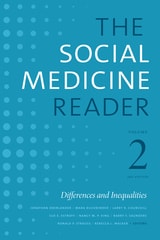
The Social Medicine Reader, Volume II, Third Edition
Differences and Inequalities, Volume 2Jonathan Oberlander, Mara Buchbinder, Larry R. Churchill, Sue E. Estroff, Nancy M. King, Barry F. Saunders, Ronald P. Strauss, and Rebecca L. Walker, editors
Duke University Press, 2019
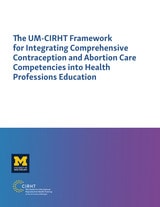
The UM-CIRHT Framework for Integrating Comprehensive Contraception and Abortion Care Competencies into Health Professions Education
Solomon W. Beza
Michigan Publishing Services, 2018
The framework is intended to provide guidance on how the programmatic and operational strategies for family planning and comprehensive abortion care could be extended in countries or institutions that seek to replicate the UM-CIRHT model in their settings. It may be adapted to the local context of individual countries and institutions.
This framework document is produced by UM-CIRHT with funding from an anonymous donor.
iatrogenesis
Essays on Becoming a PhysicianMichigan Publishing Services, 2018
In Greek, iatro- means doctor, and -genesis means origin: Iatrogenesis thus describes any effect, good or bad, brought forth by a physician’s actions. This essay compendium looks beyond a physician’s impact on patients, instead turning inward to examine the impact of medical training on student doctors. These essays written by University of Michigan medical students span from the donning of the White Coat to graduation. Along the way, each writer weaves a story, the threads of which unite in a tapestry highlighting the universality of this coming-of-age journey. These essays breathe life into each stage of medical apprenticeship, displaying the full spectrum of human emotion as medical students find ways to reinvent themselves as the physicians of tomorrow.