Results by title
19 books match the query 'Educational Psychology'
Academic Ableism
Disability and Higher EducationJay Timothy Dolmage
University of Michigan Press, 2017
Academic Ableism
Disability and Higher EducationJay Timothy Dolmage
University of Michigan Press, 2017

Constructivism in Education
Edited by D. C. Phillips
University of Chicago Press, 2000
Fantastic Antone Succeeds
Experiences in Educating Children with Fetal Alcohol SyndromeJudith Kleinfeld
University of Alaska Press, 1993
The book consists of separate chapters written in a popular and accessible style by psychologists, teachers, and birth and adoptive parents of alcohol-affected children. Many chapters are personal stories with emotional power. A birth mother, for example, tells of her anguish when she realizes that she has recovered from her own alcoholism but her daughter cannot. This mother describes how she dealt with her grief, how she told her daughter the truth, her daughter's relief at finally understanding what was wrong, and how they both developed ways of overcoming her daughter's learning problems.
Other chapters describe how experienced teachers have learned to organize classrooms where alcohol-affected children can thrive and how therapists have learned to work with parents. One chapter summarizes medical knowledge of FAS/FAE and offers information useful for understanding a child's learning and behavioral problems and devising educational approaches. The book includes lists of important resources, organizations to contact, and descriptions of effective classroom practices for teachers.
Without minimizing the seriousness of FAS/FAE and the first priority prevention, Fantastic Antone Succeeds provides practical tools and strategies that can help alcohol-affected individuals and their families lead happier, more productive lives.

Learning Theory in School Situations
Esther J. Swenson, George Lester Anderson, and Chalmers L. StacyIntroduction by T. R. McConnell
University of Minnesota Press, 1949
Learning Theory in School Situations was first published in 1949. Minnesota Archive Editions uses digital technology to make long-unavailable books once again accessible, and are published unaltered from the original University of Minnesota Press editions.
Making Workers
Radical Geographies of EducationKatharyne Mitchell
Pluto Press, 2017
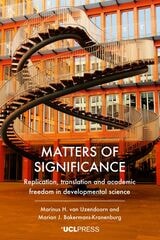
Matters of Significance
Replication, Translation and Academic Freedom in developmental scienceMarinus H. van IJzendoorn and Marian J. Bakermans-Kranenburg
University College London, 2024
Application of scientific findings to effective practice and informed policymaking is an aspiration for much research in the biomedical, behavioral, and developmental sciences. But too often translations of science to practice are conceptually narrow and developed quickly as salves to an urgent problem. For developmental science, widely implemented parenting interventions are prime examples of technical translations from knowledge about the causes of children’s mental distress. Aiming to support family relationships and facilitate adaptive child development, these programs are rushed through when the scientific findings on which they are based remain contested and without enough evidence of success from randomized controlled trials.
In Matters of Significance, the authors draw on forty years of experience with theoretical, empirical, meta-analytic, and translational work in child development research to highlight the complex relations between replication, translation, and academic freedom. They argue that challenging fake facts promulgated by under-replicated and underpowered studies is also a method of translation. Such a challenge can, in the highlighted field of attachment and emotion regulation research, bust popular myths about the decisive role of genes, hormones, or the brain on parenting and child development, with a balancing impact on practice and policy making. The authors argue that academic freedom from interference by pressure groups, stakeholders, funders, or university administrators in the core stages of research is a necessary but besieged condition for adversarial research and myth-busting.
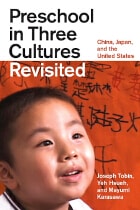
Preschool in Three Cultures Revisited
China, Japan, and the United StatesJoseph Tobin, Yeh Hsueh, and Mayumi Karasawa
University of Chicago Press, 2009
Published twenty years ago, the original Preschool in Three Cultures was a landmark in the study of education: a profoundly enlightening exploration of the different ways preschoolers are taught in China, Japan, and the United States. Here, lead author Joseph Tobin—along with new collaborators Yeh Hsueh and Mayumi Karasawa—revisits his original research to discover how two decades of globalization and sweeping social transformation have affected the way these three cultures educate and care for their youngest pupils. Putting their subjects’ responses into historical perspective, Tobin, Hsueh, and Karasawa analyze the pressures put on schools to evolve and to stay the same, discuss how the teachers adapt to these demands, and examine the patterns and processes of continuity and change in each country.
Featuring nearly one hundred stills from the videotapes, Preschool in Three Cultures Revisited artfully and insightfully illustrates the surprising, illuminating, and at times entertaining experiences of four-year-olds—and their teachers—on both sides of the Pacific.
Promotion of Social Awareness
Powerful Lessons for the Partnership of Developmental Theory andRobert L. Selman
Russell Sage Foundation, 2003
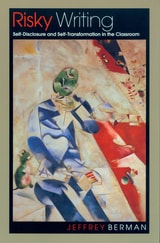
Risky Writing
Self-Disclosure and Self-Transformation in the ClassroomJeffrey Berman
University of Massachusetts Press, 2001
This is the final volume in a trilogy of works that examine the impact of writing and reading about traumatic subjects. Diaries to an English Professor (1994) explores the ways in which undergraduate students use psychoanalytic diaries to probe conflicted issues in their lives. Surviving Literary Suicide (1999) investigates how graduate students respond to suicidal literature—novels and poems that portray and sometimes glorify self-inflicted death.
In Risky Writing, Jeffrey Berman builds on those earlier studies, describing ways teachers can encourage college students to write safely on a wide range of subjects often deemed too personal or too dangerous for the classroom: grieving the loss of a beloved relative or friend, falling into depression, coping with the breakup of one's family, confronting sexual abuse, depicting a drug or alcohol problem, encountering racial prejudice. Berman points out that nearly everyone has difficulty talking or writing about such issues because they arouse shame and tend to be enshrouded in secrecy and silence. This is especially true for college students, who are just emerging from adolescence and find themselves at institutions that rarely promote self-disclosure.
Recognizing the controversial nature of his subject, Berman confronts academic opposition to personal writing head on. He also discusses the similarities between the “writing cure” and the “talking cure,” the role of the teacher and audience in the self-disclosing classroom, and the pedagogical strategies necessary to minimize risk, including the importance of empathy and other befriending skills.
Teaching Embodied
Cultural Practice in Japanese PreschoolsAkiko Hayashi and Joseph Tobin
University of Chicago Press, 2015
Akiko Hayashi and Joseph Tobin embed themselves in the classrooms of three different teachers at three different schools to examine how teachers act, think, and talk. Drawing on extended interviews, their own real-time observations, and hours of video footage, they focus on how teachers embody their lessons: how they use their hands to gesture, comfort, or discipline; how they direct their posture, gaze, or physical location to indicate degrees of attention; and how they use the tone of their voice to communicate empathy, frustration, disapproval, or enthusiasm. Comparing teachers across schools and over time, they offer an illuminating analysis of the gestures that comprise a total body language, something that, while hardly ever explicitly discussed, the teachers all share to a remarkable degree. Showcasing the tremendous importance of—and dearth of attention to—this body language, they offer a powerful new inroad into educational study and practice, a deeper understanding of how teaching actually works, no matter what culture or country it is being practiced in.

The Boy on the Beach
Building Community through PlayVivian Gussin Paley
University of Chicago Press, 2010
Four-year-old Eli plays alone at the shore, inventing dramas out of sand and water. He is Builder, Fireman, Protector, and Scout, overcoming waves and conquering monsters. Enter Marianne and doll, Mother and Baby, eager to redefine Eli as a good father and homesteader. Their separate visions intertwine in a search for a common ground on which howling wolves and butterfly sisters can learn to understand and need one another.
What can the richly imagined, impressively adaptable fantasy world of these children tell us about childhood, development, education, and even life itself? For fifty years, teacher and writer Vivian Gussin Paley has been exploring the imagery, language, and lore of young children, asking the questions they ask of themselves.
In The Boy on the Beach she continues to do so, going deeper into the mystery of play as she follows Eli and Marianne through the kindergarten year, finding more answers and more questions. How does their teacher, Mrs. Olson, manage to honor and utilize the genius of play to create an all-inclusive community in which boys and girls like each other and listen to each other’s stories? Why is Paley’s fellow teacher Yu-ching in Taiwan certain that her children pretend to be kittens in order to become necessary to the group? And why do teachers in London see their childrens’ role-playing as the natural end to loneliness in the school community?
Rich with the words of children and teachers themselves, The Boy on the Beach is vintage Paley, a wise and provocative appreciation of the importance of play and enduring curiosity about the nature of childhood and the imagination.
The Company We Keep
Interracial Friendships and Romantic Relationships from Adolescence to AdulthoodGrace Kao
Russell Sage Foundation, 2019
While research on interracial social ties has often focused on whites and blacks, Hispanics are the largest minority group and Asian Americans are the fastest growing racial group in the United States. The Company We Keep examines friendships and romantic relationships among blacks, whites, Hispanics, and Asian Americans to better understand the full spectrum of contemporary race relations. Using data from the National Longitudinal Study of Adolescent to Adult Health, the authors explore the social ties of more than 15,000 individuals from their first survey responses as middle and high school students in the mid-1990s through young adulthood nearly fifteen years later. They find that while approval for interracial marriages has increased and is nearly universal among young people, interracial friendships and romantic relationships remain relatively rare, especially for whites and blacks. Black women are particularly disadvantaged in forming interracial romantic relationships, while Asian men are disadvantaged in the formation of any romantic relationships, both as adolescents and as young adults. They also find that people in same-sex romantic relationships are more likely to have partners from a different racial group than are people in different-sex relationships. The authors pay close attention to how the formation of interracial friendships and romantic relationships depends on opportunities for interracial contact. They find that the number of students choosing different-race friends and romantic partners is greater in schools that are more racially diverse, indicating that school segregation has a profound impact on young people’s social ties.
Kao, Joyner, and Balistreri analyze the ways school diversity and adolescent interracial contact intersect to lay the groundwork for interracial relationships in young adulthood. The Company We Keep provides compelling insights and hope for the future of living and loving across racial divides.
The Educated Mind
How Cognitive Tools Shape Our UnderstandingKieran Egan
University of Chicago Press, 1997
"A carefully argued and readable book. . . . Egan proposes a radical change of approach for the whole process of education. . . . There is much in this book to interest and excite those who discuss, research or deliver education."—Ann Fullick, New Scientist
"A compelling vision for today's uncertain educational system."—Library Journal
"Almost anyone involved at any level or in any part of the education system will find this a fascinating book to read."—Dr. Richard Fox, British Journal of Educational Psychology
"A fascinating and provocative study of cultural and linguistic history, and of how various kinds of understanding that can be distinguished in that history are recapitulated in the developing minds of children."—Jonty Driver, New York Times Book Review
The Mind's Eye
Image and Memory in Writing about TraumaMarian Mesrobian MacCurdy
University of Massachusetts Press, 2007
MacCurdy begins by discussing what trauma is, how traumatic memories are stored and accessed, and how writing affects them. She then focuses on the processes involved in translating traumatic images into narrative form, showing how the same patterns and problems emerge whether the writers are students or professionals. Using examples drawn from the classroom, MacCurdy investigates the beneficial effects of the study of trauma on communities as well as individuals, witnesses as well as writers, and explores the implications of these relationships for the world at large, particularly as they pertain to issues of justice, retribution, and forgiveness.
Throughout the volume the author draws on her own experience as teacher, writer, survivor, and descendant of survivors to explain how one can engage student work on difficult subjects without appropriating the texts or getting lost in the emotions generated by them. She further shows how appropriate safeguards can be put in place to protect both teacher and student writer. The end result of such a pedagogy, MacCurdy demonstrates, is not simply better writers but more integrated people, capable of converting their own losses and griefs into compassion for others.
The Social Organization of Schooling
Larry V. Hedges
Russell Sage Foundation, 2005
The Stone Soup Experiment
Why Cultural Boundaries PersistDeborah Downing Wilson
University of Chicago Press, 2015
The experience of the Stoners and Traders is a profound testament to human sociality. Even in the form of simulation, even as a game, the participants found themselves quickly—and with real conviction—bound to the ideologies and practices of their in-group. The Stoners enjoyed their days lounging, chatting, and making crafts, while the Traders—through a complex market of playing cards—competed for the highest bankrolls. When they came into contact, misunderstanding, competition, and even manipulation prevailed, to the point that each group became so convinced of its own superiority that even after the simulation’s end the students could not reconcile.
Throughout her riveting narrative, Downing Wilson interweaves fascinating discussions on the importance of play, emotions, and intergroup interaction in the formation and maintenance of group identities, as well as on the dynamic social processes at work when different cultural groups interact. A fascinating account of social experimentation, the book paints a vivid portrait of our deepest social tendencies and the powers they have over how we make friends and enemies alike.
The Writing Cure
Psychoanalysis, Composition, and the Aims of EducationMark Bracher
Southern Illinois University Press, 1999
Psychoanalysis and writing instruction have much to offer each other, asserts Mark Bracher. In this book, Bracher examines the intersection between these two fields and proposes pedagogical uses of psychoanalytic technique for writing instruction.
Psychoanalysis reveals that the writing process is profoundly affected by factors that current theories have largely neglected—forces such as enjoyment, desire, fantasy, and anxiety, which, moreover, are often unconscious. Articulating an approach based on the work of Jacques Lacan, Bracher shows how a psychoanalytic perspective can offer useful insights into the nature of the writing process, the sources of writing problems, and the dynamics of writing instruction. He further demonstrates that writing instruction constitutes the most favorable venue outside of individual psychoanalytic treatment for pursuing psychoanalytic research and practice. Like psychoanalytic treatment proper, writing instruction can function as a way of reducing psychological conflict and as a means of pursuing psychoanalytic research into the workings of the mind. Empirical studies and personal testimonies have demonstrated the psychological (and even the physical) benefits of writing about personal conflict in an academic setting; such benefits promise to be enhanced and consolidated through the application of psychoanalytic principles to the teaching of writing.
Trade and Employment in Developing Countries, Volume 3
Synthesis and ConclusionsAnne O. Krueger
University of Chicago Press, 1988