Results by title
130 books match the query 'Educators' and 14 start with a
A Feminist Legacy
The Rhetoric and Pedagogy of Gertrude BuckSuzanne Bordelon
Southern Illinois University Press, 2007
The first book-length investigation of a pioneering English professor and theorist at Vassar College, A Feminist Legacy: The Rhetoric and Pedagogy of Gertrude Buck explores Buck’s contribution to the fields of education and rhetoric during the Progressive Era. By contextualizing Buck’s academic and theoretical work within the rise of women’s educational institutions like Vassar College, the social and political movement toward suffrage, and Buck’s own egalitarian political and social ideals, Suzanne Bordelon offers a scholarly and well-informed treatment of Buck’s achievements that elucidates the historical and contemporary impact of her work and life.
Bordelon argues that while Buck did not call herself a feminist, she embodied feminist ideals by demanding the full participation of her female students and by challenging power imbalances at every academic, social, and political level.
A Feminist Legacy reveals that Vassar College is an undervalued but significant site in the history of women’s argumentation and pedagogy. Drawing on a rich variety of archival sources, including previously unexamined primary material, A Feminist Legacy traces the beginnings of feminist theories of argumentation and pedagogy and their lasting legacy within the fields of education and rhetoric.
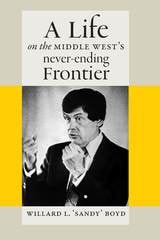
A Life on the Middle West's Never-Ending Frontier
Willard L. Boyd
University of Iowa Press, 2019
His memoir, interspersed with personal wisdom gleaned over more than six decades of service and leadership, encapsulates Sandy’s shrewd yet optimistic view of the public university as an institution. At every stage in his life—in the U.S. Navy during World War II, while practicing law or teaching, and in leadership positions at Chicago’s Field Museum and the University of Iowa— Sandy relied on his principles of open disclosure, inclusiveness, and respect for differences to guide him on issues that matter.
This chronicle of Sandy’s experiences throughout his life shows us the evolution both of the University of Iowa and of the nation writ large. More importantly, this book gives us a lens through which to examine our present situation, whether debating free speech on campus, the role of the arts and humanities in civil society, or the importance of funding for educational and cultural institutions.
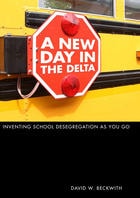
A New Day in the Delta
Inventing School Desegregation As You GoDavid W. Beckwith
University of Alabama Press, 2009
Explores Mississippi’s school desegregation from the viewpoint of a white teacher
A New Day in the Delta is a fresh and appealing memoir of the experience of a young white college graduate in need of a job as the Vietnam War reached its zenith. David Beckwith applied and was accepted for a teaching position in the Mississippi Delta in the summer of 1969. Although it seemed to him a bit strange that he was accepted so quickly for this job while his other applications went nowhere, he was grateful for the opportunity. Beckwith reported for work to learn that he was to be assigned to an all-black school as the first step in Mississippi’s long-deferred school desegregation.
The nation and Mississippi alike were being transformed by war and evolving racial relations, and Beckwith found himself on the cutting edge of the transformation of American education and society in one of the most resistant (and poor) corners of the country. Beckwith’s revealing and often amusing story of the year of mutual incomprehension between an inexperienced white teacher and a classroom full of black children who had had minimal contact with any whites. This is history as it was experienced by those who were thrust into another sort of “front line.”
A Professor at the End of Time
The Work and Future of the ProfessoriateBest, John
Rutgers University Press, 2017

Aldo Leopold
His Life and WorkCurt D. Meine
University of Wisconsin Press, 1991
This biography of Aldo Leopold follows him from his childhood as a precocious naturalist to his profoundly influential role in the development of conservation and modern environmentalism in the United States.
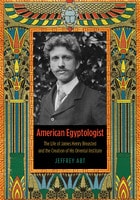
American Egyptologist
The Life of James Henry Breasted and the Creation of His Oriental InstituteJeffrey Abt
University of Chicago Press, 2011
James Henry Breasted (1865–1935) had a career that epitomizes our popular image of the archaeologist. Daring, handsome, and charismatic, he traveled on expeditions to remote and politically unstable corners of the Middle East, helped identify the tomb of King Tut, and was on the cover of Time magazine. But Breasted was more than an Indiana Jones—he was an accomplished scholar, academic entrepreneur, and talented author who brought ancient history to life not just for students but for such notables as Teddy Roosevelt and Sigmund Freud.
An Accidental Triumph
The Improbable History of American Higher EducationSol Gittleman
Vesto Books, 2023
"Hardly a day passes without reference to some scandal, fraud, intellectual or moral failure, or other ill associated with American academic institutions,” writes Sol Gittleman in his bracing new book, An Accidental Triumph. “If American higher education is such a failure, why are students and scholars from all over the world still so eager to secure a place in one of these institutions? Is American higher education a disaster or the envy of the world?”
Gittleman confronts this contradiction in this dynamic mix of history, analysis, and personal reflection. An Accidental Triumph tells the engaging story of how American higher education evolved from a patchwork of seminaries in the early nineteenth century into the world’s leader in research by the middle of the twentieth. Gittleman links this fascinating story to his own fifty-year academic career, which coincided with an explosive rise in enrollment, spurred by the GI Bill, and an unparalleled postwar boom in faculty hiring, prompted by massive new federal support for academic research from organizations such as the National Science Foundation.
Writing with authority, frankness, and unfailing wry good humor, Gittleman surveys the triumphs, tragedies, and tensions of the history of American higher education. Despite the relentless criticism, Gittleman finds good reason to remain optimistic about the future of teaching and research at the college and university level in the United States.
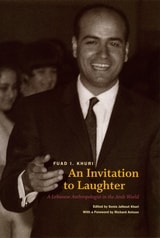
An Invitation to Laughter
A Lebanese Anthropologist in the Arab WorldFuad I. Khuri
University of Chicago Press, 2007
For the late Fuad I. Khuri, a distinguished career as an anthropologist began not because of typical concerns like accessibility, money, or status, but because the very idea of an occupation that baffled his countrymen made them—and him—laugh. “When I tell them that ‘anthropology’ is my profession . . . they think I am either speaking a strange language or referring to a new medicine.” This profound appreciation for humor, especially in the contradictions inherent in the study of cultures, is a distinctive theme of An Invitation to Laughter, Khuri’s astute memoir of life as an anthropologist in the Middle East.
A Christian Lebanese, Khuri offers up in this unusual autobiography both an insider’s and an outsider’s perspective on life in Lebanon, elsewhere in the Middle East, and in West Africa. Khuri entertains and informs with clever insights into such issues as the mentality of Arabs toward women, eating habits of the Arab world, the impact of Islam on West Africa, and the extravagant lifestyles of wealthy Arabs, and even offers a vision for a type of democracy that could succeed in the Middle East. In his life and work, as these astonishing essays make evident, Khuri demonstrated how the discipline of anthropology continues to make a difference in bridging dangerous divides.
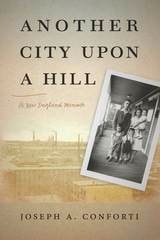
Another City upon a Hill
A New England MemoirJoseph A. Conforti
Tagus Press, 2013
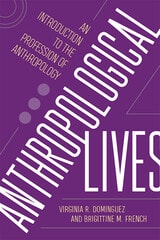
Anthropological Lives
An Introduction to the Profession of AnthropologyVirginia R Dominguez
Rutgers University Press, 2020
Anthropologists profiled: Leslie Aiello, Lee Baker, João Biehl, Tom Boellstorff, Jacqueline Comito, Shannon Dawdy, Virginia R. Dominguez, T.J. Ferguson, Brigittine French, Agustín Fuentes, Amy Goldenberg, Mary Gray, Sarah Green, Monica Heller, Douglas Hertzler, Ed Liebow, Mariano Perelman, Jeremy Sabloff, Carolyn Sargent, Marilyn Strathern, Nandini Sundar, Alaka Wali.
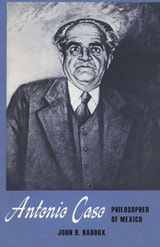
Antonio Caso
Philosopher of MexicoBy John H. Haddox
University of Texas Press, 1971
Few men have had as much cultural and educational influence on their own countries as the philosopher and educator Antonio Caso (1883-1946). He was above all a patriot of his beloved Mexico, and he sought to deliver his humanitarian message to his countrymen.
In his youth, after the revolt against Díaz, he was a member of the Ateneo de la Juventud, a group that sought to bring Mexico, spiritually and economically, back to the Mexicans. Caso realized that this effort involved the forming of a national consciousness among his people, whom he saw divided by their private and public interests.
As an educator of Mexican youth for more than thirty years, Caso sought to imbue in his students the desire to search and to question. He saw education as a perpetual search for truth, and his own life and philosophy reflect this search. He rejected any system that proposed to describe all of reality, and he despised all dogmas—official or unofficial. He particularly fought against positivism and Marxism, systems current in his youth.
The first part of this book is an introduction to the philosophical and educational ideas of Caso, as well as to the intellectual and political ideas in his life. Mr. Haddox skillfully shows the development of Caso's ideas and how they took shape from his own reading as well as from the experiences of his age and of his country. The second part contains Mr. Haddox's translations of selections from Caso's writings. They give a moving picture of Caso's hopes for Mexico and for humanitiy.
Artifact
Encounters with the Campus Shooting ArchivesJulija Šukys
West Virginia University Press, 2025
2026 IPPY Awards Bronze Medal Winner, Current Events - Social Issues/Humanitarian
2026 PROSE Award Finalist, Humanities: Literature
Artifact is about the stories we tell ourselves after mass shootings. Each college campus shooting leaves a record: archival collections, monuments to the dead, government-led inquiries, internal university investigations, and lawsuits. Artifact: Encounters with the Campus Shooting Archives seeks to understand university and college campus shootings that involve students and faculty of those institutions. The book examines the aftermaths of such attacks by moving between university archives, memorials to victims, conversations with survivors, and beyond.
Julija Šukys examines a series of five North American university and college campus shootings between 1966 and 2015: the École Polytechnique in Montreal, Concordia University in Montreal, Virginia Tech, University of Alabama–Huntsville, and Umpqua Community College in Roseburg, Oregon. These attacks involved students and faculty as both victims and perpetrators—that is, all the shooters were either faculty members or (in one case, would-be) students of the institution where the killings took place.
Šukys arrives at each site long after the killings have taken place: by now, the teddy bears, flowers, and crosses have been cleared away. Prying journalists are long gone. She sorts through myriad objects left at makeshift memorial sites. She talks for hours with a professor who survived an attack only because her colleague’s gun jammed as it was pointed at her head. She wanders and documents the reconfigured buildings made unrecognizable after the horrors that occurred within them. She reads tedious court transcripts, officious government-commissioned reports, and a troubling memoir written by a shooter’s mother and sifts through the mathematics papers that one campus shooter publishes from his prison cell.
Artifact weighs what it means to live in a place where students and their teachers are gunned down on a seemingly regular basis. It asks how we can continue to learn, teach, and live when nothing changes in response to these deaths. It attempts to speak into silence, to look at the pain of those who have come through trauma, and to meet their gazes without platitudes or triumphalism. The result is a searching book about care, memory, forgiveness, and survival.
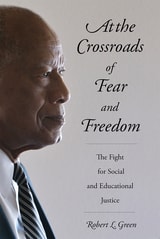
At the Crossroads of Fear and Freedom
The Fight for Social and Educational JusticeRobert L. Green
Michigan State University Press, 2016
This memoir relates previously untold stories about major Civil Rights campaigns that helped put an end to voting rights violations and Jim Crow education; explains how Green has helped urban school districts improve academic achievement levels; and explains why this history should inform our choices as we attempt to reform and improve American education. Green’s quest began when he helped the Kennedy Administration resolve a catastrophic education-related impasse and has continued through his service as one of the participants at an Obama administration summit on a current academic crisis.
It is commonly said that education is the new Civil Rights battlefield. Green’s memoir, At the Crossroads of Fear and Freedom: The Fight for Social and Educational Justice, helps us understand that educational equity has always been a central objective of the Civil Rights movement.
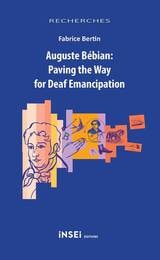
Auguste Bébian
Paving the Way for Deaf EmancipationFabrice Bertin
Gallaudet University Press, 2024
To some, he is a mythical figure; to others, he is unknown. Auguste Bébian (1789-1839) reflects society’s ambivalence toward Deaf history: sometimes recognized, often ignored. In the wake of Abbé de l’Épée, whose name is remembered in posterity and who demonstrated that the large-scale education of Deaf people was possible, Auguste Bébian was nonetheless a key player in an unprecedented upheaval, which in many ways went beyond the educational sphere. The goal of this research on Auguste Bébian, combining biographical elements and analysis of his thinking in unprecedented ways, is not to deconstruct the myth, but rather to decipher the messages it conveys, and to understand what it tells us, indirectly, about the Deaf experience.
Born in 1789 in Guadeloupe, part of the French West Indies, it was on the other side of the Atlantic Ocean, in France, that Auguste Bébian fulfilled most of his destiny. While living at the National Institution for the Deaf in Paris at the beginning of the 19th century, his daily contact with the young students made him the first known hearing person in France to achieve true mastery of sign language, the natural language of Deaf people, and a deep understanding of its inherent culture. On becoming a teacher, he constantly defended the use of sign language as a linguistic system in its own right in order to awaken the intelligence of Deaf children, to whom “we pay no more attention than to the sunlight that shines on us every day.” His numerous publications display a level of modernity rarely seen before or since. This biographical and historical study shows how the passion evinced by Auguste Bébian was a crucial link in the chain of events that led to the emancipation of Deaf people.