Results by title

13 books match the query 'Eldercare'
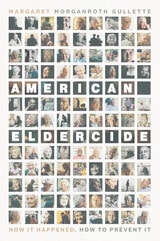
cover of American Eldercide: How It Happened, How to Prevent It

American Eldercide

How It Happened, How to Prevent It

Margaret Morganroth Gullette

University of Chicago Press, 2024

A bracing spotlight on the avoidable causes of the COVID-19 Eldercide in the United States.

Twenty percent of the Americans who have died of COVID since 2020 have been older and disabled adults residing in nursing homes—even though they make up fewer than 1 percent of the US population. Something about this catastrophic loss of life in government-monitored facilities has never added up.

Until now. In American Eldercide, activist and scholar Margaret Morganroth Gullette investigates this tragic public health crisis with a passionate voice and razor-sharp attention to detail, showing us that nothing about it was inevitable. By unpacking the decisions that led to discrimination against nursing home residents, revealing how governments, doctors, and media reinforced ageist or ableist biases, and collecting the previously little-heard voices of the residents who survived, Gullette helps us understand the workings of what she persuasively calls an eldercide.

Gullette argues that it was our collective indifference, fueled by the heightened ageism of the COVID-19 era, that prematurely killed this vulnerable population. Compounding that deadly indifference is our own panic about aging and a social bias in favor of youth-based decisions about lifesaving care. The compassion this country failed to muster for the residents of our nursing facilities motivated Gullette to pen an act of remembrance, issuing a call for pro-aging changes in policy and culture that would improve long-term care for everyone.

[more]
cover of Determined Survivors

Determined Survivors

Janice A. Smithers

Rutgers University Press, 1985

Community Life Among the Urban Elderly
[more]
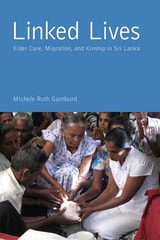
cover of Linked Lives: Elder Care, Migration, and Kinship in Sri Lanka

Linked Lives

Elder Care, Migration, and Kinship in Sri Lanka

Michele Ruth Gamburd

Rutgers University Press, 2021

When youth shake off their rural roots and middle-aged people migrate for economic opportunities, what happens to the grandparents left at home? Linked Lives provides readers with intimate glimpses into homes in a Sri Lankan Buddhist village, where elders wisely use their moral authority and their control over valuable property to assure that they receive both physical and spiritual care when they need it. The care work that grandparents do for grandchildren allows labor migration and contributes to the overall well-being of the extended family. The book considers the efforts migrant workers make to build and buy houses and the ways those rooms and walls constrain social activities. It outlines the strategies elders employ to age in place, and the alternatives they face in local old folks’ homes. Based on ethnographic work done over a decade, Michele Gamburd shows how elders face the challenges of a rapidly globalizing world.
[more]
cover of Long-Term Care around the World

Long-Term Care around the World

Edited by Jonathan Gruber and Kathleen McGarry

University of Chicago Press, 2025

A comparative analysis of both formal and informal long-term care in ten of the world’s wealthiest countries.

Nations throughout the world are in the midst of an enormous demographic transition, with life expectancy increasing and fertility falling, leading to a rapidly aging population and critical implications for long-term care around the world. This volume documents and compares long-term care programs in ten wealthy countries.

Analyses of survey data and government statistics show that the costs of long-term care are beyond the financial means of a large fraction of the elderly population in most countries, particularly the oldest and most disabled. As a result, public systems bear most of the cost of formal long-term care, such as care in an institution or paid home care. Most countries spend more on nursing homes than on home care, but this relationship varies widely as does the mix of care needs and resources used to define eligibility for public funding. At the same time, most care is provided informally through family or unpaid caregivers. The costs of informal care, including the foregone earnings of caregivers, are estimated to account for at least one-third of all long-term care spending in every country. Thus, any estimate of the social costs of long-term care must account for the implicit costs of informal care.

[more]
cover of Memory Care: Essays on Forgetting

Memory Care

Essays on Forgetting

Jennifer C. Nash

Duke University Press, 2027
Memory Care traces a daughter’s relentless search for a version of her family that she can bear to remember. Jennifer C. Nash travels across the nation in a quest to find memories of the person her mother was before Alzheimer’s began to claim her mind. Nash is consumed by the desire to remember and record, to find ways to care for her mother’s memories and her own, as imperfect as those preservations may be. In doing so, she contemplates the loss of place that comes through the dispossession, gentrification, and migration she and her ancestors have been forced to navigate. Her essays explore the slow losses that illness and antiblackness embed in everyday life and the freedom that can be found in forgetting. Speaking to universal pains in the context of black experience, Memory Care is a moving and personal rumination on the many forms of grief that memories carry with them, why we hold onto them, and when to let them go.
[more]
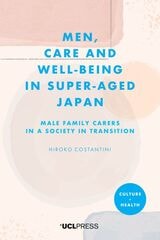
cover of Men, Care and Well-being in Super-aged Japan: Male Family Carers in a Society in Transition

Men, Care and Well-being in Super-aged Japan

Male Family Carers in a Society in Transition

Hiroko Costantini

University College London, 2026

A study of well-being and care within the evolving Japanese family context, with a focus on the men who care for older family members. 

Moving beyond the predominant focus on men in the workplace, Men, Care and Well-being in Super-aged Japan offers an innovative perspective on men’s well-being through their involvement in caring for older family members. Focusing on super-aged Japanese society, the book provides a valuable way to understand key social challenges relevant to countries on the cusp of an aging society. The book traces a shift away from the traditional family structures, highlighting how this transformation has reshaped men's roles within the family, and the increasingly important role of sons-in-law in extended family relations. 

[more]
cover of My Mother's Hip: Lessons From The World Of Eldercare

My Mother's Hip

Lessons From The World Of Eldercare

Luisa Margolies

Temple University Press, 2004
Some 400,000 hip fractures occur every year, the vast majority among the elderly; all too often these fractures are associated with death or severe disability. After her mother's double hip fracture, Luisa Margolies immersed herself in identifying and coordinating the services and professionals needed to provide critical care for an elderly person. She soon realized that the American medical system is ill prepared to deal with the long-term care needs of our graying society. The heart of My Mother's Hip is taken up with the author's day-to-day observations as her mother's condition worsened, then improved only to worsen again, while her father became increasingly anxious and disoriented. As both a devoted daughter and a skilled anthropologist, Margolies vividly renders her interactions with physicians, nurses, hospital workers, nursing home administrators, the Medicare bureaucracy, home care providers, and her parents. In the Lessons chapter that follows each episode, she discusses in a broader context the weighty decisions that adult children must make on their parents' behalf and the emotional toll their responsibility takes. Here she addresses the complex practical issues that commonly arise in such situations: understanding the consequences of hip fracture and its treatment, preparing health care proxies and advanced directives, enabling elders to remain at home, and the heartbreaking dilemma of prolonging life. Like many adult children, Margolies learned her lessons about eldercare in the midst of crises. This book is intended to ease the information-gathering and decision-making processes for others involved in eldercare.
[more]
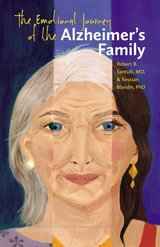
cover of The Emotional Journey of the Alzheimer's Family

The Emotional Journey of the Alzheimer's Family

Robert B. Santulli and Kesstan Blandin

Dartmouth College Press, 2015
Alzheimer’s disease is a growing public health crisis. According to the Alzheimer’s Association, there are 5.4 million victims of this disease; by 2050, there will be close to 15 million people who suffer from this debilitating disorder of memory, thinking, personality, and functioning. The disease profoundly affects immediate family members, close friends, and neighbors. These people—the Alzheimer’s family—undergo tremendous psychological and emotional change as they witness the cruel and relentless progression of the disease in their loved one. Incorporating over thirty years of experience with Alzheimer’s patients and their families with current medical knowledge, the authors chart the complex emotional journey of the Alzheimer’s family from the onset of the disease through the death of the loved one. They discuss the anger that rises in the face of discordant views of the disease, the defenses that emerge when family members are unwilling to accept a dementia diagnosis, and the common emotions of anxiety, guilt, anger, and shame. They focus especially on grief as the core response to losing a loved one to dementia, and describe the difficult processes of adaptation and acceptance, which lead to personal growth. Final chapters emphasize the importance of establishing a care community and how to understand and cope with personal stress. This volume will be useful to medical professionals and ordinary people close to or caring for a person with dementia.
[more]
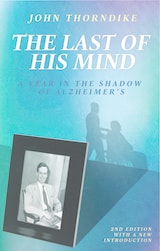
cover of The Last of His Mind, Second Edition: A Year in the Shadow of Alzheimer’s

The Last of His Mind, Second Edition

A Year in the Shadow of Alzheimer’s

John Thorndike

Ohio University Press, 2021
The second, expanded edition of this acclaimed memoir by an Alzheimer’s caregiver living with his father during his final year includes a new introduction that illustrates the immense toll of the disease, important lessons from the author’s experience, and a readers' guide. Joe Thorndike was managing editor of Life at the height of its popularity immediately following World War II. He was the founder of American Heritage and Horizon magazines, the author of three books, and the editor of a dozen more. But at age ninety-two, in the space of six months he stopped reading or writing or carrying on detailed conversations. He could no longer tell time or make a phone call. He was convinced that the governor of Massachusetts had come to visit and was in the refrigerator. Over six million Americans suffer from Alzheimer’s, and like many of them, Joe Thorndike’s one great desire was to remain in his own house. To honor his wish, his son John left his own home and moved into his father’s upstairs bedroom on Cape Cod. For a year, in a house filled with file cabinets, photos, and letters, John explored his father’s mind, his parents’ divorce, and his mother’s secrets. The Last of His Mind is the bittersweet account of a son’s final year with his father and a candid portrait of an implacable disease. It’s the ordeal of Alzheimer’s that draws father and son close, closer than they have been since John was a boy. At the end, when Joe’s heart stops beating, John’s hand is on his chest, and a story of painful decline has become a portrait of deep family ties, caregiving, and love.
[more]
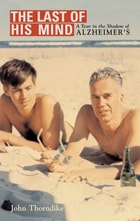
cover of The Last of His Mind: A Year in the Shadow of Alzheimer’s

The Last of His Mind

A Year in the Shadow of Alzheimer’s

John Thorndike

Ohio University Press, 2011

NEW EDITIONS AVAILABLE: Paperback ISBN 978–0804012362 / Electronic ISBN 978–0804041201 Joe Thorndike was managing editor of Life at the height of its popularity immediately following World War II. He was the founder of American Heritage and Horizon magazines, the author of three books, and the editor of a dozen more. But at age 92, in the space of six months he stopped reading or writing or carrying on detailed conversations. He could no longer tell time or make a phone call. He was convinced that the governor of Massachusetts had come to visit and was in the refrigerator. Five million Americans suffer from Alzheimer’s, and like many of them, Joe Thorndike’s one great desire was to remain in his own house. To honor his wish, his son John left his own home and moved into his father’s upstairs bedroom on Cape Cod. For a year, in a house filled with file cabinets, photos, and letters, John explored his father’s mind, his parents’ divorce, and his mother’s secrets. The Last of His Mind is the bittersweet account of a son’s final year with his father, and a candid portrait of an implacable disease. It’s the ordeal of Alzheimer’s that draws father and son close, closer than they have been since John was a boy. At the end, when Joe’s heart stops beating, John’s hand is on his chest, and a story of painful decline has become a portrait of deep family ties, caregiving, and love.
[more]
cover of Through Japanese Eyes: Thirty Years of Studying Aging in America

Through Japanese Eyes

Thirty Years of Studying Aging in America

Yohko Tsuji

Rutgers University Press, 2021

In Through Japanese Eyes, based on her thirty-year research at a senior center in upstate New York, anthropologist Yohko Tsuji describes old age in America from a cross-cultural perspective. Comparing aging in America and in her native Japan, she discovers that notable differences in the panhuman experience of aging are rooted in cultural differences between these two countries, and that Americans have strongly negative attitudes toward aging because it represents the antithesis of cherished American values, especially independence. Tsuji reveals that American culture, despite its seeming lack of guidance for those aging, plays a pivotal role in elders’ lives, simultaneously assisting and constraining them. Furthermore, the author’s lengthy period of research illustrates major changes in her interlocutors’ lives, incorporating their declines and death, and significant shifts in the culture of aging in American society as Tsuji herself gets to know American culture and grows into senescence herself.

Through Japanese Eyes offers an ethnography of aging in America from a cross-cultural perspective based on a lengthy period of research. It illustrates how older Americans cope with the gap between the ideal (e.g., independence) and the real (e.g., needing assistance) of growing older, and the changes the author observed over thirty years of research.
 
[more]
cover of Welcome to Wherever We Are: A Memoir of Family, Caregiving, and Redemption

Welcome to Wherever We Are

A Memoir of Family, Caregiving, and Redemption

Deborah J. Cohan

Rutgers University Press, 2020

Winner of the 2022 Memoir Prize for Books - Caregiving category​
ESS Public Sociology Award​
Recommended Book in Domestic Violence by DomesticShelters.org

How do you go about caregiving for an ill and elderly parent with a lifelong history of abuse and control, intertwined with expressions of intense love and adoration? How do you reconcile the resulting ambivalence, fear, and anger?
 
Welcome to Wherever We Are is a meditation on what we hold onto, what we let go of, how we remember others and ultimately how we’re remembered. Deborah Cohan shares her story of caring for her father, a man who was simultaneously loud, gentle, loving and cruel and whose brilliant career as an advertising executive included creating slogans like “Hey, how ‘bout a nice Hawaiian punch?” Wrestling with emotional extremes that characterize abusive relationships, Cohan shows how she navigated life with a man who was at once generous and affectionate, creating magical coat pockets filled with chocolate kisses when she was a little girl, yet who was also prone to searing, vicious remarks like “You’d make my life easier if you’d commit suicide.”
 
In this gripping memoir, Cohan tells her unique personal story while also weaving in her expertise as a sociologist and domestic abuse counselor to address broader questions related to marriage, violence, divorce, only children, intimacy and loss. A story most of us can relate to as we reckon with past and future choices against the backdrop of complicated family dynamics, Welcome to Wherever We Are is about how we might come to live our own lives better amidst unpredictable changes through grief and healing.

Questions for Discussion (https://d3tto5i5w9ogdd.cloudfront.net/wp-content/uploads/2020/05/11140346/Cohan_Discussion.docx)

 
[more]
cover of Your Own Will Leave You: My Mother's Dementia

Your Own Will Leave You

My Mother's Dementia

Manash Firaq Bhattacharjee

Temple University Press, 2026

“Memory’s barriers are without barriers,” writes Manash Firaq Bhattacharjee in the opening of his touching and thoughtful memoir, Your Own Will Leave You. Bhattacharjee eloquently reflects on family, care, and memory as he chronicles his experiences with his elderly mother who suffers from dementia. Working from his journal, Bhattacharjee ruminates on the ways we understand dementia and memory as well as end-of-life issues. He is not only a loving son, but also an Indian with a universal sensibility who turns to ancient and contemporary thinkers that inform his perspective.

Bhattacharjee focuses on the last months of his mother’s life and her changing demeanor—her stubbornness, humor, and vulnerability. He traces her interactions with family members, neighbors, and caregivers, while also addressing burden-of-care issues. Recounting his moments of grief and guilt with candor, Bhattacharjee also re-evaluates how Western culture prejudices popular perceptions of mental illness.

Lyrical, penetrating, occasionally aphoristic, and full of insights, Your Own Will Leave You is a heartfelt, and at times heartbreaking, memoir and a warm elegy for the author’s late mother. 

[more]