Results by title
5 books match the query 'Electronic'

Analyzing NES Music
Harmony, Form, and the Art of Technological ConstraintAndrew Schartmann
Intellect Books, 2025
Faced with severe technological constraints on system memory, composers of the Nintendo Entertainment System (NES) sought ways to disguise repetition in music that repeats extensively. Their efforts gave rise to a set of compositional techniques for creating the illusion of variety.
This book distills these techniques into a theory of harmony and form for the analysis of NES music. It then uses this theory to analyze five landmark scores of the NES era: Super Mario Bros., Dragon Warrior, Metroid, Mega Man 2, and Silver Surfer. The book also includes a detailed description of the NES hardware and its attendant constraints, highlighting the ever-evolving dialogue between technology, commercial demand, and artistic sensibility that characterizes video game music of the 1980s and 1990s.
Life and Death on the New York Dance Floor, 1980–1983
Tim Lawrence
Duke University Press, 2016
Pink Noises
Women on Electronic Music and SoundTara Rodgers
Duke University Press, 2010
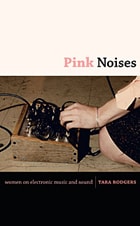
Contemporary electronic music practices are illuminated through the stories of women artists of different generations and cultural backgrounds. They include the creators of ambient soundscapes, “performance novels,” sound sculptures, and custom software, as well as the developer of the Deep Listening philosophy and the founders of the Liquid Sound Lounge radio show and the monthly Basement Bhangra parties in New York. These and many other artists open up about topics such as their conflicted relationships to formal music training and mainstream media representations of women in electronic music. They discuss using sound to work creatively with structures of time and space, and voice and language; challenge distinctions of nature and culture; question norms of technological practice; and balance their needs for productive solitude with collaboration and community. Whether designing and building modular synthesizers with analog circuits or performing with a wearable apparatus that translates muscle movements into electronic sound, these artists expand notions of who and what counts in matters of invention, production, and noisemaking. Pink Noises is a powerful testimony to the presence and vitality of women in electronic music cultures, and to the relevance of sound to feminist concerns.
Interviewees: Maria Chavez, Beth Coleman (M. Singe), Antye Greie (AGF), Jeannie Hopper, Bevin Kelley (Blevin Blectum), Christina Kubisch, Le Tigre, Annea Lockwood, Giulia Loli (DJ Mutamassik), Rekha Malhotra (DJ Rekha), Riz Maslen (Neotropic), Kaffe Matthews, Susan Morabito, Ikue Mori, Pauline Oliveros, Pamela Z, Chantal Passamonte (Mira Calix), Maggi Payne, Eliane Radigue, Jessica Rylan, Carla Scaletti, Laetitia Sonami, Bev Stanton (Arthur Loves Plastic), Keiko Uenishi (o.blaat)
Rave On
Global Adventures in Electronic Dance MusicMatthew Collin
University of Chicago Press, 2018
Electronic dance music has been a vital force for more than three decades now, and has undergone transformation upon transformation as it has taken over the world. In this searching, lyrical account of dance music culture worldwide, Matthew Collin takes stock of its highest highs and lowest lows across its global trajectory. Through firsthand reportage and interviews with clubbers and DJs, Collin documents the itinerant musical form from its underground beginnings in New York, Chicago, and Detroit in the 1980s, to its explosions in Ibiza and Berlin, to today’s mainstream music scenes in new frontiers like Las Vegas, Shanghai, and Dubai. Collin shows how its dizzying array of genres—from house, techno, and garage to drum and bass, dubstep, and psytrance—have given voice to locally specific struggles. For so many people in so many different places, electronic dance music has been caught up in the search for free cultural space: forming the soundtrack to liberation for South African youth after Apartheid; inspiring a psychedelic party culture in Israel; offering fleeting escape from—and at times into—corporatization in China; and even undergirding a veritable “independent republic” in a politically contested slice of the former Soviet Union.
Full of admiration for the possibilities the music has opened up all over the world, Collin also unflinchingly probes where this utopianism has fallen short, whether the culture maintains its liberating possibilities today, and where it might go in the future.
Tomorrow Is the Question
New Directions in Experimental Music StudiesEdited by Benjamin Piekut
University of Michigan Press, 2014