Results by title
3 books match the query 'Ellis, Richard'

Global Perspectives on the United States
Pro-Americanism, Anti-Americanism, and the Discourses BetweenEdited by Virginia R. Dominguez and Jane C. Desmond
University of Illinois Press, 2017
This daring collaborative effort showcases dialogues between international scholars engaged with the United States from abroad. The writers investigate the analytic methods and choices that label certain talk, images, behaviors, and allusions as "American" and how to read the data on such material. The editors present the essays in pairs that overlap in theme or region. Each author subsequently comments on the other's work. A third scholar or team of scholars from a different discipline or geographic location then provides another level of analysis. Contributors: Andrzej Antoszek, Sophia Balakian, Zsófia Bán, Sabine Bröck, Ian Condry, Kate Delaney, Jane C. Desmond, Virginia R. Dominguez, Ira Dworkin, Richard Ellis, Guillermo Ibarra, Seyed Mohammad Marandi, Giorgio Mariani, Ana Mauad, Loes Nas, Edward Schatz, Manar Shorbagy, Kristin Solli, Amy Spellacy, and Michael Titlestad.
[more]

Speaking to the People
The Rhetorical Presidency in Historical PerspectiveRichard Ellis
University of Massachusetts Press, 1998
Americans today expect their president to speak directly to them on the issues of the day—to address their concerns, to ask for their support, even to feel their pain. Yet, as the essays in this volume make clear, this was not always the case. During the early years of the republic, such behavior would have been deemed beneath the president's office, undignified at best, demagogic at worst. How, then, did the practice of "speaking to the people" evolve from the icy reserve of George Washington to the effusive empathy of Bill Clinton? This book explores how the "rhetorical presidency" became a central feature of American politics. Beginning with a fresh look at the framing of the Constitution, the essays examine the role of rhetoric in a variety of nineteenth-century presidencies, as well as in the crucial turn-of-the-century presidencies of William McKinley, Theodore Roosevelt, and Woodrow Wilson. Viewed against this historical backdrop, the "modern" presidencies of Franklin Roosevelt and his successors appear less a break with the past than a culmination of developments in popular leadership and rhetorical practice that began more than a century before.
[more]
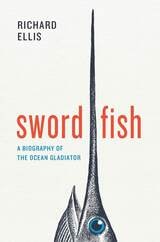
Swordfish
A Biography of the Ocean GladiatorRichard Ellis
University of Chicago Press, 2013
A perfect fish in the evolutionary sense, the broadbill swordfish derives its name from its distinctive bill—much longer and wider than the bill of any other billfish—which is flattened into the sword we all recognize. And though the majesty and allure of this warrior fish has commanded much attention—from adventurous sportfishers eager to land one to ravenous diners eager to taste one—no one has yet been bold enough to truly take on the swordfish as a biographer. Who better to do so than Richard Ellis, a master of marine natural history? Swordfish: A Biography of the Ocean Gladiator is his masterly ode to this mighty fighter.
The swordfish, whose scientific name means “gladiator,” can take on anyone and anything, including ships, boats, sharks, submarines, divers, and whales, and in this book Ellis regales us with tales of its vitality and strength. Ellis makes it easy to understand why it has inspired so many to take up the challenge of epic sportfishing battles as well as the longline fishing expeditions recounted by writers such as Linda Greenlaw and Sebastian Junger. Ellis shows us how the bill is used for defense—contrary to popular opinion it is not used to spear prey, but to slash and debilitate, like a skillful saber fencer. Swordfish, he explains, hunt at the surface as well as thousands of feet down in the depths, and like tuna and some sharks, have an unusual circulatory system that gives them a significant advantage over their prey, no matter the depth in which they hunt. Their adaptability enables them to swim in waters the world over—tropical, temperate, and sometimes cold—and the largest ever caught on rod and reel was landed in Chile in 1953, weighing in at 1,182 pounds (and this heavyweight fighter, like all the largest swordfish, was a female).
Ellis’s detailed and fascinating, fact-filled biography takes us behind the swordfish’s huge, cornflower-blue eyes and provides a complete history of the fish from prehistoric fossils to its present-day endangerment, as our taste for swordfish has had a drastic effect on their population the world over. Throughout, the book is graced with many of Ellis’s own drawings and paintings, which capture the allure of the fish and bring its splendor and power to life for armchair fishermen and landlocked readers alike.
[more]