Results by title
3 books match the query 'Emperor of Rome'
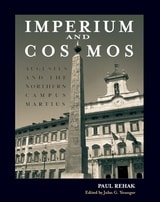
Imperium and Cosmos
Augustus and the Northern Campus MartiusPaul Rehak; Edited by John G. Younger
University of Wisconsin Press, 2006
Rehak closely examines the artistic imagery on these monuments, providing numerous illustrations, tables, and charts. In an analysis firmly contextualized by a thorough discussion of the earlier models and motifs that inspired these Augustan monuments, Rehak shows how the princeps used these on such an unprecedented scale as to truly elevate himself above the common citizen.
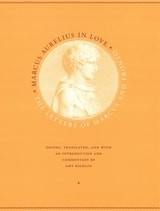
Marcus Aurelius in Love
Marcus Aurelius and Marcus Cornelius Fronto
University of Chicago Press, 2007
In 1815 a manuscript containing one of the long-lost treasures of antiquity was discovered—the letters of Marcus Cornelius Fronto, reputed to have been one of the greatest Roman orators. But this find disappointed many nineteenth-century readers, who had hoped for the letters to convey all of the political drama of Cicero’s. That the collection included passionate love letters between Fronto and the future emperor Marcus Aurelius was politely ignored—or concealed. And for almost two hundred years these letters have lain hidden in plain sight.
Marcus Aurelius in Love rescues these letters from obscurity and returns them to the public eye. The story of Marcus and Fronto began in 139 CE, when Fronto was selected to instruct Marcus in rhetoric. Marcus was eighteen then and by all appearances the pupil and teacher fell in love. Spanning the years in which the relationship flowered and died, these are the only love letters to survive from antiquity—homoerotic or otherwise. With a translation that reproduces the effusive, slangy style of the young prince and the rhetorical flourishes of his master, the letters between Marcus and Fronto will rightfully be reconsidered as key documents in the study of the history of sexuality and classics.
Reading after Actium
Vergil's Georgics, Octavian, and RomeChristopher Nappa
University of Michigan Press, 2005
Reading after Actium is a study of Vergil's Georgics, a didactic poem ostensibly about farming but in fact a brilliant exercise challenging readers to develop a broader perspective on the basic problems and the dangers of human life. Octavian is treated as one of the poet's students and given the opportunity to learn lessons in handling power, in controlling Rome's vast resources, and in preventing the bloody cycle of civil war from beginning again. Most of all the Georgics asks Octavian to consider what is involved in assuming godlike power over his fellow citizens.
Reading after Actium provides an introduction to the history of scholarship surrounding the Georgics and the political questions surrounding Octavian and his career. Nappa gives a book by book analysis of the entire poem, and a conclusion that draws together the themes of the whole. Reading after Actium will appeal to students and critics of Vergil and other Augustan Literature as well as those of didactic poetry and its traditions. Students of Roman history and politics should read this as well.
Christopher Nappa is Assistant Professor of Classics at the University of Minnesota.