Results by title
14 books match the query 'Empiricism'
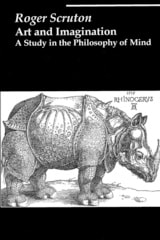
Art and Imagination
A Study in the Philosophy of MindRoger Scruton
St. Augustine's Press, 2015
Scruton examines and rejects various attempts made by recent philosophers to demarcate the realm of aesthetic judgment. He argues that the logic of aesthetic judgment does not suffice to distinguish what is “aesthetic” from what is not, for aesthetic judgments must be explained in terms of the conditions for their acceptance rather than the conditions for their truth. These “acceptance conditions” can be understood only if we first know what is meant by aesthetic experience. This theory attempts to show how aesthetic experience can be regarded as autonomous, even though it is intimately connected with ordinary experience, and is indeed dependent on ordinary experience for its full description.
Dewey's Empirical Theory of Knowledge and Reality
John R. Shook
Vanderbilt University Press, 2000
that Dewey's metaphysical empiricism remained more indebted to Kant and Hegel than is commonly supposed;
that Dewey owed more to the influence of Wundt than is commonly believed;
that the influence of Peirce and James was not as significant for the development of Dewey's theories of mind and truth as has been argued in the past;
and that Dewey's pragmatic theory of knowledge never really abandoned idealism.
Shook's exposition of the unity of Dewey's thought challenges a large scholarly industry devoted to suppressing or explaining away the consistency between Dewey's early thought and his later work. In every respect, Dewey's Empirical Theory of Knowledge and Reality is a provocative and engaging study that will occupy a unique niche in this field. It is certain to stimulate discussion and controversy, forcing Dewey traditionalists out of habitual modes of thought and transforming our conventional understanding of the development of classical American philosophy.
Difference and Givenness
Deleuze's Transcendental Empiricism and the Ontology of ImmanenceLevi R Bryant
Northwestern University Press, 2008
From one end of his philosophical work to the other, Gilles Deleuze consistently described his position as a transcendental empiricism. But just what is transcendental about Deleuze’s transcendental empiricism? And how does his position fit with the traditional empiricism articulated by Hume? In Difference and Givenness, Levi Bryant addresses these long-neglected questions so critical to an understanding of Deleuze’s thinking. Through a close examination of Deleuze’s independent work--focusing especially on Difference and Repetition--as well as his engagement with thinkers such as Kant, Maïmon, Bergson, and Simondon, Bryant sets out to unearth Deleuze’s transcendental empiricism and to show how it differs from transcendental idealism, absolute idealism, and traditional empiricism.
What emerges from these efforts is a metaphysics that strives to articulate the conditions for real existence, capable of accounting for the individual itself without falling into conceptual or essentialist abstraction. In Bryant’s analysis, Deleuze’s metaphysics articulates an account of being as process or creative individuation based on difference, as well as a challenging critique--and explanation--of essentialist substance ontologies. A clear and powerful discussion of how Deleuze’s project relates to two of the most influential strains in the history of philosophy, this book will prove essential to anyone seeking to understand Deleuze’s thought and its specific contribution to metaphysics and epistemology.
Experience and Empiricism
Hegel, Hume, and the Early DeleuzeRussell Ford
Northwestern University Press, 2023
A clarifying examination of Gilles Deleuze’s first book shows how he would later transform the problem of immanence into the problem of difference
Despite the wide reception Gilles Deleuze has received across the humanities, research on his early work has remained scant. Experience and Empiricism remedies that gap with a detailed study of Deleuze’s first book, Empiricism and Subjectivity, which is devoted to the philosophical project of David Hume. Russell Ford argues that this work is poorly understood when read simply as a stand-alone study on Hume. Its significance only becomes apparent within the context of a larger problematic that dominated, and continues to inform, modern European philosophy: the conceptual constitution of a purely immanent account of existence. While the importance of this debate is recognized in contemporary scholarship, its genealogy—including Deleuze’s place within it—has been underappreciated. This book shows how Deleuze directly engages in an ongoing debate between his teachers Jean Wahl and Jean Hyppolite over experience and empiricism, an intervention that restages the famous encounter between rationalism and empiricism that yielded Kant’s critical philosophy. What, Deleuze effectively asks, might have happened had Hume been the one roused from his empirical dogmatic slumber by the rationalist challenge of Kant?
Images of Science
Essays on Realism and EmpiricismEdited by Paul M. Churchland and Clifford A. Hooker
University of Chicago Press, 1985
Induction
Socrates to PopperJohn P. McCaskey
University of Chicago Press, 2026
Charts the historical development of induction and challenges contemporary understandings of the concept and its foundations.
The problem of induction continues to vex and beguile. How can we reliably draw universal conclusions from limited observations? In Induction, John P. McCaskey steps back and rethinks long-held assumptions, tracing the ideas of Socrates and Aristotle in ancient Greece to those of Karl Popper in the twentieth century.
This comprehensive account does not look at how people of the past answered the questions we ask today. Instead, it asks: How did they understand the very meaning of the words epagōgē in Greek, inductio in Latin, istiqrāʾ in Arabic, Induktion in German, and induction in English? McCaskey’s careful treatment of texts in their context dispels many long-standing myths, and importantly, he introduces us to a now-unfamiliar way to think about what induction is—a way in which there simply is no “problem of induction.” McCaskey reveals that the problem was one of our own making and that an accurate history may help us recover old ways—and thereby introduce new ways—to think about the whole idea. A must-read for philosophers, historians of ideas, and anyone interested in the scientific method.
Intermedialities
Political Theory and Cinematic ExperienceDavide Panagia
Northwestern University Press, 2024
Shining new light on our understanding of cinema’s ways of political thinking, Intermedialities: Political Theory and Cinematic Experience puts modern political theory in conversation with the philosophy of film. Davide Panagia argues that there are no natural laws of association that can guarantee a template for democratic participation, as democracy is predicated not on stabilizing foundations but rather on the formation of expansive collectivities and institutions that are responsive to alterability. Instead, democracy requires a relational ontology, one that he elucidates by turning to philosophers of film like Stanley Cavell, Gilles Deleuze, Miriam Hansen, and Jean-Luc Godard—all of whom have articulated a political aesthetic of cinematic experience that is at once aspectual and compositional. Panagia reads these thinkers alongside a countertradition of modern political thought, represented by David Hume, Ludwig Wittgenstein, and Gilbert Simondon. His articulation of cinematic experience thus allows for a political aesthetic that is rooted in the migratory realities of undetermined relations.
Realism's Empire
Empiricism and Enchantment in the Nineteenth-Century NovelGeoffrey Baker
The Ohio State University Press, 2009
The Emperor’s New Epistemology
Music, Empire, and Empiricism in Early Modern ChinaLester Hu
University of Chicago Press, 2027
An innovative account of listening and empire-building in 17th- and 18th-century China.
The Emperor’s New Epistemology explores how listening shaped knowledge and empire-building in seventeenth- and eighteenth-century China. As the Manchu dynasty expanded deep into Inner Asian territories deemed foreign by the majority-Han population, the Qing Empire’s musical culture encompassed the sounds of Mongols, Uyghurs, and Tibetans, as well as Western music brought by Jesuit and other Christian missionaries. Lester Hu reveals that this diversity transformed not only Qing court culture but the very grounds on which knowledge and power could be established.
In one revealing episode from 1692, the Kangxi Emperor (1654–1722) misinterpreted a key term of Classical Chinese music after studying European music with the Jesuits. Hu situates this anecdote within the political, social, and epistemic shifts that transformed late-imperial China. As Hu shows, listening was an instrument of Qing imperial authority: Knowledge about music, language, and even the universe could only be verified through the emperor’s ears. Furthermore, listening facilitated new theories of empirical knowledge, which both lent themselves to Qing-imperial ideology and generated new epistemic tensions. By exploring their echoes in similar shifts in early modern Europe, Hu’s book brings a global perspective to the study of music in the early modern world and reconsiders the transcendental ground on which such comparative and intercultural knowledge is possible.
The English Virtuoso
Art, Medicine, and Antiquarianism in the Age of EmpiricismCraig Ashley Hanson
University of Chicago Press, 2009
At the heart of this profoundly interdisciplinary study lies the Royal Society of London for the Improvement of Natural Knowledge, which from its founding in 1660 served as the major professional organization for London’s leading physicians, many of them prominent virtuosi. Craig Ashley Hanson reveals that a vital art audience emerged from the Royal Society—whose members assembled many of the period’s most important nonaristocratic collections—a century before most accounts date the establishment of an institutional base for the arts in England. Unearthing the fascinating stories of an impressive cast of characters, Hanson establishes a new foundation for understanding both the relationship between British art and science and the artistic accomplishments of the late eighteenth and nineteenth centuries.
The Ironic Hume
By John Valdimir Price
University of Texas Press, 1965
Many of the seemingly bland assertions and bald statements of the eighteenth-century philosopher David Hume contain more than the mind immediately perceives. Author John Valdimir Price contends that an understanding of Hume's writings cannot be separated from an understanding of his life. By examining the works of Hume, Price shows the way in which an ironic way of seeing events and an ironic mode of expression permeated Hume's life and writings.
Price examines Hume's irony as it is exhibited in letters to his friends and in his writings concerned with morality, people, philosophy, politics, history, and above all religion. Hume's opinions on life in general are stated in works ranging from the Treatise of Human Nature and the Essays, Moral and Political, through the Enquiry concerning Human Understanding and the Enquiry concerning Principles of Morals, to the Dialogue and Four Dissertations of his maturity.
Price feels that Hume's recognition of the ironic in life came about from his perception of the disproportion between human hopes and human accomplishments. The rhetorical consequences of applying reason to a duality in human nature creates the ironic mode. Hume conceived man's opposing tendencies as his willingness to commit himself orally to a concept, a dogma, an idea, or an ideology, and his unwillingness to involve himself in the logical and rhetorical implications of articulating those principles.
Hume's use of the ironic mode in his writings provides him with a means of challenging certain dogmatic assumptions common to thought, particularly to traditional religious thought; it acts as a mask for his sceptical intentions, and it is an implied criticism of many ideas. In his political writing, Hume frequently implied that the question under argument was almost too ridiculous to deserve serious treatment. This tactic was effectively employed in the Account of Stewart, in which Hume came to the defense of a friend.
In his most profitable venture, the History of England, Hume not only used irony to advantage, but developed a new approach to the writing of history—the use of narrative. He presented history as a series of more or less connected events, not as a series of "right" or "wrong" attitudes.
The author believes that Hume's initial religious scepticism, combined with the predominant satiric-ironic mode in the literature of his time, led him to seek irony as a method of self expression. This scepticism, which permeated all of Hume's attitudes toward life, reached its most complete expression in the Dialogues concerning Natural Religion, which accepted reason as its guide, but also accepted experience as its master.
The Tacit Dimension
Michael Polanyi
University of Chicago Press, 2009
A classic work in the philosophy of science that changed how we think about knowledge itself
“I shall reconsider human knowledge by starting from the fact that we can know more than we can tell,” writes Michael Polanyi, whose work paved the way for the likes of Thomas Kuhn and Karl Popper. The Tacit Dimension argues that tacit knowledge—tradition, inherited practices, implied values, and prejudgments—is a crucial part of scientific knowledge. As relevant today as it was when it was first published, this volume challenges the assumption that skepticism, rather than established belief, lies at the heart of scientific discovery.
"The reissuing of this remarkable book give us a new opportunity to see how far-reaching—and foundational—Michael Polanyi's ideas are, on some of the age-old questions in philosophy."—Amartya Sen, from the Foreword
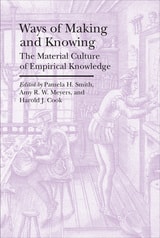
Ways of Making and Knowing
The Material Culture of Empirical KnowledgeEdited by Pamela H. Smith, Amy R. W. Meyers, and Harold J. Cook
Bard Graduate Center, 2017
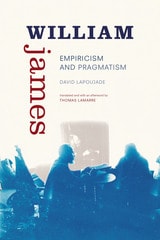
William James
Empiricism and PragmatismDavid Lapoujade
Duke University Press, 2020