Results by title
7 books match the query 'Enchantment'
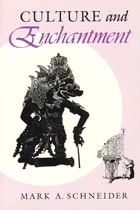
Culture and Enchantment
Mark A. Schneider
University of Chicago Press, 1993
For interpretive disciplines, Schneider suggests, meaning often behaves behaves as mysteriously as the apparitions pursued by centuries ago by natural philosophers. He demonstrates this using two case studies from anthropology: Clifford Geertz's description of Balinese cockfights and Yoruba statuary, and Claude Levi-Strauss's analyses of myths. These provide a basis for actively engaging disputes over the meaning and interpretation of culture.
Culture and Enchantment will appeal to an interdisciplinary audience in anthropology, sociology, history, history and sociology of science, culture studies, and literary theory. Schneider's provocative arguments will make this book a fulcrum in the continuing debate over the nature and prospects of cultural inquiry.
Horizons of Enchantment
Essays in the American ImaginaryLene M. Johannessen
Dartmouth College Press, 2011
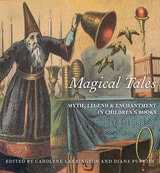
Magical Tales
Myth, Legend, and Enchantment in Children's BooksEdited by Carolyne Larrington and Diane Purkiss
Bodleian Library Publishing, 2013
Magical Tales traces the origin of the genre back through Norse mythology, Arthurian legend, and medieval literature. Drawing on manuscripts and rare books in the renowned collection of the Bodleian Library, the essays turn the spotlight on spell books; grimoires, or magical textbooks; and books of legend and myth whose themes writers like J. R. R. Tolkien and C. S. Lewis incorporated into their work, inspiring generations of writers that extend to the present day. In serving as a source of inspiration for later literary works, the contributors show, myths and legends have themselves been altered in interesting ways.
Richly illustrated, Magical Tales offers an enchanting take on the development of this wildly popular genre.
Realism's Empire
Empiricism and Enchantment in the Nineteenth-Century NovelGeoffrey Baker
The Ohio State University Press, 2009
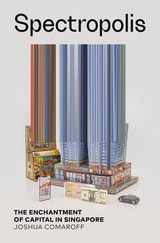
Spectropolis
The Enchantment of Capital in SingaporeJoshua Comaroff
University of Minnesota Press, 2025
How economic transformation and the spirit world collide in hypermodern Singapore
In Singapore, the financial center of Southeast Asia, hyperurbanization and commercial development exist alongside enduring belief in the economic power of ghosts: in their ability to control the flows of money and value and to determine the outcome of investments and wagers. Spectropolis explores the unlikely collusion of these two systems, demonstrating both the productive role of popular beliefs in the modern world and the surprising correlations between “late” capitalism and the workings of the spirit realm.
Detailing the logic and practices of Singapore’s ghost economy—from performing exorcisms on real estate development sites to offering money and commodities to the dead as a hedge against precarious real-world transactions—Joshua Comaroff shows how speculative finance, largely governed by chance and volatility, is understood via its inherently spectral qualities. Through the influence of Chinese Buddhist-Taoist thought, the movement of capital is placed under the sway of cosmology and geomancy, resulting in a built environment that is both technologically advanced and quite literally enchanted.
Based on detailed case studies and years of extensive fieldwork, Spectropolis argues for the power of popular belief systems to theorize contemporary socioeconomic conditions and to give form to collective affect as well as shared aspirations and anxieties. As Comaroff demonstrates, the uniquely all-consuming nature of Singapore’s tightly compressed urban economy is such that it may subsume even that which lies beyond the threshold of life itself.
Retail e-book files for this title are screen-reader friendly with images accompanied by short alt text and/or extended descriptions.
The Enchantment Of Reason
Pierre Schlag
Duke University Press, 1998
In examining the fierce resistance to questioning reason’s primacy, this renowned critic and professor of American law demonstrates how those who use and study the law perpetuate their own methodological blind spots. Claiming that reason has been endowed with a virtually mystical power to organize social life, Schlag unravels the seemingly rational world of judicial opinions, statutes, doctrines, and legal principles. In the process, he paints a shocking—and sure to be controversial—picture of the chaos and, indeed, violence of the American legal tradition.
This bold commentary on the irrationality of reason in American law and legal studies will interest not only legal scholars and philosophers but also serious thinkers across a broad disciplinary spectrum.
The Place of Enchantment
British Occultism and the Culture of the ModernAlex Owen
University of Chicago Press, 2004
In answering this question for the first time, The Place of Enchantment breaks new ground in its consideration of the role of occultism in British culture prior to World War I. Rescuing occultism from its status as an "irrational indulgence" and situating it at the center of British intellectual life, Owen argues that an involvement with the occult was a leitmotif of the intellectual avant-garde. Carefully placing a serious engagement with esotericism squarely alongside revolutionary understandings of rationality and consciousness, Owen demonstrates how a newly psychologized magic operated in conjunction with the developing patterns of modern life. She details such fascinating examples of occult practice as the sex magic of Aleister Crowley, the pharmacological experimentation of W. B. Yeats, and complex forms of astral clairvoyance as taught in secret and hierarchical magical societies like the Hermetic Order of the Golden Dawn.
Through a remarkable blend of theoretical discussion and intellectual history, Owen has produced a work that moves far beyond a consideration of occultists and their world. Bearing directly on our understanding of modernity, her conclusions will force us to rethink the place of the irrational in modern culture.