Results by title

6 books match the query 'Encounter'
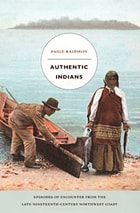
cover of Authentic Indians: Episodes of Encounter from the Late-Nineteenth-Century Northwest Coast

Authentic Indians

Episodes of Encounter from the Late-Nineteenth-Century Northwest Coast

Paige Raibmon

Duke University Press, 2005

In this innovative history, Paige Raibmon examines the political ramifications of ideas about “real Indians.” Focusing on the Northwest Coast in the late nineteenth century and early twentieth, she describes how government officials, missionaries, anthropologists, reformers, settlers, and tourists developed definitions of Indian authenticity based on such binaries as Indian versus White, traditional versus modern, and uncivilized versus civilized. They recognized as authentic only those expressions of “Indianness” that conformed to their limited definitions and reflected their sense of colonial legitimacy and racial superiority. Raibmon shows that Whites and Aboriginals were collaborators—albeit unequal ones—in the politics of authenticity. Non-Aboriginal people employed definitions of Indian culture that limited Aboriginal claims to resources, land, and sovereignty, while Aboriginals utilized those same definitions to access the social, political, and economic means necessary for their survival under colonialism.

Drawing on research in newspapers, magazines, agency and missionary records, memoirs, and diaries, Raibmon combines cultural and labor history. She looks at three historical episodes: the participation of a group of Kwakwaka’wakw from Vancouver in the 1893 World’s Columbian Exposition in Chicago; the work of migrant Aboriginal laborers in the hop fields of Puget Sound; and the legal efforts of Tlingit artist Rudolph Walton to have his mixed-race step-children admitted to the white public school in Sitka, Alaska. Together these episodes reveal the consequences of outsiders’ attempts to define authentic Aboriginal culture. Raibmon argues that Aboriginal culture is much more than the reproduction of rituals; it also lies in the means by which Aboriginal people generate new and meaningful ways of identifying their place in a changing modern environment.

[more]
cover of Encounter with Zen: writings on poetry and Zen

Encounter with Zen

writings on poetry and Zen

Lucien. Stryk

Ohio University Press, 1981
[more]
cover of Encounter with the Plumed Serpent: Drama and Power in the Heart of Mesoamerica

Encounter with the Plumed Serpent

Drama and Power in the Heart of Mesoamerica

Maarten Jansen

University Press of Colorado, 2007

The Mixtec, or the people of Ñuu Savi ('Nation of the Rain God'), one of the major civilizations of ancient Mesoamerica, made their home in the highlands of Oaxaca, where they resisted both Aztec military expansion and the Spanish conquest. In Encounter with the Plumed Serpent, two leading scholars present and interpret the sacred histories narrated in the Mixtec codices, the largest surviving collection of pre-Columbian manuscripts in existence. In these screenfold books, ancient painter-historians chronicled the politics of the Mixtec from approximately a.d. 900 to 1521, portraying the royal families, rituals, wars, alliances, and ideology of the times.

By analyzing and cross-referencing the codices, which have been fragmented and dispersed in far-flung archives, the authors attempt to reconstruct Mixtec history. Their synthesis here builds on long examination of the ancient manuscripts. Adding useful interpretation and commentary, Jansen and Pérez Jiménez synthesize the large body of surviving documents into the first unified narrative of Mixtec sacred history.

Archaeologists and other scholars as well as readers with an interest in Mesoamerican cultures will find this lavishly illustrated volume a compelling and fascinating history and a major step forward in knowledge of the Mixtec.

[more]
cover of Maimonides' Ethics: The Encounter of Philosophic and Religious Morality

Maimonides' Ethics

The Encounter of Philosophic and Religious Morality

Raymond L. Weiss

University of Chicago Press, 1991

In this book Raymond L. Weiss examines how a seminal Jewish thinker negotiates the philosophical conflict between Athens and Jerusalem in the crucial area of ethics. Maimonides, a master of both the classical and the biblical-rabbinic traditions, reconciled their differing views of morality primarily in the context of Jewish jurisprudence. Taking into consideration the entire corpus of Maimonides' writings, Weiss focuses on the ethical sections of the Commentary on the Mishnah and the Mishneh Torah, but also discusses the Guide of the Perplexed, the letters of Maimonides, and his medical works.

The gulf between classical philosophy and the Torah made the task of Maimonides extraordinarily difficult. Weiss shows that Maimonides subtly preserves the tension between those traditions while producing a practical accommodation between them. To explain how Maimonides was able to accomplish this twofold goal, Weiss takes seriously the multilevel character of Maimonides' works. Weiss interprets Maimonides as a heterodox thinker who, with utter integrity, faces the Law's encounter with philosophy and gives both the Torah and philosophy their due.
[more]
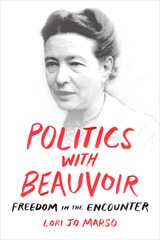
cover of Politics with Beauvoir: Freedom in the Encounter

Politics with Beauvoir

Freedom in the Encounter

Lori Jo Marso

Duke University Press, 2017
In Politics with Beauvoir Lori Jo Marso treats Simone de Beauvoir's feminist theory and practice as part of her political theory, arguing that freedom is Beauvoir's central concern and that this is best apprehended through Marso's notion of the encounter. Starting with Beauvoir's political encounters with several of her key contemporaries including Hannah Arendt, Robert Brasillach, Richard Wright, Frantz Fanon, and Violette Leduc, Marso also moves beyond historical context to stage encounters between Beauvoir and others such as Chantal Akerman, Lars von Trier, Rahel Varnhagen, Alison Bechdel, the Marquis de Sade, and Margarethe von Trotta. From intimate to historical, always affective though often fraught and divisive, Beauvoir's encounters, Marso shows, exemplify freedom as a shared, relational, collective practice. Politics with Beauvoir gives us a new Beauvoir and a new way of thinking about politics—as embodied and coalitional.
[more]
cover of Race, Religion, Region: Landscapes of Encounter in the American West

Race, Religion, Region

Landscapes of Encounter in the American West

Edited by Fay Botham and Sara M. Patterson

University of Arizona Press, 2006

Racial and religious groups have played a key role in shaping the American West, yet scholars have for the most part ignored how race and religion have influenced regional identity. In this collection, eleven contributors explore the intersections of race, religion, and region to show how they transformed the West. From the Punjabi Mexican Americans of California to the European American shamans of Arizona to the Mexican Chinese of the borderlands, historical meanings of race in the American West are complex and are further complicated by religious identities.

This book moves beyond familiar stereotypes to achieve a more nuanced understanding of race while also showing how ethnicity formed in conjunction with religious and regional identity. The chapters demonstrate how religion shaped cultural encounters, contributed to the construction of racial identities, and served as a motivating factor in the lives of historical actors. The opening chapters document how religion fostered community in Los Angeles in the first half of the twentieth century. The second section examines how physical encounters—such as those involving Chinese immigrants, Hermanos Penitentes, and Pueblo dancers—shaped religious and racial encounters in the West. The final essays investigate racial and religious identity among the Latter-day Saints and southern California Muslims. As these contributions clearly show, race, religion, and region are as critical as gender, sexuality, and class in understanding the melting pot that is the West. By depicting the West as a unique site for understanding race and religion, they open a new window on how we view all of America.
[more]