Results by title
2 books match the query 'Endocrinology'
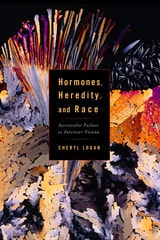
Hormones, Heredity, and Race
Spectacular Failure in Interwar ViennaCheryl A. Logan
Rutgers University Press, 2013
Early in the twentieth century, arguments about “nature” and “nurture” pitted a rigid genetic determinism against the idea that genes were flexible and open to environmental change. This book tells the story of three Viennese biologists—Paul Kammerer, Julius Tandler, and Eugen Steinach—who sought to show how the environment could shape heredity through the impact of hormones. It also explores the dynamic of failure through both scientific and social lenses. During World War I, the three men were well respected scientists; by 1934, one was dead by his own hand, another was in exile, and the third was subject to ridicule.
Paul Kammerer had spent years gathering zoological evidence on whether environmental change could alter heredity, using his research as the scientific foundation for a new kind of eugenics—one that challenged the racism growing in mainstream eugenics. By 1918, he drew on the pioneering research of two colleagues who studied how secretions shaped sexual attributes to argue that hormones could alter genes. After 1920, Julius Tandler employed a similar concept to restore the health and well-being of Vienna's war-weary citizens. Both men rejected the rigidly acting genes of the new genetics and instead crafted a biology of flexible heredity to justify eugenic reforms that respected human rights. But the interplay of science and personality with the social and political rise of fascism and with antisemitism undermined their ideas, leading to their spectacular failure.
Paul Kammerer had spent years gathering zoological evidence on whether environmental change could alter heredity, using his research as the scientific foundation for a new kind of eugenics—one that challenged the racism growing in mainstream eugenics. By 1918, he drew on the pioneering research of two colleagues who studied how secretions shaped sexual attributes to argue that hormones could alter genes. After 1920, Julius Tandler employed a similar concept to restore the health and well-being of Vienna's war-weary citizens. Both men rejected the rigidly acting genes of the new genetics and instead crafted a biology of flexible heredity to justify eugenic reforms that respected human rights. But the interplay of science and personality with the social and political rise of fascism and with antisemitism undermined their ideas, leading to their spectacular failure.
[more]

The Most Secret Quintessence of Life
Sex, Glands, and Hormones, 1850-1950Chandak Sengoopta
University of Chicago Press, 2006
Less than a century ago, physicians, scientists, and cultural commentators became fascinated by the endocrine glands and the effects of their secretions on our bodies and minds. Of all the characteristics supposed to be governed by them, the attributes of sex evoked the wildest interest. The gonads, it was revealed, secreted chemicals that not only influenced the biological expressions of sex, but seemed to generate the vitality and energy that made life worth living.
Through a series of case studies drawn from Central Europe, the United States, and Britain, The Most Secret Quintessence of Life explores how the notion of sex hormones enabled scientists to remap the human body, encouraging hopes that glandular interventions could cure ills, malfunctions, and even social deviance in ways inconceivable to previous generations. Many of these dreams failed, but their history, Chandak Sengoopta shows, takes us into the very heart of scientific medicine, revealing how even its most arcane concerns are shaped by cultural preoccupations and anxieties.
Through a series of case studies drawn from Central Europe, the United States, and Britain, The Most Secret Quintessence of Life explores how the notion of sex hormones enabled scientists to remap the human body, encouraging hopes that glandular interventions could cure ills, malfunctions, and even social deviance in ways inconceivable to previous generations. Many of these dreams failed, but their history, Chandak Sengoopta shows, takes us into the very heart of scientific medicine, revealing how even its most arcane concerns are shaped by cultural preoccupations and anxieties.
[more]