Results by title
9 books match the query 'Endocrinology & Metabolism'
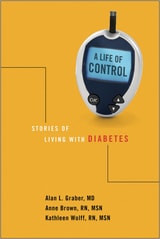
A Life of Control
Stories of Living with DiabetesAlan L. Graber
Vanderbilt University Press, 2010
The people who describe their experiences with diabetes range from teenagers to physicians, immigrants, athletes, pregnant women, accountants, a prisoner, and a dairy farmer. They speak of the variety of ways they handle monitoring, diet, insurance coverage, sports, and fashion. Some talk of how they manage to drive trucks for a living or, for recreation, fly airplanes or go spelunking. Many speak frankly of their anxieties and frustrations.
The authors acknowledge that both the patient and clinician have a story about their relationship, and describe the richness and tension in their interaction. Families, too, are sources of both support and conflict. These relationships are acknowledged in the organization of the book, which is divided into sections defined by the main elements of diabetes control: patient self-determination, the role of the family, the social situation, and the patient-clinician encounter.
The book provides a wealth of information about diabetes, including material on prevention, complications, and new technology, as well as a superb glossary, but it is not intended as a textbook on diabetes or as a self-care manual for patients. Rather the book provides a textured account of the health professional's view of diabetes control and the perspective of the patient whose life is complicated by diabetes.
Fixing Sex
Intersex, Medical Authority, and Lived ExperienceKatrina Karkazis
Duke University Press, 2008
Drawing extensively on interviews with adults with intersex conditions, parents, and physicians, Karkazis moves beyond the heated rhetoric to reveal the complex reality of how intersexuality is understood, treated, and experienced today. As she unravels the historical, technological, social, and political forces that have culminated in debates surrounding intersexuality, Karkazis exposes the contentious disagreements among theorists, physicians, intersex adults, activists, and parents—and all that those debates imply about gender and the changing landscape of intersex management. She argues that by viewing intersexuality exclusively through a narrow medical lens we avoid much more difficult questions. Do gender atypical bodies require treatment? Should physicians intervene to control the “sex” of the body? As this illuminating book reveals, debates over treatment for intersexuality force reassessment of the seemingly natural connections between gender, biology, and the body.
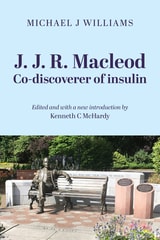
J. J. R. Macleod
Co-discoverer of insulinBy Michael J Williams, edited by Kenneth C McHardy
Aberdeen University Press, 2026
This biography reveals the little-known story of medically qualified research physiologist and biochemist, John Macleod (1876-1935). A child of a Free Kirk minister in rural Perthshire, Macleod was educated at the Grammar School and University in Aberdeen. Rapid career progress in Leipzig, Aberdeen and London culminated in his appointment as Professor of Physiology in Cleveland, Ohio aged only 27. He moved on to similar positions in Toronto then back in Aberdeen. In Cleveland he became an expert on carbohydrate physiology; in Toronto in 1922, he led the four-man team that discovered the world’s first clinically useful insulin. The following year, he was jointly awarded the Nobel Prize in Medicine or Physiology for this life-saving scientific breakthrough, together with colleague, Frederick Banting. The latter unfairly claimed that Macleod had stolen credit for the work.
In a 1982 book, The Discovery of Insulin, Canadian historian Michael Bliss gave a new, detailed interpretation of what had happened in Macleod’s department, concluding that history had underestimated Macleod’s magnificent contributions. Aberdeen-based diabetologist, Michael Williams, went on to produce this detailed account of Macleod’s life and work, originally published in 1993. This refreshed edition, J. J. R. Macleod: Co-discoverer of insulin, adds a description of several interventions over recent years to restore Macleod’s reputation as a scientist whose work contributed to saving hundreds of millions of lives.
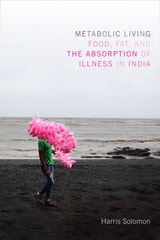
Metabolic Living
Food, Fat, and the Absorption of Illness in IndiaHarris Solomon
Duke University Press, 2016
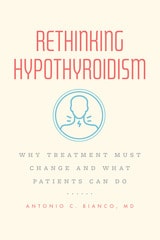
Rethinking Hypothyroidism
Why Treatment Must Change and What Patients Can DoAntonio C. Bianco, MD
University of Chicago Press, 2022
Hypothyroidism, also commonly referred to as Hashimoto’s disease, affects millions in the United States alone. It occurs when the thyroid—the butterfly-shaped gland that sits in your neck right above the front of your shirt collar—malfunctions or after thyroid surgery, causing thyroid hormone levels in circulation to drop below normal. Thus, treatment is aimed at bringing these hormone levels back to normal. This is done with daily tablets of thyroxine or T4. Because hypothyroidism is so common, we likely know someone who is on this type of medication. While most patients respond well to this standard treatment, about ten to twenty percent (some two to three million individuals in the United States) are far from living a typical life. They exhibit “foggy brain”—low energy, confusion, and poor memory. Many doctors have shrugged off their complaints, believing these symptoms to be unrelated to the thyroid disease. In Rethinking Hypothyroidism, Dr. Antonio C. Bianco, a physician and a scientist who has studied hypothyroidism and thyroid hormones for decades, offers an accessible overview of the disease’s treatment and the role of big pharma in shaping it, making the case that the current approach is failing many patients. But more than this, Bianco calls for alternatives to improve lives, and he equips patients and their families with the tools to advocate for other treatments.
Rethinking Hypothyroidism
Why Treatment Must Change and What Patients Can DoAntonio C. Bianco, MD
University of Chicago Press, 2022
In this primer for patients, their families, and their doctors, a leading physician and scientist explains why the standard treatment for hypothyroidism fails many—and offers an empowering call for change.
Hypothyroidism, also commonly referred to as Hashimoto’s disease, affects millions in the United States alone. It occurs when the thyroid—the butterfly-shaped gland that sits in your neck right above the front of your shirt collar—malfunctions or after thyroid surgery, causing thyroid hormone levels in circulation to drop below normal. Thus, treatment is aimed at bringing these hormone levels back to normal. This is done with daily tablets of thyroxine or T4. Because hypothyroidism is so common, we likely know someone who is on this type of medication. While most patients respond well to this standard treatment, about ten to twenty percent (some two to three million individuals in the United States) are far from living a typical life. They exhibit “foggy brain”—low energy, confusion, and poor memory. Many doctors have shrugged off their complaints, believing these symptoms to be unrelated to the thyroid disease. In Rethinking Hypothyroidism, Dr. Antonio C. Bianco, a physician and a scientist who has studied hypothyroidism and thyroid hormones for decades, offers an accessible overview of the disease’s treatment and the role of big pharma in shaping it, making the case that the current approach is failing many patients. But more than this, Bianco calls for alternatives to improve lives, and he equips patients and their families with the tools to advocate for other treatments.
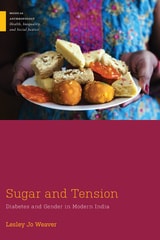
Sugar and Tension
Diabetes and Gender in Modern IndiaWeaver, Lesley Jo
Rutgers University Press, 2019
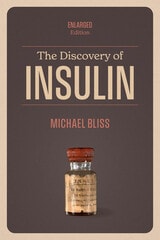
The Discovery of Insulin
Enlarged EditionMichael Bliss
University of Chicago Press, 2021
When insulin was discovered in the early 1920s, even jaded professionals marveled at how it brought starved, sometimes comatose patients with diabetes back to life. Defying the average timeline, the 1923 Nobel Prize in Physiology or Medicine was awarded for its discovery. To recount the fascinating story behind the discovery of insulin, in this classic work Michael Bliss draws on archival records and personal interviews with witnesses to the events. He unearths scientists’ memoirs and confidential appraisals of insulin by members of the Nobel Committee, bringing science to life and resolving a longstanding controversy about scientific collaboration at its most fractious and fascinating: who among the Canadian team of Frederick Banting, Charles Best, James Collip, and John Macleod ultimately deserves credit for the discovery of insulin? Or is credit due farther afield—to Georg Zuelzer in Berlin, E.L. Scott in Chicago, Israel Kleiner in New York, Nicolas Paulescu in Bucharest, John Murlin in Rochester?
Bliss’s life-and-death saga illuminates one of the most important breakthroughs in the history of medicine. With a new preface by the author and a foreword by historian Alison Li, this enlarged edition celebrates the lasting impact of insulin’s discovery and ongoing importance.