Results by title
4 books match the query 'Enlarged Edition'

Sweden, Enlarged Edition
The Nation's HistoryBy Franklin D. Scott. Epilogue by Steven Koblik
Southern Illinois University Press, 1988
Steven Koblik’s epilogue extends Scott’s now standard text with an analysis of contemporary Swedish political, economic, and social behavior. In addition to the epilogue, Scott has made a number of alterations in the text in order to maintain the timeliness and comprehensiveness of the work.
Using a chronological-topical structure, Scott shows how and why Sweden progressed from times of backwardness to an age of military greatness, through two centuries of cultural development and relapse into poverty followed by a sudden outburst of productive energy and the creation of an exceptionally prosperous welfare state where the ideal is consensus rather than confrontation.
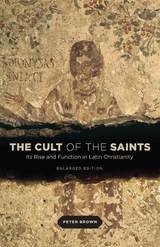
The Cult of the Saints
Its Rise and Function in Latin Christianity, Enlarged EditionPeter Brown
University of Chicago Press, 2014
In this groundbreaking work, Peter Brown explores how the worship of saints and their corporeal remains became central to religious life in Western Europe after the fall of the Roman Empire. During this period, earthly remnants served as a heavenly connection, and their veneration is a fascinating window into the cultural mood of a region in transition.
Brown challenges the long-held “two-tier” idea of religion that separated the religious practices of the sophisticated elites from those of the superstitious masses, instead arguing that the cult of the saints crossed boundaries and played a dynamic part in both the Christian faith and the larger world of late antiquity. He shows how men and women living in harsh and sometimes barbaric times relied upon the holy dead to obtain justice, forgiveness, and power, and how a single sainted hair could inspire great thinkers and great artists.
An essential text by one of the foremost scholars of European history, this expanded edition includes a new preface from Brown, which presents new ideas based on subsequent scholarship.
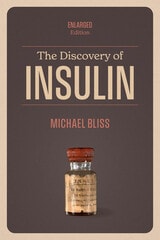
The Discovery of Insulin
Enlarged EditionMichael Bliss
University of Chicago Press, 2021
When insulin was discovered in the early 1920s, even jaded professionals marveled at how it brought starved, sometimes comatose patients with diabetes back to life. Defying the average timeline, the 1923 Nobel Prize in Physiology or Medicine was awarded for its discovery. To recount the fascinating story behind the discovery of insulin, in this classic work Michael Bliss draws on archival records and personal interviews with witnesses to the events. He unearths scientists’ memoirs and confidential appraisals of insulin by members of the Nobel Committee, bringing science to life and resolving a longstanding controversy about scientific collaboration at its most fractious and fascinating: who among the Canadian team of Frederick Banting, Charles Best, James Collip, and John Macleod ultimately deserves credit for the discovery of insulin? Or is credit due farther afield—to Georg Zuelzer in Berlin, E.L. Scott in Chicago, Israel Kleiner in New York, Nicolas Paulescu in Bucharest, John Murlin in Rochester?
Bliss’s life-and-death saga illuminates one of the most important breakthroughs in the history of medicine. With a new preface by the author and a foreword by historian Alison Li, this enlarged edition celebrates the lasting impact of insulin’s discovery and ongoing importance.

The Schlemiel as Metaphor, Revised and Enlarged Edition
Studies in Yiddish and American Jewish FictionSanford Pinsker
Southern Illinois University Press, 1991
The certainty that deep down we are all schlemiels is perhaps what makes America love an inept ball team or a Woody Allen who unburdens his neurotic heart in public.
In this unique, revised history of the schlemiel, Sanford Pinsker uses psychological, linguistic, and anecdotal approaches, as well as his considerable skills as a spritely storyteller, to trace the schlemiel from his beginnings in the Old Testament through his appearance in the nineteenth-century literature of Mendele Mocher Seforim and Sholom Aleichem to his final development as the beautiful loser in the works of Isaac Bashevis Singer, Bernard Malamud, Saul Bellow, Philip Roth, and Woody Allen. Horatio Alger might have once been a good emblem of the American sensibility, but today Woody Allen’s anxious, bespectacled punin (face) seems closer, and truer, to our national experience. His urban, end-of-the-century anxieties mirror—albeit in exaggeration—our own.
This expanded study of the schlemiel is especially relevant now, when scholarship of Yiddish and American Jewish literature is on the increase. By sketching the family tree of that durable anti-hero the schlemiel, Pinsker proves that Jewish humor is built upon the very foundations of the Jewish experience. Pinsker shows the evolution of the schlemiel from the comic butt of Yiddish jokes to a literary figure that speaks to the heart of our modern problems, and he demonstrates the way that Yiddish humor provides a sorely needed correction, a way of pulling down the vanities we all live by.