Results by title
475 books match the query 'Environmental' and 28 start with a
A Field on Fire
The Future of Environmental HistoryEdited by Mark D. Hersey and Ted Steinberg
University of Alabama Press, 2019
Inspired by the pioneering work of preeminent environmental historian Donald Worster, the contributors to A Field on Fire: The Future of Environmental History reflect on the past and future of this discipline. Featuring wide-ranging essays by leading environmental historians from the United States, Europe, and China, the collection challenges scholars to rethink some of their orthodoxies, inviting them to approach familiar stories from new angles, to integrate new methodologies, and to think creatively about the questions this field is well positioned to answer.
Worster’s groundbreaking research serves as the organizational framework for the collection. Editors Mark D. Hersey and Ted Steinberg have arranged the book into three sections corresponding to the primary concerns of Worster’s influential scholarship: the problem of natural limits, the transnational nature of environmental issues, and the question of method. Under the heading “Facing Limits,” five essays explore the inherent tensions between democracy, technology, capitalism, and the environment. The “Crossing Borders” section underscores the ways in which environmental history moves easily across national and disciplinary boundaries. Finally, “Doing Environmental History” invokes Worster’s work as an essayist by offering self-conscious reflections about the practice and purpose of environmental history.
The essays aim to provoke a discussion on the future of the field, pointing to untapped and underdeveloped avenues ripe for further exploration. A forward thinker like Worster presents bold challenges to a new generation of environmental historians on everything from capitalism and the Anthropocene to war and wilderness. This engaging volume includes a very special afterword by one of Worster’s oldest friends, the eminent intellectual historian Daniel Rodgers, who has known Worster for close to fifty years.
A Future for Amazonia
Randy Borman and Cofán Environmental PoliticsBy Michael Cepek
University of Texas Press, 2012
Blending ethnography with a fascinating personal story, A Future for Amazonia is an account of a political movement that arose in the early 1990s in response to decades of attacks on the lands and peoples of eastern Ecuador, one of the world’s most culturally and biologically diverse places. After generations of ruin at the hands of colonizing farmers, transnational oil companies, and Colombian armed factions, the indigenous Cofán people and their rain forest territory faced imminent jeopardy. In a surprising turn of events, the Cofán chose Randy Borman, a man of Euro-American descent, to lead their efforts to overcome the crisis that confronted them.
Drawing on three years of ethnographic research, A Future for Amazonia begins by tracing the contours of Cofán society and Borman’s place within it. Borman, a blue-eyed, white-skinned child of North American missionary-linguists, was raised in a Cofán community and gradually came to share the identity of his adoptive nation. He became a global media phenomenon and forged creative partnerships between Cofán communities, conservationist organizations, Western scientists, and the Ecuadorian state. The result was a collective mobilization that transformed the Cofán nation in unprecedented ways, providing them with political power, scientific expertise, and a new role as ambitious caretakers of more than one million acres of forest. Challenging simplistic notions of identity, indigeneity, and inevitable ecological destruction, A Future for Amazonia charts an inspiring course for environmental politics in the twenty-first century.
A Good That Transcends
How US Culture Undermines Environmental ReformEric T. Freyfogle
University of Chicago Press, 2017
A lawyer by training, with expertise in property rights, Freyfogle uses his legal knowledge to demonstrate that bad land use practices are rooted in the way in which we see the natural world, value it, and understand our place within it. While social and economic factors are important components of our current predicament, it is our culture, he shows, that is driving the reform crisis—and in the face of accelerating environmental change, a change in culture is vital. Drawing upon a diverse array of disciplines from history and philosophy to the life sciences, economics, and literature, Freyfogle seeks better ways for humans to live in nature, helping us to rethink our relationship with the land and craft a new conservation ethic. By confronting our ongoing resistance to reform as well as pointing the way toward a common good, A Good That Transcends enables us to see how we might rise above institutional and cultural challenges, look at environmental problems, appreciate their severity, and both support and participate in reform.
A Matter of Life and Death
Hunting in Contemporary VermontMarc Boglioli
University of Massachusetts Press, 2009
In A Matter of Life and Death, anthropologist Marc Boglioli puts a human face on a group widely regarded as morally suspect, one that currently stands in the crossfire of America's so-called culture wars. Drawing on extensive ethnographic fieldwork in Addison County, Vermont, which took him from hunting camps and sporting goods stores to local bars and kitchen tables, Boglioli focuses on how contemporary hunters, women as well as men, understand their relationship to their prey. He shows how hunters' attitudes toward animals flow directly from the rural lifeways they have continued to maintain in the face of encroaching urban sensibilities. The result is a rare glimpse into a culture that experiences wild animals in a way that is at once violent, consumptive, and respectful, and that regards hunting as an enduring link to a vanishing past. It is a book that will challenge readers—hunters, non-hunters, and anti-hunters alike—to reconsider what constitutes a morally appropriate relationship with the non-human residents of this planet.
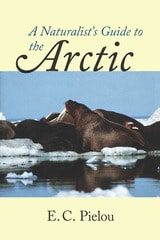
A Naturalist's Guide to the Arctic
E. C. Pielou
University of Chicago Press, 1994

A New Green Order?
The World Bank and the Politics of the Global Environment FacilityZoe Young
Pluto Press, 2002
Investigating the workings of this little known aid fund, Zoe Young takes a critical look at the conflicts involved, focusing on how the GEF's agenda relates to questions of globalisation, knowledge and accountability in the United States and the World Bank.
As our landscapes, fertility, cultures and ecosystems are being destroyed every day, Zoe Young gives a disturbing account of the complex issues that must be addressed before the world's environment can be managed more democratically - and effectively.
A Resonant Ecology
Max Ritts
Duke University Press, 2024
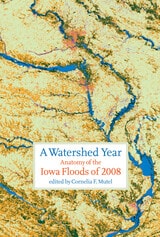
A Watershed Year
Anatomy of the Iowa Floods of 2008Cornelia F. Mutel
University of Iowa Press, 2010
In June 2008, the rivers of eastern Iowa rose above their banks to create floods of epic proportions; their amazing size—flowing in places at a rate nearly double that of the previous record flood—and the rapidity of their rise ruined farmlands and displaced thousands of residents and hundreds of businesses. In Cedar Rapids, the waters inundated more than nine square miles of the downtown area; in Iowa City, where the flood was also the most destructive in history, the University of Iowa’s arts campus was destroyed. By providing a solid base of scientific and technical information presented with unusual clarity and a wealth of supporting illustrations, the contributors to this far-reaching book, many of whom dealt firsthand with the 2008 floods, provide a detailed roadmap of the causes and effects of future devastating floods.
The twenty-five essays fall naturally into four sections. “Rising Rivers, Spreading Waters” begins by comparing the 2008 floods with the midwestern floods of 1993, moves on to trace community responses to the 2008 floods, and ends by illuminating techniques for forecasting floods and determining their size and frequency. “Why Here, Why Now?” searches for possible causes of the 2008 floods and of flooding in general: annual crops and urban landscapes, inflows into and releases from reservoirs, and climate change. “Flood Damages, Flood Costs, Flood Benefits” considers the complex mix of flood costs and effects, emphasizing damages to cities and farmlands as well as potential benefits to natural communities and archaeological sites. “Looking Back, Looking Forward” lays out approaches to managing the floods of the future that are sure to come.
While the book draws most of its examples from one particular region, it explains flooding throughout a much larger region—the midwestern Corn Belt—and thus its sobering yet energizing lessons apply well beyond eastern Iowa. By examining the relationships among rivers, floodplains, weather, and modern society; by stressing matters of science and fact rather than social or policy issues; and by addressing multiple environmental problems and benefits, A Watershed Year informs and educates all those who experienced the 2008 floods and all those concerned with the larger causes of flooding.
Abundant Earth
Toward an Ecological CivilizationEileen Crist
University of Chicago Press, 2019
Crist argues that to do so would require a two-pronged approach. Scaling down calls upon us to lower the global human population while working within a human-rights framework, to deindustrialize food production, and to localize economies and contract global trade. Pulling back calls upon us to free, restore, reconnect, and rewild vast terrestrial and marine ecosystems. However, the pervasive worldview of human supremacy—the conviction that humans are superior to all other life-forms and entitled to use these life-forms and their habitats—normalizes and promotes humanity’s ongoing expansion, undermining our ability to enact these linked strategies and preempt the mounting suffering and dislocation of both humans and nonhumans.
Abundant Earth urges us to confront the reality that humanity will not advance by entrenching its domination over the biosphere. On the contrary, we will stagnate in the identity of nature-colonizer and decline into conflict as we vie for natural resources. Instead, we must chart another course, choosing to live in fellowship within the vibrant ecologies of our wild and domestic cohorts, and enfolding human inhabitation within the rich expanse of a biodiverse, living planet.

Acid Rain and Friendly Neighbors
The Policy Dispute Between Canada and the United StatesJurgen Schmandt, Judith Clarkson, and Hilliard Roderick
Duke University Press, 1988
“Covers a wide range of issues with balance and clarity. . . . I can recommend the book highly as an intermediate-level source of information and insight into the international aspects of the acid rain problem.”—J. F. Hornig, Ambio
“A masterful analysis of the policy problems raised by acid rain in the U.S. and Canada . . . detailed, objective, understandable, and compelling. Weaving substantive and institutional factors into their analysis, the authors skillfully portray the controversy’s multifaceted nature.”—Tracy Dobson, American Journal of International Law
“[A] thorough, well-balanced analysis . . . [that] could serve as a model for analysis of complex policy issues.”—Choice
“Reveals the interface between science, technology, and public policy as being the co-extensive network it really is. . . . Timely and welcomed.”—John de la Mothe, Canadian Public Policy/Analyse de Politiques
Advocacy after Bhopal
Environmentalism, Disaster, New Global OrdersKim Fortun
University of Chicago Press, 2001
Kim Fortun explores these claims by focusing on the dynamics and paradoxes of advocacy in competing power domains. She moves from hospitals in India to meetings with lawyers, corporate executives, and environmental justice activists in the United States to show how the disaster and its effects remain with us. Spiraling outward from the victims' stories, the innovative narrative sheds light on the way advocacy works within a complex global system, calling into question conventional notions of responsibility and ethical conduct. Revealing the hopes and frustrations of advocacy, this moving work also counters the tendency to think of Bhopal as an isolated incident that "can't happen here."
Aerosol Effects on Climate
S. Gerard Jennings
University of Arizona Press, 1993
After Eden
The Evolution of Human DominationKirkpatrick Sale
Duke University Press, 2006
In After Eden, Kirkpatrick Sale answers these questions in a radically new way. Integrating research in paleontology, archaeology, and anthropology, he points to the beginning of big-game hunting as the origin of Homo sapiens’ estrangement from the natural world. Sale contends that a new, recognizably modern human culture based on the hunting of large animals developed in Africa some 70,000 years ago in response to a fierce plunge in worldwide temperature triggered by an enormous volcanic explosion in Asia. Tracing the migration of populations and the development of hunting thousands of years forward in time, he shows that hunting became increasingly adversarial in relation to the environment as people fought over scarce prey during Europe’s glacial period between 35,000 and 10,000 years ago. By the end of that era, humans’ idea that they were the superior species on the planet, free to exploit other species toward their own ends, was well established.
After Eden is a sobering tale, but not one without hope. Sale asserts that Homo erectus, the variation of the hominid species that preceded Homo sapiens and survived for nearly two million years, did not attempt to dominate the environment. He contends that vestiges of this more ecologically sound way of life exist today—in some tribal societies, in the central teachings of Hinduism and Buddhism, and in the core principles of the worldwide environmental movement—offering redemptive possibilities for ourselves and for the planet.

Against Ecological Sovereignty
Ethics, Biopolitics, and Saving the Natural WorldMick Smith
University of Minnesota Press, 2011
Against Ecological Sovereignty is a passionate defense of radical ecology that speaks directly to current debates concerning the nature, and dangers, of sovereign power. Engaging the work of Bataille, Arendt, Levinas, Nancy, and Agamben, among others, Mick Smith reconnects the political critique of sovereign power with ecological considerations, arguing that ethical and political responsibilities for the consequences of our actions do not end with those defined as human.
Against Ecological Sovereignty is the first book to turn Agamben’s analysis of sovereignty and biopolitics toward an investigation of ecological concerns. In doing so it exposes limits to that thought, maintaining that the increasingly widespread biopolitical management of human populations has an unrecognized ecological analogue—reducing nature to a “resource” for human projects. Smith contends that a radical ecological politics must resist both the depoliticizing exercise of sovereign power and the pervasive spread of biopolitics in order to reveal new possibilities for creating healthy human and nonhuman communities.
Presenting a stinging critique of human claims to sovereignty over the natural world, Smith proposes an alternative way to conceive of posthumanist ecological communities—one that recognizes the utter singularity of the beings in them.
Agent Orange
History, Science, and the Politics of UncertaintyEdwin A. Martini
University of Massachusetts Press, 2012
Taking on what one former U.S. ambassador called “the last ghost of the Vietnam War,” this book examines the far-reaching impact of Agent Orange, the most infamous of the dioxin-contaminated herbicides used by American forces in Southeast Asia. Edwin A. Martini's aim is not simply to reconstruct the history of the “chemical war” but to investigate the ongoing controversy over the short- and long-term effects of weaponized defoliants on the environment of Vietnam, on the civilian population, and on the troops who fought on both sides.
Beginning in the early 1960s, when Agent Orange was first deployed in Vietnam, Martini follows the story across geographical and disciplinary boundaries, looking for answers to a host of still unresolved questions. What did chemical manufacturers and American policymakers know about the effects of dioxin on human beings, and when did they know it? How much do scientists and doctors know even today? Should the use of Agent Orange be considered a form of chemical warfare? What can, and should, be done for U.S. veterans, Vietnamese victims, and others around the world who believe they have medical problems caused by Agent Orange?
Martini draws on military records, government reports, scientific research, visits to contaminated sites, and interviews to disentangle conflicting claims and evaluate often ambiguous evidence. He shows that the impact of Agent Orange has been global in its reach affecting individuals and communities in New Zealand, Australia, Korea, and Canada as well as Vietnam and the United States. Yet for all the answers it provides, this book also reveals how much uncertainty—scientific, medical, legal, and political—continues to surround the legacy of Agent Orange.
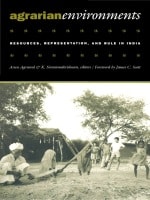
Agrarian Environments
Resources, Representations, and Rule in IndiaArun Agrawal, ed.
Duke University Press, 2000
Editors Arun Agrawal and K. Sivaramakrishnan claim that rural social change in India cannot be understood without exploring how environmental changes articulate major aspects of agrarian transformations—technological, cultural, and political—in the last two centuries. In order to examine these issues, they have reached beyond the confines of single disciplinary allegiances or methodological loyalties to bring together anthropologists, historians, political scientists, geographers, and environmental scientists who are significantly informed by interdisciplinary research. Drawing on extensive field and archival research, the contributors demonstrate the powerful political implications of blurring the boundaries between dichotomous cultural representations, combine conceptual analyses with specific case studies, and look at why competing powers chose to emphasize particular representations of land use or social relations. By providing a more textured analysis of how categories emerge and change, this work offers the possibility of creating crucial alliances across populations that have historically been assumed to lack mutual goals.
Agrarian Environments will be valuable to those in political science, Asian studies, and environmental studies.
Contributors. Arun Agrawal, Mark Baker, Molly Chattopadhyaya, Vinay Gidwani, Sumit Guha, Shubhra Gururani, Cecile Jackson, David Ludden, Haripriya Rangan, Paul Robbins, Vasant Saberwal, James C. Scott, K. Sivaramakrishnan, Ajay Skaria, Jennifer Springer, Darren Zook
Alabama Water-Resources Law
A Critical TreatiseHeather Elliott
University of Alabama Press, 2026
A compelling exploration of how Alabama’s aging water laws endanger its resources and why urgent, forward thinking reform is essential for the state’s future.
Alabama Water-Resources Law is the first truly comprehensive study examining the structure and shortcomings of Alabama’s water law. This prodigious treatise provides a necessary tool to help the state and its people understand and prepare for the wise use of its water resources. Part I provides a clear and critical statement of Alabama’s current water law in eleven chapters. Part II expands on the criticisms of existing Alabama law, recounts the history of previous efforts at addressing those criticisms, and makes recommendations for change, taking lessons from other southeastern states.
Throughout, University of Alabama law professor Heather Elliott underscores the flaws in Alabama’s current body of law, arguing that Alabama’s abundant water resources have fostered complacency that the state and its residents can no longer afford. As Alabama’s water supply is strained by population growth, economic development, and global climate change, the deficiencies in the archaic legal framework will become crippling. Investments made on the assumption of plenty will fail as water becomes less available, Alabama’s world-class aquatic biodiversity will become even more endangered, and Alabama’s courts will suffer a glut of new litigation as parties fight over rights to a finite resource. Elliott demonstrates how Alabama can avoid the worst of these consequences through the adoption of a regulated riparian statute.
Ample illustrations provide an extensive inventory of the state’s surface and groundwater resources and a technical primer on instream flow. This is a must-read for all Alabama policymakers, attorneys, and concerned citizens to answer water-law questions and to make proactive laws to bring Alabama into twenty-first-century practices.
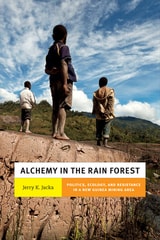
Alchemy in the Rain Forest
Politics, Ecology, and Resilience in a New Guinea Mining AreaJerry K. Jacka
Duke University Press, 2015
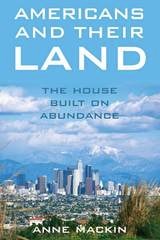
Americans and Their Land
The House Built on AbundanceAnne Mackin
University of Michigan Press, 2006
—James Carroll, author of House of War and An American Requiem, winner of the National Book Award
“Anne Mackin has taken a fresh and provocative look at that most fascinating of relationships: the one between the American people and the American land.”
—Michael Pollan, Knight Professor of Journalism and Director of the Knight Program in Science and Environmental Journalism at University of California Berkeley, contributing writer to the New York Times Magazine, and author of The Omnivore's Dilemma and The Botany of Desire
“Anne Mackin has given us a valuable and less-used lens to view the development of our neighborhoods, towns and cities: the land itself. Our relationship to the earth beneath our feet—how we dig it, buy it, sell it, zone it, pave it, spoil it or pamper it—helps explain what is produced on top of the land in our nation, from farms to homes to skyscrapers. All in all, Mackin takes us on a novel and erudite journey, from one coast to the other, and from Colonial times to the present. This valuable book marks a significant and lasting contribution to the way we see and understand our landscape and ourselves.”
—Alex Marshall, author of How Cities Work: Suburbs, Sprawl, and the Roads Not Taken
“To really understand the origins of the range war now raging between smart growth and property rights advocates over the future of the American land, you need to read this exceptional book.”
—Robert D. Yaro, President Regional Plan Association and Professor in Practice, University of Pennsylvania
Thomas Malthus once said, “The happiness of the Americans depended much less upon their peculiar degree of civilization than . . . upon their having a great plenty of fertile uncultivated land.”
Malthus knew. Lord MacCaulay knew. Albert Gallatin knew. America and its people would change as a growing population whittled away the supply of land.
Nothing has shaped the American character like the abundance of land that met the colonist, the pioneer, and the early suburbanite. With today’s political and economic institutions shaped by the largesse of yesteryear, how will Americans fare in the new landscape of water wars, expensive housing, rising fuel prices, environmental and property rights battles, and powerful industrial lobbies?
Why is land the key to American democracy? How can we protect our democracy as more people and industries compete more intensively for our remaining resources? Americans and Their Land begins an important, overdue discussion of these questions. Anne Mackin takes the reader story by story from frontier history to the present and shows how land shaped the American political landscape. She shows how our evolving traditions of apportioning resources have allowed diminished supplies to create our present, increasingly unequal society, and she asks how 300 million Americans living in the new American landscape of growing competition can better share those resources.
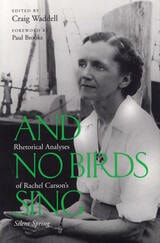
And No Birds Sing
Rhetorical Analyses of Rachel Carson's Silent SpringEdited by Craig Waddell. Foreword by Paul Brooks. Afterword by Linda Lear
Southern Illinois University Press, 2000
Craig Waddell presents essays investigating Rachel Carson’s influential 1962 book, Silent Spring. In his foreword, Paul Brooks, Carson’s editor at Houghton Mifflin, describes the process that resulted in Silent Spring. In an afterword, Linda Lear, Carson’s recent biographer, recalls the end of Carson’s life and outlines the attention that Carson’s book and Carson herself received from scholars and biographers, attention that focused so minutely on her life that it detracted from a focus on her work. The foreword by Brooks and the afterword by Lear frame this exploration within the context of Carson’s life and work.
Contributors are Edward P. J. Corbett, Carol B, Gartner, Cheryll Glotfelty, Randy Harris, M. Jimmie Killingsworth, Linda Lear, Ralph H. Lutts, Christine Oravec, Jacqueline S. Palmer, Markus J. Peterson, Tarla Rai Peterson, and Craig Waddell. Together, these essays explore Silent Spring’seffectiveness in conveying its disturbing message and the rhetorical strategies that helped create its wide influence.
Archives of the Anthropocene
Visual Grammars of Deep TimeYuriko Furuhata
Duke University Press, 2026
Arid Lands in Perspective
Edited by William G. McGinnies and Bram J. Goldman
University of Arizona Press, 1969
Contributors:
Michel Batisse
William A. Dick-Peddie
Carl N. Hodges
Richard F. Logan
Roy E. Cameron
Clifford S. Christian
Klaus W. Flach
Ronald L. Heathcote
Douglas H. K. Lee
Lawrence K. Lustig
William G. McGinnies
Peveril Meigs
James T. Neal
Daniel A. Okun
Harland I. Padfield
Patricia Paylore
Rayden A. Perry
Roald A. Peterson
Robert L. Raikes
Courtland L. Smith
Guy D. Smith
Andrew Warren
John C. York
Aridland Springs in North America
Ecology and ConservationEdited by Lawrence E. Stevens and Vicky J. Meretsky; Foreword by Gary Paul Nabhan
University of Arizona Press, 2008
Aridland Springs in North America offers a much-needed comprehensive synthesis of aridland springs ecology. Stevens and Meretsky have assembled chapters from numerous and diverse experts from the fields of geology, hydrology, geomorphology, water quality, ecosystem dynamics, water law, and conservation biology. Through analyses and case studies, these contributors provide an in-depth overview of these topics and address issues critical for improving the knowledge and conservation of springs. This volume goes beyond examining the ecological importance of aridland springs to provide practical and productive ideas for their preservation. The authors facilitate future research by cultivating a language with which to collectively describe and study springs ecosystems, creating the beginnings of a comprehensive springs classification system. This book could not be more timely, as groundwater depletion throughout the continent is rapidly decimating these vital sources of life.
CONTENTS
Prologue
Gary P. Nabhan
1 Springs Ecosystem Ecology And Conservation
Lawrence E. Stevens And Vicky J. Meretsky
2 The Demise Of Desert Springs
Peter J. Unmack And W. L. Minckley*
3 The Hydrology Of Desert Springs In North America
David K. Kreamer And Abe Springer
4 A Comprehensive Springs Classification System: Integrating Geomorphic, Hydrogeochemical, And Ecological Criteria
Abraham E. Springer, Lawrence E. Stevens, Diana E. Anderson, Roderic A. Parnell1, David K. Kreamer, Lisa Levin, And Stephen P. Flora1
5 Quaternary Cauldron Springs As Paleoecological Archives
C. Vance Haynes Jr.
6 The Extreme Environment, Trophic Structure, And Ecosystem Dynamics Of A Large Fishless Desert Spring: Montezuma Well, Arizona
Dean W. Blinn
7 Combining Ecological Research And Conservation: A Case Study In Cuatro Ciénegas, Coahuila, México
Dean A. Hendrickson, Jane C. Marks, Angie Moline, Eric Dinger, Adam Cohen
8 The Desert Fan Palm Oasis
James W. Cornett
9 Spring-Supported Vegetation Along The Colorado River, Colorado Plateau: Floristics, Vegetation Structure And Environment
John R. Spence
10 Mechanisms Of Change In Seep/Spring Plant Communities On The Southern Colorado Plateau
Vicky J. Meretsky
11 Biodiversity And Productivity At An Undisturbed Spring In Comparison With Adjacent Grazed Riparian And Upland Habitats
Bianca S. Perla And Lawrence E. Stevens
12 Plant Diversity Influenced By Indigenous Management Of Freshwater Springs: Flora Of Quitovac, Sonora, Mexico
Gary Paul Nabhan
13 Historic And Prehistoric Ethnobiology Of Desert Springs
Amadeo M. Rea
14 Vegetation Dynamics Of Great Basin Springs: Potential Effects Of Groundwater Withdrawal
Duncan Patten, Leigh Rouse, Juliet Stromberg
15 The Knowles Canyon Hanging Garden, Glen Canyon National Recreation Area, Eight Years After Burning: Changes In Vegetation And Soil Biota
Tim B. Graham
16 Between The Cracks: Water Law And Spring Conservation In Arizona
Nancy Nelson
17 Ep
Arizona Soils
David M. Hendricks
University of Arizona Press, 1985

Ascension
A NovelSteve Tomasula
University of Alabama Press, 2022
A visually stunning narrative of three eras in humankind’s vexed relationship with nature.
Ascension is a novel about the end of nature, or rather, the end of three “natures”: the time just before Darwin changed the natural world; the 1980s, just as the digital and genetic revolutions begin to replace “nature” with “environment”; and today, a time when we have the ability to manipulate nature at both the scale of the planet and at the genome. The narrative follows three different biologists on the brink of each of these cultural extinctions to explore how nature occupies our imaginations and how our imaginations bring the natural world, and our place in it, into existence.
Ascension is a story of how we continually remake the world and are in turn remade by the new nature we’ve created. It is the story of humans yearning to understand their families, themselves, and the world they live in as it comes to a close, leaving them to anticipate what will follow. Rich in visual depictions of the natural world—from nineteenth century engraving and paintings to twentieth century photography and twenty-first century databases—Ascension uses the materials of three eras to drive home our inability to escape nature, and the ways our fates are irrevocably bound together even as our actions usher in an end-time.
At Home in Nature
Technology, Labor, and Critical Ecology in Modern ChinaBan Wang, issue editor
Duke University Press, 2023
Atmospheric Things
On the Allure of Elemental EnvelopmentDerek P. McCormack
Duke University Press, 2018
Atomic Environments
Nuclear Technologies, the Natural World, and Policymaking, 1945–1960Neil S. Oatsvall
University of Alabama Press, 2023
Demonstrates how policymakers influenced environmental science during the early nuclear age
In Atomic Environments: Nuclear Technologies, the Natural World, and Policymaking, 1945–1960, Neil S. Oatsvall examines how top officials in the Truman and Eisenhower administrations used environmental science to develop nuclear strategy at the beginning of the Cold War. While many people were involved in research and analysis during the period in question, it was at highest levels of executive decision-making where environmental science and nuclear science most clearly combined to shape the nation’s policies.
Oatsvall clearly demonstrates how the natural world and the scientific disciplines that study it became integral parts of nuclear science rather than adversarial fields of knowledge. But while nuclear technologies heavily depended on environmental science to develop, those same technologies frequently caused great harm to the natural world. Moreover, while some individuals expressed real anxieties about the damage wrought by nuclear technologies, policymakers as a class consistently made choices that privileged nuclear boosterism and secrecy, prioritizing institutional values over the lives and living systems that they were ostensibly charged to protect.
By scrutinizing institutional policymaking practices and agendas at the birth of the nuclear age, a constant set of values becomes clear. Oatsvall reveals an emerging technocratic class that routinely valued knowledge about the environment to help create and maintain a nuclear arsenal, despite its existential threat to life on earth and the negative effects many nuclear technologies had on ecosystems and the American people alike. Although policymakers took their charge to protect and advance the welfare of the United States and its people seriously, Atomic Environments demonstrates how they often failed to do so because their allegiance to the US nuclear hierarchy blinded them to the real risks and dangers of the nuclear age.