Results by title
313 books match the query 'Environmental policy' and 18 start with a
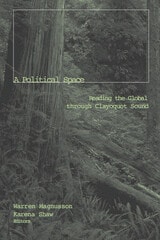
A A Political Space
Reading The Global Through Clayoquot SoundWarren Magnusson
University of Minnesota Press, 2002
An innovative look at the convergence of global trends and local struggles in this out-of-the-way place.
On the remote outer coast of Vancouver Island in British Columbia, Clayoquot Sound might seem to be situated at the periphery of contemporary power and authority. And yet, as the disputed land of native peoples and the contentious site of corporate logging in one of the world’s last remaining temperate rain forests, Clayoquot Sound is also squarely in the middle of global politics today. These authors develop a new way of making sense of the rapidly changing character of political life in our day, revealing the political problems and possibilities inherent in the convergence of the global and the local so dramatically enacted in Clayoquot Sound.
Contributors: Umeek of Ahousaht (E. Richard Atleo), Malaspina U College, British Columbia; William Chaloupka, U of Montana; Thom Kuehls, Weber State U; Timothy W. Luke, Virginia Polytechnic; R. Michael M’Gonigle, U of Victoria; Catriona Sandilands, York U, Toronto; Gary C. Shaw, California State U, Stanislaus; R. B. J. Walker, Keele U, UK; Sharon Zukin, Brooklyn College and CUNY.rights: CAN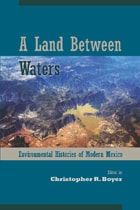
A Land Between Waters
Environmental Histories of Modern MexicoEdited by Christopher R. Boyer
University of Arizona Press, 2012
A Land Between Waters explores the relationship between the people and the environment in Mexico. It heralds the arrival of environmental history as a major area of study within the field of Mexican history. This volume brings together a dozen original works of environmental history by some of the foremost experts in Mexican environmental history from both the United States and Mexico.
The contributions collected in this seminal volume explore a wide array of topics, from the era of independence to the present day. Together they examine how humans have used, abused, and attended to nature in Mexico over more than two hundred years. Written in clear, accessible prose, A Land Between Waters showcases the breadth of Mexican environmental history in a way that defines the key topics in the field and suggests avenues for subsequent work. Most importantly, it assesses the impacts of environmental changes that Mexico has faced in the past with an eye to informing national debates about the challenges that the nation will face in the future.

A New Green Order?
The World Bank and the Politics of the Global Environment FacilityZoe Young
Pluto Press, 2002
Investigating the workings of this little known aid fund, Zoe Young takes a critical look at the conflicts involved, focusing on how the GEF's agenda relates to questions of globalisation, knowledge and accountability in the United States and the World Bank.
As our landscapes, fertility, cultures and ecosystems are being destroyed every day, Zoe Young gives a disturbing account of the complex issues that must be addressed before the world's environment can be managed more democratically - and effectively.
A People’s Green New Deal
Max Ajl
Pluto Press, 2021
'Hands-down the best book yet on the Green New Deal' - Jason Hickel
The idea of a Green New Deal was launched into popular consciousness by US Congressperson Alexandria Ocasio-Cortez in 2018. It has become a watchword in the current era of global climate crisis. But what - and for whom - is the Green New Deal?
In this concise and urgent book, Max Ajl provides an overview of the various mainstream Green New Deals. Critically engaging with their proponents, ideological underpinnings and limitations, he goes on to sketch out a radical alternative: a 'People's Green New Deal' committed to decommodification, working-class power, anti-imperialism and agro-ecology.
Ajl diagnoses the roots of the current socio-ecological crisis as emerging from a world-system dominated by the logics of capitalism and imperialism. Resolving this crisis, he argues, requires nothing less than an infrastructural and agricultural transformation in the Global North, and the industrial convergence between North and South. As the climate crisis deepens and the literature on the subject grows, A People's Green New Deal contributes a distinctive perspective to the debate.
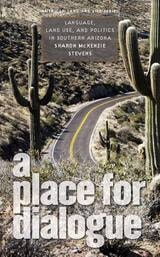
A Place for Dialogue
Language, Land Use, and Politics in Southern ArizonaSharon McKenzie Stevens
University of Iowa Press, 2007
In A Place for Dialogue, Sharon McKenzie Stevens views the contradictions and collaborations involved in the management of public land in southern Arizona—and by extension the entire arid West—through the lens of political rhetoric. Revealing the socioecological relationships among cattlemen and environmentalists as well as developers and recreationists, she analyzes the ways that language shapes landscape by shaping decisions about land use.
Stevens focuses on the collaborative Sonoran Desert Conservation Plan initiated by Pima County, Arizona, the ubiquitous use of scientific argument to defend contradictory practices, and the construction and negotiation of rancher/environmentalist identities to illuminate both literally and metaphorically the dynamics of land use politics. Drawing specifically upon extensive interviews with a diverse array of agents on all sides of the debate—ranchers, environmentalists, scientists, land managers, government officials—on historical narratives, and on her own conflicting experiences as someone who grew up with those who work the western lands, she demonstrates that it is possible to use differences to solve, rather than to aggravate, the entrenched problems that bridge land and language.
By integrating her richly textured case study of a fragile region with rhetorical approaches to narrative, science-based argument, and collective identities, Stevens makes a significant contribution to the fields of rhetoric, land management, and cultural studies.

A Pragmatism of Beginnings
Governing Crises in the AnthropocenePol Bargués
University of Michigan Press, 2027
As climate change, pandemics, disasters, migrations, and conflicts increasingly overlap, crises are becoming more complex and difficult to address. The Anthropocene is an era characterized by uncertainty and contestation, in which traditional approaches to crisis management are no longer working. This book examines the ideas that have emerged to help societies move forward, including resilience, navigation, adaptation, precaution, and slow peacebuilding. While these approaches promise hope and progress, A Pragmatism of Beginnings critically highlights their limitations, showing how they often focus on coping with crises in ways that merely preserve and reproduce a decaying status quo.
Drawing on philosophical pragmatism, the book places these imaginaries that drive crisis management today in dialogue with the work of the classical pragmatists William James, John Dewey, and Jane Addams, as well as contemporary philosophers Bruno Latour, Graham Harman, and Elizabeth Grosz, to assess both their promises and their limitations. Across a series of case studies covering disaster response, peacebuilding, global health, climate governance, migration management, and the Women, Peace and Security agenda, the book shows how contemporary crisis governance often seeks to preserve the status quo by managing risks and avoiding breakdown rather than pursue transformative change. A Pragmatism of Beginnings argues that responding to today’s crises requires more; it also demands the courage and imagination to seize new beginnings.

A Program for Land Use in Northern Minnesota
A Type Study in Land UtilizationOscar Jesness
University of Minnesota Press, 1935
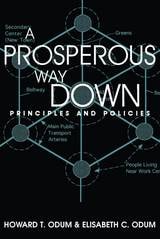
A Prosperous Way Down
Principles and PoliciesHoward T. Odum
University Press of Colorado, 2008
A Prosperous Way Down considers ways in which a future with less fossil fuel could be peaceful and prosperous. Although history records the collapse of countless civilizations, some societies and ecosystems have managed to descend in orderly stages, reducing demands and selecting and saving what is most important.
The authors make recommendations for a more equitable and cooperative world society, with specific suggestions based on their evaluations of trends in global population, wealth distribution, energy sources, conservation, urban development, capitalism and international trade, information technology, and education.
Available for the first time in paperback, this thoughtful, provocative book forces us to confront assumptions about our world 's future and provides both a steadying hand and a call to action with its pragmatic analysis of a global transition.
A Social Ecology of Capital
Éric Pineault
Pluto Press, 2022
An original theory of contemporary capitalist growth and its socio-ecological contradictions
Capital is pushing into motion ever larger global material flows. In doing so it has come to depend on massive expenditures of energy, putting to work fossil fuels and the machines they animate to transform the world, accumulate power and grow the economy. The ecological relations and crises of today’s societies are driven by the processes of extraction of the elements that come together as a throughput of material and energy flows controlled by capital and shaped by its imperative of valorization.
In A Social Ecology of Capital, Éric Pineault proposes an original model of the fossil social metabolism that has sustained the growth of advanced capitalism in the last century.
Drawing on ecological economics and critical political economy, the book analyses how the social structures of accumulation, production, consumption and waste determine and regulate the material flow and the accumulation of material artifacts. Showing how social relations shape the ecology of capital, the book highlights the contradictions humanity now faces.
A Vital Frontier
Water Insurgencies in EuropeAndrea Muehlebach
Duke University Press, 2023
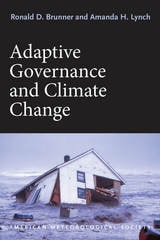
Adaptive Governance and Climate Change
Ronald D. Brunner and Amanda H. Lynch
American Meteorological Society, 2010
While recent years have seen undeniable progress in international acknowledgement both of the dangers of climate change and the importance of working to mitigate it, little has actually been done. Emissions continue to rise, and even the ambitious targets set by international accords would fall far short of the drastic cuts that are needed to prevent catastrophe.
With Adaptive Governance and Climate Change, Ronald D. Brunner and Amanda H. Lynch argue that we need to take a new tack, moving away from reliance on centralized, top-down approaches—the treaties and accords that have proved disappointingly ineffective thus far—and towards a more flexible, multi-level approach. Based in the principles of adaptive governance—which are designed to produce programs that adapt quickly and easily to new information and experimental results—such an approach would encourage diversity and innovation in the search for solutions, while at the same time pointedly recasting the problem as one in which every culture and community around the world has an inherent interest.
Advocacy after Bhopal
Environmentalism, Disaster, New Global OrdersKim Fortun
University of Chicago Press, 2001
Kim Fortun explores these claims by focusing on the dynamics and paradoxes of advocacy in competing power domains. She moves from hospitals in India to meetings with lawyers, corporate executives, and environmental justice activists in the United States to show how the disaster and its effects remain with us. Spiraling outward from the victims' stories, the innovative narrative sheds light on the way advocacy works within a complex global system, calling into question conventional notions of responsibility and ethical conduct. Revealing the hopes and frustrations of advocacy, this moving work also counters the tendency to think of Bhopal as an isolated incident that "can't happen here."
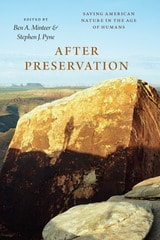
After Preservation
Saving American Nature in the Age of HumansEdited by Ben A. Minteer and Stephen J. Pyne
University of Chicago Press, 2015
Ben A. Minteer and Stephen J. Pyne bring together a stunning consortium of voices comprised of renowned scientists, historians, philosophers, environmental writers, activists, policy makers, and land managers to negotiate the incredible challenges that environmentalism faces. Some call for a new, post-preservationist model, one that is far more pragmatic, interventionist, and human-centered. Others push forcefully back, arguing for a more chastened and restrained vision of human action on the earth. Some try to establish a middle ground, while others ruminate more deeply on the meaning and value of wilderness. Some write on species lost, others on species saved, and yet others discuss the enduring practical challenges of managing our land, water, and air.
From spirited optimism to careful prudence to critical skepticism, the resulting range of approaches offers an inspiring contribution to the landscape of modern environmentalism, one driven by serious, sustained engagements with the critical problems we must solve if we—and the wild garden we may now keep—are going to survive the era we have ushered in.
Contributors include: Chelsea K. Batavia, F. Stuart (Terry) Chapin III, Norman L. Christensen, Jamie Rappaport Clark, William Wallace Covington, Erle C. Ellis, Mark Fiege, Dave Foreman, Harry W. Greene, Emma Marris, Michelle Marvier, Bill McKibben, J. R. McNeill, Curt Meine, Ben A. Minteer, Michael Paul Nelson, Bryan Norton, Stephen J. Pyne, Andrew C. Revkin, Holmes Rolston III, Amy Seidl, Jack Ward Thomas, Diane J. Vosick, John A. Vucetich, Hazel Wong, and Donald Worster.
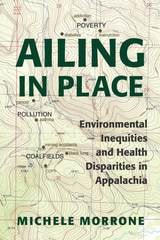
Ailing in Place
Environmental Inequities and Health Disparities in AppalachiaMichele Morrone
Ohio University Press, 2020
In Ailing in Place, Michele Morrone explores the relationship between environmental conditions in Appalachia and health outcomes that are too often ascribed to individual choices only. She applies quantitative data to observations from environmental health professionals to frame the ways in which the environment, as a social determinant of health, leads to health disparities in Appalachian communities. These examples—these stories of place—trace the impacts of water quality, waste disposal, and natural resource extraction on the health and quality of life of Appalachian people.
Public health is inextricably linked to place. Environmental conditions such as contaminated water, unsafe food, and polluted air are as important as culture, community, and landscape in characterizing a place and determining the health outcomes of the people who live there. In some places, the state of the environment is a consequence of historical activities related to natural resources and cultural practices. In others, political decisions to achieve short-term economic objectives are made with little consideration of long-term public health consequences.
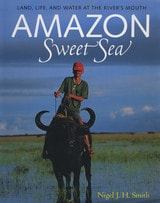
Amazon Sweet Sea
Land, Life, and Water at the River's MouthBy Nigel J. H. Smith
University of Texas Press, 2002
Far into the Atlantic Ocean, the outflow from the Amazon River creates a "sweet sea" of fresh water. At the river's mouth, a vast delta of river channels and marshes, floodplain and upland forests, open and scrub savannas, floating meadows, and mangrove swamps hosts an astonishingly diverse assemblage of plant and animal life. So rich is this biological treasure house that early European explorers deemed it inexhaustible.
In this highly readable book, Nigel Smith explores how human use of the Amazon estuary's natural resources has been affected by technological change, rapid urban growth, and accelerated market integration. Avoiding alarmist rhetoric, he shows how human intervention in the estuary has actually diversified agriculture and helped save floodplain forests from wanton destruction. His findings underscore the importance of understanding the history of land use and the ecological knowledge of local people when formulating development and conservation policies. The book will be of interest to everyone concerned with the fate of tropical forests, conserving biodiversity, and developing natural resources in a sustainable manner.
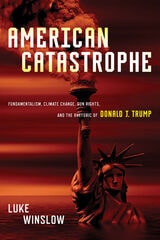
American Catastrophe
Fundamentalism, Climate Change, Gun Rights, and the Rhetoric of Donald J. TrumpLuke Winslow
The Ohio State University Press, 2020
Luke Winslow introduces the rhetorical homology as a critical tool useful for understanding how catastrophic appeals unite Americans across disparate religious, ecological, cultural, and political spheres. More specifically, the four case study chapters examining Christian fundamentalism, anti-environmentalism, gun rights messaging, and the administration of Donald Trump reveal a consistent formal pattern oriented toward catastrophe. In teasing out this orientation toward catastrophe, Winslow offers a fresh, provocative, and insightful contribution to our most pressing social challenges.
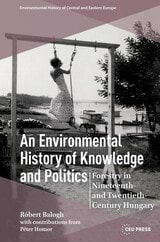
An Environmental History of Knowledge and Politics
Forestry in Nineteenth- and Twentieth-Century HungaryRobert Balogh
Central European University Press, 2026
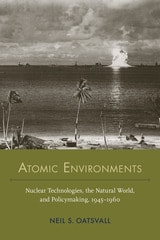
Atomic Environments
Nuclear Technologies, the Natural World, and Policymaking, 1945–1960Neil S. Oatsvall
University of Alabama Press, 2023
Demonstrates how policymakers influenced environmental science during the early nuclear age
In Atomic Environments: Nuclear Technologies, the Natural World, and Policymaking, 1945–1960, Neil S. Oatsvall examines how top officials in the Truman and Eisenhower administrations used environmental science to develop nuclear strategy at the beginning of the Cold War. While many people were involved in research and analysis during the period in question, it was at highest levels of executive decision-making where environmental science and nuclear science most clearly combined to shape the nation’s policies.
Oatsvall clearly demonstrates how the natural world and the scientific disciplines that study it became integral parts of nuclear science rather than adversarial fields of knowledge. But while nuclear technologies heavily depended on environmental science to develop, those same technologies frequently caused great harm to the natural world. Moreover, while some individuals expressed real anxieties about the damage wrought by nuclear technologies, policymakers as a class consistently made choices that privileged nuclear boosterism and secrecy, prioritizing institutional values over the lives and living systems that they were ostensibly charged to protect.
By scrutinizing institutional policymaking practices and agendas at the birth of the nuclear age, a constant set of values becomes clear. Oatsvall reveals an emerging technocratic class that routinely valued knowledge about the environment to help create and maintain a nuclear arsenal, despite its existential threat to life on earth and the negative effects many nuclear technologies had on ecosystems and the American people alike. Although policymakers took their charge to protect and advance the welfare of the United States and its people seriously, Atomic Environments demonstrates how they often failed to do so because their allegiance to the US nuclear hierarchy blinded them to the real risks and dangers of the nuclear age.