Results by title
67 books match the query 'Environmental protection' and 2 start with a
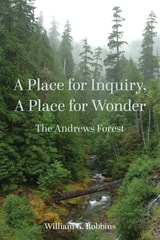
A Place for Inquiry, A Place for Wonder
The Andrews ForestWilliam Robbins
Oregon State University Press, 2020
The H.J. Andrews Experimental Forest is a slice of classic Oregon: due east of Eugene in the Cascade Mountains, it comprises 15,800 acres of the Lookout Creek watershed. The landscape is steep, with hills and deep valleys and cold, fast-running streams. The densely forested landscape includes cedar, hemlock, and moss-draped Douglas fir trees. One of eighty-one USDA experimental forests, the Andrews is administered cooperatively by the US Forest Service, OSU, and the Willamette National Forest. While many Oregonians may think of the Andrews simply as a good place to hike, research on the forest has been internationally acclaimed, has influenced Forest management, and contributed to our understanding of healthy forests.
In A Place for Inquiry, A Place for Wonder, historian William Robbins turns his attention to the long-overlooked Andrews Forest and argues for its importance to environmental science and policy. From its founding in 1948, the experimental forest has been the site of wide-ranging research. Beginning with postwar studies on the conversion of old-growth timber to fast-growing young stands, research at the Andrews shifted in the next few decades to long-term ecosystem investigations that focus on climate, streamflow, water quality, vegetation succession, biogeochemical cycling, and effects of forest management. The Andrews has thus been at the center of a dramatic shift in federal timber practices from industrial, intensive forest management policies to strategies emphasizing biodiversity and healthy ecosystems.
In A Place for Inquiry, A Place for Wonder, historian William Robbins turns his attention to the long-overlooked Andrews Forest and argues for its importance to environmental science and policy. From its founding in 1948, the experimental forest has been the site of wide-ranging research. Beginning with postwar studies on the conversion of old-growth timber to fast-growing young stands, research at the Andrews shifted in the next few decades to long-term ecosystem investigations that focus on climate, streamflow, water quality, vegetation succession, biogeochemical cycling, and effects of forest management. The Andrews has thus been at the center of a dramatic shift in federal timber practices from industrial, intensive forest management policies to strategies emphasizing biodiversity and healthy ecosystems.
[more]
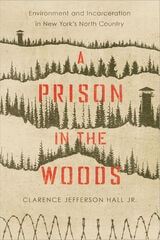
A Prison in the Woods
Environment and Incarceration in New York's North CountryClarence Jefferson Hall
University of Massachusetts Press, 2020
Since the mid-nineteenth century, Americans have known the Adirondack Mountains of upstate New York as a site of industrial production, a place to heal from disease, and a sprawling outdoor playground that must be preserved in its wild state. Less well known, however, has been the area's role in hosting a network of state and federal prisons. A Prison in the Woods traces the planning, construction, and operation of penitentiaries in five Adirondack Park communities from the 1840s through the early 2000s to demonstrate that the histories of mass incarceration and environmental consciousness are interconnected.
Clarence Jefferson Hall Jr. reveals that the introduction of correctional facilities—especially in the last three decades of the twentieth century—unearthed long-standing conflicts over the proper uses of Adirondack nature, particularly since these sites have contributed to deforestation, pollution, and habitat decline, even as they've provided jobs and spurred economic growth. Additionally, prison plans have challenged individuals' commitment to environmental protection, tested the strength of environmental regulations, endangered environmental and public health, and exposed tensions around race, class, place, and belonging in the isolated prison towns of America's largest state park.
Clarence Jefferson Hall Jr. reveals that the introduction of correctional facilities—especially in the last three decades of the twentieth century—unearthed long-standing conflicts over the proper uses of Adirondack nature, particularly since these sites have contributed to deforestation, pollution, and habitat decline, even as they've provided jobs and spurred economic growth. Additionally, prison plans have challenged individuals' commitment to environmental protection, tested the strength of environmental regulations, endangered environmental and public health, and exposed tensions around race, class, place, and belonging in the isolated prison towns of America's largest state park.
[more]