Results by title
25 books match the query 'Epidemiology'

A COVID Charter, A Better World
Toby Miller
Rutgers University Press, 2021
A COVID Charter, A Better World outlines the steps needed to reform public policies and fix the structural vulnerabilities that the current pandemic has made so painfully clear. Leading scholar Toby Miller argues that we must resist neoliberalism’s tendency to view health in terms of individual choices and market-driven solutions, because that fails to preserve human rights. He addresses the imbalance of geopolitical power to explain how we arrived at this point and shows that the pandemic is more than just a virus—it’s a social disease. By examining how the U.S., Britain, Mexico, and Colombia have responded to the COVID-19 crisis, Miller investigates corporate, scientific, and governmental decision-making and the effects those decisions have had on disadvantaged local communities. Drawing from human rights charters ratified by various international organizations, he then proposes a COVID charter, calling for a new world that places human lives above corporate profits.

Avian Reservoirs
Virus Hunters and Birdwatchers in Chinese Sentinel PostsFrédéric Keck
Duke University Press, 2020

Bioarchaeological Studies of Life in the Age of Agriculture
A View from the SoutheastEdited by Patricia M. Lambert
University of Alabama Press, 2000
Investigations of skeletal remains from key archaeological sites reveal new data and offer insights on prehistoric life and health in the Southeast.
The shift from foraging to farming had important health consequences for prehistoric peoples, but variations in health existed within communities that had made this transition. This new collection draws on the rich bioarchaeological record of the Southeastern United States to explore variability in health and behavior within the age of agriculture. It offers new perspectives on human adaptation to various geographic and cultural landscapes across the entire Southeast, from Texas to Virginia, and presents new data from both classic and little-known sites.
The contributors question the reliance on simple cause-and-effect relationships in human health and behavior by addressing such key bioarchaeological issues as disease history and epidemiology, dietary composition and sufficiency, workload stress, patterns of violence, mortuary practices, and biological consequences of European contact. They also advance our understanding of agriculture by showing that uses of maize were more varied than has been previously supposed.
Representing some of the best work being done today by physical anthropologists, this volume provides new insights into human adaptation for both archaeologists and osteologists. It attests to the heterogeneous character of Southeastern societies during the late prehistoric and early historic periods while effectively detailing the many factors that have shaped biocultural evolution.
COVID Diagnosed the System
Lessons from the Pandemic in Massachusetts PrisonsBridget Conley
Rutgers University Press, 0
The American criminal justice system was in flux in 2020, a clash of possibilities for reform, retrenchment, and radical change—nowhere more so than in Massachusetts, which had just passed major criminal justice reform. The COVID-19 pandemic interrupted the moment with life-threatening force, ravaging people held in prisons and jails across the country. However, it did not so much create new deprivations and suffering as it exposed prisons as sites of physical, institutional, and psychological violence that do not make communities safer. At the same time, advocates for people in prisons—including many incarcerated and formerly incarcerated people—seized on the pandemic’s disruptions to demand change. Detailing the first year of the pandemic inside the Massachusetts state prison system, this book argues that the history of the pandemic inside prisons exposed both the cruelties of incarceration and the power of change when it is led by directly affected people.
Consumed In The City
Observing Tuberculosis At Century'S EndPaul Draus
Temple University Press, 2004
Diseases of Poverty
Epidemiology, Infectious Diseases, and Modern PlaguesLisa V. Adams and John R. Butterly
Dartmouth College Press, 2015
Epidemics
The Story of South Africa’s Five Most Lethal Human DiseasesHoward Phillips
Ohio University Press, 2012
This is the first history of epidemics in South Africa, lethal episodes that significantly shaped this society over three centuries. Focusing on five devastating diseases between 1713 and today—smallpox, bubonic plague, “Spanish influenza,” polio, and HIV/AIDS—the book probes their origins, their catastrophic courses, and their consequences in both the short and long terms. The impacts of these epidemics ranged from the demographic—the “Spanish flu,” for instance, claimed the lives of six percent of the country’s population in six weeks—to the political, the social, the economic, the spiritual, the psychological, and the cultural. Moreover, as each of these epidemics occurred at crucial moments in the country’s history—such as during the South African War and World War I—the book also examines how these processes affected and were affected by the five epidemics. To those who read this book, history will not look the same again.
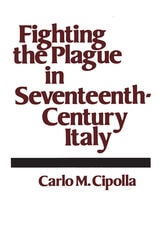
Fighting the Plague in Seventeenth-Century Italy
Carlo M. Cipolla
University of Wisconsin Press, 1981
After the great pandemic of 1348, the plague became endemic in Europe, affecting life at every level for more than three hundred years. In attempting to fight the dread enemy, the North Italian states had developed, by the early sixteenth century, a highly sophisticated system of public health. Special permanent magistracies combining legislative and executive powers were established to administer all public health matters.
In this volume, Carlo M. Cipolla throws new light on the subject, utilizing newly uncovered and significant archival material.
In the first essay, the author analyzes the complex set of interrelationships that existed between theory and practice in Renaissance epidemiology. The significance of this essay goes beyond the history of public health and extends to the larger history of science.
In the second essay, Cipolla studies a case in which health matters became the object of intense diplomatic activity. In that instance, fully sovereign states envisaged interstate controls and relinquished discretionary powers for the sake of the “common health.” Although the concerted effort was short-lived, it does represent an attempt at international health cooperation that was unmatched for another two centuries, until the first International Sanitary Conference, held in Paris in 1851.
In the third essay, unusually detailed statistical documentation allows the author to analyze in detail the demographic, economic, and social aspects of the fight against the plague in a Tuscan city—Pistoia—during the epidemic of 1630–31.
A richly documented appendix, forming an essay in itself, illustrates present knowledge of the clinical, pathological, and epidemiological features of the plague in the sixteenth and seventeenth centuries in Europe.

Forensic Epidemiology
A Comprehensive Guide for Legal and Epidemiology ProfessionalsSana Loue
Southern Illinois University Press, 1999
Sana Loue explores the concepts of legal and epidemiological causation, the use of epidemiological data based on populations to determine causation in an individual case, and the use of epidemiological evidence in litigation, including the reliance on experts and expert witnesses.
Loue provides a guide for the attorney with little or no background in epidemiological theory and for the epidemiologist contemplating a new role as an expert witness. She assumes of her readers a working knowledge of the Federal Rules of Civil Procedure and the Federal Rules of Evidence.
Discussing the epidemiologist as expert witness, Loue covers the nature of that testimony, the purpose of the testimony, and the qualifications necessary to be regarded as an expert witness. She examines various legal theories of causation, primarily in the context of product liability and toxic tort, and addresses epidemiological principles and methods used in the process of causal inference.
Loue also focuses on legal mechanisms used to assess causation. Her concern here is with depositions and testimony and the preparation of epidemiology experts. She concludes her study by comparing the legal and epidemiological concepts of causation, using actual legal cases as examples.
Throughout the text, Loue incorporates excerpts from depositions, interrogatories, and trial testimony to provide concrete examples. She also sets up an appendix to provide nonattorney readers with an overview of the legal system. Ultimately, her goal is to foster a greater understanding between law and epidemiology.
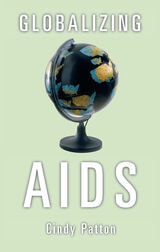
Globalizing Aids
Cindy Patton
University of Minnesota Press, 2002
A long-awaited look at responses to the AIDS epidemic in relation to globalization
As AIDS began to appear around the "global village" in the early 1980s, the closeness brought by new technologies no longer promised wondrous cultural exchange; instead it made possible the transmission of a frightening new kind of disease. International scientific institutions and news organizations quickly constructed a "place" for AIDS in the global imaginary: from the heart of Africa and gay bathhouses in San Francisco to the back streets of Southeast Asia and poverty-stricken neighborhoods in the United States. Such simplistic accounts helped recycle racist ideas about Africans and Asians, intensified homophobic visions of irresponsible gay sexuality, and ignored the scientific and human reality of local experiences of the epidemic.
In Globalizing AIDS, pioneering cultural critic Cindy Patton looks at the complex interaction between modern science, media coverage, and local activism during the first decade of the epidemic. Patton's critique of both the production of scientific credibility and the implementation of public health policy at the local level offers a bold reevaluation of how we think about AIDS and an innovative approach to the reality of the disease.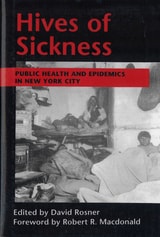
Hives of Sickness
Public Health and Epidemics in New York CityRosner, David
Rutgers University Press, 1995
An 1865 report on public health in New York painted a grim picture of "high brick blocks and closely-packed houses . . . literally hives of sickness" propagating epidemics of cholera, smallpox, typhoid, typhus, and yellow fever, which swept through the whole city. In this stimulating collection of essays, nine historians of American medicine explore New York's responses to its public health crises from colonial times to the present. The essays illustrate the relationship between the disease environment of New York and changes in housing, population, social conditions, and the success of medical science, linking such factors to New York's experiences with smallpox, polio, and AIDS.
The volume is essential reading for anyone interested in American public health and the social history of New York.
The contributors are Ronald Bayer, Elizabeth Blackmar, Gretchen A. Condran, Elizabeth Fee, Daniel M. Fox, Evelynn M. Hammonds, Alan M. Kraut, Judith Walzer Leavitt, and Naomi Rogers. David Rosner is a professor of history at Baruch College and The Graduate School of the City University of New York. Robert R. Macdonald is the director of the Museum of the City of New York.
A publication of the Museum of the City of New York
Choice Reviews 1995 November
This is one of a series of books focusing on the impact of disease intended to enhance the understanding of both past and present regarding reactions to periodic epidemics. Robert B. Macdonald, director of the Museum of the City of New York, which supports this series, states: "The individual and collective responses to widespread sickness are mirrors to the cultural, religious, economic, political, and social histories of cities and nations." Rosner selected eight renowned and respected individuals to describe the reactions and responses to smallpox, polio, and AIDS epidemics in New York City since 1860, and the efforts of officials and professionals to deal with the impact of disease. Essayists present disease broadly from economic, social, political, and health perspectives. Causes of epidemics include the expected and usual: thousands of immigrants pouring into the city, inadequate water and food supplies, lack of sewage disposal, unemployment leading to poverty. An unexpected cause was the avarice of real estate investors, inexorably driving up housing costs.
Highly recommended for all students of history, public health, health policy, and sociology. Upper-division undergraduate through professional. Copyright 1999 American Library Association

Kiss Of Death
Joseph Bastien
University of Utah Press, 1998

Mad Dogs and Meerkats
A History of Resurgent Rabies in Southern AfricaKaren Brown
Ohio University Press, 2011
Through the ages, rabies has exemplified the danger of diseases that transfer from wild animals to humans and their domestic stock. In South Africa, rabies has been on the rise since the latter part of the twentieth century despite the availability of postexposure vaccines and regular inoculation campaigns for dogs.
In Mad Dogs and Meerkats: A History of Resurgent Rabies in Southern Africa, Karen Brown links the increase of rabies to the HIV/AIDS epidemic. Her study shows that the most afflicted regions of South Africa have seen a dangerous rise in feral dog populations as people lack the education, means, or will to care for their pets or take them to inoculation centers. Most victims are poor black children. Ineffective disease control, which in part depends on management policies in neighboring states and the diminished medical and veterinary infrastructures in Zimbabwe, has exacerbated the problem.
This highly readable book is the first study of rabies in Africa, tracing its history in South Africa and neighboring states from 1800 to the present and showing how environmental and economic changes brought about by European colonialism and global trade have had long-term effects.
Mad Dogs and Meerkats is recommended for public health policy makers and anyone interested in human-animal relations and how societies and governments have reacted to one of the world’s most feared diseases.
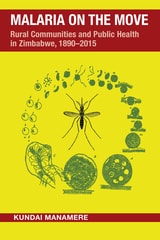
Malaria on the Move
Rural Communities and Public Health in Zimbabwe, 1890-2015Kundai Manamere
Ohio University Press, 2025

Microbial Resolution
Visualization and Security in the War against Emerging MicrobesGloria Chan-Sook Kim
University of Minnesota Press, 2024
An interdisciplinary study charting the war against microbial futures leads to a new theory of contemporary vision and visuality
In 1989, a group of U.S. government scientists met to discuss some surprising findings: new diseases were appearing around the world, and viruses that they thought long vanquished were resurfacing. Their appearance heralded a future perpetually threatened by unforeseeable biological risks, sparking a new concept of disease: the “emerging microbe.” With the Cold War nearing its end, American scientists and security experts turned to confront this new “enemy,” redirecting national security against its risky horizons. In order to be fought, emerging microbes first needed to be made perceptible; but how could something immaterial, unknowable, and ever mutating be coaxed into visibility, knowability, and operability?
Microbial Resolution charts the U.S.-led war on the emerging microbe to show how their uncertain futures were transformed into objects of global science and security. Moving beyond familiar accounts that link scientific knowledge production to optical practices of visualizing the invisible, Gloria Chan-Sook Kim develops a theory of “microbial resolution” to analyze the complex problematic that arises when dealing with these entities: what can be seen when there is nothing to see? Through a syncretic analysis of data mining, animal-tracking technologies, media networks, computer-modeled futures, and global ecologies and infrastructures, she shows how a visual impasse—the impossibility of seeing microbial futures—forms the basis for new modes of perceiving, knowing, and governing in the present.
Timely and thought provoking, Microbial Resolution opens up the rich paradoxes, irreconcilabilities, and failures inherent in this project and demonstrates how these tensions profoundly animate twenty-first-century epistemologies, aesthetics, affects, and ecologies.
Persisting Pandemics
Syphilis, AIDS, and COVIDPowel H. Kazanjian
Rutgers University Press, 2025
Practical Healthcare Epidemiology
Third EditionEdited by Ebbing Lautenbach, Keith F. Woeltje, and Preeti N. Malani
University of Chicago Press, 2010
In recent years, issues of infection prevention and control, patient safety, and quality-of-care have become increasingly prominent in healthcare facilities. Practical Healthcare Epidemiology takes a practical, hands-on approach to these issues, addressing all aspects of infection surveillance and prevention in clear, straightforward terms. This fully revised third edition brings together the expertise of more than fifty leaders in healthcare epidemiology who provide clear, sound guidance on infection prevention and control for the full range of patients in all types of healthcare facilities, including those in settings with limited resources. A powerful resource for practitioners in any branch of medicine or public health who are involved in infection prevention and control, whether they are experienced in healthcare epidemiology or new to the field.
“A handy desk reference and an up-to-date primer for trainees and experts alike” —The Journal of the American Medical Association
“An essential for anyone in the field.”—Thomas R. Talbot, Chief Hospital Epidemiologist, Vanderbilt University Medical Center

The China-US Partnership to Prevent Spina Bifida
The Evolution of a Landmark Epidemiological StudyDeborah Kowal
Vanderbilt University Press, 2015
Sixteen thousand staff were involved in running the project, which encountered massive bureaucratic obstacles as well as cultural differences, politicking for study designs and funding, the crisis of Tiananmen Square, and testy debates over research ethics. Nevertheless, the researchers persevered in a collaboration that lasted more than three decades and led to landmark findings on the role of folic acid in preventing spina bifida. Fortifying cereal grain products with folic acid became routine in the United States and a growing number of nations around the world: that intervention was named one of the ten great public health achievements of the last decade.

The Cholera Years
The United States in 1832, 1849, and 1866Charles E. Rosenberg
University of Chicago Press, 1987
"A major work of interpretation of medical and social thought . . . this volume is also to be commended for its skillful, absorbing presentation of the background and the effects of this dread disease."—I.B. Cohen, New York Times
"The Cholera Years is a masterful analysis of the moral and social interest attached to epidemic disease, providing generally applicable insights into how the connections between social change, changes in knowledge and changes in technical practice may be conceived."—Steven Shapin, Times Literary Supplement
"In a way that is all too rarely done, Rosenberg has skillfully interwoven medical, social, and intellectual history to show how medicine and society interacted and changed during the 19th century. The history of medicine here takes its rightful place in the tapestry of human history."—John B. Blake, Science
The Cholera Years
The United States in 1832, 1849, and 1866Charles E. Rosenberg
University of Chicago Press, 1987
Cholera was the classic epidemic disease of the nineteenth century, as the plague had been for the fourteenth. Its defeat was a reflection not only of progress in medical knowledge but of enduring changes in American social thought. Rosenberg has focused his study on New York City, the most highly developed center of this new society. Carefully documented, full of descriptive detail, yet written with an urgent sense of the drama of the epidemic years, this narrative is as absorbing for general audiences as it is for the medical historian. In a new Afterword, Rosenberg discusses changes in historical method and concerns since the original publication of The Cholera Years.
"A major work of interpretation of medical and social thought . . . this volume is also to be commended for its skillful, absorbing presentation of the background and the effects of this dread disease."—I.B. Cohen, New York Times
"The Cholera Years is a masterful analysis of the moral and social interest attached to epidemic disease, providing generally applicable insights into how the connections between social change, changes in knowledge and changes in technical practice may be conceived."—Steven Shapin, Times Literary Supplement
"In a way that is all too rarely done, Rosenberg has skillfully interwoven medical, social, and intellectual history to show how medicine and society interacted and changed during the 19th century. The history of medicine here takes its rightful place in the tapestry of human history."—John B. Blake, Science
The Histories of HIVs
The Emergence of the Multiple Viruses That Caused the AIDS EpidemicsWilliam H. Schneider
Ohio University Press, 2021
This new collection of essays on HIV viruses spans disciplines to topple popular narratives about the origins of the AIDS pandemic and the impact of the disease on public health policy.
With a death toll in the tens of millions, the AIDS pandemic was one of the worst medical disasters of the past century. The disease was identified in 1981, at the height of miraculous postwar medical achievements, including effective antibiotics, breakthrough advances in heart surgery and transplantations, and cheap, safe vaccines—smallpox had been eradicated just a few years earlier. Arriving as they did during this era of confidence in modern medicine, the HIV epidemics shook the public’s faith in health science. Despite subsequent success in identifying, testing, and treating AIDS, the emergence of epidemics and outbreaks of Ebola, Zika, and the novel coronaviruses (SARS and COVID-19) are stark reminders that such confidence in modern medicine is not likely to be restored until the emergence of these viruses is better understood.
This collection combines the work of major social science and humanities scholars with that of virologists and epidemiologists to provide a broader understanding of the historical, social, and cultural circumstances that produced the pandemic. The authors argue that the emergence of the HIV viruses and their epidemic spread were not the result of a random mutation but rather broader new influences whose impact depended upon a combination of specific circumstances at different places and times. The viruses emerged and were transmitted according to population movement and urbanization, changes in sexual relations, new medical procedures, and war. In this way, the AIDS pandemic was not a chance natural occurrence, but a human-made disaster.
Essays by: Ernest M. Drucker, Tamara Giles-Vernick, Ch. Didier Gondola, Guillaume Lachenal, Amandine Lauro, Preston A. Marx, Stephanie Rupp, François Simon, Jorge Varanda
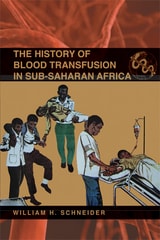
The History of Blood Transfusion in Sub-Saharan Africa
William H. Schneider
Ohio University Press, 2013
This first extensive study of the practice of blood transfusion in Africa traces the history of one of the most important therapies in modern medicine from the period of colonial rule to independence and the AIDS epidemic. The introduction of transfusion held great promise for improving health, but like most new medical practices, transfusion needed to be adapted to the needs of sub-Saharan Africa, for which there was no analogous treatment in traditional African medicine.
This otherwise beneficent medical procedure also created a “royal road” for microorganisms, and thus played a central part in the emergence of human immune viruses in epidemic form. As with more developed health care systems, blood transfusion practices in sub-Saharan Africa were incapable of detecting the emergence of HIV. As a result, given the wide use of transfusion, it became an important pathway for the initial spread of AIDS. Yet African health officials were not without means to understand and respond to the new danger, thanks to forty years of experience and a framework of appreciating long-standing health risks. The response to this risk, detailed in this book, yields important insight into the history of epidemics and HIV/AIDS.
Drawing on research from colonial-era governments, European Red Cross societies, independent African governments, and directly from health officers themselves, this book is the only historical study of the practice of blood transfusion in Africa.
The Outbreak Atlas
Rebecca Katz and Mackenzi S. Moore
Vanderbilt University Press, 2024
For years the Georgetown University Center for Global Health Science and Security has curated an interactive online tool for professionals that identifies the activities involved across all phases of an outbreak. The Georgetown Outbreak Activity Library (GOAL) captures what needs to get done, when, and by whom. Now, in The Outbreak Atlas, Rebecca Katz and Mackenzie S. Moore have translated this complex material into a book designed for a public audience.
This book provides an overview of outbreak activities alongside compelling case studies and visuals to guide readers through the complexity involved in outbreak preparedness, response, and recovery. It lifts the curtain on the rationale and interconnectedness of outbreak responses across different fields and at various levels, presenting accessible information that ensures a shared understanding of the essential activities to control an outbreak.
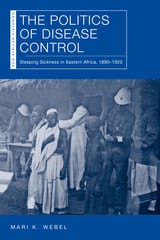
The Politics of Disease Control
Sleeping Sickness in Eastern Africa, 1890–1920Mari K. Webel
Ohio University Press, 2019
A history of epidemic illness and political change, The Politics of Disease Control focuses on epidemics of sleeping sickness (human African trypanosomiasis) around Lake Victoria and Lake Tanganyika in the early twentieth century as well as the colonial public health programs designed to control them. Mari K. Webel prioritizes local histories of populations in the Great Lakes region to put the successes and failures of a widely used colonial public health intervention—the sleeping sickness camp—into dialogue with African strategies to mitigate illness and death in the past.
Webel draws case studies from colonial Burundi, Tanzania, and Uganda to frame her arguments within a zone of vigorous mobility and exchange in eastern Africa, where African states engaged with the Belgian, British, and German empires. Situating sleeping sickness control within African intellectual worlds and political dynamics, The Politics of Disease Control connects responses to sleeping sickness with experiences of historical epidemics such as plague, cholera, and smallpox, demonstrating important continuities before and after colonial incursion. African strategies to mitigate disease, Webel shows, fundamentally shaped colonial disease prevention programs in a crucial moment of political and social change.
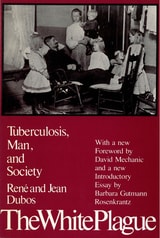
The White Plague
Tuberculosis, Man and SocietyDubos, Jean
Rutgers University Press, 1987
In The White Plague, René and Jean Dubos argue that the great increase of tuberculosis was intimately connected with the rise of an industrial, urbanized society and—a much more controversial idea when this book first appeared forty years ago—that the progress of medical science had very little to do with the marked decline in tuberculosis in the twentieth century.
The White Plague has long been regarded as a classic in the social and environmental history of disease. This reprint of the 1952 edition features new introductory writings by two distinguished practitioners of the sociology and history of medicine. David Mechanic's foreword describes the personal and intellectual experience that shaped René Dubos's view of tuberculosis. Barbara Gutmann Rosenkrantz's historical introduction reexamines The White Plague in light of recent work on the social history of tuberculosis. Her thought-provoking essay pays particular attention to the broader cultural and medical assumptions about sickness and sick people that inform a society’s approach to the conquest of disease.