Results by title
2 books match the query 'Epps, Brad'
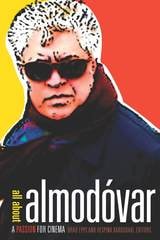
All about Almodóvar
A Passion for CinemaBrad Epps
University of Minnesota Press, 2009
All about Almodóvar offers new perspectives on the filmmaker’s artistic vision and cinematic preoccupations, influences, and techniques. Through overviews of his oeuvre and in-depth analyses of specific films, the essays here explore a diverse range of subjects: Almodóvar’s nuanced use of television and music in his films; his reworkings of traditional film genres such as comedy, horror, and film noir; his penchant for melodrama and its relationship to melancholy, violence, and coincidence; his intricate questioning of sexual and national identities; and his increasingly sophisticated inquiries into visuality and its limits.
Closing with Almodóvar’s own diary account of the making of Volver and featuring never-before-seen photographs from El Deseo production studio, All about Almodóvar both reflects and illuminates its subject’s dazzling eclecticism.
Monique Wittig
At the Crossroads of Criticism, Volume 13Brad Epps and Jonathan D. Katz, eds.
Duke University Press, 0
Contributors provide critical and disparate snapshots—some more theoretical and abstract, some more experiential and concrete—of debates on, and investments in, Wittig’s theoretical legacy. Judith Butler analyzes Wittig’s “particular” universalism and offers a careful exposition of her worldview. Diane Griffin Crowder studies Wittig within a context of materialist inquiry that has often been ignored or misunderstood. Robyn Wiegman examines the complex nature of memorialization and inquires into Wittig’s place in contemporary queer theory. Seth Clark Silberman, calling attention to Wittig’s fiction, reverses the usual ascendancy of critique over narrative fiction and produces a formally innovative, if willfully “parasitic,” account of Wittig’s claim on the contributor’s imagination as he watches his mother slowly die of cancer. Alice Jardine, who situates Wittig as a disruptive and disorienting force in a mother-centered feminism, provides an autobiographically charged review of the recent history of feminism, queer studies, and the still uneasy relations between them. The issue also includes a detailed introduction by Brad Epps and Jonathan Katz; a brief personal reflection by Sandra K. Soto, a close friend and colleague of Wittig’s; and two texts by Wittig, one critical (with a foreword by Sande Zeig) and the other creative, both previously unavailable in English.
Contributors. Judith Butler, Diane Griffin Crowder, Brad Epps, Alice Jardine, Jonathan Katz, Seth Clark Silberman, Sandra K. Soto, Robyn Wiegman, Monique Wittig, Sande Zeig