Results by title
2 books match the query 'Equal pay for equal work'

"Rights, Not Roses"
Unions and the Rise of Working-Class Feminism, 1945-80Dennis A. Deslippe
University of Illinois Press, 2000
Educated, white collar professional women carried the most visible banners of feminism. But working class women were a powerful force in the campaign for gender equality. Dennis A. Deslippe explores how unionized wage-earning women led the struggle to place women's employment rights on the national agenda, decisively influencing both the contemporary labor movement and second-wave feminism.
Deslippe's account unravels a complex history of how labor leaders accommodated and resisted working women's demands for change. Through case studies of unions representing packinghouse and electrical workers, Deslippe explains why gender equality emerged as an issue in the 1960s and how the activities of wage-earning women in and outside of their unions shaped the content of the debate. He also traces the fault lines separating working-class women--who sought gender equality within the parameters of unionist principles such as seniority--from middle-class women--who sought an equal rights amendment that would guarantee an abstract equality for all women.
Thoughtful and detailed, "Rights, Not Roses" offers a new look at the complexities of working-class feminism.
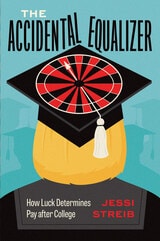
The Accidental Equalizer
How Luck Determines Pay after CollegeJessi Streib
University of Chicago Press, 2023
As a gateway to economic opportunity, a college degree is viewed by many as America’s great equalizer. And it’s true: wealthier, more connected, and seemingly better-qualified students earn exactly the same pay as their less privileged peers. Yet, the reasons why may have little to do with bootstraps or self-improvement—it might just be dumb luck. That’s what sociologist Jessi Streib proposes in The Accidental Equalizer, a conclusion she reaches after interviewing dozens of hiring agents and job-seeking graduates.
Streib finds that luck shapes the hiring process from start to finish in a way that limits class privilege in the job market. Employers hide information about how to get ahead and force students to guess which jobs pay the most and how best to obtain them. Without clear routes to success, graduates from all class backgrounds face the same odds at high pay. The Accidental Equalizer is a frank appraisal of how this “luckocracy” works and its implications for the future of higher education and the middle class. Although this system is far from eliminating American inequality, Streib shows that it may just be the best opportunity structure we have—for better and for worse.