Results by title

17 books match the query 'Ethics & Professional Responsibility'
cover of Achieving Access to Justice in a Business and Human Rights Context: An Assessment of Litigation and Regulatory Responses in European Civil-Law Countries

Achieving Access to Justice in a Business and Human Rights Context

An Assessment of Litigation and Regulatory Responses in European Civil-Law Countries

Virginie Rouas

University of London Press, 2022

A powerful guide to seeking justice from corporations who commit human rights and environmental atrocities.

Multinational enterprises, or MNEs, can contribute to economic prosperity and social development in the countries where they operate. At the same time, their activities may directly or indirectly cause harm to humans and to the environment. Historically, MNEs have rarely been held accountable for their involvement in human rights abuses and environmental damage. In recent years, however, activists have sought to hold parent companies directly liable for the harm caused by their group’s activities. They have also strategically used litigation to trigger corporate accountability reforms at international, regional, and national levels.

Focusing on Europe, this book evaluates the extent to which litigation against MNEs has been effective in achieving access to justice and corporate accountability, particularly in civil-law countries. It also considers whether ongoing regulatory developments, such as the adoption of mandatory human rights due diligence norms and the negotiations for a business and human rights treaty, can contribute to the realization of access to justice and corporate accountability in the future.

[more]
cover of Affording Justice: How the Legal Profession Is Failing America's Middle Class and What to Do About It

Affording Justice

How the Legal Profession Is Failing America's Middle Class and What to Do About It

Sheldon Krantz

Duke University Press, 2027

Middle-class Americans know two things about legal practice: law is complicated, and lawyers are expensive. So expensive, in fact, that only large companies and the wealthy can generally afford to hire them—and yet US law is often so complex that ordinary people cannot hope to represent themselves successfully. Sheldon Krantz draws on his long and varied career as a lawyer and scholar to show how the legal system has denied the majority of Americans equal access to justice and offers productive, practical reforms to address the problem. Through case studies and a comprehensive overview of relevant legal policy and practices, Krantz charts the real impacts of the current system’s inadequacies and highlights creative solutions, some that are currently in use and others that should be implemented. Affording Justice is essential reading for anyone concerned about access to justice in today’s America.
[more]
cover of An Ethics of Interrogation

An Ethics of Interrogation

Michael Skerker

University of Chicago Press, 2010
 
The act of interrogation, and the debate over its use, pervades our culture, whether through fictionalized depictions in movies and television or discussions of real-life interrogations on the news. But despite daily mentions of the practice in the media, there is a lack of informed commentary on its moral implications. Moving beyond the narrow focus on torture that has characterized most work on the subject, An Ethics of Interrogation is the first book to fully address this complex issue.
In this important new examination of a controversial subject, Michael Skerker confronts a host of philosophical and legal issues, from the right to privacy and the privilege against compelled self-incrimination to prisoner rights and the legal consequences of different modes of interrogation for both domestic criminal and foreign terror suspects. These topics raise serious questions about the morality of keeping secrets as well as the rights of suspected terrorists and insurgents. Thoughtful consideration of these subjects leads Skerker to specific policy recommendations for law enforcement, military, and intelligence professionals.
[more]
cover of BigLaw: Money and Meaning in the Modern Law Firm

BigLaw

Money and Meaning in the Modern Law Firm

Mitt Regan and Lisa H. Rohrer

University of Chicago Press, 2021
The Great Recession intensified large law firms’ emphasis on financial performance, leading to claims that lawyers in these firms were now guided by business rather than professional values.  Based on interviews with more than 250 partners in large firms, Mitt Regan and Lisa H. Rohrer suggest that the reality is much more complex. It is true that large firm hiring, promotion, compensation, and termination policies are more influenced by business considerations than ever before and that firms actively recruit profitable partners from other firms to replace those they regard as unproductive. At the same time, law firm partners continue to seek the non-financial rewards of being members of a distinct profession and are sensitive to whether their firms are committed to providing them. Regan and Rohrer argue that modern firms responding effectively to business demands while credibly affirming the importance of non-financial professional values can create strong cultures that enhance their ability to weather the storms of the modern legal market.
[more]
cover of Chicago Lawyers: The Social Structure of the Bar

Chicago Lawyers

The Social Structure of the Bar

John P. Heinz

Russell Sage Foundation, 1982
What determines the systematic allocation of status, power, and economic reward among lawyers?  What kind of social structure organizes lawyers' roles in the bar and in the larger community? As Heinz and Laumann convincingly demonstrate, the legal profession is stratified primarily by the character of the clients served, not by the type of legal service rendered.  In fact, the distinction between corporate and individual clients divides the bar into two remarkably separate hemispheres.  Using data from extensive personal interviews with nearly 800 Chicago lawyers, the authors show that lawyers who serve one type of client seldom serve the other.  Furthermore, lawyers' political, ethno-religious, and social ties are very likely to correspond to those of their client types.  Greater deference is consistently shown to corporate lawyers, who seem to acquire power by association with their powerful clients. Heinz and Laumann also discover that these two "hemispheres" of the legal profession are not effectively integrated by intraprofessional organizations such as the bar, courts, or law schools.  The fact that the bar is structured primarily along extraprofessional lines raises intriguing questions about the law and the nature of professionalism, questions addressed in a provocative and far-ranging final chapter. This volume, published jointly with the American Bar Foundation, offers a uniquely sophisticated and comprehensive analysis of lawyers' professional lives.  It will be of exceptional importance to sociologists and others interested in the legal profession, in the general study of professions, and in social stratification and the distribution of power.
[more]
cover of From Patrician to Professional Elite

From Patrician to Professional Elite

Walter Powell

Russell Sage Foundation, 1988
The Association of the Bar of the City of New York (ABCNY) is no ordinary professional organization. Formed in 1870 and housed in an imposing mid-town edifice, it was the first modern bar association, nationally known for its eminent membership, its reformist stance—and its intimidating selectivity. During much of its history, the ABCNY appeared to be more an upper-class, WASP legal club than an open, collegial association. How did such an organization fare in the face of post-war pressures for inclusiveness? From Patrician to Professional Elite offers a rare view of the internal dynamics of an institution adapting to a changed environment. The ABCNY maintained its elite identity by adopting a meritocratic organizational model in place of a class-based model. By shedding its overt exclusivity, the ABCNY asserted its legitimacy; by embracing an "open elite" or meritocratic model, the associate retained its high standing and relative homogeneity. In fact, the ABCNY today is dominated by the same functional group of lawyers as before, the corporate legal elite. This fascinating study of organizational change prompts a re-examination of fundamental questions about the class basis of modern professionalism and the dominance of elites within professions, in addition to illuminating the larger question of the role of elite institutions in democratic societies.
[more]
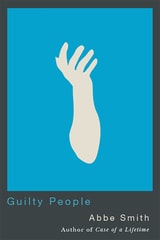
cover of Guilty People

Guilty People

Abbe Smith

Rutgers University Press, 2020

Criminal defense attorneys protect the innocent and guilty alike, but, the majority of criminal defendants are guilty. This is as it should be in a free society. Yet there are many different types of crime and degrees of guilt, and the defense must navigate through a complex criminal justice system that is not always equipped to recognize nuances.
 
In Guilty People, law professor and longtime criminal defense attorney Abbe Smith gives us a thoughtful and honest look at guilty individuals on trial. Each chapter tells compelling stories about real cases she handled; some of her clients were guilty of only petty crimes and misdemeanors, while others committed offenses as grave as rape and murder. In the process, she answers the question that every defense attorney is routinely asked: How can you represent these people?
 
Smith’s answer also tackles seldom-addressed but equally important questions such as: Who are the people filling our nation’s jails and prisons? Are they as dangerous and depraved as they are usually portrayed? How did they get caught up in the system? And what happens to them there? 
 
This book challenges the assumption that the guilty are a separate species, unworthy of humane treatment. It is dedicated to guilty people—every single one of us.
[more]
cover of Intellectual Freedom Manual, Eleventh Edition

Intellectual Freedom Manual, Eleventh Edition

Erin Office for Intellectual Freedom

American Library Association, 2026

When someone faces a difficult intellectual freedom (IF) issue, they usually don’t have time to wade through dense text to find the answers they need. Designed as a real-world reference, OIF’s Intellectual Freedom Manual provides trusted, comprehensive guidance for every library worker, from the volunteer to the director, in plain language. Whether you’re developing or reviewing policies, on-boarding new staff or trustees, responding to challenges and controversies, or studying librarianship, you’ll find this a vital tool, with features such as

  • contributions that center the voices of Black, Indigenous, and other People of Color (BIPOC) and LGBTQIA+ people, who are often targeted by censorship efforts;
  • chapters that begin with an overview explaining the big ideas and offering reflection questions;
  • an introduction to IF and why it matters, drawing on ALA's core IF documents and supported with adaptable policy worksheets;
  • information and best practice guidance on key topics such as access, children and youth, censorship and internet filtering, collection development and management, copyright, meeting rooms and exhibit spaces, library programming, politics and religion, privacy, and visits and requests from law enforcement;
  • stories from real people whose lives have been impacted by IF, showing how library policies shape culture, protect staff and users, and affect real people;
  • concise breakdowns of IF issues from legal experts, helping you understand the laws and how they apply in real situations;
  • practical advice on advocating for IF, getting help when challenges arise, lobbying, and working with your elected officials;
  • a thorough index to help you quickly find the information you need; and
  • a helpful glossary and selected bibliography of additional resources.
[more]
cover of Lawyers in Practice: Ethical Decision Making in Context

Lawyers in Practice

Ethical Decision Making in Context

Edited by Leslie C. Levin and Lynn Mather

University of Chicago Press, 2012

How do lawyers resolve ethical dilemmas in the everyday context of their practice? What are the issues that commonly arise, and how do lawyers determine the best ways to resolve them? Until recently, efforts to answer these questions have focused primarily on rules and legal doctrine rather than the real-life situations lawyers face in legal practice.

The first book to present empirical research on ethical decision making in a variety of practice contexts, including corporate litigation, securities, immigration, and divorce law, Lawyers in Practice fills a substantial gap in the existing literature. Following an introduction emphasizing the increasing importance of understanding context in the legal profession, contributions focus on ethical dilemmas ranging from relatively narrow ethical issues to broader problems of professionalism, including the prosecutor’s obligation to disclose evidence, the management of conflicts of interest, and loyalty to clients and the court. Each chapter details the resolution of a dilemma from the practitioner’s point of view that is, in turn, set within a particular community of practice. Timely and practical, this book should be required reading for law students as well as students and scholars of law and society.

[more]
cover of Life after Death: What Happens When Someone Survives an Execution?

Life after Death

What Happens When Someone Survives an Execution?

Austin D. Sarat

Temple University Press, 2027

In May and October of 2026, the Tennessee Department of Corrections failed to execute first Tony Carruthers and then Christa Pike via lethal injection. Their experiences raise the question of whether a second execution would be constitutional and fuel the debate over whether the death penalty can ever be anything but cruel and unusual punishment.

In Life after Death, esteemed legal scholar and student of capital punishment Austin Sarat tells the stories of eight others who, like Carruthers and Pike, survived failed execution attempts. He recounts what went wrong and what happened to them after their near-death experiences. Some endured the trauma of a second execution; others remained incarcerated for the rest of their lives. But each case posed distinctive challenges for courts and public officials.

Sarat insists that the death penalty can never be humane and that no one should ever have to face a second trip to the execution chamber. Life after Death urges Americans to recognize those realities. It offers a critical examination of the way the justice system uses capital punishment, and it does so by telling the stories of prisoners who survive efforts to put them to death.

[more]
cover of Modern Jewish Ethics since 1970: Writings on Methods, Sources, and Issues

Modern Jewish Ethics since 1970

Writings on Methods, Sources, and Issues

Edited by Jonathan K. Crane, Emily A. Filler, and Mira Beth Wasserman

Brandeis University Press, 2025

The field of Jewish ethics is never far from foundational questions about how to do Jewish ethics – and these questions are inseparable from other kinds of scholarly conclusions or prescriptions. In part because Jewish ethics is inherently deliberative, the volume is organized not by standalone essays but by small sets of curated conversations between scholars from different time periods, academic subfields, and religious commitments (or lack thereof).

These deliberate juxtapositions are to encourage scholars and students to develop similar meta-ethical analyses on Jewish ethics, broadly construed. Jewish ethics is not just a set of propositions or principles; nor can it be reduced to a single trajectory of thought or abstracted as an elaborate system of ideas. Jewish ethics is the field of study that engages Jewish texts, ideas, history, and experience in conversations about values and virtues, justice and good judgment, human relations and responsibilities. This volume presents some of those conversations to spark many more.
[more]
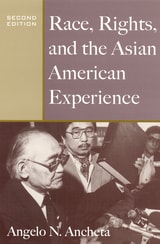
cover of Race, Rights, and the Asian American Experience

Race, Rights, and the Asian American Experience

Ancheta, Angelo N

Rutgers University Press, 2006

In Race, Rights, and the Asian American Experience, Angelo N. Ancheta demonstrates how United States civil rights laws have been framed by a black-white model of race that typically ignores the experiences of other groups, including Asian Americans. When racial discourse is limited to antagonisms between black and white, Asian Americans often find themselves in a racial limbo, marginalized or unrecognized as full participants.

Ancheta examines legal and social theories of racial discrimination, ethnic differences in the Asian American population, nativism, citizenship, language, school desegregation, and affirmative action. In the revised edition of this influential book, Ancheta also covers post-9/11 anti-Asian sentiment and racial profiling. He analyzes recent legal cases involving political empowerment, language rights, human trafficking, immigrant rights, and affirmative action in higher education-many of which move the country farther away from the ideals of racial justice. On a more positive note, he reports on the progress Asian Americans have made in the corporate sector, politics, the military, entertainment, and academia.

A skillful mixture of legal theories, court cases, historical events, and personal insights, this revised edition brings fresh insights to U.S. civil rights from an Asian American perspective.
[more]
cover of The Consciousness of the Litigator

The Consciousness of the Litigator

Duffy Graham

University of Michigan Press, 2005

"An important and thought-provoking addition to the literature on the ethics of lawyers."
---Kimberly Kirkland, Franklin Pierce Law Center

The Consciousness of the Litigator investigates the role of the lawyer in modern American political and social life and in the judicial process, and plumbs lawyers' perceptions of themselves, their work, and, especially, their sense of right and wrong.

In so doing, the book sheds light on the unique and little-examined subject of the moral mind of the litigator, whose work extends to all corners of society and whose primary expertise---making legal arguments---is the fundamental skill of all lawyers.

The Consciousness of the Litigator stands with Michael Kelly's Lives of Lawyers as a must-read for the many law students, scholars, and practicing litigators who struggle to balance ethical questions with the dictates of their highly commercialized profession.
[more]
cover of The Foundational Role of the United States Supreme Court: Reinforcing Legitimacy Through Internal Reform

The Foundational Role of the United States Supreme Court

Reinforcing Legitimacy Through Internal Reform

Tessa van Buchem

Central European University Press, 2027
In July 2022, the United Stares Supreme Court stood behind towering fences—physically intact, yet symbolically exposed. Erected in response to the leaked draft opinion in Dobbs v. Jackson Women’s Health Organization, the barriers became a stark metaphor for a deeper institutional crisis: the erosion of public trust. This book traces how the Court reached this fragile juncture and what is required to restore its legitimate authority. Once seen as a stabilizing force of American constitutionalism, the Court now faces unprecedented distrust, accusations of politicization, and declining legitimacy. The Foundational Role of the United States Supreme Court examines this erosion and outlines what must change. It shows how legitimacy can be rebuilt through transparency, principled reasoning, and a renewed commitment to the Court’s constitutional purpose and ethical standards. It offers a contribution for those seeking to understand the workings and future of the Supreme Court—and the democratic system it is meant to uphold.
[more]
cover of The Foundational Role of the United States Supreme Court: Reinforcing Legitimacy Through Internal Reform

The Foundational Role of the United States Supreme Court

Reinforcing Legitimacy Through Internal Reform

Tessa van Buchem

Central European University Press, 2027

In July 2022, the United Stares Supreme Court stood behind towering fences—physically intact, yet symbolically exposed. Erected in response to the leaked draft opinion in Dobbs v. Jackson Women’s Health Organization, the barriers became a stark metaphor for a deeper institutional crisis: the erosion of public trust. This book traces how the Court reached this fragile juncture and what is required to restore its legitimate authority. Once seen as a stabilizing force of American constitutionalism, the Court now faces unprecedented distrust, accusations of politicization, and declining legitimacy. The Foundational Role of the United States Supreme Court examines this erosion and outlines what must change. It shows how legitimacy can be rebuilt through transparency, principled reasoning, and a renewed commitment to the Court’s constitutional purpose and ethical standards. It offers a contribution for those seeking to understand the workings and future of the Supreme Court—and the democratic system it is meant to uphold.
[more]
cover of The Lawyer Myth: A Defense of the American Legal Profession

The Lawyer Myth

A Defense of the American Legal Profession

Frank T. Rennard and Read Stickland

Ohio University Press, 2008
Lawyers and the legal profession have become scapegoats for many of the problems of our age. In The Lawyer Myth: A Defense of the American Legal Profession, Rennard Strickland and Frank T. Read look behind current antilawyer media images to explore the historical role of lawyers as a balancing force in times of social, economic, and political change. One source of this disjunction of perception and reality, they find, is that American society has lost touch with the need for the lawyer’s skill and has come to blame unrelated social problems on the legal profession. This highly personal and impassioned book is their defense of lawyers and the rule of law in the United States. The Lawyer Myth confronts the hypocrisy of critics from both the right and the left who attempt to exploit popular misperceptions about lawyers and judges to further their own social and political agendas. By revealing the facts and reasoning behind the decisions in such cases as the infamous McDonald’s coffee spill, the authors provide a clear explanation of the operation of the law while addressing misconceptions about the number of lawsuits, runaway jury verdicts, and legal “technicalities” that turn criminals out on the street. Acknowledging that no system is perfect, the authors propose a slate of reforms for the bar, the judiciary, and law schools that will enable today’s lawyers—and tomorrow’s—to live up to the noble potential of their profession. Whether one thinks of lawyers as keepers of the springs of democracy, foot soldiers of the Constitution, architects and carpenters of commerce, umpires and field levelers, healers of the body politic, or simply bridge builders, The Lawyer Myth reminds us that lawyers are essential to American democracy.
[more]
cover of The Rule of Rules: Morality, Rules, and the Dilemmas of Law

The Rule of Rules

Morality, Rules, and the Dilemmas of Law

Larry Alexander and Emily Sherwin

Duke University Press, 2001

Rules perform a moral function by restating moral principles in concrete terms, so as to reduce the uncertainty, error, and controversy that result when individuals follow their own unconstrained moral judgment. Although reason dictates that we must follow rules to avoid destructive error and controversy, rules—and hence laws—are imperfect, and reason also dictates that we ought not follow them when we believe they produce the wrong result in a particular case. In The Rule of Rules Larry Alexander and Emily Sherwin examine this dilemma.
Once the importance of this moral and practical conflict is acknowledged, the authors argue, authoritative rules become the central problems of jurisprudence. The inevitable gap between rules and background morality cannot be bridged, they claim, although many contemporary jurisprudential schools of thought are misguided attempts to do so. Alexander and Sherwin work through this dilemma, which lies at the heart of such ongoing jurisprudential controversies as how judges should reason in deciding cases, what effect should be given to legal precedent, and what status, if any, should be accorded to “legal principles.” In the end, their rigorous discussion sheds light on such topics as the nature of interpretation, the ancient dispute among legal theorists over natural law versus positivism, the obligation to obey law, constitutionalism, and the relation between law and coercion.
Those interested in jurisprudence, legal theory, and political philosophy will benefit from the edifying discussion in The Rule of Rules.

[more]