Results by title
20 books match the query 'Ethnic groups'
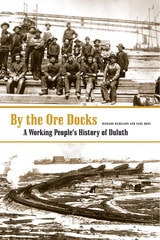
By The Ore Docks
A Working People’s History Of DuluthRichard Hudelson
University of Minnesota Press, 2006
In By the Ore Docks, Richard Hudelson and Carl Ross trace seventy years in the lives of Duluth’s multi-ethnic working class—Scandinavians, Finns, Italians, Poles, Irish, Jews, and African Americans—and chronicle, along with the events of the times, the city’s vibrant neighborhoods, religious traditions, and communities. But they also tell the dramatic story of how a populist worker’s coalition challenged the “legitimate American” business interests of the city, including the major corporation U.S. Steel.
From the Knights of Labor in the 1880s to the Industrial Workers of the World, the AFL and CIO, and the Democratic Farmer-Labor party, radical organizations and their immigrant visionaries put Duluth on the national map as a center in the fight for worker’s rights—a struggle inflamed by major strikes in the copper and iron mines.
By the Ore Docks is at once an important history of Duluth and a story of its working people, common laborers as well as union activists like Ernie Pearson, journalist Irene Paull, and Communist party gubernatorial candidate Sam Davis. Hudelson and Ross reveal tension between Duluth’s ethnic groups, while also highlighting the ability of the people to overcome those differences and shape the legacy of the city’s unsettled and remarkable past.
Richard Hudelson is professor of philosophy at the University of Wisconsin, Superior. He is the author of, among other works, Marxism and Philosophy in the Twentieth Century and The Rise and Fall of Communism.
Carl Ross (1913–2004) was a labor activist and the author of The Finn Factor in American Labor, Culture, and Society. He was director of the Twentieth-Century Radicalism in Minnesota Project of the Minnesota Historical Society.
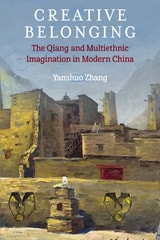
Creative Belonging
The Qiang and Multiethnic Imagination in Modern ChinaYanshuo Zhang
University of Michigan Press, 2026
China is a multicultural country home to fifty-five ethnic minority groups, yet due to linguistic and cultural barriers many of these groups remain understudied or unknown in the West. The Qiang, one of modern China’s officially recognized ethnic minorities, is also China’s longest-standing ethnoracial identity marker that has existed since the earliest recorded history of China. Creative Belonging investigates the formation and evolution of the Qiang as a people, a concept, and a cultural history in China. It further examines how the contemporary Qiang ethnic group interacts strategically with mainstream Chinese society, challenging the historically entrenched hierarchies between the sociocultural “centers” of China and its ethnic “peripheries.”
This book is based on years of ethnographic and textual-archival research in the Himalayan regions of southwest China, where the contemporary Qiang group resides. Drawing on a diverse range of official and local political discourses and previously unstudied literary, historiographical, and cinematic works, Yanshuo Zhang illuminates how the Qiang have carved out spaces of “creative belonging” within the parameters of multiculturalism in contemporary China. Rooted in ethnographic and textual-archival research, the book presents original materials produced by Qiang indigenous writers, scholars, artists, grassroots village cultural activists, and entrepreneurs at both the local and the global levels. Creative Belonging invites readers to rethink ethnicity and national belonging in China by centering minority groups’ efforts to expand the meanings and implications of “Chinese culture.”
Ethnicity and Inequality in Hawai'i
Jonathan Y. Okamura
Temple University Press, 2008
Challenging the dominant view of Hawai’i as a “melting pot paradise”—a place of ethnic tolerance and equality—Jonathan Okamura examines how ethnic inequality is structured and maintained in island society. He finds that ethnicity, not race or class, signifies difference for Hawaii’s people and therefore structures their social relations. In Hawai’i, residents attribute greater social significance to the presumed cultural differences between ethnicities than to more obvious physical differences, such as skin color.
According to Okamura, ethnicity regulates disparities in access to resources, rewards, and privileges among ethnic groups, as he demonstrates in his analysis of socioeconomic and educational inequalities in the state. He shows that socially and economically dominant ethnic groups—Chinese Americans, Japanese Americans, and Whites—have stigmatized and subjugated the islands’ other ethnic groups—especially Native Hawaiians, Filipino Americans, and Samoans. He demonstrates how ethnic stereotypes have been deployed against ethnic minorities and how these groups have contested their subordinate political and economic status by articulating new identities for themselves.

Ethnicity and Nationalism
Anthropological PerspectivesThomas Hylland Eriksen
Pluto Press, 2010
Ethnicity and nationalism are pervasive features of the contemporary world, but how far is ethnicity a result of cultural differences, and how much is it in fact dependent on the practical use of, and belief in, such differences? In this book, Thomas Hylland Eriksen demonstrates that far from being an immutable property of groups, ethnicity is a dynamic and shifting aspect of social relationships. Drawing on a wide range of classic and recent studies in anthropology and sociology, Eriksen examines the relationship between ethnicity, class, gender and nationhood and more in a lucid and comprehensive manner.
A core text for all students of social anthropology and related subjects, Ethnicity and Nationalism has been a leading introduction to the field since its original publication in 1993. This new edition - expanded and thoroughly revised - is indispensable to anyone seriously interested in understanding ethnic phenomena. New topics covered include cultural property rights, the role of genetics in the public understanding of identification, commercialisation of identity, and the significance of the internet.
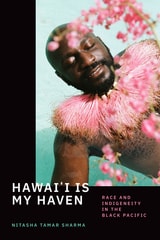
Hawai'i Is My Haven
Race and Indigeneity in the Black PacificNitasha Tamar Sharma
Duke University Press, 2021
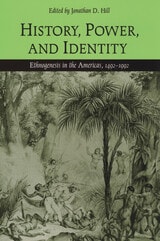
History, Power, and Identity
Ethnogenesis in the Americas, 1492-1992Jonathan D. Hill
University of Iowa Press, 1996
For the past five centuries, indigenous and African American communities throughout the Americas have sought to maintain and recreate enduring identities under conditions of radical change and discontinuity. The essays in this groundbreaking volume document this cultural activity—this ethnogenesis—within and against the broader contexts of domination; the authors simultaneously encompass the entanglements of local communities in the webs of national and global power relations as well as people's unique abilities to gain control over their history and identity.
By defining ethnogenesis as the synthesis of people's cultural and political struggles, History, Power, and Identity breaks out of the implicit contrast between isolated local cultures and dynamic global history. From the northeastern plains of North America to Amazonia, colonial and independent states in the Americas interacted with vast multilingual and multicultural networks, resulting in the historical emergence of new ethnic identities and the disappearance of many earlier ones. The importance of African, indigenous American, and European religions, myths, and symbols, as historical cornerstones in the building of new ethnic identities, emerges as one of the central themes of this convincing collection.

Humor Me
An Anthology of Humor by Writers of ColorJohn McNally
University of Iowa Press, 2002
Jews and Race
Writings on Identity and Difference, 1880–1940Edited by Mitchell B. Hart
Brandeis University Press, 2011
Let It Be Broke
Ed Pavlic
Four Way Books, 2020
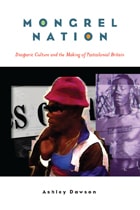
Mongrel Nation
Diasporic Culture and the Making of Postcolonial BritainAshley Dawson
University of Michigan Press, 2007
Mongrel Nation surveys the history of the United Kingdom’s African, Asian, and Caribbean populations from 1948 to the present, working at the juncture of cultural studies, literary criticism, and postcolonial theory. Ashley Dawson argues that during the past fifty years Asian and black intellectuals from Sam Selvon to Zadie Smith have continually challenged the United Kingdom’s exclusionary definitions of citizenship, using innovative forms of cultural expression to reconfigure definitions of belonging in the postcolonial age. By examining popular culture and exploring topics such as the nexus of race and gender, the growth of transnational politics, and the clash between first- and second-generation immigrants, Dawson broadens and enlivens the field of postcolonial studies.
Mongrel Nation gives readers a broad landscape from which to view the shifting currents of politics, literature, and culture in postcolonial Britain. At a time when the contradictions of expansionist braggadocio again dominate the world stage, Mongrel Nation usefully illuminates the legacy of imperialism and suggests that creative voices of resistance can never be silenced.Dawson
“Elegant, eloquent, and full of imaginative insight, Mongrel Nation is a refreshing, engaged, and informative addition to post-colonial and diasporic literary scholarship.”
—Hazel V. Carby, Yale University
“Eloquent and strong, insightful and historically precise, lively and engaging, Mongrel Nation is an expansive history of twentieth-century internationalist encounters that provides a broader landscape from which to understand currents, shifts, and historical junctures that shaped the international postcolonial imagination.”
—May Joseph, Pratt Institute
Ashley Dawson is Associate Professor of English at the City University of New York’s Graduate Center and the College of Staten Island. He is coeditor of the forthcoming Exceptional State: Contemporary U.S. Culture and the New Imperialism.
National Cultures at Grass-root Level
Antonina Kloskowska
Central European University Press, 2001
The major dilemma this volume addresses is the function of national identity in a modern society, for despite the trend towards globalization, the world continues to be riddled with national conflict.
Kłoskowska begins by looking at the controversy between two competing concepts of the origin of the nation – political and ethnic. She examines the central issues of the argument, and in particular, the characteristics and effects of ethnic differences on personal identity and the appropriation of national culture. Her theories are based upon autobiographies by individuals belonging to various national minorities in Poland and other areas where ethnic borders are blurred. The group studied included mostly young intellectuals: Ukrainians, Belarussians and Silesian-Germans. She examines the national attitudes of the various countries the ethnic minorities have been forced to live with. In her conclusion, Kłoskowska takes the view that national cultures are either ‘open’ or ‘closed’ and stresses the importance of participating in more than one cultural medium.
National Cultures at the Grass-Root Level is rich in information on contemporary theories of the nation, on its origin, character and future, and offers a deep insight into the complex and often ambiguous reality of national attitudes.
Nomadic Identities
The Performance Of CitizenshipMay Joseph
University of Minnesota Press, 1999
A look at citizenship through the lens of performance.
In a modern world of vast migrations and relocations, the rights—and rites—of citizenship are increasingly perplexing, and ever more important. This book asks how citizenship is enacted when all the world’s the stage.
Kung Fu cinema, soul music, plays, and speeches are some of the media May Joseph considers as expressive negotiations for legal and cultural citizenship. Nomadic Identities combines material culture and historical approaches to forge connections between East Africa, India, Britain, the Caribbean, and the United States in the struggles for democratic citizenship. Exploring the notion of nomadic citizenship as a modern construct, Joseph emphasizes culture as the volatile mise-en-scène through which popular conceptions of local and national citizenship emerge. Joseph, an Asian African from Tanzania, brings a personal insight to the question of how citizenship is expressed—particularly the nomadic, conditional citizenship related to histories of migrancy and the tenuous status of immigrants. Nomadic Identities investigates the metaphoric, literal, and performed possibilities available in different arenas of the everyday through which individuals and communities experience citizenship, successfully or not. A unique inquiry into contemporary experiences of migrancy linking Tanzania, Britain, and the United States, this book blends political theory, performance studies, cultural studies, and historical writing. It offers vignettes that describe the official and informal cultural transactions that designate citizenship under the globalizing forces of decolonization, the cold war, and transnational networks.Crossing the globe, Nomadic Identities provides fresh insights into the contemporary phenomena of territorial displacement and the resulting local and transnational movements of people.
Persistent Peoples
Cultural Enclaves in PerspectiveEdited by George Pierre Castile and Gilbert Kushner
University of Arizona Press, 1981
Contributors:
William Y. Adams
George Pierre Castile
N. Ross Crumrine
Timothy Dunnigan
Charles J. Erasmus
Frederick J. E. Gorman
Vera M. Green
William B. Griffen
Robert C. Harman
Mark P. Leone
Janet R. Moone
John van Willigen
Willard Walker
Power-Sharing
Institutional and Social Reform in Divided SocietiesIan O'Flynn & David Russell, Editors
Pluto Press, 2005
Power-Sharing seeks to explore the unintended consequences of power-sharing for the communities themselves, their individual members, and for others in society. More specifically, it is distinctive in questioning explicitly whether power sharing: perpetuates inter-communal conflict by institutionalising difference at the political level; inhibits conflict resolution by encouraging extremism; stifles internal diversity; and fails to leave sufficient space for individual autonomy.
This book not only provides a theoretical exploration and critique of these questions, but comprehensively examines specific test cases where power-sharing institutions have been established, including in Northern Ireland, Belgium, Bosnia-Herzegovina, Macedonia and Lebanon. It also explores such issues as the role of political leaders, human rights
instruments, the position of women, and the prospects for reconciliation within such societies.
Furthermore it provides a detailed set of policy recommendations to meet the challenges of transition in deeply-divided societies.
Race, Ethnicity, and the COVID-19 Pandemic
Edited by Melvin E. Thomas, Loren M. Henderson, and Hayward Derrick Horton
University of Minnesota Press, 2022
To understand racial disparities in COVID-19 infections and deaths, we must first understand how they are linked to racial inequality. In the United States, the material advantages afforded by whiteness lead to lower rates of infections and deaths from COVID-19 when compared to the rates among Black, Latino, and Native American populations. Most experts point to differences in population density, underlying health conditions, and proportions of essential workers as the primary determinants in the levels of COVID-19 deaths.
The national response to the pandemic has laid bare the fundamentals of a racialized social structure. Assembled by a prestigious group of sociologists, this volume examines how particularly during the first year of COVID-19, the socioeconomic impact of the pandemic led to different and poorer outcomes for Black, Latino, and Native American populations. While color-blindness shaped national discussions on essential workers, charity, and differential mortality, minorities were overwhelmingly affected. The essays in this collection provide a mix of critical examination of the progress and direction of our COVID-19 response, personal accounts of the stark difference in care and outcomes for minorities throughout the United States, and offer recommendations to create a foundation for future response and research during the critical early days.
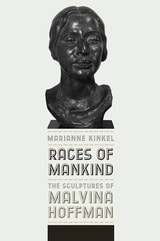
Races of Mankind
The Sculptures of Malvina HoffmanMarianne Kinkel
University of Illinois Press, 2011
A fascinating cultural history, Races of Mankind examines how we continually re-negotiate the veracity of race through collaborative processes involved in the production, display, and circulation of visual representations.
The Names of the Python
Belonging in East Africa, 900 to 1930David L. Schoenbrun
University of Wisconsin Press, 2023
Grounded in Schoenbrun’s skillful mastery of historical linguistics and vernacular texts, The Names of the Python supplements and redirects current debates about ethnicity in ex-colonial Africa and beyond. This timely volume carefully distinguishes past from present and shows the many possibilities that still exist for the creative cultural imagination.
The Rising Tide of Cultural Pluralism
The Nation-State at Bay?Edited by Crawford Young
University of Wisconsin Press, 1993
Crawford Young opens with an overview of the dramatic rise in the political significance of cultural pluralism and of scholars’ changing understanding of what drives and shapes ethnic identification. Mark Beissinger brilliantly explains the demise of the last great empire-state, the USSR, while Edward Friedman notes growing challenges to the apparent cultural homogeneity of China. Nader Entessar suggests intriguing contrasts in Azeri identity politics in Iran and the ex-USSR. Ronald Schmidt and Noel Kent explore the language and racial dimensions of the rising multicultural currents in the United States. Douglas Spitz shows the extent of the decline of the old secular vision of India of the independence generation; Alan LeBaron traces the recent emergence of an assertive Mayan identity among a submerged populace in Guatemala, long thought to be destined for Ladinoization. A case study of the diversity and uncertain future of Ethiopia dramatically emerges from four contrasting contributions: Tekle Woldemikael looks at the potential cultural tensions in Eritrea, Solomon Gashaw offers a central Ethiopian nationalist perspective, Herbert Lewis reflects the perspectives of a restless and disaffected periphery, and James Quirin provides an arresting explanation of the construction of identity amongst the Beta Israel (Ethiopian Jews). Virginia Sapiro steps back from specific regions, offering an original analysis of the interaction between cultural pluralism and gender.

The Way of Kinship
An Anthology of Native Siberian LiteratureAlexander Vaschenko
University of Minnesota Press, 2010
The first anthology of Native Siberian literature in English, The Way of Kinship represents writers from regions extending from the Ob River in the west to the Chukotka peninsula, the easternmost point of the Siberian Russian Arctic. Drawn from seven distinct ethnic groups, this diverse body of work-prose fiction, poetry, drama, and creative nonfiction-chronicles ancient Siberian cultures and traditions threatened with extinction in the contemporary world.
Translated and edited by Alexander Vaschenko and Claude Clayton Smith, leading scholars in Native Siberian literature, The Way of Kinship is an essential collection that will introduce readers to new writers and new worlds.
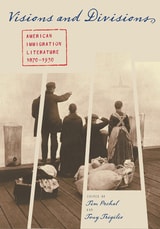
Visions and Divisions
American Immigration Literature, 1870-1930Prchal, Timothy
Rutgers University Press, 2008
From these debates came such novels as Willa Cather’s My Ántonia and Upton Sinclair’s The Jungle. Henry James, Charlotte Perkins Gilman, and Carl Sandburg added to the diversity of viewpoints of native born Americans while equally divergent immigrant perspectives were represented by writers such as Anzia Yezierska, Kahlil Gibran, and Claude McKay. This anthology presents the writing of these authors, among others less well known, to show the many ways literature participated in shaping the face of immigration. The volume also includes an introduction, annotations, a timeline, and historical documents that contextualize the literature.