Results by title

11 books match the query 'Ethnographies'

cover of Altering States: Ethnographies of Transition in Eastern Europe and the Former Soviet Union

Altering States

Ethnographies of Transition in Eastern Europe and the Former Soviet Union

Daphne Berdahl, Matti Bunzl, and Martha Lampland, Editors

University of Michigan Press, 2000
The dominant focus in transition studies to date has been on economic and political factors -- analyses generally conducted at the national or international level. The essays in Altering States instead bring us a closer look at what has been happening in everyday life in urban contexts in Germany, the Czech Republic, Slovakia, Austria, Hungary, Romania, Armenia, and Russia. The contributors to the volume -- all anthropologists -- use ethnographic methods to make visible problems and challenges that have until now been obscured. From synagogue restoration in Eastern Europe to gay tourism in Prague to the politics of rock music in Hungary, specific, local topics lead the authors to confront difficult questions of individual agency and discursive practices in the move away from socialism. Broader themes touched on include race and ethnicity, sexuality and postcoloniality, the politics of environmental restoration, and memory and remembrance in the politics of history. Altering States will fill an important gap in the study of transition in Eastern Europe and the former Soviet Union. It will appeal to anthropologists, political scientists, and sociologists and will be accessible to undergraduate and graduate students alike.
[more]
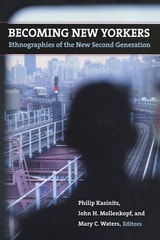
cover of Becoming New Yorkers: Ethnographies of the New Second Generation

Becoming New Yorkers

Ethnographies of the New Second Generation

Philip Kasinitz

Russell Sage Foundation, 2004
More than half of New Yorkers under the age of eighteen are the children of immigrants. This second generation shares with previous waves of immigrant youth the experience of attempting to reconcile their cultural heritage with American society. In Becoming New Yorkers, noted social scientists Philip Kasinitz, John Mollenkopf, and Mary Waters bring together in-depth ethnographies of some of New York's largest immigrant populations to assess the experience of the new second generation and to explore the ways in which they are changing the fabric of American culture. Becoming New Yorkers looks at the experience of specific immigrant groups, with regard to education, jobs, and community life. Exploring immigrant education, Nancy López shows how teachers' low expectations of Dominican males often translate into lower graduation rates for boys than for girls. In the labor market, Dae Young Kim finds that Koreans, young and old alike, believe the second generation should use the opportunities provided by their parents' small business success to pursue less arduous, more rewarding work than their parents. Analyzing civic life, Amy Forester profiles how the high-ranking members of a predominantly black labor union, who came of age fighting for civil rights in the 1960s, adjust to an increasingly large Caribbean membership that sees the leaders not as pioneers but as the old-guard establishment. In a revealing look at how the second-generation views itself, Sherry Ann Butterfield and Aviva Zeltzer-Zubida point out that black West Indian and Russian Jewish immigrants often must choose whether to identify themselves alongside those with similar skin color or to differentiate themselves from both native blacks and whites based on their unique heritage. Like many other groups studied here, these two groups experience race as a fluid, situational category that matters in some contexts but is irrelevant in others. As immigrants move out of gateway cities and into the rest of the country, America will increasingly look like the multicultural society vividly described in Becoming New Yorkers. This insightful work paints a vibrant picture of the experience of second generation Americans as they adjust to American society and help to shape its future.
[more]
cover of China Urban: Ethnographies of Contemporary Culture

China Urban

Ethnographies of Contemporary Culture

Nancy N. Chen, Constance D. Clark, Suzanne Z. Gottschang, and Lyn Jeffery, eds.

Duke University Press, 2001

China Urban is an ethnographic account of China’s cities and the place that urban space holds in China’s imagination. In addition to investigating this nation’s rapidly changing urban landscape, its contributors emphasize the need to rethink the very meaning of the “urban” and the utility of urban-focused anthropological critiques during a period of unprecedented change on local, regional, national, and global levels.

Through close attention to everyday lives and narratives and with a particular focus on gender, market, and spatial practices, this collection stresses that, in the case of China, rural life and the impact of socialism must be considered in order to fully comprehend the urban. Individual essays note the impact of legal barriers to geographic mobility in China, the proliferation of different urban centers, the different distribution of resources among various regions, and the pervasive appeal of the urban, both in terms of living in cities and in acquiring products and conventions signaling urbanity. Others focus on the direct sales industry, the Chinese rock music market, the discursive production of femininity and motherhood in urban hospitals, and the transformations in access to healthcare.

China Urban will interest anthropologists, sociologists, political scientists, and those studying urban planning, China, East Asia, and globalization.

Contributors. Tad Ballew, Susan Brownell, Nancy N. Chen, Constance D. Clark, Robert Efird, Suzanne Z. Gottschang, Ellen Hertz, Lisa Hoffman, Sandra Hyde, Lyn Jeffery, Lida Junghans, Louisa Schein, Li Zhang
[more]
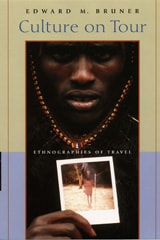
cover of Culture on Tour: Ethnographies of Travel

Culture on Tour

Ethnographies of Travel

Edward M. Bruner

University of Chicago Press, 2004

Recruited to be a lecturer on a group tour of Indonesia, Edward M. Bruner decided to make the tourists aware of tourism itself. He photographed tourists photographing Indonesians, asking the group how they felt having their pictures taken without their permission. After a dance performance, Bruner explained to the group that the exhibition was not traditional, but instead had been set up specifically for tourists. His efforts to induce reflexivity led to conflict with the tour company, which wanted the displays to be viewed as replicas of culture and to remain unexamined. Although Bruner was eventually fired, the experience became part of a sustained exploration of tourist performances, narratives, and practices.

Synthesizing more than twenty years of research in cultural tourism, Culture on Tour analyzes a remarkable variety of tourist productions, ranging from safari excursions in Kenya and dance dramas in Bali to an Abraham Lincoln heritage site in Illinois. Bruner examines each site in all its particularity, taking account of global and local factors, as well as the multiple perspectives of the various actors—the tourists, the producers, the locals, and even the anthropologist himself. The collection will be essential to those in the field as well as to readers interested in globalization and travel.
[more]
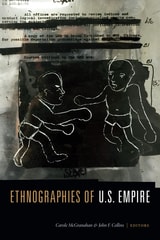
cover of Ethnographies of U.S. Empire

Ethnographies of U.S. Empire

Carole McGranahan and John F. Collins, editors

Duke University Press, 2018

How do we live in and with empire? The contributors to Ethnographies of U.S. Empire pursue this question by examining empire as an unequally shared present. Here empire stands as an entrenched, if often invisible, part of everyday life central to making and remaking a world in which it is too often presented as an aberration rather than as a structuring condition. This volume presents scholarship from across U.S. imperial formations: settler colonialism, overseas territories, communities impacted by U.S. military action or political intervention, Cold War alliances and fissures, and, most recently, new forms of U.S. empire after 9/11. From the Mohawk Nation, Korea, and the Philippines to Iraq and the hills of New Jersey, the contributors show how a methodological and theoretical commitment to ethnography sharpens all of our understandings of the novel and timeworn ways people live, thrive, and resist in the imperial present.

Contributors: Kevin K. Birth, Joe Bryan, John F. Collins, Jean Dennison, Erin Fitz-Henry, Adriana María Garriga-López, Olívia Maria Gomes da Cunha, Matthew Gutmann, Ju Hui Judy Han, J. Kēhaulani Kauanui, Eleana Kim, Heonik Kwon, Soo Ah Kwon, Darryl Li, Catherine Lutz, Sunaina Maira, Carole McGranahan, Sean T. Mitchell, Jan M. Padios, Melissa Rosario, Audra Simpson, Ann Laura Stoler, Lisa Uperesa, David Vine
[more]
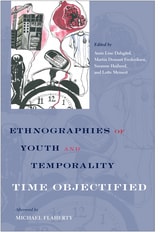
cover of Ethnographies of Youth and Temporality: Time Objectified

Ethnographies of Youth and Temporality

Time Objectified

Anne Line Dalsgard

Temple University Press, 2014

As we experience and manipulate time—be it as boredom or impatience—it becomes an object: something materialized and social, something that affects perception, or something that may motivate reconsideration and change. The editors and contributors to this important new book, Ethnographies of Youth and Temporality, have provided a diverse collection of ethnographic studies and theoretical explorations of youth experiencing time in a variety of contemporary socio-cultural settings.
 
The essays in this volume focus on time as an external and often troubling factor in young people’s lives, and shows how emotional unrest and violence but also creativity and hope are responses to troubling times. The chapters discuss notions of time and its and its “objectification” in diverse locales including the Georgian Republic, Brazil, Denmark and Uganda.
 
Based on long-term ethnographic fieldwork, the essays in Ethnographies of Youth and Temporality use youth as a prism to understand time and its subjective experience. 

In the series Global Youth, edited by Craig Jeffrey and Jane Dyson

[more]
cover of Healing at the Periphery: Ethnographies of Tibetan Medicine in India

Healing at the Periphery

Ethnographies of Tibetan Medicine in India

Laurent Pordié and Stephan Kloos, editors

Duke University Press, 2022

India has long occupied an important place in Tibetan medicine's history and development. However, Indian Himalayan practitioners of Tibetan medicine, or amchi, have largely remained overlooked at the Tibetan medical periphery, despite playing a central social and medical role in their communities. Power and legitimacy, religion and economic development, biomedical encounters and Indian geopolitics all intersect in the work and identities of contemporary Himalayan amchi. This volume examines the crucial moment of crisis and transformation that occurred in the early 2000s to offer insights into the beginnings of Tibetan medicine's professionalization, industrialization, and official recognition in India and elsewhere. Based on fine-grained ethnographic studies in Ladakh, Zangskar, Sikkim, and the Darjeeling Hills, Healing at the Periphery asks how the dynamics of capitalism, social change, and the encounter with biomedicine affect small communities on the fringes of modern India, and, conversely, what local transformations of Tibetan medicine tell us about contemporary society and health care in the Himalayas and the Tibetan world.

Contributors. Florian Besch, Calum Blaikie, Sienna R. Craig, Barbara Gerke, Isabelle Guérin, Kim Gutschow, Pascale Hancart Petitet, Stephan Kloos, Fernanda Pirie, Laurent Pordié
[more]
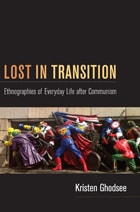
cover of Lost in Transition: Ethnographies of Everyday Life after Communism

Lost in Transition

Ethnographies of Everyday Life after Communism

Kristen Ghodsee

Duke University Press, 2011
Lost in Transition tells of ordinary lives upended by the collapse of communism. Through ethnographic essays and short stories based on her experiences with Eastern Europe between 1989 and 2009, Kristen Ghodsee explains why it is that so many Eastern Europeans are nostalgic for the communist past. Ghodsee uses Bulgaria, the Eastern European nation where she has spent the most time, as a lens for exploring the broader transition from communism to democracy. She locates the growing nostalgia for the communist era in the disastrous, disorienting way that the transition was handled. The privatization process was contested and chaotic. A few well-connected foreigners and a new local class of oligarchs and criminals used the uncertainty of the transition process to take formerly state-owned assets for themselves. Ordinary people inevitably felt that they had been robbed. Many people lost their jobs just as the state social-support system disappeared. Lost in Transition portrays one of the most dramatic upheavals in modern history by describing the ways that it interrupted the rhythms of everyday lives, leaving confusion, frustration, and insecurity in its wake.
[more]
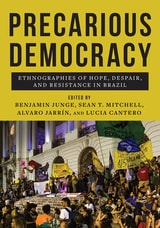
cover of Precarious Democracy: Ethnographies of Hope, Despair, and Resistance in Brazil

Precarious Democracy

Ethnographies of Hope, Despair, and Resistance in Brazil

Benjamin Junge

Rutgers University Press, 2021
Brazil changed drastically in the 21st century’s second decade. In 2010, the country’s outgoing president Lula left office with almost 90% approval. As the presidency passed to his Workers' Party successor, Dilma Rousseff, many across the world hailed Brazil as a model of progressive governance in the Global South. Yet, by 2019, those progressive gains were being dismantled as the far right-wing politician Jair Bolsonaro assumed the presidency of a bitterly divided country. Digging beneath this pendulum swing of policy and politics, and drawing on rich ethnographic portraits, Precarious Democracy shows how these transformations were made and experienced by Brazilians far from the halls of power. Bringing together powerful and intimate stories and portraits from Brazil's megacities to rural Amazonia, this volume demonstrates the necessity of ethnography for understanding social and political change, and provides crucial insights on one of the most epochal periods of change in Brazilian history.
 
[more]
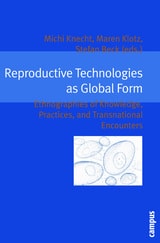
cover of Reproductive Technologies as Global Form: Ethnographies of Knowledge, Practices, and Transnational Encounters

Reproductive Technologies as Global Form

Ethnographies of Knowledge, Practices, and Transnational Encounters

Edited by Michi Knecht, Maren Klotz, and Stefan Beck

Campus Verlag, 2012

In the thirty years since the first “test-tube baby,” in-vitro fertilization and other methods of reproductive assistance have become a common aspect of family life and medicine in developed nations—and, increasingly, throughout the world. This collection brings together ethnographic studies of how these reproductive technologies are deployed across a wide variety of nations and cultures, taking special account of how they are linked to aspirations towards modernity—and how they contribute to an ongoing reconfiguration of the boundaries of knowledge and human agency. The resulting volume offers both a current snapshot of the cultural state of reproductive technologies and a plethora of provocative questions for the future.

[more]
cover of Transparency and Conspiracy: Ethnographies of Suspicion in the New World Order

Transparency and Conspiracy

Ethnographies of Suspicion in the New World Order

Harry G. West and Todd Sanders, eds.

Duke University Press, 2003

Transparency has, in recent years, become a watchword for good governance. Policymakers and analysts alike evaluate political and economic institutions—courts, corporations, nation-states—according to the transparency of their operating procedures. With the dawn of the New World Order and the “mutual veil dropping” of the post–Cold War era, many have asserted that power in our contemporary world is more transparent than ever. Yet from the perspective of the relatively less privileged, the operation of power often appears opaque and unpredictable. Through vivid ethnographic analyses, Transparency and Conspiracy examines a vast range of expressions of the popular suspicion of power—including forms of shamanism, sorcery, conspiracy theory, and urban legends—illuminating them as ways of making sense of the world in the midst of tumultuous and uneven processes of modernization.

In this collection leading anthropologists reveal the variations and commonalities in conspiratorial thinking or occult cosmologies around the globe—in Korea, Tanzania, Mozambique, New York City, Indonesia, Mongolia, Nigeria, and Orange County, California. The contributors chronicle how people express profound suspicions of the United Nations, the state, political parties, police, courts, international financial institutions, banks, traders and shopkeepers, media, churches, intellectuals, and the wealthy. Rather than focusing on the veracity of these convictions, Transparency and Conspiracy investigates who believes what and why. It makes a compelling argument against the dismissal of conspiracy theories and occult cosmologies as antimodern, irrational oversimplifications, showing how these beliefs render the world more complex by calling attention to its contradictions and proposing alternative ways of understanding it.

Contributors.
Misty Bastian, Karen McCarthy Brown, Jean Comaroff, John Comaroff, Susan Harding, Daniel Hellinger, Caroline Humphrey, Laurel Kendall, Todd Sanders, Albert Schrauwers, Kathleen Stewart, Harry G. West

[more]