Results by title

7 books match the query 'Ethnological museums and collections'
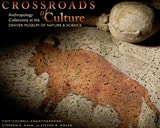
cover of Crossroads of Culture: Anthropology Collections at the Denver Museum of Nature & Science

Crossroads of Culture

Anthropology Collections at the Denver Museum of Nature & Science

Chip Colwell

University Press of Colorado, 2010

The hectic front of the Denver Museum of Nature & Science hides an unseen back of the museum that is also bustling. Less than 1 percent of the museum's collections are on display at any given time, and the Department of Anthropology alone cares for more than 50,000 objects from every corner of the globe not normally available to the public. This lavishly illustrated book presents and celebrates the Denver Museum of Nature & Science's exceptional anthropology collections for the first time.

The book presents 123 full-color images to highlight the museum's cultural treasures. Selected for their individual beauty, historic value, and cultural meaning, these objects connect different places, times, and people. From the mammoth hunters of the Plains to the first American pioneer settlers to the flourishing Hispanic and Asian diasporas in downtown Denver, the Rocky Mountain region has been home to a breathtaking array of cultures. Many objects tell this story of the Rocky Mountains' fascinating and complex past, whereas others serve to bring enigmatic corners of the globe to modern-day Denver.

Crossroads of Culture serves as a behind-the-scenes tour of the museum's anthropology collections. All the royalties from this publication will benefit the collections of the Denver Museum of Nature & Science's Department of Anthropology.
[more]
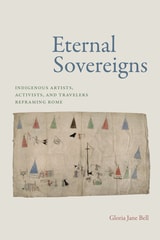
cover of Eternal Sovereigns: Indigenous Artists, Activists, and Travelers Reframing Rome

Eternal Sovereigns

Indigenous Artists, Activists, and Travelers Reframing Rome

Gloria Jane Bell

Duke University Press, 2024
In 1925, Pius XI staged the Vatican Missionary Exposition in Rome’s Vatican City. Offering a narrative of the Catholic Church’s beneficence to a global congregation, the exposition displayed thousands of cultural belongings stolen from Indigenous communities, which were seen by one million pilgrims. Gloria Jane Bell’s Eternal Sovereigns offers critical revision to that story. Bell reveals the tenacity, mobility, and reception of Indigenous artists, travelers, and activists in 1920s Rome. Animating these conjunctures, the book foregrounds competing claims to sovereignty from Indigenous and papal perspectives. Bell deftly juxtaposes the “Indian Museum” of nineteenth-century sculptor Ferdinand Pettrich, acquired by the Vatican, with the oeuvre of Indigenous artist Edmonia Lewis. Focusing on Turtle Island, Bell analyzes Indigenous cultural belongings made by artists from nations including Cree, Lakota, Anishinaabe, Nipissing, Kanien’kehá:ka, Wolastoqiyik, and Kwakwaka’wakw. Drawing on years of archival research and field interviews, Bell provides insight into the Catholic Church’s colonial collecting and its ongoing ethnological display practices. Written in a voice that questions the academy’s staid conventions, the book reclaims Indigenous belongings and other stolen treasures that remain imprisoned in the stronghold of the Vatican Museums.
[more]
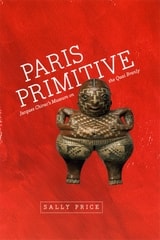
cover of Paris Primitive: Jacques Chirac's Museum on the Quai Branly

Paris Primitive

Jacques Chirac's Museum on the Quai Branly

Sally Price

University of Chicago Press, 2007

In 1990 Jacques Chirac, the future president of France and a passionate fan of non-European art, met Jacques Kerchache, a maverick art collector with the lifelong ambition of displaying African sculpture in the holy temple of French culture, the Louvre. Together they began laying plans, and ten years later African fetishes were on view under the same roof as the Mona Lisa. Then, in 2006, amidst a maelstrom of controversy and hype, Chirac presided over the opening of a new museum dedicated to primitive art in the shadow of the Eiffel Tower: the Musée du Quai Branly.

Paris Primitive recounts the massive reconfiguration of Paris’s museum world that resulted from Chirac’s dream, set against a backdrop of personal and national politics, intellectual life, and the role of culture in French society. Along with exposing the machinations that led to the MQB’s creation, Sally Price addresses the thorny questions it raises about the legacy of colonialism, the balance between aesthetic judgments and ethnographic context, and the role of institutions of art and culture in an increasingly diverse France. Anyone with a stake in the myriad political, cultural, and anthropological issues raised by the MQB will find Price’s account fascinating.
[more]
cover of Posterity Is Now: Practicing Museum Anthropology, Collections Care, and Collaborative Research with Indigenous Peoples

Posterity Is Now

Practicing Museum Anthropology, Collections Care, and Collaborative Research with Indigenous Peoples

Jennifer A. Shannon

University of Wyoming Press, 2025

Posterity Is Now is about doing—about how to do—museum anthropology, collections stewardship, and collaborative research based on working in collaboration with Indigenous communities. Guided by values-centered practice, this book shows how following Indigenous communities’ lead, being flexible, and creating a welcoming environment to build essential relationships can reorient museums to support cultural continuity instead of merely preserving objects.
 
In this handbook based on over twenty years of teaching and practice at the intersection of museums, anthropology, and Indigenous peoples, Jennifer A. Shannon covers both the theoretical (i.e., exploring the idea of objects as kin) and the pragmatic (i.e., guidelines for how to design and budget collaborative projects). She advocates for fundamental change in how anthropological research design and practice are done within and beyond the museum and how leadership and staff view the very purpose of the museum. She also demonstrates how collaborative museum anthropology can be a model for the fields of anthropology, public scholarship, and social science research more broadly.
 
Posterity Is Now is a starting point, a “companion to practice,” written in accessible language and equally relevant for use in university classrooms, by qualitative researchers, and by practitioners in museums and cultural centers.
 
[more]
cover of Races of Mankind: The Sculptures of Malvina Hoffman

Races of Mankind

The Sculptures of Malvina Hoffman

Marianne Kinkel

University of Illinois Press, 2011

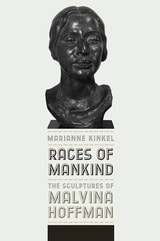
In 1930, Chicago's Field Museum of Natural History commissioned sculptor Malvina Hoffman to produce three-dimensional models of racial types for an anthropology display called The Races of Mankind. Marianne Kinkel’s cultural biography of the long-running exhibition measures how Hoffman’s ninety-one bronze and stone sculptures impacted perceptions of race in twentieth-century visual culture. Kinkel looks at how Hoffman's collaborations with curators and anthropologists transformed the commission from a traditional physical anthropology display into a fine art exhibit. She also tracks appearances of statuettes of the works in New York and Paris exhibitions and looks at how publishers used images of the sculptures to illustrate atlases, maps, and encyclopedias. The volume concludes with the dismantling of the exhibit in 1969 and the Field Museum’s redeployment of some of the sculptures in new educational settings.

A fascinating cultural history, Races of Mankind examines how we continually re-negotiate the veracity of race through collaborative processes involved in the production, display, and circulation of visual representations.
[more]
cover of Reframing the Ethnographic Museum: Histories, Politics and Futures

Reframing the Ethnographic Museum

Histories, Politics and Futures

Edited by Michael Rowlands, Nick Stanley, and Graeme Were

University College London, 2025

Amid calls for decolonization and digital innovation, this necessary work explores the shifting histories and futures of ethnographic museums worldwide.

Ethnographic museums are at a crossroads; caught between colonial legacies, and the difficulties of captivating new audiences in a digital world. Reframing the Ethnographic Museum brings together leading scholars and curators to study the shifting role of these institutions in a rapidly changing cultural and political landscape. From Asia to Africa, the book explores how different museum strategies have grappled with decolonization and digital transformation, engaging in critical analysis and including case studies of innovative curatorial practices.

As museums confront calls for accountability and reconsider their collections, this volume provides a relevant exploration of the dilemmas and possibilities facing ethnographic display today. Reframing the Ethnographic Museum urges us to rethink how we engage with the past, and how museums can become spaces of dialogue and reflection.
[more]
cover of The Museum in the Cultural Sciences: Collecting, Displaying, and Interpreting Material Culture in the Twentieth Century

The Museum in the Cultural Sciences

Collecting, Displaying, and Interpreting Material Culture in the Twentieth Century

Edited by Peter N. Miller

Bard Graduate Center, 2021

In early twentieth-century Berlin, Wilhelm von Bode sparked a controversy with his sweeping proposal to reorganize a group of the city’s museums. Debates about the role and structure of museums played out in 1907 and 1910 with two striking series of articles that appeared in the journal Museumskunde: Journal for the Administration and Technology of Public and Private Collections. The first was a six-part essay by Otto Lauffer on history museums, and the second was a ten-part piece by Oswald Richter regarding ethnographic museums. Together, they initiated a century of significant dialogue.

The Museum in the Cultural Sciences offers the first full English translations of these articles, which remain influential in conversations about the implications of art, historical, and ethnographic museums. They show how sophisticated the discussion of museums and museum display was in the early twentieth century and how much could be gained from revisiting these reflections today. Accompanied by short commentaries from museum professionals, these articles offer an intervention into and intensification of the current debate about the function and purpose of museums.
[more]