Results by title
316 books match the query 'Ethnomusicology' and 24 start with a

A Beautiful Fight
The Racial Politics of Capoeira in Backland BahiaEsther Viola Kurtz
University of Michigan Press, 2025
2026 Dance Studies Association de la Torre Bueno First Book Award Shortlist Finalist
A Beautiful Fight examines the potentials and limits of capoeira Angola to cohere a multiracial community committed to antiracist struggle. Capoeira, a musical fight-game that originated among enslaved Africans in Brazil, holds special significance for Black Brazilian activists as a spiritual and political practice that affirms the value of Black lives, thus countering anti-Black violence sanctioned by the Brazilian state. However, many capoeira groups count more white practitioners than Black, especially groups of the politicized, Afrocentric style capoeira Angola, raising debates about appropriation of Black culture that resonate across the Americas. A Beautiful Fight addresses these tensions. Drawing on ethnographic research with a multiracial capoeira Angola group in Brazil’s Bahian sertão or backlands, Esther Viola Kurtz explores diverse group members’ understandings of capoeira’s spiritual and political meanings and considers how white participation impacts capoeira’s antiracist politics. A Beautiful Fight argues that white practitioners occupying space in capoeira divert attention from Black members’ concerns and reproduce racist and colonialist ideologies, albeit unintentionally. In this way, the book complicates claims that shared music and dance bridge differences and facilitate cross-racial unity, yet Kurtz proposes that capoeira still transmits knowledge and tools that, when used with intention, commitment, and care, can be wielded to collaboratively contest racism and imagine a more just world.
A Feminist Ethnomusicology
Writings on Music and GenderEllen Koskoff
University of Illinois Press, 2014
In this intellectual memoir, Koskoff describes her journey through the maze of social history and scholarship related to her work examining the intersection of music and gender. Koskoff collects new, revised, and hard-to-find published material from mid-1970s through 2010 to trace the evolution of ethnomusicological thinking about women, gender, and music, offering a perspective of how questions emerged and changed in those years, as well as Koskoff's reassessment of the early years and development of the field. Her goal: a personal map of the different paths to understanding she took over the decades, and how each inspired, informed, and clarified her scholarship. For example, Koskoff shows how a preference for face-to-face interactions with living people served her best in her research, and how her now-classic work within Brooklyn's Hasidic community inflamed her feminist consciousness while leading her into ethnomusicological studies.
An uncommon merging of retrospective and rumination, A Feminist Ethnomusicology: Writings on Music and Gender offers a witty and disarmingly frank tour through the formative decades of the field and will be of interest to ethnomusicologists, anthropologists, scholars of the history and development of feminist thought, and those engaged in fieldwork.
Includes a foreword by Suzanne Cusick framing Koskoff's career and an extensive bibliography provided by the author.
A Guru’s Journey
Pandit Chitresh Das and Indian Classical Dance in DiasporaSarah Morelli
University of Illinois Press, 2019
A Guru's Journey provides an ethnographic study of the dance form in the San Francisco Bay Area community formed by Das. Sarah Morelli, a kathak dancer and one of Das's former students, investigates issues in teaching, learning, and performance that developed around Das during his time in the United States. In modifying kathak's form and teaching for Western students, Das negotiates questions of Indianness and non-Indianness, gender, identity, and race. Morelli lays out these issues for readers with the goal of deepening their knowledge of kathak aesthetics, technique, and theory. She also shares the intricacies of footwork, facial expression in storytelling, and other aspects of kathak while tying them to the cultural issues that inform the dance.
A Language of Song
Journeys in the Musical World of the African DiasporaSamuel Charters
Duke University Press, 2009
Each of the book’s fourteen chapters is a vivid rendering of a particular location that Charters visited. While music is always his focus, the book is filled with details about individuals, history, landscape, and culture. In first-person narratives, Charters relates voyages including a trip to the St. Louis home of the legendary ragtime composer Scott Joplin and the journey to West Africa, where he met a man who performed an hours-long song about the Europeans’ first colonial conquests in Gambia. Throughout the book, Charters traces the persistence of African musical culture despite slavery, as well as the influence of slaves’ songs on subsequent musical forms. In evocative prose, he relates a lifetime of travel and research, listening to brass bands in New Orleans; investigating the emergence of reggae, ska, and rock-steady music in Jamaica’s dancehalls; and exploring the history of Afro-Cuban music through the life of the jazz musician Bebo Valdés. A Language of Song is a unique expedition led by one of music’s most observant and well-traveled explorers.

A Latin American Music Reader
Views from the SouthJavier F Leon
University of Illinois Press, 2016
Contributors include Marina Alonso Bolaños, Gonzalo Camacho Díaz, José Jorge de Carvalho, Claudio F. Díaz, Rodrigo Cantos Savelli Gomes, Juan Pablo González, Rubén López-Cano, Angela Lühning, Jorge Martínez Ulloa, Maria Ignêz Cruz Mello, Julio Mendívil, Carlos Miñana Blasco, Raúl R. Romero, Iñigo Sánchez Fuarros, Carlos Sandroni, Carolina Santamaría-Delgado, Rodrigo Torres Alvarado, and Alejandro Vera.
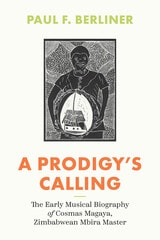
A Prodigy's Calling
The Early Musical Biography of Cosmas Magaya, Zimbabwean Mbira MasterPaul F. Berliner
University of Chicago Press, 2024
Ethnomusicologist Paul F. Berliner has been studying Zimbabwean mbira for more than fifty years. When he first arrived in what was then Rhodesia after the nation declared independence from the United Kingdom, he met Cosmas Magaya, a mbira player who would become his teacher and lifelong collaborator. A Prodigy’s Calling chronicles the early years of Magaya’s life, documenting the master mbira player’s journey from child prodigy to established expert. As a child, Magaya was immersed in mbira music through his father’s work as a healer and spirit medium. As Magaya grew, so too did his world; his performances extended beyond the family compound as his skill and knowledge increased, bringing him into contact with a society fraught with decolonial conflict.
Following Magaya’s childhood, readers will learn how his upbringing guided his journey through the community’s social networks and how his early sensibilities, proclivities, and talents shaped his development. At the same time, his deepening engagement with music and the ancestors was affected by overlapping tensions between Shona cosmology and Christian ideology, rural and urban lifestyles, and the escalating African nationalist struggle and the white supremacist state. While Magaya’s story reflects profound social changes in the nation, it is also a story of musical apprenticeship. Readers following Magaya’s discovery of ever finer details in the music’s richly layered patterns will enhance their ability to hear mbira music’s forms, variations, and sonic qualities. Linocut illustrations by South African artist Lucas Bambo bring the narrative to life, and Berliner’s spirited storytelling is accompanied by QR codes that take readers directly to recordings of music as Magaya learns it. Appendices for musicians interested in learning or improving their mbira playing complement the story of Magaya’s early life. Inviting the reader into the very tradition it recounts, the book offers intimate insights into the relationships among music, Shona cosmology, and colonial politics in everyday life.
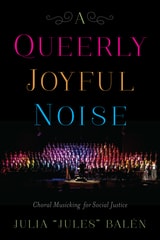
A Queerly Joyful Noise
Choral Musicking for Social JusticeJulia "Jules" Balén
Rutgers University Press, 2017
Honorable Mention, 2019 Herndon Book Prize - (SEM-GST)
A Queerly Joyful Noise examines how choral singing can be both personally transformative and politically impactful. As they blend their different voices to create something beautiful, LGBTIQ singers stand together and make themselves heard. Comparing queer choral performances to the uses of group singing within the civil rights and labor movements, Julia “Jules” Balén maps the relationship between different forms of oppression and strategic musical forms of resistance. She also explores the potential this queer communal space creates for mobilizing progressive social action.
A proud member of numerous queer choruses, Balén draws from years of firsthand observations, archival research, and extensive interviews to reveal how queer chorus members feel shared vulnerability, collective strength, and even moments of ecstasy when performing. A Queerly Joyful Noise serves as a testament to the power of music, intimately depicting how participation in a queer chorus is more than a pastime, but a meaningful form of protest through celebration.
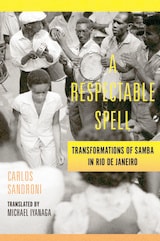
A Respectable Spell
Transformations of Samba in Rio de JaneiroCarlos Sandroni
University of Illinois Press, 2021
Incisive and comprehensive, A Respectable Spell tells the compelling story of an iconic Brazilian musical genre.
A Song for the Horses
Musical Heritage for More-than-Human Futures in MongoliaK. G. Hutchins
University of Arizona Press, 2025
Hutchins’s ethnographic research, spanning more than a decade, provides a vivid and intimate portrayal of Mongolian life. Musicians use the morin khuur, or ‘horse fiddle,’ to engage with the subjectivities and agencies of nonhuman animals and other beings. This work is a significant contribution to the posthuman turn in social sciences, engaging with theories from prominent scholars such as Donna Haraway and Anna Tsing .
As climate change continues to impact communities worldwide, this book offers a unique perspective on how cultural heritage can be mobilized to address environmental challenges, providing valuable lessons for global efforts to build sustainable and resilient futures. At the intersection of music, environment, and posthumanism, A Song for the Horses shows how Mongolian musicians use cultural traditions to imagine and build toward alternative futures beyond climate change and neoliberalism.

Adventures of a Ballad Hunter
By John A. Lomax, foreword by John Lomax III, John Nova Lomax, and Anna Lomax Wood
University of Texas Press, 2017
Growing up beside the Chisholm Trail, captivated by the songs of passing cowboys and his bosom friend, an African American farmhand, John A. Lomax developed a passion for American folk songs that ultimately made him one of the foremost authorities on this fundamental aspect of Americana. Across many decades and throughout the country, Lomax and his informants created over five thousand recordings of America’s musical heritage, including ballads, blues, children’s songs, fiddle tunes, field hollers, lullabies, play-party songs, religious dramas, spirituals, and work songs. He acted as honorary curator of the Archive of American Folk Song at the Library of Congress, directed the Slave Narrative Project of the WPA, and cofounded the Texas Folklore Society. Lomax’s books include Cowboy Songs and Other Frontier Ballads, American Ballads and Folk Songs, Negro Folk Songs as Sung by Leadbelly, and Our Singing Country, the last three coauthored with his son Alan Lomax.
Adventures of a Ballad Hunter is a memoir of Lomax’s eventful life. It recalls his early years and the fruitful decades he spent on the road collecting folk songs, on his own and later with son Alan and second wife Ruby Terrill Lomax. Vibrant, amusing, often haunting stories of the people he met and recorded are the gems of this book, which also gives lyrics for dozens of songs. Adventures of a Ballad Hunter illuminates vital traditions in American popular culture and the labor that has gone into their preservation.

African Music on LP
An Annotated DiscographyAlan P. Merriam
Northwestern University Press, 1972
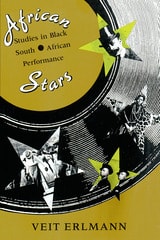
African Stars
Studies in Black South African PerformanceVeit Erlmann
University of Chicago Press, 1991
become ever more popular in the West, where they are now
widely celebrated as expressions of opposition to
discrimination and repression. Less well known is the
rich history of these arts, which were shaped by several
generations of black artists and performers whose
struggles, visions, and aspirations did not differ fundamentally
from those of their present-day counterparts.
In five detailed case studies Veit Erlmann digs deep to expose the roots of the most important of these performance traditions. He relates the early history of isicathamiya, the a cappella vocal style made famous by Ladysmith Black Mambazo.
In two chapters on Durban between the World Wars he charts the evolution of Zulu music and dance, studying in depth the transformation of ingoma, a dance form popular among migrant workers since the 1930s. He goes on to
record the colorful life and influential work of Reuben T. Caluza,
South Africa's first black ragtime composer. And Erlmann's reconstruction of the 1890s concert tours of an Afro-American vocal group, Orpheus M. McAdoo and the Virginia Jubilee Singers, documents the earliest link between the African and American performance traditions.
Numerous eyewitness reports, musicians' personal testimonies, and song texts enrich Erlmann's narratives and demonstrate that black performance evolved in response to the growing economic and racial segmentation of South African
society. Early ragtime, ingoma, and isicathamiya enabled the black urban population to comment on their precarious social position and to symbolically construct a secure space within a rapidly changing political world.
Today, South African workers, artists, and youth continue to build upon this performance tradition in their struggle for freedom and democracy. The early performers portrayed by Erlmann were guiding lights—African stars—by which the present and future course of South Africa is being determined.
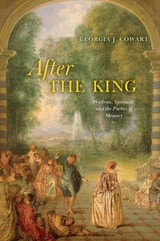
After the King
Watteau, Spectacle, and the Poetics of MemoryGeorgia J. Cowart
University of Chicago Press, 2026
Musicologist Georgia J. Cowart explores how Antoine Watteau’s late paintings reimagine the symbolic order of absolutism in the wake of Louis XIV’s death.
Antoine Watteau has long been known for the theatricality of his paintings, but what that theatricality signifies has remained elusive. In After the King, Georgia Cowart contends that this mode of painting takes shape in response to the spectacle of Louis XIV’s absolutism, which the painter’s late works transform into a new aesthetic language.
The king’s death marked a turning point in Watteau’s art. In the six years that followed, his paintings turned more decisively toward the musical stage. Evoking theatrical plots, frontispieces, and costume types, they conjured a world in which the legacy of absolutist culture lingered as stylized memory—its rituals, emblems, and pleasures recast through theatrical illusion and ironic distance.
Rather than treating Watteau as a painter of nostalgic reverie or Rococo charm, Cowart situates his art within the immersive performance culture of Versailles and the vibrant Parisian stage, at a time when the opéra-ballet, popular opera, and the commedia dell’arte were charting new theatrical landscapes. Drawing on art history, musicology, theater studies, and Pierre Nora’s theory of lieux de mémoire, she proposes a new framework that understands Watteau’s paintings as acts of theatrical memory and cultural recomposition.
Elegantly written and conceptually ambitious, After the King reveals how Watteau recoded the symbols of monarchy to stage a post-absolutist cultural imagination shaped by irony, sensuality, and poetic transformation.
Alive in the Sound
Black Music as CounterhistoryRonald Radano
Duke University Press, 2025
Ambient Sufism
Ritual Niches and the Social Work of Musical FormRichard C. Jankowsky
University of Chicago Press, 2021
American Gamelan and the Ethnomusicological Imagination
Elizabeth A. Clendinning
University of Illinois Press, 2020

Amplifying Power
The Shaping of the Jamaican Sound SystemJulian Henriques
Duke University Press, 2027
An Illini Place
Building the University of Illinois CampusIncoronata Inserra
University of Illinois Press, 2017
Arousing Sense
Recipes for Workshopping Sensory ExperienceTomie Hahn
University of Illinois Press, 2021
User-friendly and practical, Arousing Sense is a guide to how teaching through sensory experience can lead to positive, transformative impact in the classroom and everyday life.

Arsenio Rodríguez and the Transnational Flows of Latin Popular Music
David F. García
Temple University Press, 2006
Audible Empire
Music, Global Politics, CritiqueRonald Radano and Tejumola Olaniyan, editors
Duke University Press, 2016
Contributors: Kofi Agawu, Philip V. Bohlman. Michael Denning, Brent Hayes Edwards, Nan Enstad, Andrew Jones, Josh Kun, Morgan Luker, Jairo Moreno, Tejumola Olaniyan, Marc Perry, Ronald Radano, Nitasha Sharma, Micol Seigel, Gavin Steingo, Penny Von Eschen, Amanda Weidman.
Aurality
Listening and Knowledge in Nineteenth-Century ColombiaAna María Ochoa Gautier
Duke University Press, 2014
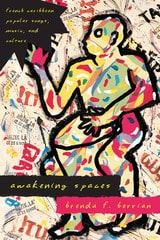
Awakening Spaces
French Caribbean Popular Songs, Music, and CultureBrenda F. Berrian
University of Chicago Press, 2000
Based on personal interviews and discussions of song texts, Berrian shows how these musicians express their feelings about current and past events, about themselves, their islands, and the French. Through their lyrical themes, these songs create metaphorical "spaces" that evoke narratives of desire, exile, subversion, and Creole identity and experiences. Berrian opens up these spaces to reveal how the artists not only engage their listeners and effect social change, but also empower and identify themselves. She also explores the music as it relates to the art of drumming, and to genres such as African American and Latin jazz and reggae. With Awakening Spaces, Berrian adds fresh insight into the historical struggles and arts of the French Caribbean.
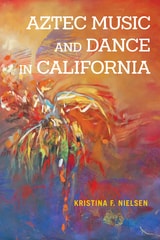
Aztec Music and Dance in California
Kristina F. Nielsen
University of Illinois Press, 2026