Results by title
34 books match the query 'Etymology'
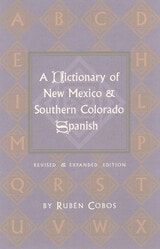
A Dictionary of New Mexico and Southern Colorado Spanish
Revised and Expanded EditionRubén Cobos
Museum of New Mexico Press, 2011
Ruben Cobos spent a decade working on the revised and expanded edition of the dictionary, published in 2003. The Dictionary of New Mexico and Southern Colorado Spanish has assumed its place as the most authoritative reference on the archaic dialect of Spanish spoken in this region.
A Dictionary of Selected Synonyms in the Principal Indo-European Languages
Carl Darling Buck
University of Chicago Press, 1988
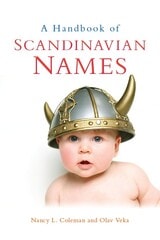
A Handbook of Scandinavian Names
Nancy L. Coleman
University of Wisconsin Press, 2010
Are you looking for
• A Scandinavian name for your baby?
• The names of Norse gods and heroes?
• The history and meaning of Scandinavian first names?
• Variations and alternate spellings for common Scandinavian names?
• Naming traditions and customs in Norway, Sweden, and Denmark?
A Handbook of Scandinavian Names includes a dictionary of more than fifteen hundred given names from Norway, Sweden, and Denmark, plus some from Iceland and Finland. Each entry provides a guide to pronunciation and the origin and meaning of the name. Many entries also include variations and usage in the Scandinavian countries and famous bearers of the name.
Adding engaging context to the dictionary section is an extensive comparative guide to naming practices. The authors discuss immigration to North America from Scandinavia and the ways given names and surnames were adapted in the New World. Also included in the book is a history of Scandinavian names, information on “Name Days,” and discussion of significant names from mythology and history, including naming traditions in royal families.
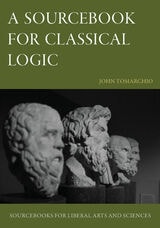
A Sourcebook for Classical Logic
John Tomarchio
Catholic University of America Press, 2023
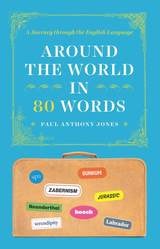
Around the World in 80 Words
A Journey through the English LanguagePaul Anthony Jones
University of Chicago Press, 2018
Surprising, entertaining, and illuminating, this is essential reading for armchair travelers and word nerds. Our dictionaries are full of hidden histories, tales, and adventures from all over the world—if you know where to look.
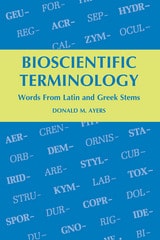
Bioscientific Terminology
Words from Latin and Greek StemsDonald M. Ayers
University of Arizona Press, 1972
Separate sections on Latin and Greek derivations. Each section has 20 lessons—with assignments following each lesson—giving the user a vast technical vocabulary and increased word-recognition ability.
A Definitive Reference:
Hundreds of Greek and Latin stems, prefixes, and suffixes show the precise application of the classical languages to biological and medical usage. Topic-organized bibliography, index of bases.
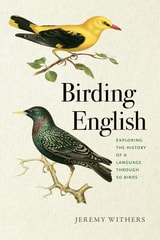
Birding English
Exploring the History of a Language Through 50 BirdsJeremy Withers
University of Iowa Press, 2026
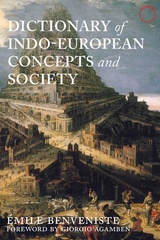
Dictionary of Indo-European Concepts and Society
Émile Benveniste
HAU, 2016
This book has famously inspired a wealth of thinkers, including Roland Barthes, Claude Lévi-Strauss, Pierre Bourdieu, Jacques Derrida, Umberto Eco, Giorgio Agamben, François Jullien, and many others. In this new volume, Benveniste’s masterpiece on the study of language and society finds new life for a new generation of scholars. As political fictions continue to separate and reify differences between European, Middle Eastern, and South Asian societies, Benveniste reminds us just how historically deep their interconnections are and that understanding the way our institutions are evoked through the words that describe them is more necessary than ever.
English Words Instructor's Manual
R. L. Cherry
University of Arizona Press, 1986
English Words from Latin and Greek Elements
Donald M. Ayers; Revised by Thomas D. Worthen
University of Arizona Press, 1986
Since its first publication in 1965, English Words from Latin and Greek Elements by Donald M. Ayers has empowered thousands of students to expand their vocabulary by uncovering the classical roots embedded in modern English. Now in its enduring second edition, this trusted resource proves that vocabulary is most effectively learned through understanding—not memorization.
Why dedicate an entire book to this approach? Because Ayers goes beyond the basics. Students are introduced to a broad spectrum of Latin and Greek roots, encounter new vocabulary in meaningful context, and reinforce their learning through targeted exercises. This method equips learners with lifelong tools to decode unfamiliar words and deepen their command of English.
Written for English learners—not classical language scholars—this book requires no prior knowledge of Latin or Greek. It’s proven effective across high school and college classrooms, and adaptable for both remedial and accelerated programs.
Flesh Becomes Word
A Lexicography of the Scapegoat or, the History of an IdeaDavid Dawson
Michigan State University Press, 2013
Forgotten Paths
Etymology and the Allegorical MindsetDavide Del Bello
Catholic University of America Press, 2007
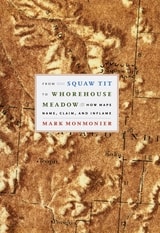
From Squaw Tit to Whorehouse Meadow
How Maps Name, Claim, and InflameMark Monmonier
University of Chicago Press, 2006
From Squaw Tit to Whorehouse Meadow probes this little-known chapter in American cartographic history by considering the intersecting efforts to computerize mapmaking, standardize geographic names, and respond to public concern over ethnically offensive appellations. Interweaving cartographic history with tales of politics and power, celebrated geographer Mark Monmonier locates his story within the past and present struggles of mapmakers to create an orderly process for naming that avoids confusion, preserves history, and serves different political aims. Anchored by a diverse selection of naming controversies—in the United States, Canada, Cyprus, Israel, Palestine, and Antarctica; on the ocean floor and the surface of the moon; and in other parts of our solar system—From Squaw Tit to Whorehouse Meadow richly reveals the map’s role as a mediated portrait of the cultural landscape. And unlike other books that consider place names, this is the first to reflect on both the real cartographic and political imbroglios they engender.
From Squaw Tit to Whorehouse Meadow is Mark Monmonier at his finest: a learned analysis of a timely and controversial subject rendered accessible—and even entertaining—to the general reader.
Homer's Text and Language
Gregory Nagy
University of Illinois Press, 2004
In Homeric studies, there has been an ongoing debate centering on different ways to establish the text of Homer and the different ways to appreciate the poetry created in the language of Homer. Gregory Nagy, a lifelong Homer scholar, takes a stand in the midst of this debate. He presents an overview of millennia of scholarly engagement with Homer's poetry, shows the different editorial principles that have been applied to the texts, and evaluates their impact.
Indian Place Names in Alabama
William A. Read, and revised edition by James B. McMillan
University of Alabama Press, 1984
Learn the Secrets of Alabama’s Fascinating Place Names
In Place Names in Alabama, readers embark on a captivating journey through the linguistic and cultural heritage embedded in the state’s geography. This masterful reference work, compiled by a renowned linguist and historian, unveils the origins and meanings of hundreds of towns, rivers, creeks, and landmarks—many rooted in Native American languages, colonial history, and local folklore. From the bustling streets of Tuscaloosa, whose name means “Black Warrior,” to Mobile, rooted in the name of the indigenous Maubila people, this book reveals the deep cultural and linguistic layers that shape Alabama’s identity. Other fascinating examples are Talladega, which traces its name to a Muscogee word meaning “border town” and Opelika, derived from Creek for “large swamp.”
Indian Place Names in Alabama is scholarly yet accessible, ideal for historians, educators, genealogists, and curious readers. It is richly annotated and includes historical maps, archival citations, and linguistic insights. Its etymologies include place names of Indigenous, French, Spanish, and English origin. Whether you're tracing ancestral roots, exploring regional history, or simply intrigued by the names on a map, Indian Place Names in Alabama offers a treasure trove of discovery.
Judaism
The Genealogy of a Modern NotionBoyarin, Daniel
Rutgers University Press, 2019
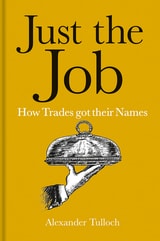
Just the Job
How Trades got their NamesAlexander Tulloch
Bodleian Library Publishing, 2020
The story behind these (and many more) job titles is rarely predictable and often fascinating. In this highly original book, linguist Alexander Tulloch examines the etymology behind a selection of trades and professions, unearthing intriguing bits of historical information along the way. Here readers will find explanations of common surnames, such as Spencer, Hayward, and Fletcher; obsolete jobs such as pardoner, cordwainer, or telegraph boy; and roles for the modern era, such as wedding planner, pundit, and sky marshal. Packed with additional etymological information and literary quotations, this book will appeal not only to linguists, but to anyone interested in the quirky twists and turns of meaning that have led to the familiar job titles of today.
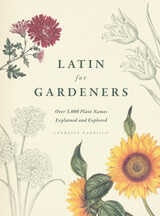
Latin for Gardeners
Over 3,000 Plant Names Explained and ExploredLorraine Harrison
University of Chicago Press, 2012
Since Latin became the standard language for plant naming in the eighteenth century, it has been intrinsically linked with botany. And while mastery of the classical language may not be a prerequisite for tending perennials, all gardeners stand to benefit from learning a bit of Latin and its conventions in the field. Without it, they might buy a Hellebores foetidus and be unprepared for its fetid smell, or a Potentilla reptans with the expectation that it will stand straight as a sentinel rather than creep along the ground.
An essential addition to the gardener’s library, this colorful, fully illustrated book details the history of naming plants, provides an overview of Latin naming conventions, and offers guidelines for pronunciation. Readers will learn to identify Latin terms that indicate the provenance of a given plant and provide clues to its color, shape, fragrance, taste, behavior, functions, and more.
Piros and Prehistory
A Study in TanoanDavid Leedom Shaul
University of Utah Press, 2024
Shaul’s arguments use linguistic analyses coupled with historic and prehistoric records of migration and cultural interaction. Following the establishment of Piro as a Tanoan language, much of the linguistic analysis involves determining the aspects of Piro that were inherited from the earlier Proto-Tanoan versus those that were incorporated later as a result of borrowing from other languages through cultural interaction. This book lays out the linguistic argument that the similarities between Piro and Tiwan languages result from borrowing, not common ancestry, and it provides a record of contact between groups and linguistic evolution based on these movements.
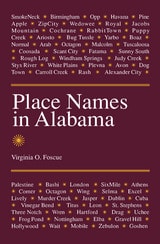
Place Names in Alabama
Virginia O. Foscue
University of Alabama Press, 1988
Discover the stories, people, and histories behind the names on Alabama's map.
Place Names in Alabama is the first comprehensive and systematic study of the names that define Alabama's geographic landscape. In this indispensable reference work, Virginia O. Foscue examines more than 2,600 place names drawn from across the state, including counties, cities, towns, rivers, lakes, streams, mountains, and other significant geographic features. Each entry provides detailed information on location, historical development, etymology, naming history, and documented sources, creating a rich portrait of the people, cultures, and events that have shaped Alabama over time.
Drawing upon archival records, historical documents, maps, and interviews with local informants, Foscue uncovers the stories behind the names that appear on Alabama's maps. The volume reveals the influence of Native American languages, European settlement, transportation networks, natural features, political leaders, local families, and regional traditions on the state's evolving identity. By tracing how communities and landmarks acquired their names, the book illuminates broader patterns of migration, settlement, economic development, and cultural exchange throughout Alabama's history.
More than a dictionary of place names, this work offers a unique window into Alabama's social and cultural heritage. Readers discover not only the origins of familiar names but also the histories of the individuals and communities that helped build the state. Whether used as a scholarly resource, a genealogical tool, or a source of fascinating historical insights, Place Names in Alabama remains an essential guide to understanding the connections between geography, language, and history in the American South.
Valuable for historians, genealogists, geographers, librarians, educators, students, journalists, and local history enthusiasts, this landmark volume continues to serve as the definitive reference on Alabama's geographic names and the stories they preserve.
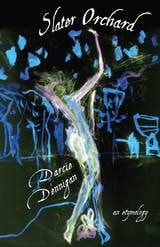
Slater Orchard
An EtymologyDarcie Dennigan
University of Alabama Press, 2019
In Slater Orchard, a cleaning woman navigates a half-imaginary world ravaged by industrial waste and pollution. As she labors to grow pear trees in a dumpster, appearances unravel around and within her, and the orchard becomes a burial ground. We begin to question both the reliability of the narrator and of consensual reality.
With sharp wit and precise diction, Darcie Dennigan calls on and works in the lineage of great modernist women, from Clarice Lispector to Marie Redonnet. Slater Orchard is thoroughly contemporary in its themes, however, evincing dire questions of rampant capitalism and climate change that are rapidly changing our world and the exigencies of living in it.
Spanish Vocabulary
An Etymological ApproachBy David Brodsky
University of Texas Press, 2008
Unlike other vocabulary guides that require the rote memorization of literally thousands of words, this book starts from the premise that using the etymological connections between Spanish and English words—their common derivations from Latin, Greek, and other languages—is the most effective way to acquire and remember vocabulary. This approach is suitable for beginners as well as for advanced students. Teachers of the language will also find much material that can be used to help motivate their students to acquire, and retain, Spanish vocabulary.
Spanish Vocabulary is divided into four parts and four annexes:
- Part I provides background material on the origins of Spanish and begins the process of presenting Spanish vocabulary.
- Part II presents "classical" Spanish vocabulary—words whose form (in both Spanish and English) is nearly unchanged from Latin and Greek.
- Part III deals with "popular" Spanish vocabulary, which underwent significant changes in form (and often meaning) during the evolution from Latin to Spanish. A number of linguistic patterns are identified that will help learners recognize and remember new vocabulary.
- Part IV treats a wide range of themes, including words of Germanic and Arabic origin, numbers, time, food and animals, the family, the body, and politics.
- Annex A: Principal exceptions to the "Simplified Gender Rule"
- Annex B: 700 words whose relations, if any, to English words are not immediately obvious
- Annex C: -cer verbs and related words
- Annex D: 4,500 additional words, either individually or in groups, with English correspondences
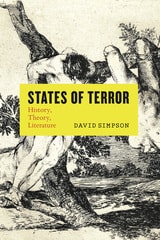
States of Terror
History, Theory, LiteratureDavid Simpson
University of Chicago Press, 2019
Introducing the concept of the “fear-terror cluster,” Simpson is able to capture the wide range of terms that we have used to express extreme emotional states over the centuries—from anxiety, awe, and concern to dread, fear, and horror. He shows that the choices we make among such words to describe shades of feeling have seriously shaped the attribution of motives, causes, and effects of the word “terror” today, particularly when violence is deployed by or against the state. At a time when terror-talk is widely and damagingly exploited by politicians and the media, this book unpacks the slippery rhetoric of terror and will prove a vital resource across humanistic and social sciences disciplines.
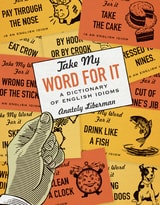
Take My Word for It
A Dictionary of English IdiomsAnatoly Liberman
University of Minnesota Press, 2022
Three centuries of English idioms—their unusual origins and unexpected interpretations
To pay through the nose. Raining cats and dogs. By hook or by crook. Curry favor. Drink like a fish. Eat crow. We hear such phrases every day, but this book is the first truly all-encompassing etymological guide to both their meanings and origins. Spanning more than three centuries, Take My Word for It is a fascinating, one-of-a-kind window into the surprisingly short history of idioms in English. Widely known for his studies of word origins, Anatoly Liberman explains more than one thousand idioms, both popular and obscure, occurring in both American and British standard English and including many regional expressions.
The origins, and even the precise meaning, of most idioms are often obscure and lost in history. Based on a critical analysis of countless conjectures, with exact, in-depth references (rare in the literature on the subject), Take My Word for It provides not only a large corpus of idiomatic phrases but also a vast bibliography. Detailed indexes and a thesaurus make the content accessible at a glance, and Liberman’s introduction and conclusion add historical dimensions. The result of decades of research by a leading authority, this book is both instructive and absorbing for scholars and general readers, who won’t find another resource as comparable in scope or based on data even remotely as exhaustive.
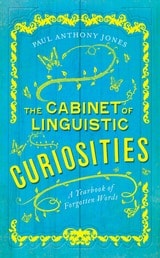
The Cabinet of Linguistic Curiosities
A Yearbook of Forgotten WordsPaul Anthony Jones
University of Chicago Press, 2019
On the day on which flirting was banned in New York City, for instance, you’ll discover why to “sheep’s-eye” someone once meant to look at them amorously. On the day on which a disillusioned San Franciscan declared himself Emperor of the United States, you’ll find the word “mamamouchi,” a term for people who consider themselves more important than they truly are. And on the day on which George Frideric Handel completed his 259-page Messiah after twenty-four days of frenzied work, you’ll see why a French loanword, literally meaning “a small wooden barrow,” is used to refer to an intense period of work undertaken to meet a deadline.
The English language is vast enough to supply us with a word for every occasion—and this linguistic “wunderkammer” is here to prove precisely that. So whatever date this book has found its way into your hands, there’s an entire year’s worth of linguistic curiosities waiting to be found.
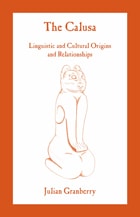
The Calusa
Linguistic and Cultural Origins and RelationshipsJulian Granberry
University of Alabama Press, 2012
Presents a full phonological and morphological analysis of the total corpus of surviving Calusa language data left by a literate Spanish captive held by the Calusa from his early youth to adulthood
The linguistic origins of Native American cultures and the connections between these cultures as traced through language in prehistory remain vexing questions for scholars across multiple disciplines and interests. Native American linguist Julian Granberry defines the Calusa language, formerly spoken in southwestern coastal Florida, and traces its connections to the Tunica language of northeast Louisiana.
Archaeologists, ethnologists, and linguists have long assumed that the Calusa language of southwest Florida was unrelated to any other Native American language. Linguistic data can offer a unique window into a culture’s organization over space and time; however, scholars believed the existing lexical data was insufficient and have not previously attempted to analyze or define Calusa from a linguistic perspective.
In The Calusa: Linguistic and Cultural Origins and Relationships, Granberry presents a full phonological and morphological analysis of the total corpus of surviving Calusa language data left by a literate Spanish captive held by the Calusa from his early youth to adulthood. In addition to further defining the Calusa language, this book presents the hypothesis of language-based cultural connections between the Calusa people and other southeastern Native American cultures, specifically the Tunica. Evidence of such intercultural connections at the linguistic level has important implications for the ongoing study of life among prehistoric people in North America. Consequently, this thoroughly original and meticulously researched volume breaks new ground and will add new perspectives to the broader scholarly knowledge of ancient North American cultures and to debates about their relationships with one another.
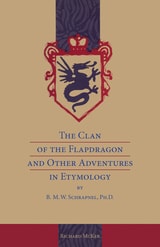
The Clan of the Flapdragon and Other Adventures in Etymology by B. M. W. Schrapnel, Ph.D.
Richard McKee
University of Alabama Press, 1997
This potpourri of satire on language use in Western culture will trigger chuckles and guffaws from an eclectic readership
In The Clan of the Flapdragon and Other Adventures in Etymology by B. M. W. Schrapnel, Ph.D., the pseudonymous critic satirizes a variety of subjects in and out of academe. These adventurous essays include lampoons on writing, language, and literature, and the collection is a delightful spoof of much in contemporary culture—especially areas of intellectual pretension. Readers will be entertained by anachronistic allusions, improbable parodies, whimsical etymologies, tongue-in-cheek word play, and stunning purple prose—examples of just some of the liberties Schrapnel takes with the language.
Dr. Schrapnel includes a wide array of audience reactions in the form of bogus letters from fictional readers, confirming that language and literature are everyone’s business. He also offers an annual list of words that writers and speakers should use more often—a lexicographer’s equivalent to the endangered species list—and coins terms such as prufrockery and grendelish.
The Origins of Catholic Words
A Discursive DictionaryAnthony Lo Bello
Catholic University of America Press, 2020
The Return of Resentment
The Rise and Decline and Rise Again of a Political EmotionRobert A. Schneider
University of Chicago Press, 2023
The term “resentment,” often casually paired with words like “hatred,” “rage,” and “fear,” has dominated US news analysis since November 2016. Despite its increased use, this word seems to defy easy categorization. Does “resentment” describe many interlocking sentiments, or is it just another way of saying “anger”? Does it suggest an irrational grievance, as opposed to a legitimate callout of injustice? Does it imply political leanings, or is it nonpartisan by nature?
In The Return of Resentment, Robert A. Schneider explores these questions and more, moving from eighteenth-century Britain to the aftermath of the French Revolution to social movements throughout the twentieth century. Drawing on a wide range of writers, thinkers, and historical experiences, Schneider illustrates how resentment has morphed across time, coming to express a collective sentiment felt by people and movements across the political spectrum. In this history, we discover resentment’s modernity and its ambiguity—how it can be used to dismiss legitimate critique and explain away violence, but also convey a moral stance that demands recognition. Schneider anatomizes the many ways resentment has been used to label present-day movements, from followers of Trump and supporters of Brexit to radical Islamicists and proponents of identity politics. Addressing our contemporary political situation in a novel way, The Return of Resentment challenges us to think critically about the roles different emotions play in politics.
The Translations of Nebrija
Language, Culture, and Circulation in the Early Modern WorldByron Ellsworth Hamann
University of Massachusetts Press, 2015
Tracing the global influence of Nebrija's dictionary, Byron Ellsworth Hamann, in this interdisciplinary, deeply researched book, connects pagan Rome, Muslim Spain, Aztec Tenochtitlan, Elizabethan England, the Spanish Philippines, and beyond, revealing new connections in world history. The Translations of Nebrija re-creates the travels of people, books, and ideas throughout the early modern world and reveals the adaptability of Nebrija's text, tracing the ways heirs and pirate printers altered the dictionary in the decades after its first publication. It reveals how entries in various editions were expanded to accommodate new concepts, such as for indigenous languages in the Americas—a process with profound implications for understanding pre-Hispanic art, architecture, and writing. It shows how words written in the margins of surviving dictionaries from the Americas shed light on the writing and researching of dictionaries across the early modern world.
Exploring words and the dictionaries that made sense of them, this book charts new global connections and challenges many assumptions about the early modern world.
The World in a Phrase
A Brief History of the Aphorism, Second EditionJames Geary
University of Chicago Press, 2025
Aphorisms are literature’s hand luggage. Light and compact, they contain everything you need to get through a rough day at the office or a dark night of the soul. Aphorisms, the oldest written art form on the planet, have been going viral for thousands of years, delivering the short, sharp shock of old forgotten truths. Today, visual artists are mixing pithy language with compelling imagery and using social media to take the form into the future. In a world of disinformation and deepfakes, aphorisms point to the power of fresh debate over tired dogma and inconvenient truths over comfortable lies.
Starting in ancient China and ending with contemporary meme-makers and street artists, The World in A Phrase tells the story of the aphorism through brief biographies of some of its greatest practitioners: sages like Lao-tzu and the Buddha, philosophers like Schopenhauer and Nietzsche, writers like George Eliot and Marie von Ebner-Eschenbach, humorists like Mark Twain and Dorothy Parker, activists like James Baldwin and Audre Lorde, poets like Langston Hughes and Kay Ryan, and artists like Jenny Holzer and David Byrne.
The World in A Phrase is for lovers of words and seekers of wisdom. This new edition of The New York Times bestseller features 26 additional aphorists and explores the aphorism in the age of social media, showing why these short sentences are the ultimate deep dives in an era when TL;DR has become a cultural catchphrase.

Tocharian and Indo-European Studies 21
Edited by Birgit Anette Olsen, Hannes Fellner, Michaël Peyrot, and Georges-Jean Pinault
Museum Tusculanum, 2022
This book offers the most diverse and comprehensive treatment of the relationships between ancient Tocharian A and B and other Indo-European languages. Studying now-extinct languages from the first millennium, early twentieth-century archaeologists discovered previously unknown Tocharian A and Tocharian B writings on Buddhist manuscripts near northwest China. Volumes in the Tocharian and Indo-European Studies series present the authoritative study of these two closely related languages, focusing both on philological and linguistic approaches toward their relationship with other Indo-European languages.

Transcendental Wordplay
America’s Romantic Punsters and the Search for the Language of NatureMichael West
Ohio University Press, 2000
Throughout the first half of the nineteenth century, America was captivated by a muddled notion of “etymology.” New England Transcendentalism was only one outcropping of a nationwide movement in which schoolmasters across small-town America taught students the roots of words in ways that dramatized religious issues and sparked wordplay.
Shaped by this ferment, our major romantic authors shared the sensibility that Friedrich Schlegel linked to punning and christened “romantic irony.” Notable punsters or etymologists all, they gleefully set up as sages, creating jocular masterpieces from their zest for oracular wordplay. Their search for a primal language lurking beneath all natural languages provided them with something like a secret language that encodes their meanings. To fathom their essentially comic masterpieces we must decipher it.
Interpreting Thoreau as an ironic moralist, satirist, and social critic rather than a nature-loving mystic, Transcendental Wordplay suggests that the major American Romantics shared a surprising conservatism. In this award-winning study, Professor West rescues the pun from critical contempt and allows readers to enjoy it as a serious form of American humor.
Voices in Exile
Jamaican Texts of the 18th and 19th CenturiesJean D'Costa
University of Alabama Press, 2009
Recovering the voices that shaped Jamaica's language, literature, and identity.
Voices in Exile: Jamaican Texts of the 18th and 19th Centuries is a landmark anthology that brings together a rich collection of historical documents illuminating the origins and development of Jamaican language, culture, and identity. Edited by renowned scholars Jean D'Costa and Barbara Lalla, the volume gathers songs, sermons, folk narratives, eyewitness accounts, personal testimonies, and other primary materials that reveal the complex social and cultural world of Jamaica during the colonial and post-emancipation eras.
Spanning the eighteenth and nineteenth centuries, the collection traces the emergence of a distinctive Jamaican society forged through the interaction of African, European, and Caribbean peoples. The selected texts capture the realities of plantation life, slavery, resistance, religious expression, language development, and everyday experience while showcasing the creativity and resilience of communities whose voices have often been marginalized in traditional historical narratives.
Particularly valuable for its documentation of Jamaican Creole and evolving linguistic practices, the anthology provides readers with direct access to the words and perspectives of individuals living through profound social transformation. Materials from the periods before emancipation, during apprenticeship, and after emancipation illustrate how language and culture adapted to changing political and economic conditions.
More than a collection of historical texts, Voices in Exile serves as a window into the formation of Jamaican identity and the broader cultural history of the Caribbean. By preserving and contextualizing these remarkable documents, D'Costa and Lalla offer an indispensable resource for students and scholars of Caribbean studies, literature, linguistics, history, postcolonial studies, and the African diaspora. The result is a compelling archive of voices that continue to resonate across centuries and enrich our understanding of Jamaica's cultural heritage.