Results by title
3745 books match the query 'Europe' and 292 start with a
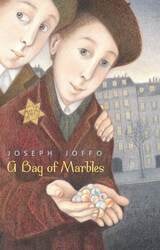
A Bag of Marbles
Joseph Joffo
University of Chicago Press, 2000
A Bibliography of East European Travel Writing on Europe
Wendy Bracewell
Central European University Press, 2008
The bibliography volume of the three-volume East Looks West: East European Travel Writing in Europe collates travel writing published in book form by east Europeans travelling in Europe from ca. 1550 to 2000. It is intended as a fundamental research tool, collecting together travel writings within each national/linguistic tradition, and enabling comparative analysis of such material. It fills an important gap in the existing reference literature, both in western and east European languages, and will be of use to those working in the growing fields of comparative travel writing, regional and national identities, and postcolonialism.
These texts exist in surprisingly large numbers, and include writings of high literary quality as well as of historical interest, but they have been relatively little studied as a genre. Much of this material is rare and difficult to find, even in national libraries. As a result, there are few bibliographical surveys of the literature of east European travel and self-representation, and none that are region-wide or comparative in scope.
This is the third volume of a three-part set of East Looks West.
Vol. 1. Orientations. An Anthology of East European Travel Writing on Europe.
Vol. 2. Undern Eastern Eyes. A Comparative Introduction to East European Travel Writing on Europe.
A Blue Tale and Other Stories
Marguerite Yourcenar
University of Chicago Press, 1995
Published to great acclaim in France in 1993, this collection is not only a delight for Marguerite Yourcenar fans but a welcome port of entry for any reader not yet familiar with the author's lengthier, more demanding works. This collection includes three stories written between 1927 and 1930 when the author was in her mid-twenties. These stories cover a range of themes, from an allegory on greed and a scene from the war of the sexes to a witch hunt that obsessively creates its own quarry.
For the devoted readers of Yourcenar, this collection allows a rare glimpse at the beginnings of a writer's craft. In these accomplished but forgotten pieces, edited and introduced by her biographer, Josyane Savigneau, readers will find the blend of fable and fairy tale of Oriental Tales, the psychological chronicle of Dear Departed, and the ironic realism of A Coin in Nine Hands. Read as an introduction to Yourcenar's work, the stories take us into the writer's workshop, as it were, to the early days of creation. A Blue Tale and Other Stories carries the unmistakable voice of a formidable and vastly talented writer.
Marguerite Yourcenar (her pseudonym was an anagram of her family name, Crayencour) was born in Brussels in 1903 and died in Maine in 1987. One of the most respected writers in the French language, she is best known as the author of the acclaimed Memoirs of Hadrian and The Abyss. She was awarded many literary honors, most notably election to the Académie Française in 1980, the first woman so honored.
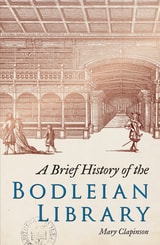
A Brief History of the Bodleian Library
Mary Clapinson
Bodleian Library Publishing, 2015
A Brief History of the Bodleian Library takes readers through the Library’s history, from its founding in 1602 by Sir Thomas Bodley to the present day. Along the way, the book traces the development of the Library’s incomparable collection, complete with details that reveal the eccentricities of those who have helped shape it, including Bodley himself, who conceived of the Library as a “republic of the learned,” and King George VI, who inadvertently delayed the opening of the New Bodleian in 1946 when he broke the key in the lock. Covering the major moments in the Library’s history and with a great many fun facts—How did the Library come to own not one of Shakespeare’s First Folios but two?—the book also apprises readers of its present concerns, including the building of individual subject libraries across Oxford, the use of underground passages, and the perennial search for more space.

A Brief History of the Bodleian Library
Mary Clapinson
Bodleian Library Publishing, 2020
How did a library founded over four hundred years ago grow to become the world-renowned institution it is today, home to over thirteen million items? From its foundation by Sir Thomas Bodley in 1598 to the opening of the Weston Library in 2015, this illustrated account shows how the Library’s history has been involved with the British monarchy and political events throughout the centuries. The history of the Library is also a history of collectors and collections, and this book traces the story of major donations and purchases, making use of the Library’s own substantial archives to show how it came to house key items such as early confirmations of the Magna Carta, Shakespeare’s First Folio, and the manuscript of Jane Austen’s earliest writings, among many others.
This revised edition brings the history of the Bodleian Library up to the present moment. Beautifully illustrated with prints, portraits, manuscripts, and archival material, this book is essential reading for anyone interested in the history of libraries and collections.

A Cardboard Castle?
An Inside History of the Warsaw Pact, 1955-1991The National Security Archive Mastny
Central European University Press, 2005

A Castle in the Backyard
The Dream of a House in FranceBetsy Draine and Michael Hinden
University of Wisconsin Press, 2006
Like any romance, this one has had its ups and downs, and Betsy and Michael chart its course in this delightful memoir. They offer an intimate glimpse of a region little known to Americans—the Dordogne valley, its castles and prehistoric art, its walking trails and earthy cuisine—and describe the charms and mishaps of setting up housekeeping thousands of miles from home.
Along with the region’s terrain and culture, A Castle in the Backyard introduces us to the people of Périgord—the castle’s proprietor, the village children, the gossipy real-estate agent, the rascally mason, and the ninety-year-old widow with a tale of heartbreak. A celebration of a place and its people, the book also reflects on the future of historic Périgord as tourism and development pose a challenge to its graceful way of life.

A Century of Populist Demagogues
Eighteen European Portraits, 1918–2018Ivan T. Berend
Central European University Press, 2020
The renowned historian Ivan T. Berend discusses populist demagoguery through the presentation of eighteen politicians from twelve European countries spanning World War I to the present. Berend defines demagoguery, reflects on its connections with populism, and examines the common features and differences in the demagogues’ programs and language.
Mussolini and Hitler, the “model demagogues,” are only briefly discussed, as is the election of Donald Trump in the United States and its impact on Europe. The eighteen detailed portraits include two communists, two fascists, and several right-wing and anti-EU politicians, extending across the full range of demagoguery. The author covers Béla Kun, the leader of the Hungarian Soviet Republic in 1919, weaving through Codreanu and Gömbös from the 1930s, on to Stahremberg and Haider in Austria, and then more broadly throughout Europe from Ceaușescu, Milošević, Tuđjman, Izetbegović, Berlusconi, Wilders, to the two Le Pens, Farage, and Boris Johnson, Orbán and the two Kaczyńskis. Each case includes an analysis of the time and place and is illustrated with quotations from the demagogues’ speeches.
This book is a warning about the continuing threat of populist demagogues both for their subjects and for history itself. Berend insists on the crucial importance for Europe to understand the reality behind their promises and persuasive language as imperative to impeding their success.

A Collection of Ranter Writings
Spiritual Liberty and Sexual Freedom in the English RevolutionNigel Smith
Pluto Press, 2014
The Ranters - like the Levellers and the Diggers - were a group of religious libertarians who flourished during the English Civil War (1642–1651), a period of social and religious turmoil which saw, in the words of the historian Christopher Hill, 'the world turned upside down'.
A Collection of Ranter Writings is the most notable attempt to anthologise the key Ranter writings, bringing together some of the most remarkable, visionary and unforgettable texts. The subjects range from the limits to pleasure and divine right, to social justice and collective action.
The Ranters have intrigued and captivated generations of scholars and philosophers. This carefully curated collection will be of great interest to historians, philosophers and all those trying to understand past radical traditions.
A Collective Pursuit
Teachers' Unions and Education ReformLesley Lavery
Temple University Press, 2020
Teachers’ unions are the organizations responsible for safeguarding the conditions of teachers’ employment. Union supporters claim strong synergies between teachers’ interests and students’ interests, but critics of unions insist that the stance of teachers in collective bargaining may disadvantage students as unions reduce the power of administrators to manage, remove, reward or retain excellent teachers.
In A Collective Pursuit, Lesley Laveryunpacks how teachers’ unions today are fighting for contracts that allow them to earn a decent living and build “schools all students deserve.” She explains the form and function of the nation’s largest teachers’ unions. Lavery then explores unionization campaigns in the Twin Cities charter schools. A Collective Pursuit also examines teacher strikes and contract negotiations, school finance and finance reform, and district and union attempts to address racial achievement gaps, to provide a context for understanding the economic, political, and demographic forces that inspire teachers to improve conditions for students.
A Collective Pursuit emphasizes that while teachers’ unions serve a traditional, economic role, they also provide a vast array of valuable services to students, educators, parents, and community members.

A Colored Man Round the World
David F. Dorr
University of Michigan Press, 1999
Malini Johar Schueller has edited and annotated the 1858 text and added a critical introduction that provides a useful context for understanding and appreciating this important but heretofore neglected document. Her edition of A Colored Man Round the World provides a fascinating account of Dorr's negotiation of the conflicting roles of slave versus man, taking into account all of the racial complexities that existed at the time. As a traveler abroad, Dorr claimed an American selfhood that allowed him mobility in Europe, and he benefited from the privileges accorded American "Orientalists" venturing in the near East. However, any empowerment that Dorr experienced while a tourist vanished upon his return to America.
The book will be welcomed for the rare perspective it provides of the mid-nineteenth century, through the eyes of an African-American slave and for the light it casts on world and U.S. history as well as on questions of racial and national identity.
Malini Johar Schueller is Professor of English, University of Florida.
A Comedian Sees the World
Charlie Chaplin, Edited by Lisa Stein Haven
University of Missouri Press, 2014
Available only in the USA and Canada.
A Comedy Called Susenbrotus
Connie McQuillen
University of Michigan Press, 1998
Susenbrotus is in many ways representative of later university comedy. It is a rowdy, bawdy farce with roots in the Roman comedies of Plautus and Terence. The wit and much of the humor in these plays is in the reworking of traditional themes with characters and situations adapted to contemporary types and topical satire. Almost every playwright for the professional stage (with the notable exception of Shakespeare) either wrote or acted in university plays. Moreover, they were popular forms of entertainment and were attended not only by members of the academic community but also by visiting dignitaries, courtiers, foreign ambassadors, and on occasion, the English monarchs.
Susenbrotus is special among later university plays because it was specifically written for King James I. It was meant to flatter the king, who prided himself on his humanist education, with a display of wit and erudition. It was also meant to entertain: the play itself is quite funny. It involves the antics of several contemporary types (the pedant, a poet, a Spanish dandy, and a braggart soldier) vying for the affection of a cross-dressed boy. Much of the wit in Susenbrotus is verbal: scholarly puns, sexual metaphors, classical allusions, and quotations that are explained in annotations. The sustained transvestitism of the character Fortunia distinguishes it from its classical sources as well as from other plays of its type. Unlike Latin texts that were submitted to publishing houses and therefore corrected or stylized by printers, Susenbrotus is an example of Latin as it was written in the seventeenth century.
Connie McQuillen is Associate Professor of Humanities, Southwest State University, Minnesota.

A Commentary on Cicero, De Officiis
Andrew R. Dyck
University of Michigan Press, 1997
Composed in haste shortly before Cicero's death, de Officiis has exercised enormous influence over the centuries. It is all the more surprising that Andrew R. Dyck's volume is the first detailed English commentary on the work written in this century. It deals with the problems of the Latin text (taking account of Michael Winterbottom's new edition), it delineates the work's structure and sometimes elusive train of thought, clarifies the underlying Greek and Latin concepts, and provides starting points for approaching the philosophical and historical problems that de Officiis raises.
A work of major importance for classicists, philosophers, and ancient historians, this Commentary will be an invaluable companion to all readers of Cicero's last philosophical work.
Andrew R. Dyck is Professor of Classics, University of California, Los Angeles.
Publication of this volume is supported by a grant from the National Endowment for the Humanities.

A Common Law for Europe
Barbara Pasa
Central European University Press, 2005
A Communist Odyssey
The life of József Pogány/John PepperThomas Sakmyster
Central European University Press, 2012

A Companion to Margaret More Roper Studies
Life Records, Essential Texts, and Critical EssaysElizabeth McCutcheon
Catholic University of America Press, 2022
Margaret More Roper is the learned daughter of St. Thomas More, the Catholic martyr; their lives are closely linked to each other and to early sixteenth-century changes in politics and religion and the social upheaval and crises of conscience that they brought. Specifically, Roper's major works - her translation of Erasmus's commentary on the Lord's Prayer and the long dialogue letter between More and Roper on conscience - highlight two major preoccupations of the period: Erasmian humanism and More's last years, which led to his death and martyrdom.
Roper was one of the most learned women of her time and a prototype of the woman writer in England, and this edited volume is a tribute to her life, writings, and place among early women authors. It combines comprehensive and convenient joining of biographical, textual, historical, and critical components within a single volume for the modern reader. There is no comparable study in print, and it fills a significant gap in studies of early modern women writers.
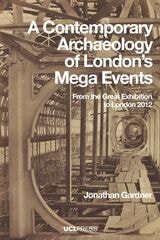
A Contemporary Archaeology of London's Mega Events
From the Great Exhibition to London 2012Jonathan Gardner
University College London, 2022
This book explores the traces of London’s most significant modern “mega events”: the Great Exhibition of 1851, the 1951 Festival of Britain’s South Bank Exhibition, and the 2012 Olympic and Paralympic Games. Though only open for a few weeks or months, mega events permanently and disruptively reshape their host cities and societies: they demolish and rebuild whole districts, they draw in materials and participants from around the globe, and their organizers self-consciously seek to leave a “legacy” that will endure for decades or more. The book argues that these spectacles must thus be seen as long-lived and persistent, rather than simply transient or short-term phenomena. It explores the long-term history of each event through contemporary archaeology, examining the contents and building materials of the Great Exhibition’s Crystal Palace and their extraordinary afterlife at Sydenham, South London; how the Festival of Britain’s South Bank Exhibition employed displays of ancient history to construct a new postwar British identity; and how London 2012 dealt with competing visions of the past as archaeology, waste, and heritage in creating a vision of the future.
A Cosmos of Desire
The Medieval Latin Erotic Lyric in English ManuscriptsThomas C Moser, Jr.
University of Michigan Press, 2004
Thomas C. Moser, Jr. explores the fascinating body of medieval Latin erotic poetry found in English manuscripts. His study describes the intellectual and social context from which the great erotic songs of the twelfth century emerged, and examines a variety of erotic poems, from school exercises to the magnificent lyrics found in Arundel 384. He also illuminates the influence of neoplatonic philosophy on this poetry, explicating key neoplatonic texts and applying that analysis in close readings of erotic lyrics from the same period and milieu.
A Cosmos of Desire will interest scholars of medieval literature as well as specialists in Latin poetry and philosophy. Students of Middle English literature will find that it fills an important gap in our understanding of English intellectual life between the twelfth and the fourteenth century. All Latin prose and poetry is translated, some works for the first time, and the book is generously illustrated with photographs of the manuscripts discussed.
Thomas C. Moser, Jr. is Associate Professor of English at the University of Maryland, College Park.
A Culture of Corruption?
Coping with Government in Post-communist EuropeWilliam L. Miller
Central European University Press, 2001
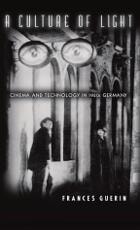
A Culture of Light
Cinema and Technology in 1920s GermanyFrances Guerin
University of Minnesota Press, 2005
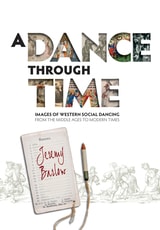
A Dance Through Time
Images of Western Social Dancing from the Middle Ages to Modern TimesJeremy Barlow
Bodleian Library Publishing, 2012
A Dance to the Music of Time
First MovementAnthony Powell
University of Chicago Press, 1995
A Dance to the Music of Time is a landmark work of fiction, praised by readers and critics and other novelists throughout the 75 years since the first volume was published. Equal parts funny and heartbreaking, clever and moving, Anthony Powell's universally acclaimed epic encompasses a four-volume panorama of twentieth century London.
Hailed by Time as "brilliant literary comedy as well as a brilliant sketch of the times," A Dance to the Music of Time opens just after World War I and carries through the 1950s, with all the changes of society, characters, and relationships that those shifting eras bring.
Four very different young men on the threshold of manhood dominate this opening volume of A Dance to the Music of Time. The narrator, Jenkins—a budding writer—shares a room with Templer, already a passionate womanizer, and Stringham, aristocratic and reckless. Widmerpool, as hopelessly awkward as he is intensely ambitious, lurks on the periphery of their world. Amid the fever of the 1920s and the first chill of the 1930s, these four gain their initiations into sex, society, business, and art. A masterpiece of modern fiction, Powell's epic creates a rich portrait of life in England between the wars.
"Reading Powell," says the New York Times, "is like living someone else's life, inextricably entangled with your own." Give this first volume a try, and you'll find characters and scenes and insights that will stay with you for the rest of your life.
Includes these novels:
A Question of Upbringing
A Buyer's Market
The Acceptance World
A Dance to the Music of Time
Fourth MovementAnthony Powell
University of Chicago Press, 1995
A Dance to the Music of Time is a landmark work of fiction, praised by readers and critics and other novelists throughout the 75 years since the first volume was published. Equal parts funny and heartbreaking, clever and moving, Anthony Powell's universally acclaimed epic encompasses a four-volume panorama of twentieth century London. Hailed by Time as "brilliant literary comedy as well as a brilliant sketch of the times," A Dance to the Music of Time opens just after World War I and carries through the 1950s, with all the changes to society, character, and relationships those shifting eras bring.
In this final volume of A Dance to the Music of Time, Nick Jenkins describes a world of ambition, intrigue, and dissolution. England has won the war, but its costs, physical and moral, were vast. Widmerpool's wife sets a snare for the young writer X. Trapnel, while her husband suffers private agony and public humiliation. Set against a background of politics, business, high society, and the counterculture in England and Europe, this magnificent work of art sounds an unforgettable requiem for an age.
"Reading Powell," says the New York Times, "is like living someone else's life, inextricably entangled with your own." Give this first volume a try, and you'll find characters and scenes and insights that will stay with you for the rest of your life.
Includes these novels:
Books Do Furnish a Room
Temporary Kings
Hearing Secret Harmonies
A Dance to the Music of Time
Second MovementAnthony Powell
University of Chicago Press, 1995
A Dance to the Music of Time is a landmark work of fiction, praised by readers and critics and other novelists throughout the 75 years since the first volume was published. Equal parts funny and heartbreaking, clever and moving, Anthony Powell's universally acclaimed epic encompasses a four-volume panorama of twentieth century London. Hailed by Time as "brilliant literary comedy as well as a brilliant sketch of the times," A Dance to the Music of Time opens just after World War I and continues through the 1950s.
In the background of this second volume of A Dance to the Music of Time, the rumble of distant events in Germany and Spain presages the storm of World War II. In England, even as the whirl of marriages and adulteries, fashions and frivolities, personal triumphs and failures gathers speed, men and women find themselves on the brink of fateful choices.
"Reading Powell," says the New York Times, "is like living someone else's life, inextricably entangled with your own." Give this first volume a try, and you'll find characters and scenes and insights that will stay with you for the rest of your life
Includes these novels:
At Lady Molly's
Casanova's Chinese Restaurant
The Kindly Ones
A Dance to the Music of Time
Third MovementAnthony Powell
University of Chicago Press, 1995
A Dance to the Music of Time is a landmark work of fiction, praised by readers and critics and other novelists throughout the 75 years since the first volume was published. Equal parts funny and heartbreaking, clever and moving, Anthony Powell's universally acclaimed epic encompasses a four-volume panorama of twentieth century London. Hailed by Time as "brilliant literary comedy as well as a brilliant sketch of the times," A Dance to the Music of Time opens just after World War I and continues through the 1950s and all the changes to life, society, and relationships those shifting eras bring.
In this third volume of A Dance to the Music of Time, we again meet Widmerpool, doggedly rising in rank; Jenkins, shifted from one dismal army post to another; Stringham, heroically emerging from alcoholism; Templer, still on his eternal sexual quest. Here, too, we are introduced to Pamela Flitton, one of the most beautiful and dangerous women in modern fiction. Wickedly barbed in its wit, uncanny in its seismographic recording of human emotions and social currents, this saga stands as an unsurpassed rendering of England's finest yet most costly hour.
"Reading Powell," says the New York Times, "is like living someone else's life, inextricably entangled with your own." Give Dance a try, and you'll find characters and scenes and insights that will stay with you for the rest of your life.
Includes these novels:
The Valley of Bones
The Soldier's Art
The Military Philosophers
A Day in a Medieval City
Chiara Frugoni
University of Chicago Press, 2005
A Day in a Medieval City breathes life into the activities of the city streets, homes, fields, schools, and places of worship. With entertaining anecdotes and gritty details, it engages the modern reader with its discoveries of the religious, economic, and institutional practices of the day. From urban planning and education to child care, hygiene, and the more leisurely pursuits of games, food, books, and superstitions, Frugoni unearths the daily routines of the private and public lives of citizens. A Day in a Medieval City is a charming portal to the Middle Ages that you'll surely want with you on your travels to Europe—or in your armchair.
“Stunningly beautiful . . . and a good read as well. . . . It’s amazing how much wealth of detail and image Ms. Frugoni has packed into this delightful, relatively small book.”—Steve Goode, Washington Times
“Charming and insightful. . . .Written with exceptional grace and infused with a warm sense of humanity.”—Library Journal

A Documentary History of Communism in Russia
From Lenin to GorbachevEdited by Robert V. Daniels
University Press of New England, 2001
A Dossier of Texts Relating to Gerosimos Avlonites
Ted A. Campbell
Bridwell Press, 2025
A Duel of Giants
Bismarck, Napoleon III, and the Origins of the Franco-Prussian WarDavid Wetzel
University of Wisconsin Press, 2001
Combining impeccable scholarship and literary elegance, David Wetzel depicts the drama of machinations and passions that exploded in a war that forever changed the face of European history.
A Feast for the Eyes
Art, Performance, and the Late Medieval BanquetChristina Normore
University of Chicago Press, 2015
A Feast for the Eyes is the first book-length study of the court banquets of northwestern Europe in the fourteenth and fifteenth centuries. Christina Normore draws on an array of artworks, archival documents, chroniclers’ accounts, and cookbooks to re-create these events and reassess the late medieval visual culture in which banquets were staged. Feast participants, she shows, developed sophisticated ways of appreciating artistic skill and attending to their own processes of perception, thereby forging a court culture that delighted in the exercise of fine aesthetic judgment.
Challenging modern assumptions about the nature of artistic production and reception, A Feast for the Eyes yields fresh insight into the long history of multimedia work and the complex relationships between spectacle and spectators.
A Feast of Words
Banquets and Table Talk in the RenaissanceMichel Jeanneret
University of Chicago Press, 1991

A Fistful of Shells
West Africa from the Rise of the Slave Trade to the Age of RevolutionToby Green
University of Chicago Press, 2019
With A Fistful of Shells, Toby Green transforms our view of West and West-Central Africa by reconstructing the world of these kingdoms, which revolved around trade, diplomacy, complex religious beliefs, and the production of art. Green shows how the slave trade led to economic disparities that caused African kingdoms to lose relative political and economic power. The concentration of money in the hands of Atlantic elites in and outside these kingdoms brought about a revolutionary nineteenth century in Africa, parallel to the upheavals then taking place in Europe and America. Yet political fragmentation following the fall of African aristocracies produced radically different results as European colonization took hold.
Drawing not just on written histories, but on archival research in nine countries, art, oral history, archaeology, and letters, Green lays bare the transformations that have shaped world politics and the global economy since the fifteenth century and paints a new and masterful portrait of West Africa, past and present.
A Florentine Chansonnier from the Time of Lorenzo the Magnificent
Edited by Howard M. Brown
University of Chicago Press, 1983

A Folk Divided
Homeland Swedes and Swedish Americans, 1840-1940H. Arnold Barton
Southern Illinois University Press, 1994
In this unique longitudinal study of how a divided people relate to one another, H. Arnold Barton outlines dilemmas created by the great migration of Swedes to the United States from 1840 through 1940 and the complex love-hate relationship that resulted between those who stayed and those who left. During that hundred-year period, one Swede out of five voluntarily immigrated to the United States, and four-fifths of those immigrants remained in their new country. This study seeks to explore the far-reaching implications of this mass migration for both Swedes and Swedish Americans.
The Swedes were a literate, historically aware people, and the 1.2 million Swedes who immigrated to the United States offer a particularly well-documented and illuminating case study. Barton has skillfully woven into the text translations of little known published and unpublished Swedish sources from both sides of the Atlantic, to embody—in haunting human terms—both what was gained and what was lost through emigration.
Past studies have traditionally shown ethnic mobilization to be a defensive reaction against the exclusive nativism of resident Americans. Barton convincingly demonstrates, however, that the creation of a distinctive Swedish-American identity was at least equally an expression of the immigrants’ need to justify leaving their homeland to their former compatriots and to themselves by asserting a rightful and unique place within the Swedish national community. He concludes that the relationship between Swedes and Swedish Americans was essentially similar to that experienced by other peoples divided by migration, and that the long debate over the United States and emigration at its deepest level reveals both hopes and fears most conspicuously symbolized by America and "Americanization" in an increasingly integrated world undergoing the relentless advance of modernization.
A Genealogy of Manners
Transformations of Social Relations in France and England from the Fourteenth to the Eighteenth CenturyJorge Arditi
University of Chicago Press, 1998
Analyzing courtesy manuals and etiquette books from the thirteenth to the eighteenth century, Arditi shows how the dominant classes of a society were able to create a system of social relations and put it into operation. The result was an infrastructure in which these classes could successfully exert power. He explores how the ecclesiastical authorities of the Middle Ages, the monarchies from the fifteenth through the seventeenth century, and the aristocracies during the early stages of modernity all forged their own codes of manners within the confines of another, dominant order. Arditi goes on to describe how each of these different groups, through the sustained deployment of their own forms of relating with one another, gradually moved into a position of dominance.

A Genealogy of Terror in Eighteenth-Century France
Ronald Schechter
University of Chicago Press, 2018
For centuries prior to the French Revolution, the word “terror” had largely positive connotations. Subjects flattered monarchs with the label “terror of his enemies.” Lawyers invoked the “terror of the laws.” Theater critics praised tragedies that imparted terror and pity. By August 1794, however, terror had lost its positive valence. As revolutionaries sought to rid France of its enemies, terror became associated with surveillance committees, tribunals, and the guillotine. By unearthing the tradition that associated terror with justice, magnificence, and health, Schechter helps us understand how the revolutionary call to make terror the order of the day could inspire such fervent loyalty in the first place—even as the gratuitous violence of the revolution eventually transformed it into the dreadful term we would recognize today. Most important, perhaps, Schechter proposes that terror is not an import to Western civilization—as contemporary discourse often suggests—but rather a domestic product with a long and consequential tradition.

A General History of Quadrupeds
The Figures Engraved on WoodThomas Bewick
University of Chicago Press, 2009
In the late eighteenth century, the British took greater interest than ever before in observing and recording all aspects of the natural world. Travelers and colonists returning from far-flung lands provided dazzling accounts of such exotic creatures as elephants, baboons, and kangaroos. The engraver Thomas Bewick (1753–1828) harnessed this newfound interest by assembling the most comprehensive illustrated guide to nature of his day.
A General History of Quadrupeds, first published in 1790, showcases Bewick’s groundbreaking engraving techniques that allowed text and images to be published on the same page. From anteaters to zebras, armadillos to wolverines, this delightful volume features engravings of over four hundred animals alongside descriptions of their characteristics as scientifically understood at the time. Quadrupeds reaffirms Bewick’s place in history as an incomparable illustrator, one whose influence on natural history and book printing still endures today.

A Generation Divided
German Children and the Berlin WallThomas A. Davey
Duke University Press, 1987
Thomas Davey conducted interviews with children both sides of the Wall, participated in their daily lives, collected their drawings, talked with their teachers and families and grew aware of just how attentive children can be to moral and political subtleties of national life. The result is a revealing and dramatic portrait of a young generation coming to terms with complex national and historical circumstances of the two cites of East and West Berlin.
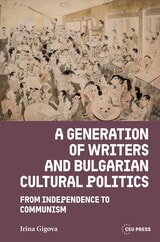
A Generation of Writers and Bulgarian Cultural Politics
From Independence to CommunismIrina Gigova
Central European University Press, 2026

A Ghost in Trieste
Joseph Cary
University of Chicago Press, 1993
Here is the crossroads of East and West. A port held in turn by the Romans, the Venetians, the Austrians, the Germans, the Slavs, and finally the Italians, Trieste is the capital of nowhere, fertile source of a unique literary florescence before the First World War. At times an exile home and an exiled city. "I cannot claim to have walked across it all,:" wrote Saba, the poet of Trieste in 1910 of the city Cary crosses and recrosses, seeking the poetry of the place that inspired its literary giants. Trieste's cultural and historical riches, its geographical splendor of hills and sea and mysterious presence unfold in a series of stories, monologues and literary juxtapositions that reveal the city's charms as well as its seductive hold on the writer's imagination. Throughout, literary and immediate impressions alike are elaborated in paintings and maps, and in handsome line drawings by Nicholas Read.
This "clownish and adolescent Parsifal," this Trieste of the "prickly grace," this place "impaled in my heart like a permanent point," this symbol of the Adriatic, this "city made of books" — here the book remakes the city. The Trieste of allusions magically becomes a city of palpable allure, of warmth and trying contradictions and gritty beauty. Part travel diary, part guide book, part literary history, A Ghost in Trieste is a brilliant introduction to an extraordinary time and place. In Joseph Cary, Trieste has found a new poet, and readers, a remarkably captivating companion and guide.
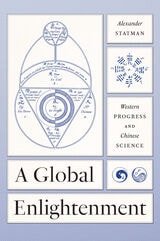
A Global Enlightenment
Western Progress and Chinese ScienceAlexander Statman
University of Chicago Press, 2023
The Enlightenment gave rise not only to new ideas of progress but consequential debates about them. Did distant times and places have anything to teach the here and now? Voltaire could believe that they did; Hegel was convinced that they did not. Early philosophes praised Chinese philosophy as an enduring model of reason. Later philosophes rejected it as stuck in the past. Seeking to vindicate ancient knowledge, a group of French statesmen and savants began a conversation with the last great scholar of the Jesuit mission to China. Together, they drew from Chinese learning to challenge the emerging concept of Western advancement.
A Global Enlightenment traces this overlooked exchange between China and the West to make compelling claims about the history of progress, notions of European exceptionalism, and European engagement with Chinese science. To tell this story, Alexander Statman focuses on a group of thinkers he terms “orphans of the Enlightenment,” intellectuals who embraced many of their contemporaries’ ideals but valued ancient wisdom. They studied astronomical records, gas balloons, electrical machines, yin-yang cosmology, animal magnetism, and Daoist medicine. And their inquiries helped establish a new approach to the global history of science.
Rich with new archival research and fascinating anecdotes, A Global Enlightenment deconstructs two common assumptions about the early to late modern period. Though historians have held that the idea of a mysterious and inscrutable East was inherent in Enlightenment progress theory, Statman argues that it was the orphans of the Enlightenment who put it there: by identifying China as a source of ancient wisdom, they turned it into a foil for scientific development. But while historical consensus supposes that non-Western ideas were banished from European thought over the course of the Enlightenment, Statman finds that Europeans became more interested in Chinese science—as a precursor, then as an antithesis, and finally as an alternative to modernity.

A Greater Ireland
The Land League and Transatlantic Nationalism in Gilded Age AmericaEly M. Janis
University of Wisconsin Press, 2014
As this "Greater Ireland" flourished, new opportunities arose for women and working-class men to contribute within Irish-American society. Exploring the complex interplay of ethnicity, class, and gender, Janis demonstrates the broad range of ideological, social, and political opinion held by Irish Americans in the 1880s. Participation in the Land League deeply influenced a generation that replaced their old county and class allegiances with a common cause, shaping the future of Irish-American nationalism.
A Guide to Editing Middle English
Vincent McCarren and Douglas Moffat, Editors
University of Michigan Press, 1998
A Guide to Editing Middle English collects nineteen essays and three appendices written by leading text editors in Middle English. A number of essays deal primarily with theoretical questions, while others offer assessments of historical developments in editing, especially in regard to the most well-known Middle English works. Most of the essays deal with practical matters: how to use a computer in preparing and presenting an edition; how to form and arrange the standard parts of an edition; and how to handle problems presented by texts in areas such as science, astrology, and cooking. The three appendices provide bibliographical references to dictionaries, facsimiles, and manuscript description.
Contributors, in addition to the editors, are Peter Baker, Richard Beadle, Norman Blake, Helen Cooper, A. S. G. Edwards, Jennifer Fellows, David C. Greetham, Mary Hamel, Constance Heiatt, Nicholas Jacobs, Geroge Keiser, Peter J. Lucas, Maldwyn Mills, Linne Mooney, and Peter Robinson.
The many and varied perspectives of this volume will make it of interest to readers of Middle English texts, those involved in textual scholarship, and those interested in editing in general. It occupies a unique place in the field of Middle English studies and will likely remain a standard reference tool for a long time.
Vincent McCarren is a Research Associate with the Middle English Dictionary at the University of Michigan. Douglas Moffat, formerly with the Middle English Dictionary, is a Development Officer with the University of Michigan.

A Handbook of Scandinavian Names
Nancy L. Coleman
University of Wisconsin Press, 2010
Are you looking for
• A Scandinavian name for your baby?
• The names of Norse gods and heroes?
• The history and meaning of Scandinavian first names?
• Variations and alternate spellings for common Scandinavian names?
• Naming traditions and customs in Norway, Sweden, and Denmark?
A Handbook of Scandinavian Names includes a dictionary of more than fifteen hundred given names from Norway, Sweden, and Denmark, plus some from Iceland and Finland. Each entry provides a guide to pronunciation and the origin and meaning of the name. Many entries also include variations and usage in the Scandinavian countries and famous bearers of the name.
Adding engaging context to the dictionary section is an extensive comparative guide to naming practices. The authors discuss immigration to North America from Scandinavia and the ways given names and surnames were adapted in the New World. Also included in the book is a history of Scandinavian names, information on “Name Days,” and discussion of significant names from mythology and history, including naming traditions in royal families.

A Hebrew Chronicle from Prague, C. 1615
Abraham David
University of Alabama Press, 1993
"This slender anonymous work, spanning 1389 to 1611, presents the priorities and concerns of a Jewish community straddling the late medieval and early modern periods. Ample footnotes and explanations provide the lay reader with sufficient background to understand the references to historical events and figures, to ideologies and to institutions. A comprehensive introduction presents the realities of Prague and Bohemia, as well as offering a helpful discussion of the chronicle and other contemporary Jewish accounts."
—Conservative Jewish Quarterly
"In about 1615 an anonymous Jew from Prague composed a short Hebrew chronicle to recount 'the expulsions, miracles, and other occurrences befalling [the Jews] in Prague and the other lands of our long exile.' Abraham David discovered the manuscript [and] added glosses, historical notes, and an introduction. . . . The chronicle, with its brief annual entries, is not a continuous narrative, but does give a feeling of immediacy, like a newspaper."
—Polin: Studies in Polish Jewry

A Historian and His World
A Life of Christopher Dawson, 1889-1970Christina Scott
Catholic University of America Press, 2023
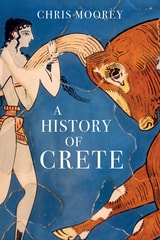
A History of Crete
Chris Moorey
Haus Publishing, 2019
To guide us through this spectacular history, Chris Moorey, who has lived in Crete for over twenty years, provides an engaging and lively account of the island spanning from the Stone Age to the present day. A History of Crete steps in to fill a gap in scholarship on this fascinating island, providing the first complete history of Crete to be published for over twenty years, and the first ever that is written with a wide readership in mind.

A History of Fascism, 1914–1945
Stanley G. Payne
University of Wisconsin Press, 1996
“A History of Fascism is an invaluable sourcebook, offering a rare combination of detailed information and thoughtful analysis. It is a masterpiece of comparative history, for the comparisons enhance our understanding of each part of the whole. The term ‘fascist,’ used so freely these days as a pejorative epithet that has nearly lost its meaning, is precisely defined, carefully applied and skillfully explained. The analysis effectively restores the dimension of evil.”—Susan Zuccotti, The Nation
“A magisterial, wholly accessible, engaging study. . . . Payne defines fascism as a form of ultranationalism espousing a myth of national rebirth and marked by extreme elitism, mobilization of the masses, exaltation of hierarchy and subordination, oppression of women and an embrace of violence and war as virtues.”—Publishers Weekly

A History of German Jewish Bible Translation
Abigail Gillman
University of Chicago Press, 2018
This book is the first in English to offer a close analysis of German Jewish translations as part of a larger cultural project. Looking at four distinct waves of translations, Abigail Gillman juxtaposes translations within each that sought to achieve similar goals through differing means. As she details the history of successive translations, we gain new insight into the opportunities and problems the Bible posed for different generations and gain a new perspective on modern German Jewish history.