Results by title
5 books match the query 'European Culture'

European Culture and the Media
Edited by Ib Bondebjerg and Peter Golding
Intellect Books, 2004
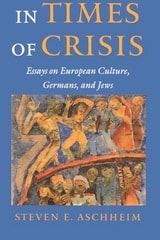
In Times of Crisis
Essays on European Culture, Germans, and JewsSteven E. Aschheim
University of Wisconsin Press, 2001
The nineteenth- and twentieth-century relationship between European culture, German history, and the Jewish experience produced some of the West’s most powerful and enduring intellectual creations—and, perhaps in subtly paradoxical and interrelated ways, our century’s darkest genocidal moments. In Times of Crisis explores the flashpoints of this vexed relationship, mapping the coordinates of a complex triangular encounter of immense historical import.
In essays that range from the question of Nietzsche’s legacy to the controversy over Daniel Goldhagen’s Hitler’s Willing Executioners, the distinguished historian Steven E. Aschheim presents this encounter as an ongoing dialogue between two evolving cultural identities. He touches on past dimensions of this exchange (such as the politics of Weimar Germany) and on present dilemmas of grasping and representing it (such as the Israeli discourse on the Holocaust). His work inevitably traces the roots and ramifications of Nazism but at the same time brings into focus historical circumstances and contemporary issues often overshadowed or distorted by the Holocaust.
These essays reveal the ubiquitous charged inscriptions of Nazi genocide within our own culture and illuminate the projects of some later thinkers and historians—from Hannah Arendt to George Mosse to Saul Friedlander—who have wrestled with its problematics and sought to capture its essence. From the broadly historical to the personal, from the politics of Weimar Germany to the experience of growing up German Jewish in South Africa, the essays expand our understanding of German Jewish history in particular, but also of historical processes in general.
Media, Democracy and European Culture
Edited by Ib Bondebjerg and Peter Madsen
Intellect Books, 2008
Media, Democracy and European Culture presents up-to-date and cutting-edge research on the political and cultural dimension of democracy in Europe and its representation in the media. This interdisciplinary volume brings together the work of some of the most prominent European scholars in media, political science, sociology, cultural studies and law. The contributors explore issues of globalization, the role of the media and communication policy to order to provide a comparative country-to-country look at how the media constructs European identity. This timely and forward-looking collection will be of interest to scholars of media, international and cultural studies.
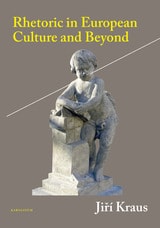
Rhetoric in European Culture and Beyond
Jirí Kraus
Karolinum Press, 2014
Kraus demonstrates that the reputation of rhetoric falls when it is reduced to a refined method for deceiving the public and increases when it is seen as a scientific discipline that is used throughout all of the fields of the humanities. In this sense, the author argues, rhetoric strives for universal recognition and the cultivation of rhetorical expression, spoken and written, including not only its production but also reception and interpretation.

Transatlantic Stowe
Harriet Beecher Stowe and European CultureDenise Kohn
University of Iowa Press, 2006