Results by title
15 books match the query 'Europeans'

An Early Encounter with Tomorrow
Europeans, Chicago's Loop, and the World's Columbian ExpositionArnold Lewis
University of Illinois Press, 1997
Extravagantly illustrated with over seventy photographs, drawings, paintings, and contemporary cartoons, An Early Encounter with Tomorrow documents the mixture of amazement and alarm with which European visitors greeted 1890s Chicago: as a futuristic city animated by a crass, frenetic mercantile class. This volume also contains an extensive bibliography, arranged by country, and profiles of the foreign observers who sought the implications for European culture in what Asa Briggs called the "shock city" of the western world.
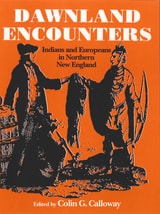
Dawnland Encounters
Indians and Europeans in Northern New EnglandEdited by Colin G. Calloway
University Press of New England, 1991
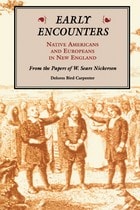
Early Encounters
Native Americans and Europeans in New England. From the Papers of W. Sears NickersonDelores Bird Carpenter
Michigan State University Press, 1994
Early Encounters contains a selection of nineteen essays from the papers of prominent New England historian, antiquarian, and genealogist Warren Sears Nickerson (1880-1966). This extensive study of his own family ties to the Mayflower, and his exhaustive investigation of the first contacts between Europeans and Native Americans, in what is today New England, made him an unquestioned authority in both fields.
The research upon which the text of Early Encounters is based occurred between the 1920s and the 1950s. Each of Nickerson’s works included in this carefully edited volume is placed in its context by Delores Bird Carpenter; she provides the reader with a wealth of useful background information about each essay’s origin, as well as Nickerson’s reasons for undertaking the research. Material is arranged thematically: the arrival of the Mayflower; conflicts between Europeans and Native Americans; and other topics related to the history and legends of early European settlement on Cape Cod. Early Encounters is a thoughtfully researched, readable book that presents a rich and varied account of life in colonial New England.
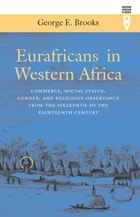
Eurafricans in Western Africa
Commerce, Social Status, Gender, and Religious Observance from the Sixteenth to the Eighteenth CenturyGeorge E. Brooks
Ohio University Press, 2003
Eurafricans in Western Africa traces the rich social and commercial history of western Africa. The most comprehensive study to date, it begins prior to the sixteenth century when huge profits made by middlemen on trade in North African slaves, salt, gold, pepper, and numerous other commodities prompted Portuguese reconnaissance voyages along the coast of western Africa. From Senegal to Sierra Leone, Portuguese, including “New Christians” who reverted to Judaism while living in western Africa, thrived where riverine and caravan networks linked many African groups.
Portuguese and their Luso-African descendants contended with French, Dutch, and English rivals for trade in gold, ivory, slaves, cotton textiles, iron bars, cowhides, and other African products. As the Atlantic slave trade increased, French and Franco-Africans and English and Anglo-Africans supplanted Portuguese and Luso-Africans in many African places of trade.
Eurafricans in Western Africa follows the changes that took root in the eighteenth century when French and British colonial officials introduced European legal codes, and concludes with the onset of the French Revolution and Napoleonic Wars, when suppression of the slave trade and expanding commerce in forest and agricultural commodities again transformed circumstances in western Africa.
Professor George E. Brooks’s outstanding history of these vital aspects of western Africa is enriched by his discussion of the roles of the women who married or cohabited with European traders. Through accounts of incidents and personal histories, which are integrated into the narrative, the lives of these women and their children are accorded a prominent place in Professor Brooks’s fascinating discussion of this dynamic region of Africa.

Globalizing the Lower Rio Grande
European Entrepreneurs in the Borderlands, 1749-1881Kyle Carpenter
University of North Texas Press, 2024
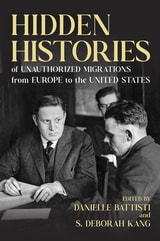
Hidden Histories of Unauthorized Migrations from Europe to the United States
Edited by Danielle Battisti and S. Deborah Kang
University of Illinois Press, 2025
Often depicted as the nation’s iconic legal immigrant, unauthorized European migrants are often overlooked by scholars, policymakers, and the media. This volume tells the stories of European migrants who adopted irregular migration strategies to enter and remain in the United States throughout the twentieth century. Contributors explore facets of this history with essays on migration patterns from Russia, Italy, Ireland, the Ottoman Empire, and Poland. They also offer important arguments about the treatment of unauthorized European migrants by states and societies on both sides of the Atlantic and how the reception of undocumented immigrants has been and continues to be impacted by the dynamics of racial, class, and gender constructions in the United States and abroad. As the contributors show, the reception accorded unauthorized European migrants frequently obscured and even normalized their irregular migration strategies, easing their access to American citizenship.
Revealing and insightful, Hidden Histories of Unauthorized Migrations from Europe to the United States sheds new light our intertwined notions of race, legality, and immigration.
Contributors: Danielle Battisti, Ashley Johnson Bavery, Mary Patrice Erdmans, Polina Ermoshkina, Torsten Feys, Carly Goodman, S. Deborah Kang, E. Kyle Romero, Randa Tawil, and Joanna Wojdon
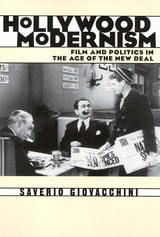
Hollywood Modernism
Film & Politics In Age Of New DealSaverio Giovacchini
Temple University Press, 2001
Seeing Hollywood as a forcefield, Giovacchini examines the social networks, working relationships, and political activities of artists, intellectuals, and film workers who flocked to Hollywood from Europe and the eastern United States before and during the second world war. He creates a complex and nuanced portrait of this milieu, adding breadth and depth to the conventional view of the era's film industry as little more than an empire for Jewish moguls or the major studios. In his rendering Hollywood's newcomers joined with its established elite to develop a modernist aesthetic for film that would bridge popular and avant-garde sensibilities; for them, realism was the most effective vehicle for conveying their message and involving a mass audience in the democratic struggle for process.
If You've Seen One, You've Seen the Mall
EUROPEANS AND AMERICAN MASS CULTURERob Kroes
University of Illinois Press, 1996
continually fragmenting, disassembling, and reassembling itself--and in
the process creating something new. In a series of topical essays that
show why he is one of Europe's leading authorities on American culture,
Kroes probes trends in American advertising, the image of the Vietnam
war in American films, the implications of American vernacular culture as represented in rap music, and other topics.

India in the Eyes of Europeans
Conceptualization of Religion in Theology and Oriental StudiesMartin Fárek
Karolinum Press, 2022
In India in the Eyes of Europeans, Martin Fárek argues that when Western scholars interpret Indian traditions, they actually present distorted reflections of their own European culture, despite their attempts at unbiased objectivity. This distortion is clearest in the way India is viewed primarily through a religious lens—a lens fashioned from an implicitly Christian design. While discussing the current international dialogue on the topic and the work of such scholars as S. N. Balagangadhara, Fárek’s study presents the results of original research on several key topics: the problems in assigning religious significance to the Indian traditions that gave rise to Hinduism and Buddhism; Europeans’ questioning of Indians’ historical consciousness; the current debate surrounding the arrival of the Aryans in India; and controversial interpretations of the work of the reformer Rammohan Raj. The result is a provocative study that should prove fascinating to Indologists, theologians, anthropologists, and anyone interested in the history of thought.
Natives, Europeans, and Africans in Sixteenth-Century Santiago de Guatemala
By Robinson A. Herrera
University of Texas Press, 2003
The first century of Spanish colonization in Latin America witnessed the birth of cities that, while secondary to great metropolitan centers such as Mexico City and Lima, became important hubs for regional commerce. Santiago de Guatemala, the colonial capital of Central America, was one of these. A multiethnic and multicultural city from its beginning, Santiago grew into a vigorous trading center for agrarian goods such as cacao and cattle hides. With the wealth this commerce generated, Spaniards, natives, and African slaves built a city that any European of the period would have found familiar.
This book provides a more complete picture of society, culture, and economy in sixteenth-century Santiago de Guatemala than has ever before been drawn. Robinson Herrera uses previously unstudied primary sources, including testaments, promissory notes, and work contracts, to recreate the lives and economic activities of the non-elite sectors of society, including natives, African slaves, economically marginal Europeans, and people of mixed descent. His focus on these groups sheds light on the functioning of the economy at the lower levels and reveals how people of different ethnic groups formed alliances to create a vibrant local and regional economy based on credit. This portrait of Santiago also increases our understanding of how secondary Spanish American cities contributed vitally to the growth of the colonies.

Rescuing the Enlightenment from the Europeans
Critical Theories of DecolonizationNikita Dhawan
Duke University Press, 2026

Shaping Migration between Europe and Latin America
New Perspectives and ChallengesEdited by Ana Margheritis
University of London Press, 2018

The Social World of Batavia
Europeans and Eurasians in Colonial IndonesiaJean Gelman Taylor
University of Wisconsin Press, 2009
Original in its focus on gender and use of varied sources—travelers’ accounts, newspapers, legal codes, genealogical data, photograph albums, paintings, and ceramics—The Social World of Batavia, first published in 1983, forged new paths in the study of colonial society. In this second edition, Gelman offers a new preface as well as an additional chapter tracing the development of these themes by a new generation of scholars.
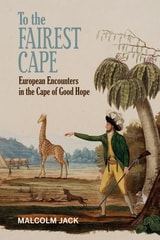
To the Fairest Cape
European Encounters in the Cape of Good HopeJack, Malcolm
Bucknell University Press, 2019
Published by Bucknell University Press. Distributed worldwide by Rutgers University Press.
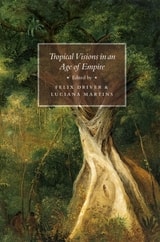
Tropical Visions in an Age of Empire
Edited by Felix Driver and Luciana Martins
University of Chicago Press, 2005
Bringing together a group of distinguished contributors from disciplines across the arts and humanities, this volume contains eleven beautifully illustrated essays—arranged in three sections devoted to voyages, mappings, and sites—that consider the ways that tropical places were encountered, experienced, and represented in visual form. Covering a wide range of tropical sites in the Pacific, South Asia, West Africa, the Caribbean, and Latin America, the book will appeal to a broad readership: scholars of postcolonial studies, art history, literature, imperial history, history of science, geography, and anthropology.