Results by title
15 books match the query 'Eve'
Adam and Eve in the Armenian Tradition, Fifth through Seventeenth Centuries
Michael E. Stone
SBL Press, 2013
Eve
Charles Peguy
St. Augustine's Press, 2024
Kathleen Curran Sweeney provides the English reader with a much needed translation of Peguy's long poem, Eve, first published in 1914. Considering Peguy's length and depth in Eve and its syllabic poetic meter, this is not an easy undertaking. Yet Sweeney manages to convey an authentic Peguy in English and at last provides access to Christ's discourse with Eve, an epic encounter that conveys literary genius enthralled with memory, charity, and the transformation of this contemplation in light of the theological perspective of the Incarnation and the redemption of man by God.
Freeing Charles
The Struggle to Free a Slave on the Eve of the Civil WarScott Christianson
University of Illinois Press, 2010
From Eve to Evolution
Darwin, Science, and Women's Rights in Gilded Age AmericaKimberly A. Hamlin
University of Chicago Press, 2014
Hamlin chronicles the lives and writings of the women who combined their enthusiasm for evolutionary science with their commitment to women’s rights, including Antoinette Brown Blackwell, Eliza Burt Gamble, Helen Hamilton Gardener, Charlotte Perkins Gilman, and Elizabeth Cady Stanton. These Darwinian feminists believed evolutionary science proved that women were not inferior to men, that it was natural for mothers to work outside the home, and that women should control reproduction. The practical applications of this evolutionary feminism came to fruition, Hamlin shows, in the early thinking and writing of the American birth control pioneer Margaret Sanger.
Much scholarship has been dedicated to analyzing what Darwin and other male evolutionists had to say about women, but very little has been written regarding what women themselves had to say about evolution. From Eve to Evolution adds much-needed female voices to the vast literature on Darwin in America.

Letters from Clara
One Intrepid Woman's Travels on the Eve of War, 1936-1939Janet Newman
Wisconsin Historical Society Press, 2022

On the Eve of Conquest
The Chevalier de Raymond's Critique of New France in 1754Joseph L. Peyser
Michigan State University Press, 1997
In 1754, Charles de Raymond, chevalier of the Royal and Military Order of Saint Louis and a captain in the Troupes de la Marine wrote a bold, candid, and revealing expose; on the French colonial posts and settlements of New France. On the Eve of the Conquest, more than an annotated translation, includes a discussion on the historical background of the start of the French and Indian War, as well as a concise biography of Raymond and Michel Le Courtois de Surlaville, the army colonel at the French court to whom the report was sent. The events surrounding Raymond's controversial year as commandant of the post (now Fort Wayne, Indiana) in 1749-50, his disputed recall by Governor General Jacques-Pierre de Taffanel de La Jonquier, and the subsequent friction between La Jonquiere's successor, Ange de Menneville Duqesne, and Raymond are presented in detail and illustrated by translations of their correspondence.
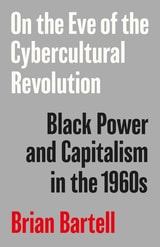
On the Eve of the Cybercultural Revolution
Black Power and Capitalism in the 1960sBrian Bartell
University of Minnesota Press, 2025
Uncovering the Black Power movement’s contributions to theorizing the politics of automation
On the Eve of the Cybercultural Revolution offers a comprehensive look at the Black Power movement’s theoretical work and insights into the entanglement of capitalism, technology, and racism. Drawing upon James and Grace Lee Boggs’s expanded notion of the cybercultural era, Brian Bartell demonstrates how a range of artists, writers, and activists from the 1960s prefigured the wider discourse around automation and made it a central concern of their politics.
Rather than reducing automation to an isolated technical phenomenon, theorists of the Black radical tradition identified its important historical antecedents in colonialism and plantation slavery, emphasizing how the emerging cyberculture joined with issues such as the reorganization of labor, ecological harm, and racial inequality. Examining the work of Martin Luther King Jr., Noah Purifoy, the Black Panthers, and others, On the Eve of the Cybercultural Revolution outlines the new forms of social reproduction conceived outside of the dominant structures of racial capitalism.
Bartell synthesizes a wide range of source texts, including political speeches, literature, and activist archives, to show how the Black Power movement sought to create a postscarcity, more-than-capitalist economy. By shedding light on the movement’s underexplored engagement with theories of technology, he provides a crucial key to understanding the historical dynamics responsible for our technocapitalist present.
Retail e-book files for this title are screen-reader friendly.
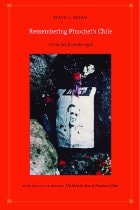
Remembering Pinochet's Chile
On the Eve of London 1998Steve J. Stern
Duke University Press, 2004
“A thoughtful, nuanced study of how Chileans remember the traumatic 1973 coup by Augusto Pinochet against Salvador Allende and the nearly two decades of military government that followed. . . . In light of the recent revelations of American human rights abuses of Iraqi prisoners, [Stern’s] insights into the legacies of torture and abuse in the Chilean prisons of the 1970s certainly have contemporary significance for any society that undergoes a national trauma.”—Publishers Weekly
“This outstanding work of scholarship sets a benchmark in the history of state terror, trauma, and memory in Latin America.”—Thomas Miller Klubock, American Historical Review
“This is a book of uncommon depth and introspection. . . . Steve J. Stern has not only advanced the memory of the horrors of the military dictatorship; he has assured the place of Pinochet’s legacy of atrocity in our collective conscience.”—Peter Kornbluh, author of The Pinochet File: A Declassified Dossier on Atrocity and Accountability
“Steve J. Stern’s book elegantly recounts the conflicted recent history of Chile. He has found a deft solution to the knotty problem of evenhandedness in representing points of view so divergent they defy even the most careful attempts to portray the facts of the Pinochet period. He weaves a tapestry of memory in which narratives of horror and rupture commingle with the sincere perceptions of Chileans who remember Pinochet’s rule as salvation. The facts are there, but more important is the understanding we gain by knowing how ordinary Chileans—Pinochet’s supporters and his victims—work through their unresolved past.”—John Dinges, author of The Condor Years: How Pinochet and His Allies Brought Terrorism to Three Continents
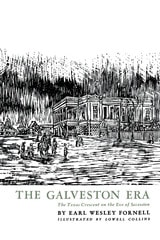
The Galveston Era
The Texas Crescent on the Eve of SecessionBy Earl Wesley Fornell
University of Texas Press, 1961
The "Queen City" of Texas they called her—or the "Octopus of the Gulf." Galveston from 1845 to 1860 was the center of culture in Texas—or the monster with an economic strangle hold on all Texas trade. It was a gracious city with wide paved streets, impressive buildings, and neat gardens; yet it was also a pestilence-ridden place where no sanitary code was ever enforced and where one in every two children died before reaching maturity. Its citizens, avid for culture and knowledge, attended concerts and plays in great numbers and exhibited an eager interest in science and history; yet they could not be brought to support the school system. Galveston was a city where no person in need was ever left uncared for, where the sick and needy—strangers or friends—were succoured; yet no free Negro was safe from legalized abduction and forced enslavement, and the city served as a center for the revived African slave trade.
Earl Fornell makes the charming, colorful, cosmopolitan, contradictory city of Galveston the focal point of his study of the Texas Gulf Coast on the eve of the Civil War. The years 1845-1860 were crucial for this area; during that period the economy became more and more dependent upon slave labor, and thus the stage was set for secession.
Dr. Fornell describes with clarity the interrelated events, the decisions, and the conflicts that went into the development of Galveston and the Texas Gulf Coast during these years. He portrays the people and their way of life. He introduces us to some of the notables who helped to shape the destiny of Texas: Sam Houston, the old general; Lorenzo Sherwood, the golden-tongued propounder of radical economic doctrines; Willard Richardson, Hamilton Stuart, Ferdinand Flake, and Edward Cushing, the newspapermen whose writing both reflected and guided the thought of their fellow citizens; Arthur Lynn, the British consul whose observing and compassionate nature brought him onto the stage of Galveston history with striking frequency and whose voluminous letters provide a rich source for historical details; and William Ballinger, a minor player on the stage but one whose conscience and interests mirrored those of many other thoughtful Galvestonians.
Always present, affecting and affected by virtually every aspect of life on the Coast, the slave-labor problem grew ever more acute as the expanding railroad system laid more and more of the land open for development. Dr. Fornell shows with keen insight how it eventually forced Texans into a position where conflict with the federal government was unavoidable and the decision to secede from the Union inevitable.
The late Earl W. Fornell, a native of Wisconsin, held B.A. and M.A. degrees in political science from the New School for Social Research, the M.A. degree in political history from Columbia University, and the Ph.D. degree in political history from Rice University. He taught at Columbia, Amarillo College, Rice, and Lamar State College of Technology.
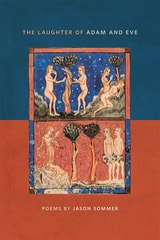
The Laughter of Adam and Eve
Jason Sommer
Southern Illinois University Press, 2013

The Life of Adam and Eve in Greek
A Critical EditionJohannes Tromp
SBL Press, 2016
A Brill classic now in paperback from SBL Press
This critical edition of the Life of Adam and Eve in Greek is based on all available manuscripts. In the introduction the history of previous research is summarized, and the extant manuscripts are presented. Next comes a description of the grammatical characteristics of the manuscripts’ texts, followed by a detailed study of the genealogical relationships between them, resulting in a reconstruction of the writing’s history of transmission in Greek. On the basis of all this information, the Greek text of the Life of Adam and Eve in its earliest attainable stage, is established.
Features:
- Illustrations of textual relationships and variants
- Indices for subjects, passages, words in the text, variants, and additions and revisions Full critical apparatus with relevant evidence from the manuscripts

The Ovary of Eve
Egg and Sperm and PreformationClara Pinto-Correia
University of Chicago Press, 1997
"The most wonderfully eye-opening, or imagination-opening book, as amusing as it is instructive."—Mary Warnock, London Observer
"[A] fascinating and often humorous study of a reproductive theory that flourished from the mid-17th century to the mid-18th century."—Nina C. Ayoub, Chronicle of Higher Education
"More than just a good story, The Ovary of Eve is an object lesson about the history of science: Don't trust it. . . . Pinto-Correia says she wants to tell the story of history's losers. In doing so, she makes defeat sound more appealing than victory."—Emily Eakin, Nation.
"A sparkling history of preformation as it once affected every facet of European culture."—Robert Taylor, Boston Globe
The Road to September 1939
Polish Jews, Zionists, and the Yishuv on the Eve of World War IIJehuda Reinharz and Yaacov Shavit
Brandeis University Press, 2018

Walking with Eve in the Loved City
PoemsRoy Bentley
University of Arkansas Press, 2018
Finalist, 2018 Miller Williams Poetry Prize
Walking with Eve in the Loved City is an ambitious collection. Using a variety of male figures—Jeff Goldblum, Ringo Starr, the poet’s uncle Billy, to name a few—these poems skillfully interrogate masculinity and its cultural artifacts, searching for a way to reconcile reverence for the father figure with a crisis of faith about the world as run by men. And yet, despite the gravity of the subjects these poems engage, this is a hopeful, frequently funny book that encourages the reader to look deeply at the world, and then to laugh if she can.
Roy Bentley often accomplishes this work through a careful balancing of honesty and misdirection, as when in the poem “Can’t Help Falling in Love” the real drama of the narrative—the appearance of an affair between the speaker’s father and a drive-in restaurant carhop—operates as a backdrop for the eight-year-old speaker’s puerile attraction to the woman; or when the vampire Nosferatu (a frequent figure in the poems) materializes in a trailer park, his immortality becoming a lens through which to process the speaker’s righteous anger about wealth and poverty.
God too features prominently—as does doubt. Drawing from the vernacular of his childhood, Bentley accesses the simultaneous austerity and lyrical opulence of the King James Bible to invent stories in which the last note struck is often a call to pay kinder attention. More than anything, these poems serve as humanistic advocates, using the power of narrative—film, interview, imagination, memoir—to highlight how people matter.
Walking with Eve in the Loved City invites the reader to join in this watching and witnessing, to take part in renewing how we see.
Women of the Twelfth Century, Volume 3
Eve and the ChurchGeorges Duby
University of Chicago Press, 1998
Drawing on these writings, Duby describes how women were thought to embody particular sins, such as sorcery, disobedience, and licentiousness. He evaluates Eve's role in man's fall from grace in the Garden of Eden and analyzes the reasoning behind the view that women are unstable, curious, frivolous creatures. He also notes that these charges are leveled against women, even as praise is heaped upon them for the conventional virtues they exhibit in their roles as wives and mothers.
As the final installment in Duby's three-volume study of French noblewomen of the twelfth century, Eve and the Church is the last work of this superb historian. It will be of interest to scholars of medieval history and women's history as well as to anyone interested in current debates about women and religion.
Georges Duby (1919-1996) was a member of the Académie française and for many years held the distinguished chair in medieval history at the Collège de France. His books include The Three Orders; The Age of Cathedrals; The Knight, the Lady, and the Priest; Love and Marriage in the Middle Ages; and History Continues, all published by the University of Chicago Press.