Results by title
7 books match the query 'Evidence, Expert'
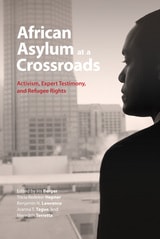
African Asylum at a Crossroads
Activism, Expert Testimony, and Refugee RightsIris Berger
Ohio University Press, 2015
African Asylum at a Crossroads: Activism, Expert Testimony, and Refugee Rights examines the emerging trend of requests for expert opinions in asylum hearings or refugee status determinations. This is the first book to explore the role of court-based expertise in relation to African asylum cases and the first to establish a rigorous analytical framework for interpreting the effects of this new reliance on expert testimony.
Over the past two decades, courts in Western countries and beyond have begun demanding expert reports tailored to the experience of the individual claimant. As courts increasingly draw upon such testimony in their deliberations, expertise in matters of asylum and refugee status is emerging as an academic area with its own standards, protocols, and guidelines. This deeply thoughtful book explores these developments and their effects on both asylum seekers and the experts whose influence may determine their fate.
Contributors: Iris Berger, Carol Bohmer, John Campbell, Katherine Luongo, E. Ann McDougall, Karen Musalo, Tricia Redeker Hepner, Amy Shuman, Joanna T. Tague, Meredith Terretta, and Charlotte Walker-Said.
American Indian History on Trial
Historical Expertise in Tribal LitigationE. Richard Hart
University of Utah Press, 2017
Hart, a historian who has testified in cases that have resulted in roughly a billion dollars in judgments, uses specific cases to explain at length what kind of historical research and documentation is necessary for tribes seeking to protect and claim their rights under United States law. He demonstrates the legal questions that Native Americans face by exploring the cultural history and legal struggles of six Indian nations. He recounts how these were addressed by expert testimony grounded in thorough historical understanding, research, and argumentation. The case studies focus on the Wenatchi, Coeur d’Alene, Hualapai, Amah Mutsun, Klamath, and Zuni peoples but address issues relevant to many American tribes.
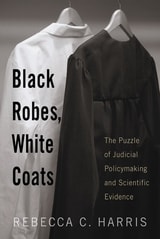
Black Robes, White Coats
The Puzzle of Judicial Policymaking and Scientific EvidenceRebecca C. Harris
Rutgers University Press, 2008
Combining political analysis, scientific reasoning, and an in-depth study of specific state supreme court cases, Black Robes, White Coats is an interdisciplinary examination of the tradition of "gatekeeping," the practice of deciding the admissibility of novel scientific evidence. Rebecca Harris systematically examines judicial policymaking in three areas forensic DNA, polygraphs, and psychological syndrome evidence to answer the question: Why is scientific evidence treated differently among various jurisdictions? These decisions have important implications for evaluating our judicial system and its ability to accurately develop scientific policy.
While the interaction of these professions occurs because the white coats often develop and ascertain knowledge deemed very useful to the black robes, Harris concludes that the black robes are well positioned to render appropriate rulings and determine the acceptability of harnessing a particular science for legal purposes.
First book to systematically gather and analyze judicial decisions on scientific admissibility
Analyzes several key cases including Arizona v. Bible and Kansas v. Marks
Includes examples of evidence in three appendices: forensic DNA, polygraph evidence, and syndrome evidence
Presents an original model of the gatekeeping process
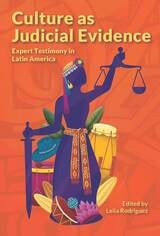
Culture as Judicial Evidence
Expert Testimony in Latin AmericaEdited by Leila Rodriguez
University of Minnesota Press, 2020
Culture as Judicial Evidence in Latin America summarizes the current state of this work in six countries: Mexico, Costa Rica, Peru, Chile, Colombia, and Uruguay, and lays out the challenges and dilemmas involved in the creation and use of cultural expert testimony. Organized into three sections, the book advances a framework for the use of cultural evidence, and presents readers with nine case studies based on trials in six individual countries. These countries have implemented legal reform, constitutional amendments and the adoption of international legislation to create the legal frameworks that enable this new form of legal evidence to be admissible in Latin American courts. The contributing authors are cultural anthropologists with vast experience researching the impact of cultural expert witness testimony. A forward-looking final section examines the dilemmas and challenges of this work that remain to be solved.
Gangs on Trial
Challenging Stereotypes and Demonization in the CourtsJohn M. Hagedorn
Temple University Press, 2022
John Hagedorn, who has long been an expert witness in gang-related court cases, claims that what transpires in the trials of gang members is a far cry from what we would consider justice. In Gangs on Trial, he recounts his decades of experience to show how stereotypes are used against gang members on trial and why that is harmful. Hagedorn uses real-life stories to explain how implicit bias often replaces evidence and how the demonization of gang members undermines fairness. Moreover, a “them and us” mentality leads to snap judgments that ignore the complexity of gang life in America.
Gangs on Trial dispels myths about gangs and recommends tactics for lawyers, mitigation specialists, and expert witnesses as well as offering insights for jurors. Hagedorn describes how minds are subconsciously “primed” when a defendant is identified as a gang member, and discusses the “backfire effect,” which occurs when jurors hear arguments that run counter to their beliefs. He also reveals how attributional errors, prejudice, and racism impact sentences of nonwhite defendants.
Hagedorn argues that dehumanization is the psychological foundation of mass incarceration. Gangs on Trial advocates for practical sentencing reforms and humanizing justice.
Sorting Sexualities
Expertise and the Politics of Legal ClassificationStefan Vogler
University of Chicago Press, 2021
In this rich ethnographic study, Vogler reveals how different legal arenas take dramatically different approaches to classifying sexuality and use those classifications to legitimate different forms of social control. By delving into the histories behind these diverging classification practices and analyzing their contemporary reverberations, Vogler shows how the science of sexuality is far more central to state power than we realize.
The Expert Witness in Islamic Courts
Medicine and Crafts in the Service of LawRon Shaham
University of Chicago Press, 2010
Shaham begins with a history of expert testimony in medieval Islamic culture, analyzing the different roles played by male experts, especially physicians and architects, and females, particularly midwives. From there, he focuses on the case of Egypt, tracing the country’s reform of its traditional legal system along European lines beginning in the late nineteenth century. Returning to a broader perspective, Shaham draws on a variety of legal and historical sources to place the phenomenon of expert testimony in cultural context. A truly comprehensive resource, The Expert Witness in Islamic Courts will be sought out by a broad spectrum of scholars working in history, religion, gender studies, and law.