Results by title

6 books match the query 'Excess'
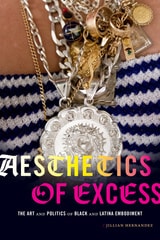
cover of Aesthetics of Excess: The Art and Politics of Black and Latina Embodiment

Aesthetics of Excess

The Art and Politics of Black and Latina Embodiment

Jillian Hernandez

Duke University Press, 2020
Heavy makeup, gaudy jewelry, dramatic hairstyles, and clothes that are considered cheap, fake, too short, too tight, or too masculine: working-class Black and Latina girls and women are often framed as embodying "excessive" styles that are presumed to indicate sexual deviance. In Aesthetics of Excess Jillian Hernandez examines how middle-class discourses of aesthetic value racialize the bodies of women and girls of color. At the same time, their style can be a source of cultural capital when appropriated by the contemporary art scene. Drawing on her community arts work with Black and Latina girls in Miami, Hernandez analyzes the art and self-image of these girls alongside works produced by contemporary artists and pop musicians such as Wangechi Mutu, Kara Walker, and Nicki Minaj. Through these relational readings, Hernandez shows how notions of high and low culture are complicated when women and girls of color engage in cultural production and how they challenge the policing of their bodies and sexualities through artistic authorship.
[more]
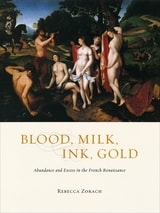
cover of Blood, Milk, Ink, Gold: Abundance and Excess in the French Renaissance

Blood, Milk, Ink, Gold

Abundance and Excess in the French Renaissance

Rebecca Zorach

University of Chicago Press, 2005

Most people would be hard pressed to name a famous artist from Renaissance France. Yet sixteenth-century French kings believed they were the heirs of imperial Rome and commissioned a magnificent array of visual arts to secure their hopes of political ascendancy with images of overflowing abundance. With a wide-ranging yet richly detailed interdisciplinary approach, Rebecca Zorach examines the visual culture of the French Renaissance, where depictions of sacrifice, luxury, fertility, violence, metamorphosis, and sexual excess are central. Zorach looks at the cultural, political, and individual roles that played out in these artistic themes and how, eventually, these aesthetics of exuberant abundance disintegrated amidst perceptions of decadent excess.
 
Throughout the book, abundance and excess flow in liquids-blood, milk, ink, and gold-that highlight the materiality of objects and the human body, and explore the value (and values) accorded to them. The arts of the lavish royal court at Fontainebleau and in urban centers are here explored in a vibrant tableau that illuminates our own contemporary relationship to excess and desire.
 
From marvelous works by Francois Clouet to oversexed ornamental prints to Benvenuto Cellini's golden saltcellar fashioned for Francis I, Blood, Milk, Ink, Gold covers an astounding range of subjects with precision and panache, producing the most lucid, well-rounded portrait of the cultural politics of the French Renaissance to date.
[more]
cover of In Excess: Sergei Eisenstein's Mexico

In Excess

Sergei Eisenstein's Mexico

Masha Salazkina

University of Chicago Press, 2009

During the 1920s and ’30s, Mexico attracted an international roster of artists and intellectuals—including Orson Welles, Katherine Anne Porter, and Leon Trotsky—who were drawn to the heady tumult engendered by battling cultural ideologies in an emerging center for the avant-garde. Against the backdrop of this cosmopolitan milieu, In Excess reconstructs the years that the renowned Soviet director Sergei Eisenstein spent in the country to work on his controversial film ¡Que Viva Mexico!

            Illuminating the inextricability of Eisenstein’s oeuvre from the global cultures of modernity and film, Masha Salazkina situates this unfinished project within the twin contexts of postrevolutionary Mexico and the ideas of such contemporaneous thinkers as Walter Benjamin. In doing so, Salazkina explains how Eisenstein’s engagement with Mexican mythology, politics, and art deeply influenced his ideas, particularly about sexuality. She also uncovers the role Eisenstein’s bisexuality played in his creative thinking and identifies his use of the baroque as an important turn toward excess and hybrid forms. Beautifully illustrated with rare photographs, In Excess provides the most complete genealogy available of major shifts in this modern master’s theories and aesthetics.
[more]
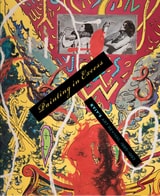
cover of Painting in Excess: Kyiv's Art Revival, 1985-1993

Painting in Excess

Kyiv's Art Revival, 1985-1993

Olena Martynyuk

Rutgers University Press, 2022
The upheavals of glasnost and perestroika followed by the collapse of the Soviet Union remarkably transformed the art scene in Kyiv, launching Ukrainian contemporary art as a global phenomenon. The previously calm waters of the culturally provincial capital of the Ukrainian Soviet Republic became radically stirred with new and daring art made publicly visible for the first time since the avant-garde period of the early twentieth century. As artists were freed from the dictates of the fading Communist ideology and the constraints of late socialist realism, an explosion of styles emerged, creating an effect of baroque excess. This exhibition catalogue traces and documents the diverse artistic manifestations of these transitional and exhilarating years in Kyiv while providing some historical artworks for context. Published in partnership with the Zimmerli Museum.
[more]
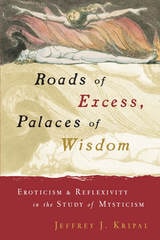
cover of Roads of Excess, Palaces of Wisdom: Eroticism and Reflexivity in the Study of Mysticism

Roads of Excess, Palaces of Wisdom

Eroticism and Reflexivity in the Study of Mysticism

Jeffrey J. Kripal

University of Chicago Press, 2001

William Blake once wrote that "The road of excess leads to the palace of wisdom." Inspired by these poetic terms, Jeffrey J. Kripal reveals how the works of scholars of mysticism are often rooted in their own mystical experiences, "roads of excess," which can both lead to important insights into these scholars' works and point us to our own "palaces of wisdom."

In his new book, Kripal addresses the twentieth-century study of mysticism as a kind of mystical tradition in its own right, with its own unique histories, discourses, sociological dynamics, and rhetorics of secrecy. Fluidly combining autobiography and biography with scholarly exploration, Kripal takes us on a tour of comparative mystical thought by examining the lives and works of five major historians of mysticism—Evelyn Underhill, Louis Massignon, R. C. Zaehner, Agehananda Bharati, and Elliot Wolfson—as well as relating his own mystical experiences. The result, Kripal finds, is seven "palaces of wisdom": the religious power of excess, the necessity of distance in the study of mysticism, the relationship between the mystical and art, the dilemmas of male subjectivity and modern heterosexuality, a call for ethical criticism, the paradox of the insider-outsider problem in the study of religion, and the magical power of texts and their interpretation.

An original and penetrating analysis of modern scholarship and scholars of mysticism, Roads of Excess, Palaces of Wisdom is also a persuasive demonstration of the way this scholarly activity is itself a mystical phenomenon.
[more]
cover of Visions Of Excess: Selected Writings, 1927-1939

Visions Of Excess

Selected Writings, 1927-1939

Georges Bataille

University of Minnesota Press, 1985

Since the publication of Visions of Excess in 1985, there has been an explosion of interest in the work of Georges Bataille. The French surrealist continues to be important for his groundbreaking focus on the visceral, the erotic, and the relation of society to the primeval. This collection of prewar writings remains the volume in which Batailles’s positions are most clearly, forcefully, and obsessively put forward.This book challenges the notion of a “closed economy” predicated on utility, production, and rational consumption, and develops an alternative theory that takes into account the human tendency to lose, destroy, and waste. This collection is indispensible for an understanding of the future as well as the past of current critical theory.Georges Bataille (1897-1962), a librarian by profession, was founder of the French review Critique. He is the author of several books, including Story of the Eye, The Accused Share, Erotism, and The Absence of Myth.
[more]