Results by title
18 books match the query 'Exclusion'
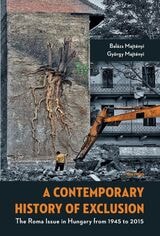
A Contemporary History of Exclusion
The Roma Issue in Hungary from 1945 to 2015György Majtényi
Central European University Press, 2016
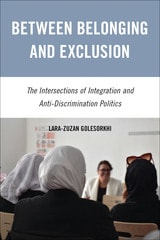
Between Belonging and Exclusion
The Intersections of Integration and Anti-Discrimination PoliticsLara-Zuzan Golesorkhi
Temple University Press, 2026
Integration and discrimination are two of the most salient yet contradictory forces shaping contemporary European politics. In Between Belonging and Exclusion Lara-Zuzan Golesorkhi asserts that this tension exists because integration politics do not facilitate non-discrimination, nor do they address experiences of discrimination. She draws on interviews with refugees and other key actors in integration politics to examine the barriers hindering refugee women’s labor market participation in Germany.
Golesorkhi introduces four explanatory tropes that reveal how and why integration efforts have often fallen short. She examines the power relations and limitations in migration governance as well as the identity narratives of Germanness/Europeanness, and the gendered and racialized mechanisms of “othering” that contribute to discrimination.
Between Belonging and Exclusion delineates what Germany and the EU “get wrong” about integration and anti-discrimination as it outlines conceptual and practical suggestions for expanding the terms of inclusion.
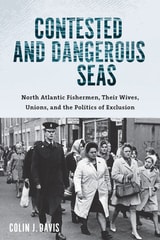
Contested and Dangerous Seas
North Atlantic Fishermen, Their Wives, Unions, and the Politics of ExclusionColin J. Davis
University of Massachusetts Press, 2019
During the 1960s and 1970s, these seafaring workers experienced new hardships. As modern fleets from many nations intensified their hunt for fish, they found themselves in increasing competition for disappearing prey. Colin J. Davis details the unfolding drama as New England and British fishermen and their wives, partners, and families reacted to this competition. Rather than acting as bystanders to these crises, the men and women chronicled in Contested and Dangerous Seas became fierce advocates for the health of the Atlantic Ocean fisheries and for their families' livelihoods.

Dry Place
Landscapes Of Belonging And ExclusionPatricia L. Price
University of Minnesota Press, 2004
Gathers tales from the Southwestern United States and Northern Mexico to understand the relationship between people and place in a borderland
Landscape is the space of negotiation between human beings and the physical world, and rarely are the negotiations more complex and subtle than those conducted through the desert landscape along the Mexico-U.S. border.
Patricia L. Price views the shaping of the landscape on and around the border through various narratives that have sought to establish claims to these dry lands. Most prominent are the accounts of Anglo-American expansionism and Manifest Destiny juxtaposed with the Chicano nationalist tale of Aztlán in the twentieth century, all constituting collective, contending claims to the U.S. Southwest. Demonstrating how stories can become vehicles for changing places and identities, Price considers characters old and new who inhabit the contemporary borderlands between Mexico and the United States—ranging from longstanding manifestations of good and evil in the figures of the Virgin of Guadalupe and the Devil to a collection of lay saints embodying current concerns. Dry Place weaves together theoretical insights with field-based inquiry, autobiography, and creative writing to arrive at a textured understanding of the bordered landscape of late modern subjectivity.
Ethics of Liberation
In the Age of Globalization and ExclusionEnrique Dussel
Duke University Press, 2012
Throughout his career, Dussel has sought to open a space for articulating new possibilities for humanity out of, and in light of, the suffering, dignity, and creative drive of those who have been excluded from Western Modernity and neoliberal rationalism. Grounded in engagement with the oppressed, his thinking has figured prominently in philosophy, political theory, and liberation movements around the world.
In Ethics of Liberation, Dussel provides a comprehensive world history of ethics, demonstrating that our most fundamental moral and ethical traditions did not emerge in ancient Greece and develop through modern European and North American thought. The obscured and ignored origins of Modernity lie outside the Western tradition. Ethics of Liberation is a monumental rethinking of the history, origins, and aims of ethics. It is a critical reorientation of ethical theory.

Exclusion and Engagement
Social Policy in Latin AmericaEdited by Christopher Abel and Colin M. Lewis
University of London Press, 2002
Generations of Exclusion
Mexican-Americans, Assimilation, and RaceEdward E. Telles
Russell Sage Foundation, 2008
Holocaust Survivors in Canada
Exclusion, Inclusion, Transformation, 1947-1955Adara Goldberg
University of Manitoba Press, 2015
Peruvian Lives across Borders
Power, Exclusion, and HomeM. Cristina Alcalde
University of Illinois Press, 2018
Alcalde draws on interviews, surveys, participant observation, and textual analysis to argue that to belong is to exclude. To that end, transnational Peruvians engage in both subtle and direct policing along the borders of belonging. These acts allow them to claim and maintain the social status they enjoyed in their homeland even as they profess their openness and tolerance. Alcalde details these processes and their origins in Peru's gender, racial, and class hierarchies. As she shows, the idea of return—whether desired or rejected, imagined or physical—spurs constructions of Peruvianness, belonging, and home.
Deeply researched and theoretically daring, Peruvian Lives across Borders answers fascinating questions about an understudied group of migrants.

Powers of Exclusion
Land Dilemmas in Southeast AsiaHall Derek
National University of Singapore Press, 2011
Sanctuary
Exclusion, Violence, and Indigenous Migrants in the East BayCruz Medina
The Ohio State University Press, 2024
Taking a Northern California community of migrants from Guatemala as a case study, Medina demonstrates the ways in which immigration policy and educational barriers exclude Indigenous migrant populations. He follows the community at the “Sanctuary”—a Spanish-speaking church in the East Bay Area that serves as a place of worship, English language instruction, and refuge for migrants. Medina assembles participant observations, interviews, surveys, and other data to provide points of entry into intersecting issues of immigration, violence, language, and property and to untangle aspects of citizenship, exclusion, and assumptions about literacy.
The Dialectics of Citizenship
Exploring Privilege, Exclusion, and RacializationBernd Reiter
Michigan State University Press, 2013
The Perils of Belonging
Autochthony, Citizenship, and Exclusion in Africa and EuropePeter Geschiere
University of Chicago Press, 2009
Despite being told that we now live in a cosmopolitan world, more and more people have begun to assert their identities in ways that are deeply rooted in the local. These claims of autochthony—meaning “born from the soil”—seek to establish an irrefutable, primordial right to belong and are often employed in politically charged attempts to exclude outsiders. In The Perils of Belonging, Peter Geschiere traces the concept of autochthony back to the classical period and incisively explores the idea in two very different contexts: Cameroon and the Netherlands.
In both countries, the momentous economic and political changes following the end of the cold war fostered anxiety over migration. For Cameroonians, the question of who belongs where rises to the fore in political struggles between different tribes, while the Dutch invoke autochthony in fierce debates over the integration of immigrants. This fascinating comparative perspective allows Geschiere to examine the emotional appeal of autochthony—as well as its dubious historical basis—and to shed light on a range of important issues, such as multiculturalism, national citizenship, and migration.
The Quality of Divided Democracies
Minority Inclusion, Exclusion, and Representation in the New EuropeLicia Cianetti
University of Michigan Press, 2019
The Sound of Exclusion
NPR and the Latinx PublicChristopher Chávez
University of Arizona Press, 2021
Chávez analyzes NPR as a historical product that has evolved alongside significant changes in technology, industry practice, and demography. In The Sound of Exclusion, Chávez asks these pressing questions: What kind of news organization was NPR intended to be? What has it become over time? In what ways is it evolving to meet the needs of a nation, in which U.S. Latinxs are becoming an increasingly larger portion of the American public that NPR serves? Informed by more than fifty in-depth interviews conducted with public radio practitioners from all aspects of the business, Chávez addresses how power is enacted in everyday broadcast practices. By interrogating industry practices, we might begin to reimagine NPR as a public good that serves the broad and diverse spectrum of the American public.
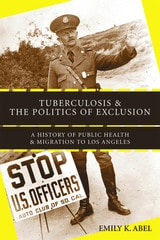
Tuberculosis and the Politics of Exclusion
A History of Public Health and Migration to Los AngelesAbel, Emily K.
Rutgers University Press, 2007
Winner of the 2008 Arthur J. Viseltear Prize from the American Public Health Association and Nominated for the 2008 William H. Welch Medal, AAHM
Though notorious for its polluted air today, the city of Los Angeles once touted itself as a health resort. After the arrival of the transcontinental railroad in 1876, publicists launched a campaign to portray the city as the promised land, circulating countless stories of miraculous cures for the sick and debilitated. As more and more migrants poured in, however, a gap emerged between the city’s glittering image and its dark reality.
Emily K. Abel shows how the association of the disease with “tramps” during the 1880s and 1890s and Dust Bowl refugees during the 1930s provoked exclusionary measures against both groups. In addition, public health officials sought not only to restrict the entry of Mexicans (the majority of immigrants) during the 1920s but also to expel them during the 1930s.
Abel’s revealing account provides a critical lens through which to view both the contemporary debate about immigration and the U.S. response to the emergent global tuberculosis epidemic.

What Comes after Entanglement?
Activism, Anthropocentrism, and an Ethics of ExclusionEva Haifa Giraud
Duke University Press, 2019
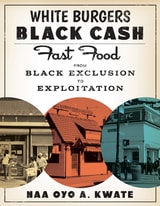
White Burgers, Black Cash
Fast Food from Black Exclusion to ExploitationNaa Oyo A. Kwate
University of Minnesota Press, 2023
The long and pernicious relationship between fast food restaurants and the African American community
- James Beard Foundation: James Beard Media Award for Reference, History, and Scholarship — Winner
- Urban Affairs Association Best Book in Urban Affairs — Winner
- Association for Humanist Sociology Betty and McClung Lee Book Award — Winner
- Black Caucus of the American Library Association — Honor, Nonfiction category
- Museum of African American History Stone Book Award — Shortlist
- Business History Conference: Hagley Prize — Finalist
- Association for the Study of Food and Society: ASFS Book Award — Winner
- Society for the Study of Social Problems: Eduardo Bonilla-Silva Outstanding Book Award — Winner
- Foreword: INDIES — Silver winner, History category
Today, fast food is disproportionately located in Black neighborhoods and marketed to Black Americans through trgeted advertising. But throughout much of the twentieth century, fast food was developed specifically for White urban and suburban customers, purposefully avoiding Black spaces. In White Burgers, Black Cash, Naa Oyo A. Kwate traces the evolution in fast food from the early 1900s to the present, from its long history of racist exclusion to its current damaging embrace of urban Black communities.
Fast food has historically been tied to the country’s self-image as the land of opportunity and is marketed as one of life’s simple pleasures, but a more insidious history lies at the industry’s core. White Burgers, Black Cash investigates the complex trajectory of restaurant locations from a decided commitment to Whiteness to the disproportionate densities that characterize Black communities today. Kwate expansively charts fast food’s racial and spatial transformation and centers the cities of Chicago, New York City, and Washington, D.C., in a national examination of the biggest brands of today, including White Castle, KFC, Burger King, McDonald’s, and more.
Deeply researched, compellingly told, and brimming with surprising details, White Burgers, Black Cash reveals the inequalities embedded in America’s popular national food tradition.