Results by title
15 books match the query 'Existence'
A Defense of the Catholic Religion
The Necessity, Existence, and Limits of an Infallible ChurchBeda Mayr, OSB
Catholic University of America Press, 2023
Anaesthetics of Existence
Essays on Experience at the EdgeCressida J. Heyes
Duke University Press, 2020
“Experience” is a thoroughly political category, a social and historical product not authored by any individual. At the same time, “the personal is political,” and one's own lived experience is an important epistemic resource. In Anaesthetics of Existence Cressida J. Heyes reconciles these two positions, drawing on examples of things that happen to us but are nonetheless excluded from experience. If for Foucault an “aesthetics of existence” was a project of making one's life a work of art, Heyes's “anaesthetics of existence” describes antiprojects that are tacitly excluded from life—but should be brought back in. Drawing on critical phenomenology, genealogy, and feminist theory, Heyes shows how and why experience has edges, and she analyzes phenomena that press against those edges. Essays on sexual violence against unconscious victims, the temporality of drug use, and childbirth as a limit-experience build a politics of experience while showcasing Heyes's much-needed new philosophical method.
Between Gaia and Ground
Four Axioms of Existence and the Ancestral Catastrophe of Late LiberalismElizabeth A. Povinelli
Duke University Press, 2021
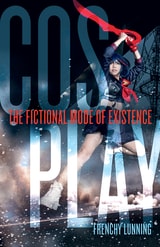
Cosplay
The Fictional Mode of ExistenceFrenchy Lunning
University of Minnesota Press, 2022
An exploration of cosplay and its relationship with the realms of its global fandom, performance, and the modes of fictional existence
Flourishing far beyond its Japanese roots, cosplay has become an international phenomenon with fervid fans who gather at enormous, worldwide conventions annually. Here, author Frenchy Lunning offers an intimate, sensational tour through cosplay’s past and present, as well as its global lure.
Through a culmination of years of personal research on cosplay, and growing out of Lunning’s wealth of scholarship, conference presentations, and cosplayer interviews, Cosplay is a unique and necessary examination of identity, performance, play, and otaku fandom and culture in relation to contemporary theories. With discussions covering construction, masquerades, and community through performance, Lunning presents cosplay as a dynamic and ever-evolving global practice. She combines the fascinating viewpoints of cosplayers with observational, in-depth research on cosplay history and practice, and a deep dive into critical theory involving the modes of fictional existence, in order to understand its global expansion.
Augmented with beautiful photographs, this is an engrossing, lively read that explores a complicated and often misunderstood history and meditates on how cosplay allows its participants to create and construct meaning and identity.
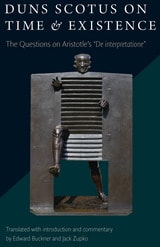
Duns Scotus on Time and Existence
John Duns Scotus
Catholic University of America Press, 2014
Eternal Possibilities
A Neutral Ground for Meaning and ExistenceDavid Weissman
Southern Illinois University Press, 1977
Eternal Possibilities: A Neutral Ground for Meaning and Existence builds on David Weissman's earlier Dispositional Properties and makes a signal contribution to the study of metaphysics. Here, broadening and enriching the point of view adopted in his earlier work, Weissman cites and criticizes a large number of theories proposed by authors from Plato to Wittgenstein and others exploring language theory and metaphysics.
Students of Wittgenstein will be especially interested in Mr. Weissman's critical examination of Wittgenstein's claim in the Tractatus that possibilities are the facts for logic. Weissman proposes a modal theory of properties: they exist in the first instance as possibilities. He argues that a sentence is meaningful if it signifies a property or complex of properties existing as a possible, and true if that possible is instantiated. The status of possibilities and their relation to actual states of affairs are considered in detail.
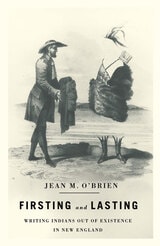
Firsting and Lasting
Writing Indians out of Existence in New EnglandJean M. O’Brien
University of Minnesota Press, 2010
Inwardness and Existence
Subjectivity in/and Hegel, Heidegger, Marx, and FreudWalter A. Davis
University of Wisconsin Press, 1989
On the Existence of Digital Objects
Yuk Hui
University of Minnesota Press, 2016
Digital objects, in their simplest form, are data. They are also a new kind of industrial object that pervades every aspect of our life today—as online videos, images, text files, e-mails, blog posts, Facebook events.Yet, despite their ubiquity, the nature of digital objects remains unclear.
On the Existence of Digital Objects conducts a philosophical examination of digital objects and their organizing schema by creating a dialogue between Martin Heidegger and Gilbert Simondon, which Yuk Hui contextualizes within the history of computing. How can digital objects be understood according to individualization and individuation? Hui pursues this question through the history of ontology and the study of markup languages and Web ontologies; he investigates the existential structure of digital objects within their systems and milieux. With this relational approach toward digital objects and technical systems, the book addresses alienation, described by Simondon as the consequence of mistakenly viewing technics in opposition to culture.
Interdisciplinary in philosophical and technical insights, with close readings of Husserl, Heidegger, and Simondon as well as the history of computing and the Web, Hui’s work develops an original, productive way of thinking about the data and metadata that increasingly define our world.
Possibility Necessity and Existence
Abbagnano and His PredecessorsNino Langiulli
Temple University Press, 1992
In this systematic historical analysis, Nino Langiulli focuses on a key philosophical issue, possibility, as it is refracted through the thought of the Italian philosopher Nicola Abbagnano. Langiulli examines Abbagnano's attempt to raise possibility to a level of prime importance and investigates his understanding of existence. In so doing, the author offers a sustained exposition of and argument with the account of possibility in the major thinkers of the Western tradition—Plato, Aristotle, Kant, and Kierkegaard. He also makes pertinent comments on such philosophers as Diodorus Cronus, William of Ockham, Spinoza, Hobbes, and Hegel, as well as such logicians as DeMorgan and Boole.
Nicola Abbagnano, who died in 1990, recently came to the attention of the general public as an influential teacher of author Umberto Eco. Creator of a dictionary of philosophy and author of a multiple-volume history of Western philosophy, Abbagnano was the only philosopher, according to Langiulli, to argue that "to be is to be possible."
Even though the concept of probability and the discipline of statistics are grounded in the concept of possibility, philosophers throughout history have grappled with the problem of defining it. Possibility has been viewed by some as an empty concept, devoid of reality, and by others as reducible to actuality or necessity—concepts which are opposite to it. Langiulli analyzes and debates Abbagnano's treatment of necessity as secondary to possibility, and he addresses the philosopher's conversation with his predecessors as well as his European and American contemporaries.
In the series Themes in the History of Philosophy, edited by Edith Wyschogrod.
Stoic Theology
Proof for the Existence of the Cosmic God and of the Traditional GodsP. A. Meijer
Eburon Academic Publishers, 2008
The Different Modes of Existence
Étienne Souriau
University of Minnesota Press, 2015
What relation is there between the existence of a work of art and that of a living being? Between the existence of an atom and that of a value like solidarity? These questions become our own each time a reality—whether it is a piece of music, someone we love, or a fictional character—is established and begins to take on an importance in our lives. Like William James or Gilles Deleuze, Souriau methodically defends the thesis of an existential pluralism. There are indeed different manners of existing and even different degrees or intensities of existence: from pure phenomena to objectivized things, by way of the virtual and the “super-existent,” to which works of art and the intellect, and even morality, bear witness. Existence is polyphonic, and, as a result, the world is considerably enriched and enlarged. Beyond all that exists in the ordinary sense of the term, it is necessary to allow for all sorts of virtual and ephemeral states, transitional realms, and barely begun realities, still in the making, all of which constitute so many “inter-worlds.”
The Religion of Existence
Asceticism in Philosophy from Kierkegaard to SartreNoreen Khawaja
University of Chicago Press, 2016
At the heart of existentialism, Noreen Khawaja argues, is a story about secular thought experimenting with the traditions of European Christianity. This book explores how a distinctly Protestant asceticism formed the basis for the chief existentialist ideal, personal authenticity, which is reflected in approaches ranging from Kierkegaard’s religious theory of the self to Heidegger’s phenomenology of everyday life to Sartre’s global mission of atheistic humanism. Through these three philosophers, she argues, we observe how ascetic norms have shaped one of the twentieth century’s most powerful ways of thinking about identity and difference—the idea that the “true” self is not simply given but something that each of us is responsible for producing.
Engaging with many central figures in modern European thought, this book will appeal to philosophers and historians of European philosophy, scholars of modern Christianity, and those working on problems at the intersection of religion and modernity.
Truth and Existence
Jean-Paul Sartre
University of Chicago Press, 1992
Truth and Existence is introduced by an extended biographical, historical, and analytical essay by Ronald Aronson.
"Truth and Existence is another important element in the recently published links between Sartre's existentialist ontology and his later ethical, political, and literary concerns. . . . The excellent introduction by Aronson will help readers not experienced in reading Sartre."—Choice
"Accompanied by an excellent introduction, this dense, lucidly translated treatise reveals Sartre as a characteristically 20th-century figure."—Publishers Weekly
Jean-Paul Sartre (1906-1980) was offered, but declined, the Nobel Prize for literature in 1964. His many works of fiction, drama, and philosophy include the monumental study of Flaubert, The Family Idiot, and The Freud Scenario, both published in translation by the University of Chicago Press.

Witness and Existence
Essays in Honor of Schubert M. OgdenEdited by Philip E. Devenish and George L. Goodwin
University of Chicago Press, 1989
Witness and Existence pays tribute to Ogden by bringing together essays by eminent scholars in New Testament studies and philosophical theology, two fields which directly reflect his methodological concerns and his substantive contributions. The book honors Ogden precisely by engaging the fundamental issues which Ogden himself has taken so seriously.
The first group of essays presents careful analyses of issues basic to the early Christian witness; the second group examines the credibility of the Christian claim about God in terms of human experience. The editors' introductory essay provides the first comprehensive analysis yet to appear of Ogden's theology. A complete bibliography of his published writings is included as an appendix.