Results by title
24 books match the query 'Experiment'
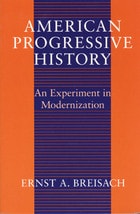
American Progressive History
An Experiment in ModernizationErnst Breisach
University of Chicago Press, 1993
Focusing his account on the work of the movement's most important representatives—including Charles Beard, James Harvey Robinson, and Carl Becker—Ernst Breisach demonstrates that Progressive history is distinguished by its unique combination of beliefs in the objective reality of historical facts and its faith in the inevitability of the progress of the human race. And though he discusses at length Frederick Jackson Turner's contributions to the creation of a modern American historiography, Breisach sets him apart from the scholars who shaped Progressive history.
While Progressive history is usually treated in isolation from simultanieous movements in European historiography, Breisach shows how it was formulated in the face of the same cultural pressures confronting European historians. Indeed, it becomes clear that until the 1930s the Progressive historians' confidence in the validity of historical investigation and the progress of civilization shielded American historians from the skepticism and cultural pessimism which characterized many of their European contempories.
Breisach's exceptionally broad and subtle analysis reveals American Progressive history to be an important and innovative experiment in the international quest for a New History, as well as a coherent school of thought in its own right.
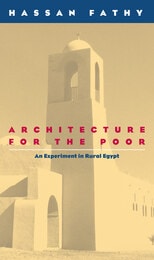
Architecture for the Poor
An Experiment in Rural EgyptHassan Fathy
University of Chicago Press, 1976
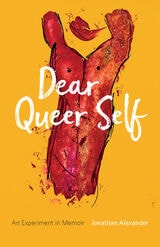
Dear Queer Self
An Experiment in MemoirJonathan Alexander
Acre Books, 2022
In this unconventional memoir, Jonathan Alexander addresses wry and affecting missives to a conflicted younger self. Focusing on three years—1989, 1993, and 1996—Dear Queer Self follows the author through the homophobic heights of the AIDS epidemic, the fall of the Berlin Wall, the election of Bill Clinton, and the steady advancements in gay rights that followed. With humor and wit afforded by hindsight, Alexander relives his closeted college years, his experiments with his sexuality in graduate school, his first marriage to a woman, and his budding career as a college professor.
As he moves from tortured self-denial to hard-won self-acceptance, the author confronts the deeply uncomfortable ways he is implicated in his own story. More than just a coming-out narrative, Dear Queer Self is both an intimate psychological exploration and a cultural examination—a meshing of inner and outer realities and a personal reckoning with how we sometimes torture the truth to make a life. It is also a love letter, an homage to a decade of rapid change, and a playlist of the sounds, sights, and feelings of a difficult, but ultimately transformative, time.
Designing Human Practices
An Experiment with Synthetic BiologyPaul Rabinow and Gaymon Bennett
University of Chicago Press, 2012
In 2006 anthropologists Paul Rabinow and Gaymon Bennett set out to rethink the role that human sciences play in biological research, creating the Human Practices division of the Synthetic Biology Engineering Research Center—a facility established to create design standards for the engineering of new enzymes, genetic circuits, cells, and other biological entities—to formulate a new approach to the ethical, security, and philosophical considerations of controversial biological work. They sought not simply to act as watchdogs but to integrate the biosciences with their own discipline in a more fundamentally interdependent way, inventing a new, dynamic, and experimental anthropology that they could bring to bear on the center’s biological research.
Designing Human Practices is a detailed account of this anthropological experiment and, ultimately, its rejection. It provides new insights into the possibilities and limitations of collaboration, and diagnoses the micro-politics which effectively constrained the potential for mutual scientific flourishing. Synthesizing multiple disciplines, including biology, genetics, anthropology, and philosophy, alongside a thorough examination of funding entities such as the National Science Foundation, Designing Human Practices pushes the social study of science into new and provocative territory, utilizing a real-world experience as a springboard for timely reflections on how the human and life sciences can and should transform each other.
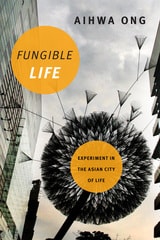
Fungible Life
Experiment in the Asian City of LifeAihwa Ong
Duke University Press, 2016
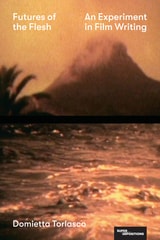
Futures of the Flesh
An Experiment in Film WritingDomietta Torlasco
Northwestern University Press, 2026
Exploring alternative possibilities of viewpoint through cinematic experimentation
In this boldly multidimensional work, Domietta Torlasco alternates between theoretical writings, film essays, and fragmented excerpts from an original screenplay to construct a temporal as well as spatial architecture for her critical intervention. Futures of the Flesh posits that cinematic experimentation holds the strongest potential to reimagine life—its forms, rhythms, and affects—beyond the division between subject and object, human and animal, animate and inanimate. Such potential cannot be clearly located in either space or time but, on the contrary, requires that we think according to momentum, diffraction, and difference.
As a novel notion and the formative medium of both subject and object, the flesh affirms the openness and indefinite generativity of being, allowing for the appearance of new perceptual relations and forms of kinship. Torlasco stages a dialogue between thinkers including Hortense Spillers and Maurice Merleau-Ponty and turns to canonical films, including Blade Runner and Solaris, classic sci-fi literature, such as Octavia Butler’s Kindred, and contemporary video art to elucidate how these media imaginatively rework the distinction between categories of being. This book endeavors to redefine the relation between theory and practice, analysis and creation, to name the primary relations that, under specific techno-aesthetic conditions, enable the emergence of porous, un-bordered forms of life.
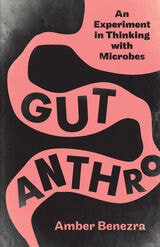
Gut Anthro
An Experiment in Thinking with MicrobesAmber Benezra
University of Minnesota Press, 2023
A fascinating ethnography of microbes that opens up new spaces for anthropological inquiry
The trillions of microbes in and on our bodies are determined by not only biology but also our social connections. Gut Anthro tells the fascinating story of how a sociocultural anthropologist developed a collaborative “anthropology of microbes” with a human microbial ecologist to address global health crises across disciplines. It asks: what would it mean for anthropology to act with science? Based partly at a preeminent U.S. lab studying the human microbiome, the Center for Genome Sciences at Washington University, and partly at a field site in Bangladesh studying infant malnutrition, it examines how microbes travel between human guts in the “field” and in microbiome laboratories, influencing definitions of health and disease, and how the microbiome can change our views on evolution, agency, and life.
As lab scientists studied the interrelationships between gut microbes and malnutrition in resource-poor countries, Amber Benezra explored ways to reconcile the scale and speed differences between the lab, the intimate biosocial practices of Bangladeshi mothers and their children, and the looming structural violence of poverty. In vital ways, Gut Anthro is about what it means to collaborate—with mothers, local field researchers in Bangladesh, massive philanthropic global health organizations, with the microbiome scientists, and, of course, with microbes. It follows microbes through various enactments in scientific research—microbes as kin, as data, and as race. Revealing how racial categories are used in microbiome research, Benezra argues that microbial differences need transdisciplinary collaboration to address racial health disparities without reifying race as a straightforward biological or social designation.
Gut Anthro is a tour de force of science studies and medical anthropology as well as an intensely personal and deeply theoretical accounting of what it means to do anthropology today.
Cover alt text:
Black background overlaid with a pink organic path suggestive of a human digestive system. Title appears within the guts as if being processed.
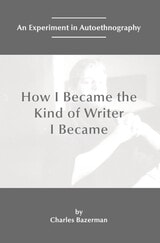
How I Became the Kind of Writer I Became
An Experiment in AutoethnographyCharles Bazerman
University Press of Colorado, 2024

Hungary and the Habsburgs, 1765-1800
An Experiment in Enlightened AbsolutismÉva H. Balázs
Central European University Press, 1997
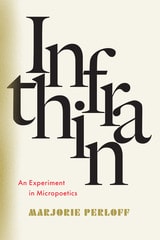
Infrathin
An Experiment in MicropoeticsMarjorie Perloff
University of Chicago Press, 2021
The “infrathin” was Marcel Duchamp’s playful name for the most minute shade of difference: that between the report of a gunshot and the appearance of the bullet hole, or between two objects in a series made from the same mold. “Eat” is not the same thing as “ate.” The poetic, Marjorie Perloff suggests, can best be understood as the language of infrathin. For in poetry, whether in verse or prose, words and phrases that are seemingly unrelated in ordinary discourse are realigned by means of sound, visual layout, etymology, grammar, and construction so as to “make it new.”
In her revisionist “micropoetics,” Perloff draws primarily on major modernist poets from Stein and Yeats to Beckett, suggesting that the usual emphasis on what this or that poem is “about,” does not do justice to its infrathin possibilities. From Goethe’s eight-line “Wanderer’s Night Song” to Eliot’s Four Quartets, to the minimalist lyric of Rae Armantrout, Infrathin is designed to challenge our current habits of reading and to answer the central question: what is it that makes poetry poetry?
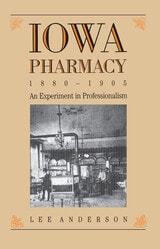
Iowa Pharmacy, 1880-1905
Experiment In ProfessionalismLee Anderson
University of Iowa Press, 1989
Popular culture remembers the settling of the Midwest as a golden era of unbounded opportunity, a time when every farm was a family farm and every farmer glowed with health. Pioneers in nineteenth-century Iowa, however, had to battle a formidable host of diseases during this golden era—malaria was endemic, smallpox and dysentery occurred in widespread epidemics, and typhoid, cholera, scarlet fever, and diphtheria had their seasons. Physicians in the growing Hawkeye State had little of the status and skill they command today, and herbalists, hydropaths, eclectics, Thomsonians, and homeopaths competed with purveyors of home remedies and patent medicines for their services.
The druggists of pioneer Iowa were artisan producers who compounded and prescribed botanical and chemical medicines, sold a variety of other merchandise from perfumes to paints, and dispensed the secret concoctions known as patent medicines, guaranteed to cure any condition, however alarming. In this compelling study, Lee Anderson tells the story of these early pharmacists and their hard-fought quest to legitimize their profession. While he confronts the politics of professionalism and the purpose of the pharmaceutical science and education, he also illuminates the mutual role of physicians and pharmacists in frontier health care.
With skill and humor, Anderson recreates an exciting time in midwestern history and provides insights into national issues of professionalism in medicine. His study will appeal to scholars in the history of medicine, pharmacy, and professionalism and to everyone interested in the history of the Midwest.
Kierkegaard as Phenomenologist
An ExperimentJeffrey Hanson
Northwestern University Press, 2010
In Kierkegaard as Phenomenologist: An Experiment, Jeffrey Hanson embarks on a project to locate Kierkegaard within the current phenomenological discussion. This work is an experiment inasmuch as the plausibility of the undertaking itself will be determined only by the outcome. Some of the contributors clearly regard it as possible to read Kierkegaard as a phenomenologist. Others plainly do not and will contest the very hypothesis that forms the basis of this experiment.
As with any experiment, the larger discussion will determine its success, but Kierkegaard as Phenomenologist lays the groundwork for two exciting possibilities: first, that Kierkegaard scholarship will be renewed, and second, that the meaning of phenomenology itself will be reconsidered.
Kinds of Value
An Experiment in Modal AnthropologyPaul Kockelman
Prickly Paradigm Press, 2020
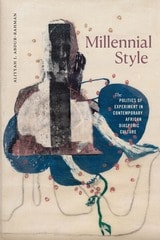
Millennial Style
The Politics of Experiment in Contemporary African Diasporic CultureAliyyah I. Abdur-Rahman
Duke University Press, 2024
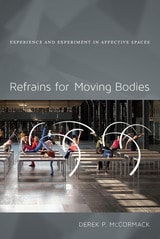
Refrains for Moving Bodies
Experience and Experiment in Affective SpacesDerek P. McCormack
Duke University Press, 2013
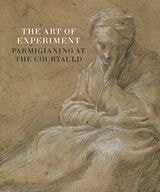
The Art of Experiment
Parmigianino at The CourtauldEdited by Ketty Gottardo and Guido Rebecchini
Paul Holberton Publishing, 2022
Accompanying an exhibition at London’s Courtauld Gallery, this stunning catalog presents works by the Renaissance artist Girolamo Francesco Maria Mazzola, better known as Parmigianino (1503–1540).
Fundamentally a draftsman at heart, Parmigianino drew relentlessly during his relatively short life, and around a thousand of his drawings have survived. The Courtauld’s collection comprises twenty-four sheets. In preparation for the catalog, new photography and technical examinations have been carried out on all the works, revealing two new drawings that were previously unknown, hidden underneath their historic mounts. They have also helped to better identify connections between some of the drawings and the finished paintings for which they were conceived. This stunning illustrated catalog presents the whole Courtauld collection and sheds light on an artist who approached every technique with unprecedented freedom and produced innovative works that are still admired by artists and collectors today.
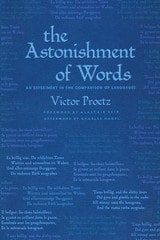
The Astonishment of Words
An Experiment in the Comparison of LanguagesBy Victor Proetz
University of Texas Press, 1971
One, two! one, two! And through and through
The vorpal blade went snicker-snack!
He left it dead, and with its head
He went galumphing back.
Un deux, un deux, par le milieu,
Le glaive vorpal fait pat-à-pan!
La bête défaite, avec sa tête,
Il rentre gallomphant.
Eins, Zwei! Eins, Zwei! Und durch und durch
Seins vorpals Schwert zerschniferschnück.
Da blieb es todt! Er, Kopf in Hand,
Geläumfig zog zurück!
The late Victor Proetz was by vocation a visual artist who created many distinguished architectural and decorative designs. His favorite avocation, however, was to explore the possibilities (and impossibilities) of words, especially words in translation, and to share his discoveries. As Alastair Reid says in his foreword, "He turned words over in his head, he listened to them, he unraveled them, he looked them up, he played with them, he passed them on like presents, all with an unjadeable astonishment."
What, Proetz wondered, do some of the familiar and not-so-familiar works of English and American literature sound like in French? In German? "How," he asked, "do you say 'Yankee Doodle' in French—if you can?" And "How do they say 'Hounyhnhnm' and 'Cheshire Cat' and things like that in German?" And, in either language, "How, in God's name, can you possibly say 'There she blows!'?"
This book, unfortunately left incomplete on his death in 1966, contains many of his answers. They are given not only in the assembled texts and translations but also in his wry, curious, sometimes hilarious commentaries. None of it is scholarly in any formal, academic sense—"and yet," Reid reminds us, "his is precisely the kind of enthusiastic curiosity that gives scholarship its pointers."
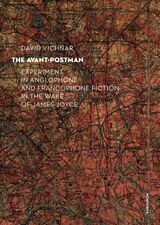
The Avant-Postman
Experiment in Anglophone and Francophone Fiction in the Wake of James JoyceDavid Vichnar
Karolinum Press, 2022
The Avant-Postman explores a broad range of innovative postwar writing from France, Britain, and the United States. Taking James Joyce’s Ulysses and Finnegans Wake as a joint starting point, David Vichnar draws genealogical lines from there through the work of more than fifty writers up to very recent years, including William Burroughs, B. S. Johnson, Ian Sinclair, Kathy Acker, Alan Moore, David Foster Wallace, and many others. Centering the exploration around five strategies employed by Joyce—narrative parallax, stylistic metempsychosis, concrete writing, forgery, and neologizing the logos—the book reveals the striking continuities and developments from Joyce’s day to our own.
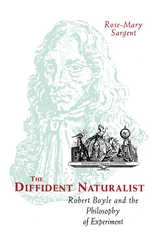
The Diffident Naturalist
Robert Boyle and the Philosophy of ExperimentRose-Mary Sargent
University of Chicago Press, 1995
Sargent examines the philosophical, legal, experimental, and religious traditions—among them English common law, alchemy, medicine, and Christianity—that played a part in shaping Boyle's experimental thought and practice. The roots of his philosophy in his early life and education, in his religious ideals, and in the work of his predecessors—particularly Bacon, Descartes, and Galileo—are fully explored, as are the possible influences of his social and intellectual circle. Drawing on the full range of Boyle's published works, as well as on his unpublished notebooks and manuscripts, Sargent shows how these diverse influences were transformed and incorporated into Boyle's views on and practice of experiment.
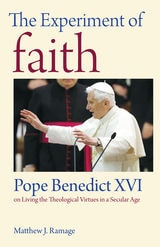
The Experiment of Faith
Pope Benedict XVI on Living the Theological Virtues in a Secular AgeCatholic University of America Press, 2020
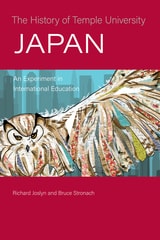
The History of Temple University Japan
An Experiment in International EducationRichard Joslyn and Bruce Stronach
Temple University Press, 2023
The authors recount the development of the academic program, the recruitment of students, and the support from Temple that enabled curricular and pedagogical improvement.
They also address the university’s relationships with three Japanese partners, and the financial threats and crises TUJ faced over the decades.
The History of Temple University Japan is not only an important documentation of TUJ, but also a history of U.S.-Japanese relations. What emerges is the significant impact TUJ has had on the thousands of students, faculty, and staff who have been a part of this international academic institution.
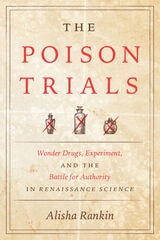
The Poison Trials
Wonder Drugs, Experiment, and the Battle for Authority in Renaissance ScienceAlisha Rankin
University of Chicago Press, 2021
At a time when poison was widely feared, the urgent need for effective cures provoked intense excitement about new drugs. As doctors created, performed, and evaluated poison trials, they devoted careful attention to method, wrote detailed experimental reports, and engaged with the problem of using human subjects for fatal tests. In reconstructing this history, Rankin reveals how the antidote trials generated extensive engagement with “experimental thinking” long before the great experimental boom of the seventeenth century and investigates how competition with lower-class healers spurred on this trend.
The Poison Trials sheds welcome and timely light on the intertwined nature of medical innovations, professional rivalries, and political power.

The Rise of the Wave Theory of Light
Optical Theory and Experiment in the Early Nineteenth CenturyJed Z. Buchwald
University of Chicago Press, 1989
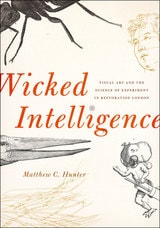
Wicked Intelligence
Visual Art and the Science of Experiment in Restoration LondonMatthew C. Hunter
University of Chicago Press, 2013