Results by title
9 books match the query 'Expertising'
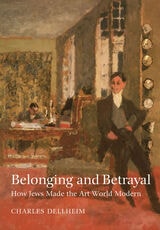
Belonging and Betrayal
How Jews Made the Art World ModernCharles Dellheim
Brandeis University Press, 2021
The story of dealers of Old Masters, champions of modern art, and victims of Nazi plunder.
Since the late 1990s, the fate of Nazi-stolen art has become a cause célèbre. In Belonging and Betrayal, Charles Dellheim turns this story on its head by revealing how certain Jewish outsiders came to acquire so many old and modern masterpieces in the first place—and what this reveals about Jews, art, and modernity. This book tells the epic story of the fortunes and misfortunes of a small number of eminent art dealers and collectors who, against the odds, played a pivotal role in the migration of works of art from Europe to the United States and in the triumph of modern art.
Beautifully written and compellingly told, this story spans both sides of the Atlantic from the late nineteenth century to the present. It is set against the backdrop of critical transformations, among them the gradual opening of European high culture, the ambiguities of Jewish acculturation, the massive sell-off of aristocratic family art collections, the emergence of different schools of modern art, the cultural impact of World War I, and the Nazi war against the Jews.
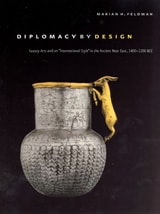
Diplomacy by Design
Luxury Arts and an "International Style" in the Ancient Near East, 1400-1200 BCEMarian H. Feldman
University of Chicago Press, 2006
Marian Feldman's Diplomacy by Design examines the profound connection between art produced during this period and its social context, revealing inanimate objects as catalysts—or even participants—in human dynamics. Feldman's fascinating study shows the ways in which the exchange of these works of art actively mediated and strengthened political relations, intercultural interactions, and economic negotiations. Previous studies of this international style have focused almost exclusively on stylistic attribution at the expense of social contextualization. Written by a specialist in ancient Near Eastern art and archaeology who has excavated and traveled extensively in this area of the world, Diplomacy by Design provides a much broader consideration of the symbolic power of material culture and its centrality in the construction of human relations.
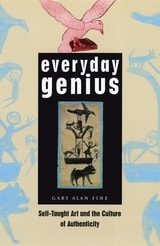
Everyday Genius
Self-Taught Art and the Culture of AuthenticityGary Alan Fine
University of Chicago Press, 2004
Fine considers the differences among folk art, outsider art, and self-taught art, explaining the economics of this distinctive art market and exploring the dimensions of its artistic production and distribution. Interviewing dealers, collectors, curators, and critics and venturing into the backwoods and inner-city homes of numerous self-taught artists, Fine describes how authenticity is central to the system in which artists—often poor, elderly, members of a minority group, or mentally ill—are seen as having an unfettered form of expression highly valued in the art world. Respected dealers, he shows, have a hand in burnishing biographies of the artists, and both dealers and collectors trade in identities as much as objects.
Revealing the inner workings of an elaborate and prestigious world in which money, personalities, and values affect one another, Fine speaks eloquently to both experts and general readers, and provides rare access to a world of creative invention-both by self-taught artists and by those who profit from their work.
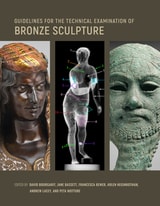
Guidelines for the Technical Examination of Bronze Sculpture
David Bourgarit
J. Paul Getty Trust, The, 2023
Since the fourth millennium BCE, bronze has been the preferred medium for some of the most prestigious and sacred works of art. But only through interdisciplinary research can the fabrication of these extraordinary objects be properly investigated, interpreted, and documented. This innovative publication bridges the expertise of myriad art-technological specialists to create a new framework for advancing the understanding of bronze sculpture.
Essential reading for curators, conservators, scientists, archaeologists, sculptors, metallurgists, founders, dealers, collectors, and anyone interested in the life cycle of a bronze, this volume explains how to identify the evidence of process steps, metals used, casting defects, and surface work and alterations before moving on to address analytical techniques ranging from visual exams to imaging, material analyses, and dating. The guidelines are accompanied by detailed illustrations, including videos, charts, and animations; a robust vocabulary, ensuring precision across English, German, French, Italian, and Chinese; a diverse selection of case studies; and a comprehensive bibliography.
The free online edition of this open-access publication is available at getty.edu/publications/bronze-guidelines/ and includes videos and zoomable illustrations. Also available are free PDF and EPUB downloads of the book.
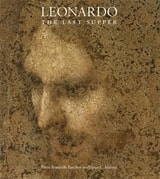
Leonardo, The Last Supper
Pinin Brambilla Barcilon and Pietro C. Marani
University of Chicago Press, 2001
The technical problems with the Last Supper began as soon as Leonardo started to paint it. He jettisoned the traditional fresco technique of applying paint to wet plaster, a method unsuited to Leonardo's slow and thorough execution, and created the work instead with an experimental technique that involved painting directly on the dry plaster. With this renegade method, Leonardo rendered one of the most enduring painting techniques volatile and unstable. Added to this initial complication have been centuries of pollution, tourists, candle smoke, and the ravages of age, not to mention food fights in the refectory staged by Napoleonic soldiers and Allied bombs in 1943. By the middle of the twentieth century, the Last Supper was in desperate need of a complete restoration.
Pinin Brambilla Barcilon was chosen to head this twenty-year project, and Leonardo, The Last Supper is the official record of her remarkable effort. It first documents the cleaning and removal of the overpainting performed in the other attempts at restoration and then turns to Barcilon's meticulous additions in watercolor, which were based on Leonardo's preparatory drawings, early copies of the painting, and contemporary textual descriptions. This book presents full-scale reproductions of details from the fresco that clearly display and distinguish Leonardo's hand from that of the restorer. With nearly 400 sumptuous color reproductions, the most comprehensive technical documentation of the project by Barcilon, and an introductory essay by art historian and project codirector Pietro C. Marani that focuses on the history of the fresco, Leonardo, The Last Supper is an invaluable historic record, an extraordinarily handsome book, and an essential volume for anyone who appreciates the beauty, technical achievements, and fate of Renaissance painting.
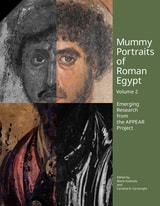
Mummy Portraits of Roman Egypt, Volume 2
Emerging Research from the APPEAR ProjectMarie Svoboda
J. Paul Getty Trust, The, 2026
Nearly a thousand funerary portraits from Roman Egypt, once interred with mummified remains, survive in museums around the world. These fascinating paintings offer the unparalleled opportunity for viewers to come face-to-face with people who lived and died some two thousand years ago.
The international collaboration known as APPEAR (Ancient Panel Paintings: Examination, Analysis, and Research) was launched in 2013 to promote the study of these objects and gather research findings in a shared database. This second volume of Mummy Portraits of Roman Egypt compiles seventeen scholarly papers from the APPEAR conference hosted in October 2022 at the Allard Pierson Museum, Amsterdam. Conservators, scientists, and curators presented new research on topics such as technical imaging; nondestructive analytical techniques; provenance and collecting; treatment histories; connoisseurship and forgeries; comparisons of works across institutions; and scientific studies of woods, pigments, coatings, binders, and supports. This volume will be a valuable resource to conservators, scientists, curators, and collectors.
The free online edition of this open-access publication is available at getty.edu/publications/mummy-portraits-2/ and includes zoomable illustrations and graphs. Also available are free PDF and EPUB downloads of the book.
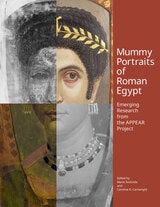
Mummy Portraits of Roman Egypt
Emerging Research from the APPEAR ProjectMarie Svoboda
J. Paul Getty Trust, The, 2020
Once interred with mummified remains, nearly a thousand funerary portraits from Roman Egypt survive today in museums around the world, bringing viewers face-to-face with people who lived two thousand years ago. Until recently, few of these paintings had undergone in-depth study to determine by whom they were made and how.
An international collaboration known as APPEAR (Ancient Panel Paintings: Examination, Analysis, and Research) was launched in 2013 to promote the study of these objects and to gather scientific and historical findings into a shared database. The first phase of the project was marked with a two-day conference at the Getty Villa. Conservators, scientists, and curators presented new research on topics such as provenance and collecting, comparisons of works across institutions, and scientific studies of pigments, binders, and supports. The papers and posters from the conference are collected in this publication, which offers the most up-to-date information available about these fascinating remnants of the ancient world.
The free online edition of this open-access publication is available at www.getty.edu/publications/mummyportraits/ and includes zoomable illustrations and graphs. Also available are free PDF, EPUB, and Kindle/MOBI downloads of the book.
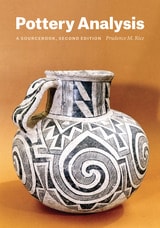
Pottery Analysis, Second Edition
A SourcebookPrudence M. Rice
University of Chicago Press, 2015
This new edition fully incorporates more than two decades of growth and diversification in the fields of archaeological and ethnographic study of pottery. It begins with a summary of the origins and history of pottery in different parts of the world, then examines the raw materials of pottery and their physical and chemical properties. It addresses ethnographic and ethnoarchaeological perspectives on pottery production; reviews the methods of studying pottery’s physical, mechanical, thermal, mineralogical, and chemical properties; and discusses how proper analysis of artifacts can reveal insights into their culture of origin. Intended for use in the classroom, the lab, and out in the field, this essential text offers an unparalleled basis for pottery research.
Pottery Analysis
A SourcebookPrudence M. Rice
University of Chicago Press, 1987