Results by title
2 books match the query 'Extradition'
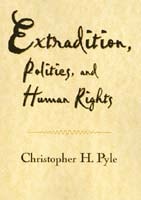
Extradition Politics & Human Rights
Christopher Pyle
Temple University Press, 2001
Three hundred years ago, few people cared about the murky pasts of new arrivals to the United States, and the countries they had left made few efforts to pursue them to their new home. Today, with the growth of bureaucracy, telecommunications, and air travel, extradition has become a full-time business. But the public's knowledge of, and consequent concern about, extradition remains minimal, aroused from time to time by newspaper headlines, only to fade.
In this readable and compelling history of extradition in America, Christopher Pyle remedies that ignorance. Using American constitutional law and drawing on a wealth of historical cases, he describes the collision of law and politics that occurs when a foreign country demands the surrender of individuals held to be terrorists by some and freedom fighters by others. He shows how U.S. policymakers have attempted to substitute deportation for extradition and turn the surrender of a foreign national (or even an American citizen) into a political rather than a judicial process.
Beginning with the New England Puritans' refusal to surrender the "regicides" who had signed the death warrant of Charles I, he traces the attitudes and ideologies that have shaped American extradition practice, culminating in the efforts by the Reagan and Bush administrations to turn the legal extradition process into an executive tool of state policy. Along the way we meet such luminaries as James Madison and John Stuart Mill, William Rehnquist and Oliver North, as well as pirates and fugitive slaves, anarchists and refugees, drug lords and runaway sailors.
Woven throughout this story is the author's belief that current developments in extradition law ignore or actually violate the principles of individual liberty, due process, and humanity on which we claim our country was built. As he remarks in the Introduction, "Extradition involves the surrender of human beings -- persons under the protection of our Constitution -- to foreign regimes, many of which are unjust. This reality was well understood in the eighteenth and nineteenth centuries, when the United States was a refuge for the victims of European oppression, but it has been disregarded frequently in the twentieth century as we have sought to stem the tide of immigration and develop advantageous economic and political relations with autocratic regimes of every stripe."
[more]

Unsafe Haven
The United States, the IRA and Political PrisonersKaren McElrath
Pluto Press, 2000
For almost two hundred years the United States has been a safe haven for Irish political prisoners seeking refuge. More recently however the US government has sought deportation, extradition and prosecution to exclude Irish republicans from the country. In the first book to focus on the relationship between these tools of exclusion and US foreign policy, Karen McElrath examines why this change has come about and the extent to which the granting of political asylum in the US is influenced by relations with Britain and other countries.
Karen McElrath questions US government attempts to portray an impartial role in the Irish conflict, arguing that historical and contemporary evidence reveals otherwise. She shows that, far from being a neutral process, the success of bids for political asylum often depends on the relationship between the US and the government of the applicant’s country of origin. Drawing on exclusive interviews with Irish Republicans who have faced deportation or extradition from the United States, or who have been prosecuted in the US for politically-motivated offences, McElrath explores the links between deportation and extradition outcomes and foreign policy issues. The tools of exclusion are defined in their historical context, and the history of US extradition law is described, with particular focus on the treaties with Britain. McElrath also examines the offences for which Irish and Irish-American Republicans have been charged, discusses the various levels of support for Irish political prisoners in the US, and summarises the findings by international human rights organisations.
Karen McElrath questions US government attempts to portray an impartial role in the Irish conflict, arguing that historical and contemporary evidence reveals otherwise. She shows that, far from being a neutral process, the success of bids for political asylum often depends on the relationship between the US and the government of the applicant’s country of origin. Drawing on exclusive interviews with Irish Republicans who have faced deportation or extradition from the United States, or who have been prosecuted in the US for politically-motivated offences, McElrath explores the links between deportation and extradition outcomes and foreign policy issues. The tools of exclusion are defined in their historical context, and the history of US extradition law is described, with particular focus on the treaties with Britain. McElrath also examines the offences for which Irish and Irish-American Republicans have been charged, discusses the various levels of support for Irish political prisoners in the US, and summarises the findings by international human rights organisations.
[more]