Results by title
5 books match the query 'Extraordinary Life'
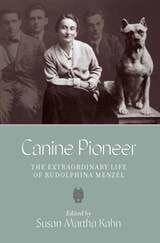
Canine Pioneer
The Extraordinary Life of Rudolphina MenzelEdited by Susan Martha Kahn
Brandeis University Press, 2022
An insightful look at the life and legacy of a pioneer cynologist between Europe and Israel.
Rudolphina Menzel (née Waltuch, 1891–1973), was a Viennese-born, Jewish scientist whose pioneering research on canine psychology, development, and behavior fundamentally shaped the ways dogs came to be trained, cared for, and understood. Between the two world wars, Menzel was known throughout Europe as one of the foremost breeders and trainers of police dogs and served as a sought-after consultant at Kummersdorf, the German military dog training institute in Berlin. She was also a fervent Zionist who was responsible for inventing the canine infrastructure in what came to be the State of Israel and for training hundreds of dogs to protect Jewish lives and property in pre-state Palestine. Teaching Jews to like dogs and training dogs to serve Jews became Menzel’s unique kind of Zionist mission. Detailed and insightful, Canine Pioneer: The Extraordinary Life of Rudolphina Menzel brings to light an important piece of history.
Rudolphina Menzel (née Waltuch, 1891–1973), was a Viennese-born, Jewish scientist whose pioneering research on canine psychology, development, and behavior fundamentally shaped the ways dogs came to be trained, cared for, and understood. Between the two world wars, Menzel was known throughout Europe as one of the foremost breeders and trainers of police dogs and served as a sought-after consultant at Kummersdorf, the German military dog training institute in Berlin. She was also a fervent Zionist who was responsible for inventing the canine infrastructure in what came to be the State of Israel and for training hundreds of dogs to protect Jewish lives and property in pre-state Palestine. Teaching Jews to like dogs and training dogs to serve Jews became Menzel’s unique kind of Zionist mission. Detailed and insightful, Canine Pioneer: The Extraordinary Life of Rudolphina Menzel brings to light an important piece of history.
[more]
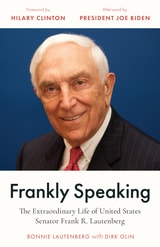
Frankly Speaking
The Extraordinary Life of United States Senator Frank R. LautenbergBonnie Lautenberg
Rutgers University Press, 2024
Frank Lautenberg was the embodiment of the American dream. The son of Eastern European immigrants who toiled in the factories of northern New Jersey, he rose to become a Fortune 500 CEO and eventually a five-term US senator. Yet his is not a simple rags-to-riches tale, but is rather the story of someone who used his newfound affluence and influence to improve the lives of ordinary Americans.
Told by one of the people who knew him best, his widow Bonnie, Frankly Speaking reveals the political strategies that made Lautenberg one of the Senate’s most powerful advocates for the health and safety of America’s citizens. He championed seemingly minor, unglamorous reforms that made a big difference to everyday lives, from raising the national drinking age to preventing domestic abusers from purchasing guns. These campaigns earned him powerful enemies in the alcohol, tobacco, and firearms industries, and he was subjected to some of the most brutal campaign mudslinging in American history. Yet, as this inspiring biography reveals, New Jersey’s longest-serving senator was not afraid to take big political risks if it meant standing up for his principles, whether that meant opposing the Iraq War or protecting LGBTQ and women’s rights.
Told by one of the people who knew him best, his widow Bonnie, Frankly Speaking reveals the political strategies that made Lautenberg one of the Senate’s most powerful advocates for the health and safety of America’s citizens. He championed seemingly minor, unglamorous reforms that made a big difference to everyday lives, from raising the national drinking age to preventing domestic abusers from purchasing guns. These campaigns earned him powerful enemies in the alcohol, tobacco, and firearms industries, and he was subjected to some of the most brutal campaign mudslinging in American history. Yet, as this inspiring biography reveals, New Jersey’s longest-serving senator was not afraid to take big political risks if it meant standing up for his principles, whether that meant opposing the Iraq War or protecting LGBTQ and women’s rights.
[more]
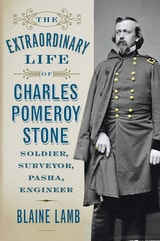
The Extraordinary Life of Charles Pomeroy Stone
Soldier, Surveyor, Pasha, EngineerBlaine Lamb
Westholme Publishing, 2016
Civil War Hero and Scapegoat, Surveyor of Mexico, General of the Egyptian Army, and Builder of the Statue of Liberty’s Pedestal
In the winter of 1861, as the secession crisis came to a head, an obscure military engineer, Charles Pomeroy Stone, emerged as the rallying point for the defense of Washington, D.C. against rebel attack. He was protector of the newly elected president and right-hand man of the army’s commanding general, General Winfield Scott, under whom he had served with distinction during the Mexican–American War. Nevertheless, with in a year, this same hero sat in a military prison accused of incompetence and possible treason.
Like other Union officers, Stone had the misfortune to run afoul of radical politicians in the nation’s capital who sought to control the war effort by undermining the professional military establishment. Their weapon, the Joint Committee on the Conduct of the War, applied a litmus test of commitment to abolition, loyalty to the Republican Party and battlefield success for the retention and promotion of army commanders. Stone, a Democrat who did not see the conflict as a crusade against slavery, and who lost his only battle, failed on all counts.
Readers of Civil War history know Stone best for his mistreatment at the hands of the Joint Committee.When his name appears, it is almost always in connection with the battle at Ball’s Bluff, Virginia, during which a close associate of Lincoln’s was killed, and its aftermath. His story, however, goes far beyond that engagement. In The Extraordinary Life of Charles Pomeroy Stone: Soldier, Surveyor, Pasha, Engineer that ranges from the Halls of Montezuma to Gold Rush California, and from the pyramids of Egypt to the foot of the Statue of Liberty, historian Blaine Lamb brings to light the many facets of Stone’s remarkable life and career. He weaves into the narrative such characters as Ulysses S. Grant,William Tecumseh Sherman, Abraham Lincoln,Winfield Scott, Alexander von Humboldt, Thaddeus Lowe, Chinese Gordon, Khedive Ismail, and Frederic Auguste Bartholdi. But the center of this tale of nineteenth-century adventure, exploration, war, and intrigue remains Stone himself, a man of honor, steadfast loyalty, and tragic innocence.
[more]

The Iron Rose
The Extraordinary Life of Charlotte Ross, MDFred Edge
University of Manitoba Press, 1992
[more]
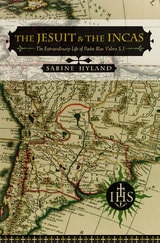
The Jesuit and the Incas
The Extraordinary Life of Padre Blas Valera, S.J.Sabine Hyland
University of Michigan Press, 2004
In the spirit of justice Blas Valera broke all the rules-and paid with his life. Hundreds of years later, his ghost has returned to haunt the official story. But is it the truth, and will it set the record straight?
This is the tale of Father Blas Valera, the child of a native Incan woman and Spanish father, caught between the ancient world of the Incas and the conquistadors of Spain. Valera, a Jesuit in sixteenth-century Peru, believed in what to his superiors was pure heresy: that the Incan culture, religion, and language were equal to their Christian counterparts.
As punishment for his beliefs he was imprisoned, beaten, and, finally, exiled to Spain, where he died at the hands of English pirates in 1597.
Four centuries later, this Incan chronicler had been all but forgotten, until an Italian anthropologist discovered some startling documents in a private Neapolitan collection. The documents claimed, among other things, that Valera's death had been faked by the Jesuits; that he had returned to Peru; and, intriguingly, while there had taught his followers that the Incas used a secret phonetic quipu-a record-keeping device of the Inca empire-to record history.
Far from settling anything, the documents created an international sensation among scholars and led to bitter disputes over how they should be assessed. Are they forgeries, authentic documents, or something in between? If genuine, they will radically reform our view of Inca culture and Valera. The author insightfully examines the evidence, showing how fact and fiction intertwine, and brings the dimly understood history of this author-priest to light.
Sabine Hyland is Co-director of a multidisciplinary project studying the Chanka people of Peru. She holds a doctoral degree in anthropology from Yale, and is Assistant Professor of Anthropology at St. Norbert College.
[more]