Results by title
14 books match the query 'Eyes'
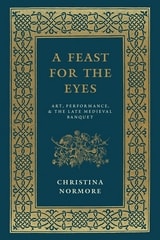
A Feast for the Eyes
Art, Performance, and the Late Medieval BanquetChristina Normore
University of Chicago Press, 2015
A Feast for the Eyes is the first book-length study of the court banquets of northwestern Europe in the fourteenth and fifteenth centuries. Christina Normore draws on an array of artworks, archival documents, chroniclers’ accounts, and cookbooks to re-create these events and reassess the late medieval visual culture in which banquets were staged. Feast participants, she shows, developed sophisticated ways of appreciating artistic skill and attending to their own processes of perception, thereby forging a court culture that delighted in the exercise of fine aesthetic judgment.
Challenging modern assumptions about the nature of artistic production and reception, A Feast for the Eyes yields fresh insight into the long history of multimedia work and the complex relationships between spectacle and spectators.
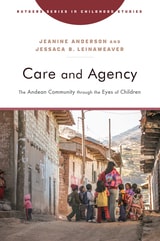
Care and Agency
The Andean Community through the Eyes of ChildrenJeanine Anderson
Rutgers University Press, 2025
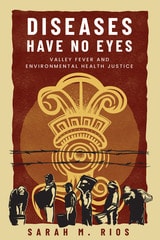
Diseases Have No Eyes
Valley Fever and Environmental Health JusticeSarah M. Rios
Temple University Press, 2026
Diseases Have No Eyes investigates how communities in Central Valley, California deal with Valley Fever, a painful illness caused by a soil fungus. The airborne disease’s symptoms can last from two months to a patient’s lifetime and may be fatal. Nearly a third of the national cases are reported in California, where those infected are disproportionately farmworkers and people incarcerated in the region. Poverty, pollution, and prison expose these groups to cumulative environmental and health risks that deny Valley Fever patients adequate medical treatment.
Sarah M. Rios examines how these populations face racial health disparities and develop strategies of care. She connects environmental justice activists as well as prison advocates and abolitionists who mobilize protests and issue calls to action to the past and ongoing efforts for medical autonomy and healthy communities. Diseases Have No Eyes emphasizes that vulnerable groups have developed an expertise and understanding of Valley Fever out of necessity. In the process, these community members offer an alternative public health response that extends beyond the individual body.
In the series Insubordinate Spaces
Ears, Eyes, and Hands
Reflections on Language, Literacy, and LinguisticsDeborah L. Wolter
Gallaudet University Press, 2018
Wolter reveals and rectifies the impact of deficit mindsets in the educational system regarding race, ethnicity, economic status, gender, and disability. As a literacy specialist, she works with students who fall through the cracks in a system that strives to embrace the diverse backgrounds and abilities found in the classroom. Her passion for engaging students and cultivating literacy shines in the stories she tells, which serve as parables that allow readers to evaluate their own attitudes and assumptions. Educators, parents, and community members will benefit from Wolter’s examination of sociolinguistics and language privilege as she identifies how ethnocentrism and ableism are contributing to negative educational outcomes for some students. With humor and warmth, she offers a path toward approaching language and listening as a gateway to connection and understanding, both inside the classroom and beyond.
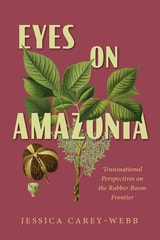
Eyes on Amazonia
Transnational Perspectives on the Rubber Boom FrontierJessica Carey-Webb
Vanderbilt University Press, 2024
Eyes on Amazonia operates in cultural geography, ecocriticism, and visual cultural analysis. The diverse and intriguing documents and images examined in this book capture the modernizing project of this region at a crucial juncture in its long history: the early twentieth-century rubber boom.
In the Eyes of God
A Study on the Culture of SufferingBy Fernando Escalante Gonzalbo
University of Texas Press, 2006
"Every culture needs to appropriate the universal truth of human suffering," says Fernando Escalante, ". . . to give its own meaning to this suffering, so that human existence is bearable." Originally published in Spanish as La mirada de Dios: Estudios sobre la cultura del sufrimiento, this book is a remarkable study of the evolution of the culture of suffering and the different elements that constitute it, beginning with a reading of Rousseau and ending with the appearance of the Shoah in the Western consciousness—"The memory endures, and this constitutes a fundamental transition for the Western conscience: we have witnessed."
Drawing on writings from the Greeks to Cervantes, Voltaire to Nietzsche, and Freud to William James, Escalante combines his considerable knowledge of politics and political theory with a vast array of literary examples to arrive at an intellectual understanding of the history and meaning of suffering. His investigation encompasses the rise of popular politics, the role of messianism in modern nationalism, and the contemporary implications of the Shoah.
This book will appeal to a wide audience: students of political theory, humanism, and philosophy, as well as the general reader interested in a glimpse into the mind of a highly original Latin American thinker.

India in the Eyes of Europeans
Conceptualization of Religion in Theology and Oriental StudiesMartin Fárek
Karolinum Press, 2022
In India in the Eyes of Europeans, Martin Fárek argues that when Western scholars interpret Indian traditions, they actually present distorted reflections of their own European culture, despite their attempts at unbiased objectivity. This distortion is clearest in the way India is viewed primarily through a religious lens—a lens fashioned from an implicitly Christian design. While discussing the current international dialogue on the topic and the work of such scholars as S. N. Balagangadhara, Fárek’s study presents the results of original research on several key topics: the problems in assigning religious significance to the Indian traditions that gave rise to Hinduism and Buddhism; Europeans’ questioning of Indians’ historical consciousness; the current debate surrounding the arrival of the Aryans in India; and controversial interpretations of the work of the reformer Rammohan Raj. The result is a provocative study that should prove fascinating to Indologists, theologians, anthropologists, and anyone interested in the history of thought.
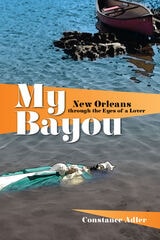
My Bayou
New Orleans through the Eyes of a LoverConstance Adler
Michigan State University Press, 2012
A vividly described and intensely personal memoir, My Bayou charts a personal and spiritual transformation along the fabled banks of Bayou Saint John in New Orleans. When Constance Adler moves to New Orleans, she begins what becomes a lasting love affair with the city, and especially the bayou—a living entity and the beating heart of local culture. Rites of passage, celebrations, mysterious accidents, and magic all take place on its banks, leading Adler to a vibrant awareness of the power of being part of a community. That faith is tested in the wake of Hurricane Katrina, and is ultimately proven right, as Bayou Saint John begins to rebuild.

Old China Through the Eyes of a Storyteller
Julie Moss Herrera
Parkhurst Brothers, Inc., 2012
“Having traveled on the same People to People Ambassador journey to China with Julie, I have seen Julie's anthology from inception to fruition. It is a masterful, engaging, informative and scholarly addition to our understanding and appreciation of Chinese culture, particularly storytelling and folk traditions, from ancient days to today. Practicing storytellers will especially appreciate her tips for telling and context clues at the end of each story.”
--Judith Heineman, storyteller, producer and Illinois Humanities Road Scholar
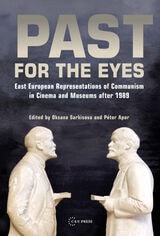
Past for the Eyes
East European Representations of Communism in Cinema and Museums After 1989Oksana Sarkisova
Central European University Press, 2008
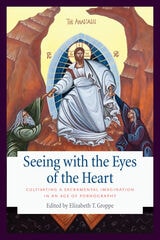
Seeing with the Eyes of the Heart
Cultivating a Sacramental Imagination in an Age of PornographyElizabeth T. Groppe
Catholic University of America Press, 2020
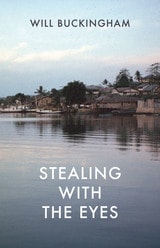
Stealing with the Eyes
Imaginings and Incantations in IndonesiaWill Buckingham
Haus Publishing, 2018
Through his encounters with these remarkable craftsmen—which in relating her also interweaves with Tanimbarese history, myth, and philosophy dating back to ancient times— we are shown the forces at play in all of our lives: the struggle between the powerful and the powerless, the tension between the past and the future, and how to make sense of a world that is in constant flux.
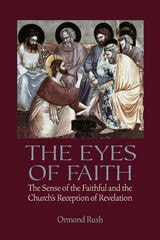
The Eyes of Faith
The Sense of the Faithful and the Church's Reception of RevelationOrmond Rush
Catholic University of America Press, 2009
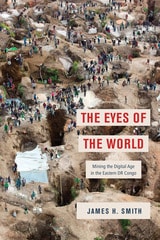
The Eyes of the World
Mining the Digital Age in the Eastern DR CongoJames H. Smith
University of Chicago Press, 2022
The digital devices that, many would argue, define this era exist not only because of Silicon Valley innovations but also because of a burgeoning trade in dense, artisanally mined substances like tantalum, tin, and tungsten. In the tentatively postwar Eastern DR Congo, where many lives have been reoriented around artisanal mining, these minerals are socially dense, fueling movement and innovative collaborations that encompass diverse actors, geographies, temporalities, and dimensions. Focusing on the miners and traders of some of these “digital minerals,” The Eyes of the World examines how Eastern Congolese understand the work in which they are engaged, the forces pitted against them, and the complicated process through which substances in the earth and forest are converted into commodified resources. Smith shows how violent dispossession has fueled a bottom-up social theory that valorizes movement and collaboration—one that directly confronts both private mining companies and the tracking initiatives implemented by international companies aspiring to ensure that the minerals in digital devices are purified of blood.