Results by title
2 books match the query 'Ezrahi, Sidra DeKoven'
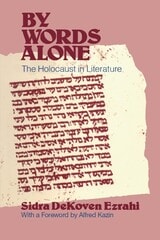
By Words Alone
The Holocaust in LiteratureSidra DeKoven Ezrahi
University of Chicago Press, 1980
The creative literature that evolved from the Holocaust constitutes an unprecedented encounter between art and life. Those who wrote about the Holocaust were forced to extend the limits of their imaginations to encompass unspeakably violent extremes of human behavior. The result, as Ezrahi shows in By Words Alone, is a body of literature that transcends national and cultural boundaries and shares a spectrum of attitudes toward the concentration camps and the world beyond, toward the past and the future.
[more]
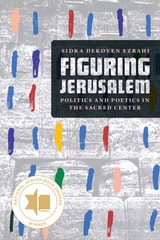
Figuring Jerusalem
Politics and Poetics in the Sacred CenterSidra DeKoven Ezrahi
University of Chicago Press, 2022
Figuring Jerusalem explores how Hebrew writers have imagined Jerusalem, both from the distance of exile and from within its sacred walls.
For two thousand years, Hebrew writers used their exile from the Holy Land as a license for invention. The question at the heart of Figuring Jerusalem is this: how did these writers bring their imagination “home” in the Zionist century? Sidra DeKoven Ezrahi finds that the same diasporic conventions that Hebrew writers practiced in exile were maintained throughout the first half of the twentieth century. And even after 1948, when the state of Israel was founded but East Jerusalem and its holy sites remained under Arab control, Jerusalem continued to figure in the Hebrew imagination as mediated space. It was only in the aftermath of the Six Day War that the temptations and dilemmas of proximity to the sacred would become acute in every area of Hebrew politics and culture.
Figuring Jerusalem ranges from classical texts, biblical and medieval, to the post-1967 writings of S. Y. Agnon and Yehuda Amichai. Ultimately, DeKoven Ezrahi shows that the wisdom Jews acquired through two thousand years of exile, as inscribed in their literary imagination, must be rediscovered if the diverse inhabitants of Jerusalem are to coexist.
[more]