Results by title

3 books match the query 'Falconer, Heather M.'
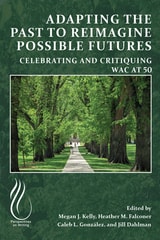
cover of Adapting the Past to Reimagine Possible Futures: Celebrating and Critiquing WAC at 50

Adapting the Past to Reimagine Possible Futures

Celebrating and Critiquing WAC at 50

Megan J. Kelly

University Press of Colorado, 2024
Developed from presentations at the Fifteenth International Writing Across the Curriculum Conference, this edited collection celebrates the 50th anniversary of the WAC movement while also identifying innovative directions for writing pedagogies, program building and impact, and program mobilization. Contributors reflect on the evolution of WAC as an educational movement as well as the challenges and possibilities facing WAC programs as they respond to the shifting contexts of higher education. The chapters in this collection—found in sections on faculty development, classroom implications, and institutional considerations—offer a range of practices, pedagogies, frameworks, and models for readers who are invested in building and sustaining WAC programs that impact their college and university campuses through cultures of writing. Adapting the Past to Reimagine Possible Futures engages topics such as program assessment, professionalization, and interdisciplinary collaborations, and connections with creative writing. Its 17 chapters testify to WAC’s persistence, resilience, and impact in a dynamic educational landscape.
[more]
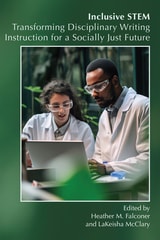
cover of Inclusive STEM: Transforming Disciplinary Writing Instruction for a Socially Just Future

Inclusive STEM

Transforming Disciplinary Writing Instruction for a Socially Just Future

Heather M. Falconer

University Press of Colorado, 2025
Encompassing a diversity of STEM education contexts, this edited collection offers instructional strategies and assignments for creating equitable, inclusive classrooms. With a focus on writing instruction, each chapter presents ways to create space for individuals and voices historically marginalized in STEM disciplines. Contributions move beyond typical disciplinary writing and content instruction and instead focus on work that is intentionally, sometimes subtly, disrupting the assumptions of STEM writing, communication, and knowledge-making. Contributors consider how we can create a sense of belonging for students from groups that have historically been kept out of these disciplines, how faculty can consciously create space for student voices to be heard, and how to do so with an eye toward the discursive practices of STEM disciplines. The chapters in Inclusive STEM offer specific cases—classroom- or research-based contexts—that describe their intents and goals, the interventions they enacted, how students responded, and the unexpected elements that presented themselves. These chapters also reveal the ugly bits: sharing lessons learned and errors made. The collection targets educators who teach disciplinary content, as well as writing in STEM.
[more]
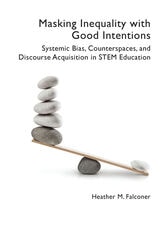
cover of Masking Inequality with Good Intentions: Systemic Bias, Counterspies, and Discourse Acquisition in STEM Education

Masking Inequality with Good Intentions

Systemic Bias, Counterspies, and Discourse Acquisition in STEM Education

Heather M. Falconer

University Press of Colorado, 2023

In Masking Inequality with Good Intentions, Heather M. Falconer examines the impact of systemic bias on disciplinary discourse acquisition and identity development by asking “How do the norms and expectations of higher education and STEM, specifically, impact the development of scientific identity and discursive skill?” and “What role do societal markers like race and gender play in the negotiation of identity in STEM learning environments?”

Drawing on the experiences and writings of six students from historically underrepresented backgrounds in STEM, each participating in an undergraduate research program, Falconer discusses how programmatic and pedagogical choices can work to either further marginalize students and disrupt their writing and identity development as scientists or create counterspaces—spaces where students can thrive and push back against dominant, oppressive forces. Practical applications for pedagogy, curriculum, and program design are included.

[more]