Results by title
22 books match the query 'Family farms'

Blue Shadows Farm
A NovelJerry Apps
University of Wisconsin Press, 2009
Silas Starkweather, a Civil War veteran, is drawn to Wisconsin and homesteads 160 acres in Ames County, where he is known as the mysterious farmer forever digging holes. After years of hardship and toil, however, Silas develops a commitment to farming his land and respect for his new community. When Silas’s son Abe inherits Blue Shadows Farm he chooses to keep the land out of reluctant necessity, distilling and distributing “purified corn water” throughout Prohibition and the Great Depression in order to stay solvent. Abe’s daughter, Emma, willingly takes over the farm after her mother’s death. Emma’s love for this place inspires her to open the farm to school-children and families who share her respect for it. As she considers selling the land, Emma is confronted with a difficult question—who, through thick and thin, will care for Blue Shadows Farm as her family has done for over a century? In the midst of a controversy that disrupts the entire community, Emma looks into her family’s past to help her make crucial decisions about the future of its land.
Through the story of the Starkweather family’s changing fortunes, and each generation’s very different relationship with the farm and the land, Blue Shadows Farm is in some ways the narrative of all farmers and the increasingly difficult challenges they face as committed stewards of the land.
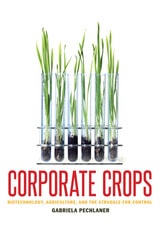
Corporate Crops
Biotechnology, Agriculture, and the Struggle for ControlBy Gabriela Pechlaner
University of Texas Press, 2012
Biotechnology crop production area increased from 1.7 million hectares to 148 million hectares worldwide between 1996 to 2010. While genetically modified food is a contentious issue, the debates are usually limited to health and environmental concerns, ignoring the broader questions of social control that arise when food production methods become corporate-owned intellectual property. Drawing on legal documents and dozens of interviews with farmers and other stakeholders, Corporate Crops covers four case studies based around litigation between biotechnology corporations and farmers. Pechlaner investigates the extent to which the proprietary aspects of biotechnologies—from patents on seeds to a plethora of new rules and contractual obligations associated with the technologies—are reorganizing crop production.
The lawsuits include patent infringement litigation launched by Monsanto against a Saskatchewan canola farmer who, in turn, claimed his crops had been involuntarily contaminated by the company’s GM technology; a class action application by two Saskatchewan organic canola farmers launched against Monsanto and Aventis (later Bayer) for the loss of their organic market due to contamination with GMOs; and two cases in Mississippi in which Monsanto sued farmers for saving seeds containing its patented GM technology. Pechlaner argues that well-funded corporate lawyers have a decided advantage over independent farmers in the courts and in creating new forms of power and control in agricultural production. Corporate Crops demonstrates the effects of this intersection between the courts and the fields where profits, not just a food supply, are reaped.
Debt and Dispossession
Farm Loss in America's HeartlandKathryn Marie Dudley
University of Chicago Press, 2000
The farm crisis of the 1980s was the worst economic disaster to strike rural America since the Depression—thousands of farmers lost their land and homes, irrevocably altering their communities and, as Kathryn Marie Dudley shows, giving rise to devastating social trauma that continues to affect farmers today. Through interviews with residents of an agricultural county in western Minnesota, Dudley provides an incisive account of the moral dynamics of loss, dislocation, capitalism, and solidarity in farming communities.
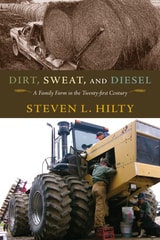
Dirt, Sweat, and Diesel
A Family Farm in the Twenty-first CenturySteven L. Hilty
University of Missouri Press, 2016
With very few people engaged in agriculture today, it is no surprise that most Americans have little understanding of the challenges that modern farmers face. This book provides readers a glimpse into life on a modern Missouri farm where a variety of grains, grass seed, corn, and cattle are produced. All of the conversations, events, and descriptions are drawn from the author’s experience working alongside and observing this father and son family farm operation during the course of a year.
Farming today is technologically complex and requires a broad set of skills that range from soil conservation, animal husbandry, and mechanics to knowledge of financial markets and computer technology. The focus on skills, in addition to the size of the financial risks, and the number of unexpected challenges along the way provides readers with a new perspective and appreciation for modern farm life.
During Wind and Rain
The Jones Family Farm in the Arkansas Delta 1848-2006Margaret Jones Bolsterli
University of Arkansas Press, 2008
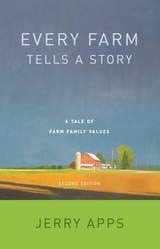
Every Farm Tells a Story
A Tale of Family ValuesJerry Apps
Wisconsin Historical Society Press, 2018
“Do your chores without complaining. Show up on time. Do every job well. Always try to do better. Never stop learning. Next year will be better. Care for others, especially those who have less than you. Accept those who are different from you. Love the land.”
In this paperback edition of a beloved Jerry Apps classic, the rural historian captures the heart and soul of life in rural America. Inspired by his mother’s farm account books—in which she meticulously recorded every farm purchase—Jerry chronicles life on a small farm during and after World War II. Featuring a new introduction exclusive to this 2nd edition, Every Farm Tells a Story reminds us that, while our family farms are shrinking in number, the values learned there remain deeply woven in our cultural heritage.
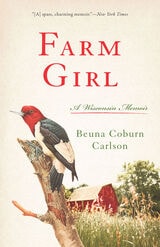
Farm Girl
A Wisconsin MemoirBeuna Coburn Carlson
University of Wisconsin Press, 2020
Farm Girl is Beuna "Bunny" Coburn Carlson's loving tribute to the gently rolling hills of western Wisconsin. With an inviting and fluid voice, she shares intimate moments of happinesses from her childhood: collecting butternuts for homemade maple candy, watching her father read by the flickering light of a kerosene lamp, and the joy of finding a juicy orange at the bottom of a Christmas stocking. Underlying each vignette is the courage of a strong family surviving adversity and finding comfort in one another. Hers is a memoir that readers can dip in and out of with pleasure.
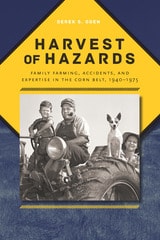
Harvest of Hazards
Family Farming, Accidents, and Expertise in the Corn Belt, 1940-1975Derek S. Oden
University of Iowa Press, 2017
In this study of the farm safety movement in the Corn Belt, historian Derek Oden examines why agriculture was so dangerous and why improvements were so difficult to achieve. Because farmers were self-employed business owners whose employees were mainly family members; because they lived far from aid such as hospitals and fire stations; and because they had to manage such a diverse array of new technologies, they could not easily adopt the workplace safety and public health reforms designed for factories and urban settings. In response, beginning in the 1940s, farmers and a new breed of farm safety specialists relied upon an increasingly elaborate educational campaign to lessen injuries and illnesses on the farm.
Several government, business, and nonprofit organizations—from the US Department of Agriculture to the National Safety Council and 4-H and the Future Farmers of America—worked together to publicize both the dangers of farming and the information farmers needed to stay safe while driving tractors, applying anhydrous ammonia, or repairing machinery. By the 1960s, however, the partnership began to break down, and by the 1970s the safety movement became increasingly contested as professional and policy divisions emerged. This groundbreaking study incorporates agriculture into the histories of occupational safety and public health.
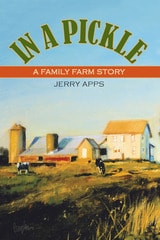
In a Pickle
A Family Farm StoryJerry Apps
University of Wisconsin Press, 2008
Listening to the Land
Stories from the Cacapon and Lost River ValleyJamie S. Ross
West Virginia University Press, 2013
Although still rural and mostly forested, development and land fragmentation in the Cacapon and Lost River Valley have increased over the last decades. Listening to the Land: Stories from the Cacapon and Lost River Valley is a conversation between the people of this Valley and their land, chronicling this community’s dedication to preserving its farms, forests, and rural heritage.
Memory of Trees
A Daughter’s Story of a Family FarmGayla Marty
University of Minnesota Press, 2013
Memory of Trees is a multigenerational story of Gayla Marty’s family farm near Rush City, Minnesota. Cleared from woodlands by her great-grandfather Jacob in the 1880s, the farm passed to her father, Gordon, and his brother, Gaylon. Hewing to a conservative Swedish Baptist faith, the two brothers worked the farm, raising their families in side-by-side houses.
As the years go by, the families grow—and slowly grow apart. Uncle Gaylon, more doctrinaire in his faith, rails against the permissiveness of Gayla’s parents. Financial tensions arise as well when the farm economy weakens and none of the children is willing or able to take over. Gayla is encouraged to leave for college, international travel, and city life, but the farm remains essential to her sense of self, even after the family decides to sell the land.
When Gaylon has an accident on a tractor, Gayla becomes driven to reconnect with him and to find out why she and her uncle—once so close but now estranged—were the only two members of the family who had resisted selling the land. Guided by vivid images of the farm’s many beautiful trees, she pores over sacred and classical works as well as layers of her own memory to understand the forces that have transformed the American landscape and culture in the last half of the twentieth century. Beneath the belief in land as a giver of life and blessing, she discovers a powerful anxiety born of human uprootedness and loss. Movingly written, Memory of Trees will resonate for many with attachments to small towns or farms, whether they continue to work the land or, like so many, have left for a different life.
Michigan Family Farms and Farm Buildings
Landscapes of the Heart and MindHemalata Dandekar
University of Michigan Press, 2010
Eight family-farm case studies display farm buildings' relationship to the land they sit on, their function on the farm, the materials they're made with, the farm enterprises themselves, and the families who own them. Photographs, plans, elevations, and sections of typical, exemplary traditional farm buildings show the aesthetic and architectural qualities of those types of buildings across the state.
The ways in which the buildings serve the productive activities of the farm, shelter and nourish the people and livestock, yield a living, and enable the aspirations of farm people are shown in the words and photographs of the farmers themselves. The buildings form a window into the lives of Michigan's family farms and into the hearts and minds of the people who have lived and worked in them their entire lives.
More Stories from the Round Barn
Jacqueline Dougan Jackson
Northwestern University Press, 2002
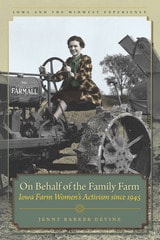
On Behalf of the Family Farm
Iowa Farm Women's Activism since 1945Jenny Barker Devine
University of Iowa Press, 2013
Focusing on women in four national farm organizations in Iowa—the Farm Bureau, the Farmers Union, the National Farm Organization, and the Porkettes—Devine highlights specific moments in time when farm women had to reassess their roles and strategies for preserving and improving their way of life. Rather than retreat from the male-dominated world of agribusiness and mechanized production, postwar women increasingly asserted their identities as agricultural producers and demanded access to public spaces typically reserved for men.
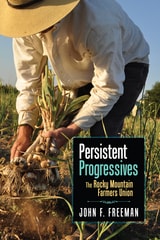
Persistent Progressives
The Rocky Mountain Farmers UnionJohn F. Freeman
University Press of Colorado, 2015
Using data spanning decades, author John Freeman covers the founding of the RMFU in 1907 until the present, demonstrating how members continually sought to control the means of production and marketing by forming cooperatives, providing consumer services, and engaging in politics. Powering this evolution was a group of “practical idealists”—the Farmers Union leaders and titular persistent progressives who shaped the organization’s growth and expansion. Initiated by Jim Patton, who brought the organization out of its oppositional roots and into its cooperative advocacy, the RMFU passed to John Stencel and then David Carter, joining hands with agricultural conservationists and small organic producers along the way to carry the torch for progressive agrarianism in today’s urbanized world. Shaken but undeterred by some notable failures, its leadership remains convinced of the efficacy of cooperatives as a means to achieve justice for all.
Discussing the broader social, economic, political, and environmental issues related to farming, ranching, and urbanization, Persistent Progressives seamlessly blends regional history with ongoing issues of agricultural and economic development.
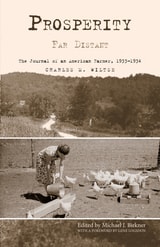
Prosperity Far Distant
The Journal of an American Farmer, 1933–1934Charles M. Wiltse
Ohio University Press, 2012
Fresh from receiving a doctorate from Cornell University in 1933, but unable to find work, Charles M. Wiltse joined his parents on the small farm they had recently purchased in southern Ohio. There, the Wiltses scratched out a living selling eggs, corn, and other farm goods at prices that were barely enough to keep the farm intact.
In wry and often affecting prose, Wiltse recorded a year in the life of this quintessentially American place during the Great Depression. He describes the family’s daily routine, occasional light moments, and their ongoing frustrations, small and large—from a neighbor’s hog that continually broke into the cornfields to the ongoing struggle with their finances. Franklin Roosevelt’s New Deal had little to offer small farmers, and despite repeated requests, the family could not secure loans from local banks to help them through the hard economic times. Wiltse spoke the bitter truth when he told his diary, “We are not a lucky family.” In this he represented millions of others caught in the maw of a national disaster.
The diary is introduced and edited by Michael J. Birkner, Wiltse’s former colleague at the Papers of Daniel Webster Project at Dartmouth College, and coeditor, with Wiltse, of the final volume of Webster’s correspondence.
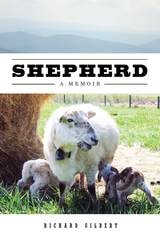
Shepherd
A MemoirRichard Gilbert
Michigan State University Press, 2014

Simple Things
Lessons from the Family FarmJerry Apps
Wisconsin Historical Society Press, 2018
Six Generations Here
A Farm Family RemembersMarjorie McLellan
Wisconsin Historical Society Press, 1997
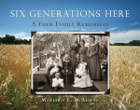
Six Generations Here: A Farm Family Remembers
by Marjorie L. McLellan, with an essay by Kathleen Neils Conzen and a foreword by Dan Freas
Discover the story of the Krueger family, as images of farm, family, and landscape reveal the struggles of rural immigrant life in Wisconsin. Drawing on snapshots, memorabilia, and interviews, Six Generations Here brings together the voices of the past and the present to create a distinctive portrait of Wisconsin farm life.
Leaving their German home in 1851, the Kruegers came to America for economic opportunity. But like other immigrant families, they struggled to make ends meet. Only with the whole family helping out did they manage to get their Watertown farm up and running. By the turn of the century, they had achieved a life of middle-class comfort in the midst of the rigors of dairy farming. Over the generations, the Kruegers incorporated their past traditions with the needs of the present, adapting to the challenges of rural American life and, when necessary, breaking from the past. Despite these changes, their commitment to hard work and family persisted, shaped their identity, and ensured their success.
Through photographs, documents, and family stories, the Kruegers left a deep history of who they were and how they sought to be remembered. Follow their family through six generations as they compile a rich and varied record of Wisconsin life.
Stories from the Round Barn
Jacqueline Dougan Jackson
Northwestern University Press, 2000
The Future of Family Farms
Practical Farmers' Legacy Letters ProjectTeresa Opheim
University of Iowa Press, 2016
The Farm Legacy Letters project, developed by the member-driven nonprofit Practical Farmers of Iowa, is designed to help farmers and farmland owners think about their farm’s future and talk about it with their families. An essential complement to handbooks on business succession, this book gathers the letters and stories of midwestern families about the land they cherish—how they acquired it, what they treasure most about it, and their hopes for its future. Some of the writers descend from families who have owned a particular patch of the earth since the 1800s, while others became farmland owners more recently—one as recently as 2015. Some are no longer farmland owners at all, because—after careful thought about what mattered most to them—they sold their land to the next generation of farmers.
All of these writers hope that, by sharing their farmland legacies, they will encourage others to ponder and then write about the histories, accomplishments, challenges, and hopes for their farmland for the generations who come after they are gone.
The Struggle for Food Sovereignty
Alternative Development and the Renewal of Peasant Societies TodayEdited by Remy Herrera and Kin Chi Lau
Pluto Press, 2015