Results by title
145 books match the query 'Family relationships' and 6 start with a
A House on Stilts
Mothering in the Age of Opioid AddictionPaula Becker
University of Iowa Press, 2019
More than 2.5 million Americans are addicted to opioids, some half-million of these to heroin. For many of them, their drug addiction leads to lives of demoralization, homelessness, and constant peril. For parents, a child’s addiction upends family life, catapulting them onto a path no longer prescribed by Dr. Spock, but by Dante’s Inferno. Within this ten-year crucible, Paula is transformed by an excruciating, inescapable truth: the difference between what she can do and what she cannot do.
A Life of Control
Stories of Living with DiabetesAlan L. Graber
Vanderbilt University Press, 2010
The people who describe their experiences with diabetes range from teenagers to physicians, immigrants, athletes, pregnant women, accountants, a prisoner, and a dairy farmer. They speak of the variety of ways they handle monitoring, diet, insurance coverage, sports, and fashion. Some talk of how they manage to drive trucks for a living or, for recreation, fly airplanes or go spelunking. Many speak frankly of their anxieties and frustrations.
The authors acknowledge that both the patient and clinician have a story about their relationship, and describe the richness and tension in their interaction. Families, too, are sources of both support and conflict. These relationships are acknowledged in the organization of the book, which is divided into sections defined by the main elements of diabetes control: patient self-determination, the role of the family, the social situation, and the patient-clinician encounter.
The book provides a wealth of information about diabetes, including material on prevention, complications, and new technology, as well as a superb glossary, but it is not intended as a textbook on diabetes or as a self-care manual for patients. Rather the book provides a textured account of the health professional's view of diabetes control and the perspective of the patient whose life is complicated by diabetes.
A Nation’s Undesirables
Mixed-Race Children and Whiteness in the Post-Nazi EraTracey Owens Patton
The Ohio State University Press, 2024
An innovative investigation of the entangled histories of race, transnational adoption, and post-Nazi Germany.
In a moving blend of family history and cutting-edge scholarship, Tracey Owens Patton’s A Nation’s Undesirables synthesizes work in rhetorical postmemory studies, critical adoption studies, Afrofuturism, and more to tell the story of her mother and aunt, Lore and Lilli. Two of thousands of children born to white German women and Black American men after World War II, the twins moved to the United States at age seven, where their mother renounced her parental rights and put them into the adoption system. They did not see her again for fifty-two years.Patton takes up the twins’ story and their reckoning with their mixed-race, Black German identity to disrupt standard narratives around World War II, Black experiences in Germany, and race and adoption. Combining family interviews, historical artifacts, and autoethnographic reflection, Patton composes a new narrative of women and Black German children in the postwar era. In examining the systemic racism of Germany’s efforts to move children like Lore and Lilli out of the country—and the suppression of German women’s bodily autonomy—Patton amplifies the once unacknowledged identities of these Black German children to broaden our understanding of citizenship, racism, and sexism after World War II.
A Wall Is Just a Wall
The Permeability of the Prison in the Twentieth-Century United StatesReiko Hillyer
Duke University Press, 2024
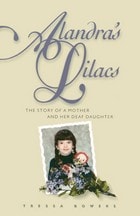
Alandra's Lilacs
The Story of a Mother and Her Deaf DaughterTressa Bowers
Gallaudet University Press, 1999
When, in 1968, 19-year-old Tressa Bowers took her baby daughter to an expert on deaf children, he pronounced that Alandra was “stone deaf,” she most likely would never be able to talk, and she probably would not get much of an education because of her communication limitations. Tressa refused to accept this stark assessment of Alandra’s prospects. Instead, she began the arduous process of starting her daughter’s education.
Economic need forced Tressa to move several times, and as a result, she and Alandra experienced a variety of learning environments: a pure oralist approach, which discouraged signing; Total Communication, in which the teachers spoke and signed simultaneously; a residential school for deaf children, where Signed English was employed; and a mainstream public school that relied upon interpreters. Changes at home added more demands, from Tressa’s divorce to her remarriage, her long work hours, and the ongoing challenge of complete communication within their family. Through it all, Tressa and Alandra never lost sight of their love for each other, and their affection rippled through the entire family. Today, Tressa can triumphantly point to her confident, educated daughter and also speak with pride of her wonderful relationship with her deaf grandchildren. Alandra’s Lilacs is a marvelous story about the resiliency and achievements of determined, loving people no matter what their circumstances might be.
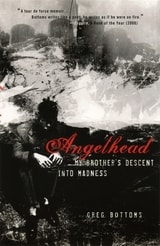
Angelhead
My Brother's Descent into MadnessGreg Bottoms
University of Chicago Press, 2005
A taut, powerful memoir of madness, Angelhead documents the violent, drug-addled descent of the author's brother, Michael, into schizophrenia. Beginning with Michael's first psychotic break—seeing God in his suburban bedroom window while high on LSD—Greg Bottoms recounts, in gripping, dramatic prose, the bizarre disappearances, suicide attempts, and the shocking crime that land Michael in the psychiatric wing of a maximum security prison. A work of nonfiction with the form and imagery of a novel, Angelhead enables the reader to witness not only the fragmenting of a mind, but of a family as well.