Results by title
6 books match the query 'Fan fiction'
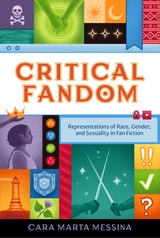
Critical Fandom
Representations of Race, Gender, and Sexuality in Fan FictionCara Marta Messina
University of Iowa Press, 2026
Critical Fandom positions fan authors as rhetoricians and fan fiction as an action. Every fan author navigates—implicitly or explicitly—the politics of their fandom, the media they love, their lived experiences, digital technologies, reader expectations, and a larger culture. To better understand critical fans, Cara Marta Messina analyzes Archive of Our Own tagging practices, fan fictions, and interviews from four different fandoms.
Fans of The Legend of Korra celebrate queer relationships while understanding representation is just the first step in the face of systemic homophobia. Game of Thrones fan authors challenge racism and heteronormativity in both the community and the show. In online forums for Black Panther, fans make space for sapphic romances and explore the humanity of Erik Killmonger, ultimately contending with harmful stereotypes of radical Black men. And the Our Flag Means Death fandom demonstrates how a show can flourish when it centers queerness, especially for trans fans. Even in these moments of joy, there’s conflict. Critical Fandom seeks to answer what comes next.
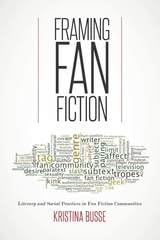
Framing Fan Fiction
Literary and Social Practices in Fan Fiction CommunitiesKristina Busse
University of Iowa Press, 2017
Framing Fan Fiction deploys personal history and the interpretations of specific stories to contextualize fan fiction culture and its particular forms of intertextuality and performativity. In doing so, it highlights the way fans use fan fiction’s reimagining of the source material to explore issues of identities and peformativities, gender and sexualities, within a community of like-minded people. In contrast to the celebration of originality in many other areas of artistic endeavor, fan fiction celebrates repetition, especially the collective creation and circulation of tropes.
An essential resource for scholars, Framing Fan Fiction is also an ideal starting point for those new to the study of fan fiction and its communities of writers.
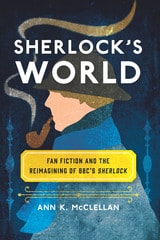
Sherlock's World
Fan Fiction and the Reimagining of BBC's SherlockAnn K. McClellan
University of Iowa Press, 2018
Sherlock Holmes remains more popular than ever some 130 years after the detective first appeared in print. These days, the iconic character’s staying power is due in large part to the success of the recent BBC series Sherlock, which brings the famous sleuth into the twenty-first century.
One of the most-watched television series in BBC history, Sherlock is set in contemporary London, where thirtysomething Sherlock and John (no longer fussy old Holmes and Watson), alongside New Scotland Yard, solve crimes with the help of smartphones, texting, online forums, and the internet. In their modernization of Sir Arthur Conan Doyle’s nineteenth-century world, Sherlock creators Stephen Moffatt and Mark Gatiss make London as much a character of their show as the actors themselves. The highly stylized series has inspired an impassioned fan community in Britain, the U.S., and beyond. Fans create and share their writings, which reimagine the characters in even more dramatic ways than the series can.
Interweaving fan fiction studies, world-building, and genre studies, Ann McClellan examines the hit series and the fan fiction it inspires. Using Sherlock to trace the changing face of fan fiction studies, McClellan’s book explores how far fans are willing to go to change the Sherlockian canon while still reinforcing its power and status as the source text. What makes Sherlock fanfic Sherlockian? How does it stay within the canon even while engaging in the wildest reimaginings? Sherlock’s World explores the boundaries between canon, genre, character, and reality through the lenses of fan fiction and world-building. This book promises to be a valuable resource for fan studies scholars, those who write fan fiction, and Sherlock fans alike.
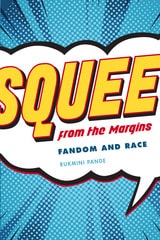
Squee from the Margins
Fandom and RaceRukmini Pande
University of Iowa Press, 2018
Rukmini Pande’s examination of race in fan studies is sure to make an immediate contribution to the growing field. Until now, virtually no sustained examination of race and racism in transnational fan cultures has taken place, a lack that is especially concerning given that current fan spaces have never been more vocal about debating issues of privilege and discrimination.
Pande’s study challenges dominant ideas of who fans are and how these complex transnational and cultural spaces function, expanding the scope of the field significantly. Along with interviewing thirty-nine fans from nine different countries about their fan practices, she also positions media fandom as a postcolonial cyberspace, enabling scholars to take a more inclusive view of fan identity. With analysis that spans from historical to contemporary, Pande builds a case for the ways in which non-white fans have always been present in such spaces, though consistently ignored.
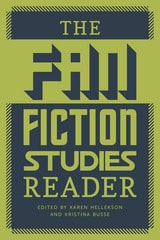
The Fan Fiction Studies Reader
Karen Hellekson and Kristina Busse
University of Iowa Press, 2014
Organized into four thematic sections, the essays address fan-created works as literary artifacts; the relationship between fandom, identity, and feminism; fandom and affect; and the role of creativity and performance in fan activities. Considered as literary artifacts, fan works pose important questions about the nature of authorship, the meaning of “originality,” and modes of transmission. Sociologically, fan fiction is and long has been a mostly female enterprise, from the fanzines of the 1960s to online forums today, and this fact has shaped its themes and its standing among fans. The questions of how and why people become fans, and what the difference is between liking something and being a fan of it, have also drawn considerable scholarly attention, as has the question of how fans perform their fannish identities for diverse audiences.
Thanks to the overlap between fan studies and other disciplines related to popular and cultural studies—including social, digital, and transmedia studies—an increasing number of scholars are turning to fan studies to engage their students. Fan fiction is the most extensively explored aspect of fan works and fan engagement, and so studies of it can often serve as a basis for addressing other aspects of fandom. These classic essays introduce the field’s key questions and some of its major figures. Those new to the field or in search of context for their own research will find this reader an invaluable resource.
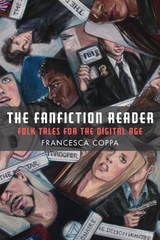
The Fanfiction Reader
Folk Tales for the Digital AgeFrancesca Coppa
University of Michigan Press, 2017