Results by title
2 books match the query 'Fang, Berlin'
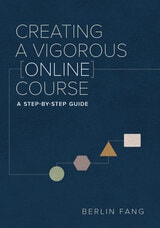
Creating a Vigorous Online Course
A Step-by-Step GuideBerlin Fang
Bridwell Press, 2026
Creating a Vigorous Online Course by Berlin Fang is a comprehensive, step-by-step guide for educators looking to build meaningful, engaging, and structurally sound online learning experiences. Drawing on decades of instructional design expertise and educational research, Fang bridges the gap between conceptual pedagogy and real-world teaching practices. The book is uniquely structured to walk educators through the entire course creation process—from planning and tool selection to assessment design, interaction strategies, and multimedia integration.
Unlike many overly technical or abstract resources, this book offers platform-agnostic guidance enriched with clear tasks, practical tips, checklists, and real examples. It emphasizes principles such as granularity, modular design, reusability, accessibility, and equivalence to in-person learning—all while respecting instructors' time and creativity.
Fang’s conversational tone and thoughtful analogies (like course design as translation or architecture) make complex ideas approachable, and his deep respect for both teachers and students is evident throughout. Whether you're teaching fully online, hybrid, HyFlex, or simply looking to digitize parts of your course, this book provides actionable strategies to craft student-centered experiences without sacrificing academic rigor.
An invaluable companion for K-12 educators, higher ed faculty, and instructional designers alike, Creating a Vigorous Online Course transforms course design from a technical burden into an empowering, iterative, and creative endeavor.
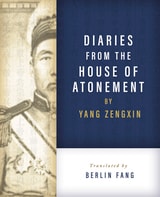
Diaries from the House of Atonement
By Zengxin Yang, translated by Berlin Fang
Bridwell Press, 2026
Diaries from the House of Atonement offers a rare glimpse into the intellectual world of Yang Zengxin (1864–1928), the pragmatic ruler who maintained relative stability in Xinjiang from the fall of the Qing dynasty until his assassination in 1928.
Rather than recounting his administration, Yang's diaries explore Confucian and Daoist thought, personal cultivation, political philosophy, and China's uncertain future. They reveal the intellectual principles that may have shaped his approach to governance, including his reflections on moral order, cultural tradition, and religion.
The diaries also show Yang's understanding of the Bagua (八卦) and the I Ching, showing how classical Chinese philosophy could inform practical life and political thought. This translation introduces English-language readers to Yang not merely as a regional ruler, but as a reflective thinker whose writings illuminate the encounter between Chinese tradition, political crisis, religious thought, and the search for social order.