Results by title
6 books match the query 'Fantastic'
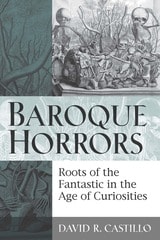
Baroque Horrors
Roots of the Fantastic in the Age of CuriositiesDavid R. Castillo
University of Michigan Press, 2011
"David Castillo takes us on a tour of some horrific materials that have rarely been considered together. He sheds a fantastical new light on the baroque."
---Anthony J. Cascardi, University of California Berkeley
"Baroque Horrors is a textual archeologist's dream, scavenged from obscure chronicles, manuals, minor histories, and lesser-known works of major artists. Castillo finds tales of mutilation, mutation, monstrosity, murder, and mayhem, and delivers them to us with an inimitable flair for the sensational that nonetheless rejects sensationalism because it remains so grounded in historical fact."
---William Egginton, Johns Hopkins University
"Baroque Horrors is a major contribution to baroque ideology, as well as an exploration of the grotesque, the horrible, the fantastic. Castillo organizes his monograph around the motif of curiosity, refuting the belief that Spain is a country incapable of organized scientific inquiry."
---David Foster, Arizona State University
Baroque Horrors turns the current cultural and political conversation from the familiar narrative patterns and self-justifying allegories of abjection to a dialogue on the history of our modern fears and their monstrous offspring. When life and death are severed from nature and history, "reality" and "authenticity" may be experienced as spectator sports and staged attractions, as in the "real lives" captured by reality TV and the "authentic cadavers" displayed around the world in the Body Worlds exhibitions. Rather than thinking of virtual reality and staged authenticity as recent developments of the postmodern age, Castillo looks back to the Spanish baroque period in search for the roots of the commodification of nature and the horror vacui that accompanies it. Aimed at specialists, students, and readers of early modern literature and culture in the Spanish and Anglophone traditions as well as anyone interested in horror fantasy, Baroque Horrors offers new ways to rethink broad questions of intellectual and political history and relate them to the modern age.
David Castillo is Associate Professor and Director of Graduate Studies in the Department of Romance Languages and Literatures at the University at Buffalo, SUNY.
Jacket art: Frederick Ruysch's anatomical diorama. Engraving reproduction "drawn from life" by Cornelius Huyberts. Image from the Zymoglyphic Museum.
Delirio—The Fantastic, the Demonic, and the Réel
The Buried History of Nuevo LeónBy Marie Theresa Hernández
University of Texas Press, 2002
Striking, inexplicable stories circulate among the people of Nuevo León in northern Mexico. Stories of conversos (converted Jews) who fled the Inquisition in Spain and became fabulously wealthy in Mexico. Stories of women and children buried in walls and under houses. Stories of an entire, secret city hidden under modern-day Monterrey. All these stories have no place or corroboration in the official histories of Nuevo León.
In this pioneering ethnography, Marie Theresa Hernández explores how the folktales of Nuevo León encode aspects of Nuevolenese identity that have been lost, repressed, or fetishized in "legitimate" histories of the region. She focuses particularly on stories regarding three groups: the Sephardic Jews said to be the "original" settlers of the region, the "disappeared" indigenous population, and the supposed "barbaric" society that persists in modern Nuevo León. Hernández's explorations into these stories uncover the region's complicated history, as well as the problematic and often fascinating relationship between history and folklore, between officially accepted "facts" and "fictions" that many Nuevoleneses believe as truth.
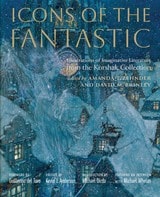
Icons of the Fantastic
Illustrations of Imaginative Literature from The Korshak CollectionAmanda T. Zehnder
University of Delaware Press, 2025
Winner of the 2026 PIA MidAmerica GraphEx Award for Best of Category, Hardcover Book Binding
Finalist for the 2026 Locus Awards in the Illustrated and Art Books category
"The Korshak Collection is a portrait and biography of a man and his family, who once looked upon the dark skies and saw Immortals, gods hunting in the storm clouds. Stephen Korshak decided to dedicate his life to tell us all how the thunder sounded and preserve the outlines of the cosmos for the awe of us all. Enjoy, believe—be amazed." —Guillermo del Toro, from the Foreword
Icons of the Fantastic: Illustrations of Imaginative Literature from the Korshak Collection features artwork by pioneering artists from over 160 years of published works of science fiction and fantasy. The illustrations in the collection appeared on the covers of timeless novels such as the Tarzan series by Edgar Rice Burroughs and classic pulp magazines from the 1930s through 1960s, such as Amazing Stories and Weird Tales. They accompany images of mischievous satyrs, ethereal mermaids, and spell-casting witches for texts ranging from The Tempest, Don Quixote, and Alice's Adventures in Wonderland to works by Edgar Allan Poe and H. G. Wells. Alongside essays about famous illustrators such as Arthur Rackham and Aubrey Beardsley, contributors engage in a critical reassessment of understudied artists such as José Segrelles, Wladyslaw Benda, Margaret Brundage, and Hannes Bok. The book includes a foreword by Guillermo del Toro, a preface by Kevin J. Anderson, an introduction by Michael Dirda, and an interview with renowned contemporary illustration artist Michael Whelan.
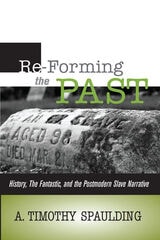
RE-FORMING THE PAST
HISTORY, THE FANTASTIC, & THE POSTMODERN SLAVE NARRATIVEA. Timothy Spaulding
The Ohio State University Press, 2005
In their rejection of mimetic representation and traditional historiography, Spaulding contextualizes postmodern slave narrative. By addressing both literary and popular African American texts, Re-Forming the Past expands discussions of both the African American literary tradition and postmodern culture.
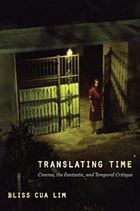
Translating Time
Cinema, the Fantastic, and Temporal CritiqueBliss Cua Lim
Duke University Press, 2009
In Translating Time, Bliss Cua Lim argues that fantastic cinema depicts the coexistence of other modes of being alongside and within the modern present, disclosing multiple “immiscible temporalities” that strain against the modern concept of homogeneous time. In this wide-ranging study—encompassing Asian American video (On Cannibalism), ghost films from the New Cinema movements of Hong Kong and the Philippines (Rouge, Itim, Haplos), Hollywood remakes of Asian horror films (Ju-on, The Grudge, A Tale of Two Sisters) and a Filipino horror film cycle on monstrous viscera suckers (Aswang)—Lim conceptualizes the fantastic as a form of temporal translation. The fantastic translates supernatural agency in secular terms while also exposing an untranslatable remainder, thereby undermining the fantasy of a singular national time and emphasizing shifting temporalities of transnational reception.
Lim interweaves scholarship on visuality with postcolonial historiography. She draws on Henri Bergson’s understanding of cinema as both implicated in homogeneous time and central to its critique, as well as on postcolonial thought linking the ideology of progress to imperialist expansion. At stake in this project are more ethical forms of understanding time that refuse to domesticate difference as anachronism. While supernaturalism is often disparaged as a vestige of primitive or superstitious thought, Lim suggests an alternative interpretation of the fantastic as a mode of resistance to the ascendancy of homogeneous time and a starting-point for more ethical temporal imaginings.
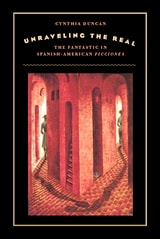
Unraveling the Real
The Fantastic in Spanish-American FiccionesAuthored by Cynthia Duncan
Temple University Press, 2010
In literary and cinematic fictions, the fantastic blurs the lines between reality and fantasy. Lacking a consensus on definition, critics often describe the fantastic as supernatural, or similar to, but quite different from fantasy, science fiction, and magical realism.
In Unraveling the Real Cynthia Duncan provides a new theoretical framework for discussing how the fantastic explores both metaphysical and socially relevant themes in Spanish American fictions. Duncan deftly shows how authors and artists have used this literary genre to convey marginalized voices as well as critique colonialism, racism, sexism, and classism. Selecting examples from the works of such noted writers as Jorge Luis Borges, Julio Cortázar, and Carlos Fuentes, among others, she shows how capacious the concept is, and why it eludes standard definition.
Challenging the notion that the fantastic is escapist in nature, Unraveling the Real shows how the fantastic has been politically engaged throughout the twentieth century, often questioning what is real or unreal. Presenting a mirror image of reality, the fantastic does not promoting a utopian parallel universe but rather challenges the way we think about the world around us and the cultural legacy of colonialism.