Results by title
7 books match the query 'Fantasy games'
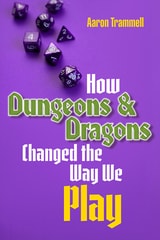
How Dungeons & Dragons Changed the Way We Play
Aaron Trammell
Duke University Press, 2026
Shared Fantasy
Role Playing Games as Social WorldsGary Alan Fine
University of Chicago Press, 1983
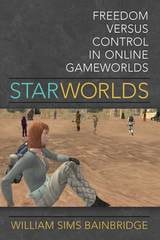
Star Worlds
Freedom Versus Control in Online GameworldsWilliam Sims Bainbridge
University of Michigan Press, 2016
The four “star worlds” explored in this book illustrate the dilemmas concerning the role of technology as liberator or oppressor in our postindustrial society, and represent computer simulations of future possibilities of human experience. Bainbridge considers the relationship between a real person and the role that person plays, the relationship of an individual to society, and the relationship of human beings to computing technology. In addition to collecting ethnographic and quantitative data about the social behavior of other players, he has immersed himself in each of these worlds, role-playing 14 avatars with different skills and goals to gain new insights into the variety of player experience from a personal perspective.
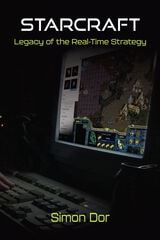
StarCraft
Legacy of the Real-Time StrategySimon Dor
University of Michigan Press, 2024
Apart from the game’s clear landmark status, StarCraft offers a unique insight into changes in gaming culture and, more broadly, the marketability and profit of previously niche areas of interest. The book places StarCraft in the history of real-time strategy games in the 1990s—Dune II, Command & Conquer, Age of Empires—in terms of visual style, narrative tropes, and control. It shows how design decisions, technological infrastructures, and a strong contribution from its gaming community through Battle.net and its campaign editor were necessary conditions for the flexibility it needed to grow its success. In exploring the fanatic clusters of competitive players who formed the first tournaments and professionalized gaming, StarCraft shows that the game was key to the transition towards foreseeing play and essential to competitive gaming and e-sports.

The Boy on the Beach
Building Community through PlayVivian Gussin Paley
University of Chicago Press, 2010
Four-year-old Eli plays alone at the shore, inventing dramas out of sand and water. He is Builder, Fireman, Protector, and Scout, overcoming waves and conquering monsters. Enter Marianne and doll, Mother and Baby, eager to redefine Eli as a good father and homesteader. Their separate visions intertwine in a search for a common ground on which howling wolves and butterfly sisters can learn to understand and need one another.
What can the richly imagined, impressively adaptable fantasy world of these children tell us about childhood, development, education, and even life itself? For fifty years, teacher and writer Vivian Gussin Paley has been exploring the imagery, language, and lore of young children, asking the questions they ask of themselves.
In The Boy on the Beach she continues to do so, going deeper into the mystery of play as she follows Eli and Marianne through the kindergarten year, finding more answers and more questions. How does their teacher, Mrs. Olson, manage to honor and utilize the genius of play to create an all-inclusive community in which boys and girls like each other and listen to each other’s stories? Why is Paley’s fellow teacher Yu-ching in Taiwan certain that her children pretend to be kittens in order to become necessary to the group? And why do teachers in London see their childrens’ role-playing as the natural end to loneliness in the school community?
Rich with the words of children and teachers themselves, The Boy on the Beach is vintage Paley, a wise and provocative appreciation of the importance of play and enduring curiosity about the nature of childhood and the imagination.
The Counterfeit Coin
Videogames and Fantasies of EmpowermentChristopher Goetz
Rutgers University Press, 2023
Their System, Our Game
Homebrew and the Worlds of PathfinderScott DeJong and Marc Lajeunesse
University of Michigan Press, 2026
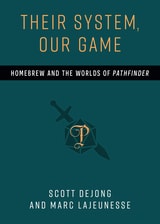
Our favorite tabletop role-playing games (TTRPGs) provide a chance to act out a fantasy. It might be the desire to wipe out foes with a single strike, the ability to charm even the most curmudgeonly townsfolk, or maybe even just the aspiration to adventure as a potted plant. Since game systems don’t always let players craft the kinds of games they want to experience, this is when they turn to the “homebrew” process to create personal rules and worlds. While Pathfinder has a history of being an underdog to the longtime industry leader Dungeons & Dragons, it has an ethos of open game design that inspires players, indie makers, and third-party content creators to brew up new rules, characters, classes, and game settings.
Their System, Our Game looks at the history of Pathfinder and how it encourages aspiring makers to break into the game design space. Through interviews with player-creators and third party makers, the authors use a range of perspectives to define homebrew for TTRPGs. Taking a closer look at homebrew design, they create two homebrew campaigns (available as free downloads) collaboratively with two different groups of players. Player accounts of gameplay and designer reflections of how their homebrew actually played out at the game table outline some of the challenges and perks of designing on the fly, creating customized settings, and bending or breaking rules. The book concludes by going through the research, interviews, design, and play analysis to show what homebrew and Pathfinder mean together. Ultimately Their System, Our Game is a celebration of how players use homebrew to explore creation and expression in their own TTRPGs.