Results by title
16 books match the query 'Farm'
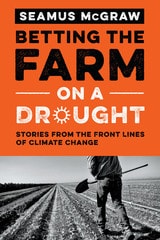
Betting the Farm on a Drought
Stories from the Front Lines of Climate ChangeBy Seamus McGraw
University of Texas Press, 2015
Climate change has become one of the most polarizing issues of our time. Extremists on the left regularly issue hyperbolic jeremiads about the impending destruction of the environment, while extremists on the right counter with crass, tortured denials. But out in the vast middle are ordinary people dealing with stronger storms and more intense droughts than they’ve ever known. This middle ground is the focus of Betting the Farm on a Drought, a lively, thought-provoking book that lays out the whole story of climate change—the science, the math, and most importantly, the human stories of people fighting both the climate and their own deeply held beliefs to find creative solutions to a host of environmental challenges.
Seamus McGraw takes us on a trip along America’s culturally fractured back roads and listens to farmers and ranchers and fishermen, many of them people who are not ideologically, politically, or in some cases even religiously inclined to believe in man-made global climate change. He shows us how they are already being affected and the risks they are already taking on a personal level to deal with extreme weather and its very real consequences for their livelihoods. McGraw also speaks to scientists and policymakers who are trying to harness that most renewable of American resources, a sense of hope and self-reliance that remains strong in the face of daunting challenges. By bringing these voices together, Betting the Farm on a Drought ultimately becomes a model for how we all might have a pragmatic, reasoned conversation about our changing climate.
Buying the Farm
Peace and War on a Sixties CommuneTom Fels
University of Massachusetts Press, 2012
With deft individual portraits, Fels reveals the social dynamics of the group and explores the ongoing difficulties faced by a commune that was founded in idealism and sought to operate on the model of a leaderless democracy. He draws on a large body of farm-family and 1960s-related writing and the notes of community members to present a variety of points of view. The result is an absorbing narrative that chronicles the positive aspects of Montague Farm while documenting the many challenges and disruptions that marked its history.

Children on the Farm
A Postcard Book of Photographs by Pete WettachLeslie A. Loveless
University of Iowa Press, 2004
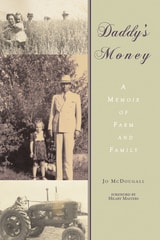
Daddy’s Money
A Memoir of Farm and FamilyJo McDougall
University of Arkansas Press, 2011
Family and Farm in Pre-Famine Ireland
The Parish of KillashandraKevin O'Neill
University of Wisconsin Press, 1985
Now available in paperback, Kevin O’Neill’s highly praised study of rural Ireland in the years leading up to the "Great Hunger" of the 1840s explicates the social, economic, and demographic conditions of the era. He argues that overpopulation and deprivation were inextricably linked to a third variable—the rapid economic development of rural Ireland that was shaped by British interests.
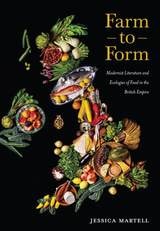
Farm to Form
Modernist Literature and Ecologies of Food in the British EmpireJessica Martell
University of Nevada Press, 2020
Deeply informed by Martell’s extensive knowledge of modern British, Irish, American, and World Literatures, this progressive work positions modernism as central to the study of narratives of resistance against social and environmental degradation. Analyzed works include those of Thomas Hardy, E. M. Forster, Virginia Woolf, Joseph Conrad, George Russell, and James Joyce.
In light of climate change, fossil fuel supremacy, nutritional dearth, and other pressing food issues, modernist texts bring to life an era of crisis and anxiety similar to our own. In doing so, Martell summons the past as a way to employ the modernist term of “defamiliarizing” the present so that entrenched perceptions can be challenged. Our current food regime is both new and constantly evolving with the first industrial food trades. Studying earlier cultural responses to them invites us to return to persistent problems with new insights and renewed passion.
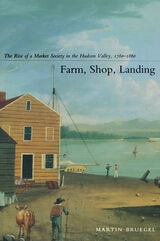
Farm, Shop, Landing
The Rise of a Market Society in the Hudson Valley, 1780–1860Martin Bruegel
Duke University Press, 2002
Combining theoretical rigor with extensive archival research, Bruegel’s account diverges from other historiographies of nineteenth-century economic development. It challenges the assumption that the coexistence of long-distance trade, private property, and entrepreneurial activity lead to one inescapable outcome: a market economy either wholeheartedly embraced or entirely rejected by its members. When Bruegel tells the story of farmer William Coventry struggling in the face of bad harvests, widow Mary Livingston battling her tenants, blacksmith Samuel Fowks perfecting the cast-iron plough, and Hannah Bushnell sending her butter to market, Bruegel shows that the social conventions of a particular community, and the real struggles and hopes of individuals, actively mold the evolving economic order. Ultimately, then, Farm, Shop, Landing suggests that the process of modernization must be understood as the result of the simultaneous and often contentious interplay of social and economic spheres.
Farm
A Multimodal ReaderJoyce Kinkead
Utah State University Press, 2020
The text guides the reader through the Jeffersonian idealism of the yeoman farmer (“cultivators of the earth are the chosen people of God”) to literature of the nineteenth and twentieth centuries (Thoreau’s “The Bean-Field,” Cather’s prairie trilogy, Steinbeck’s The Grapes of Wrath, and Carpenter’s Farm City). Contributors provide historical context for the literary texts, such as discussion of sharecropping vs. plantation systems, the rise of agribusiness and chemical farming, and Teddy Roosevelt’s Country Life Commission. Written, visual, and oral texts ask readers to consider the farm in art (Grant Wood), ecology (Rachel Carson’s Silent Spring), children’s and young adult literature (classic children’s books, YA novels, nonfiction, and poetry), advertising (from early boosterism to Chipotle videos), print culture (farmers’ market and victory garden posters from both world wars), folklore (food culture, vintners, and veterinarian practices), popular culture (Farm Aid concerts), and much more. Each reading is supported by activities, exercises, projects, and visual rhetorical elements that further connect students to agriculture and the essential work of farmers.
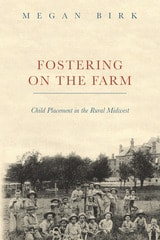
Fostering on the Farm
Child Placement in the Rural MidwestMegan Birk
University of Illinois Press, 2019
Drawing on institution records, correspondence from children and placement families, and state reports, Megan Birk scrutinizes how the farm system developed--and how the children involved may have become some of America's last indentured laborers. Between 1850 and 1900, up to one-third of farm homes contained children from outside the family. Birk reveals how the nostalgia attached to misplaced perceptions about healthy, family-based labor masked the realities of abuse, overwork, and loveless upbringings endemic in the system. She also considers how rural people cared for their own children while being bombarded with dependents from elsewhere. Finally, Birk traces how the ills associated with rural placement eventually forced reformers to transition to a system of paid foster care, adoptions, and family preservation.
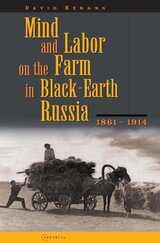
Mind and Labor on the Farm in Black-Earth Russia, 1861-1914
David Kerans
Central European University Press, 2001
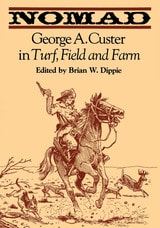
Nomad
George A. Custer in Turf, Field, and FarmEdited by Brian W. Dippie
University of Texas Press, 1980
Between 1867 and 1875, George Armstrong Custer contributed fifteen letters under the apt pseudonym Nomad to the New York-based sportsman's journal Turf, Field and Farm. Previously available only in a collector's typescript edition, the Nomad letters offer valuable insight into the character of the Boy General as he gives expression to his abiding love for hunting, horses, and hounds.
Vivid accounts of days in the field after buffalo and deer alternate with letters that attest to Custer's passion for Kentucky thoroughbreds and trotters and his devotion to his favorite hunting dogs. Moreover, the letters show Custer as a student of literature who constandy alluded to works of fiction and drama and who loved to quote poetry as he self-consciously honed his skills as a writer.
The Nomad letters also open the way to controversy since three of the letters written in 1867, as Brian Dippie's careful annotations make clear, offer a strikingly different account of Custer's ill-starred induction into Indian fighting than the accepted version recorded five years later in his memoirs, My Life on the Plains. Composed only a few months after the abortive Hancock Expedition that led to Custer's court-martial and suspension from rank and pay for one year, the Nomad letters are full of a passion and venom absent from My Life on the Plains. They provide an immediate response to the events of 1867 that will interest all students of the Western Indian wars and of Custer's fascinating career.
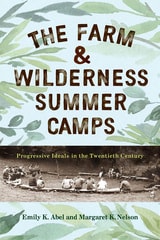
The Farm & Wilderness Summer Camps
Progressive Ideals in the Twentieth CenturyEmily K. Abel
Rutgers University Press, 2024
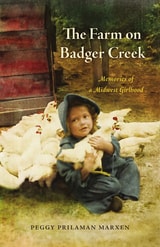
The Farm on Badger Creek
Memories of a Midwest GirlhoodPeggy Prilaman Marxen
Wisconsin Historical Society Press, 2021
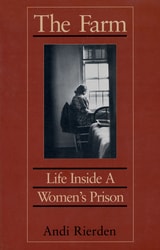
The Farm
Life Inside a Women's PrisonAndi Rierden
University of Massachusetts Press, 1997
Written by a journalist, this book depicts the day-to-day struggles and concerns of inmates a the Connecticut Correctional Institution in Niantic (renamed the Janet S. York correctional Institution), the state's only prison for women. Build in 1917 as a work farm for prostitutes, unwed mothers, and other women of allegedly immoral character, “the Farm,” as it is still called, has long served as a barometer of prevailing social attitudes toward women.
In the summer of 1992, Andi Rierden obtained permission from the warden at Niantic to conduct research on life inside the institution. During the next three and a half years, she spent more than fifteen hundred hours among the women, recording interviews, strolling the grounds with inmates and corrections officers, sharing meals, attending classes and group counseling sessions, and tracking former inmates after their release.
The stories these women tell shed light ton a wide range of issues, from the effects of more stringent drug laws and sentences to the rise of violence among inmates. In the process it becomes clear that the ideal of rehabilitation has been largely abandoned and replaced by a belief in punishment and retribution.
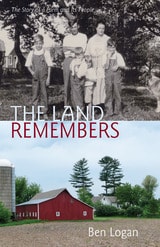
The Land Remembers
The Story of a Farm and Its PeopleBen Logan, with an introduction by Curt Meine
University of Wisconsin Press, 2017
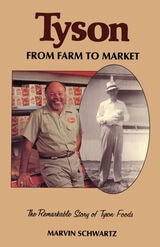
Tyson
From Farm to MarketMarvin Schwartz
University of Arkansas Press, 1991