Results by title
81 books match the query 'Farm life' and 6 start with a

A Bountiful Harvest
The Midwestern Farm Photographs of Pete Wettach, 1925-1965Leslie A. Loveless
University of Iowa Press, 2002
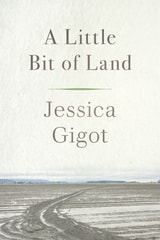
A Little Bit of Land
Jessica Gigot
Oregon State University Press, 2022
From midwifing new lambs to harvesting basil, Jessica Gigot invites the reader into her life on a small farm and the uncommon road that led her there. Fascinated by farming and the burgeoning local food movement, she spent her twenties wandering the Pacific Northwest, interning at small farms and doing graduate work in horticulture, always with an eye towards learning as much as she could about how and why people farm. Despite numerous setbacks and the many challenges of farming, she created a family and farm life defined by resilience and a genuine love of the land.
In A Little Bit of Land, Gigot explores the intricacies of small-scale agriculture in the Pacific Northwest and the changing role of women in this male-dominated industry. Gigot alternates between chapters describing joys, routines, and challenges of farm life and chapters reflecting on her formative experiences in agriculture, on farms and in classrooms from Ashland to the Skagit Valley. Throughout, she explores questions of sustainability, economics, health, and food systems.
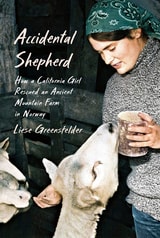
Accidental Shepherd
How a California Girl Rescued an Ancient Mountain Farm in NorwayLiese Greensfelder
University of Minnesota Press, 2024
A summer job turns serious when a young woman takes the reins on a remote farm—and learns far more than how to herd sheep
In May 1972, Liese Greensfelder arrived in the small Norwegian town of Øystese to startling news: Johannes, the farmer who hired her for the summer, had just been hospitalized after a stroke. Could she please watch over his place for a month or so, until he got back on his feet? Twenty years old and with no farming experience, Liese was dropped off the next day at a centuries-old mountain farm at the end of a dirt road high above the magnificent Hardanger Fjord—with 115 sheep, two cows, one calf, a draft horse, and a Norwegian herding dog to care for.
Armed with a command of Danish that enabled rudimentary communication, Liese began learning from neighbors who spoke an ancient Norwegian dialect—how to feed the animals, milk by hand, and supervise her first lambing. The farm was run in the old way: horses and wagons instead of tractors, haymaking in the rain, and hikes into the mountains to check on the sheep that ranged free over those wild peaks all summer. And, she was quick to discover, the farm was on the brink of ruin, for Johannes was a heartless man who had abused his animals and neglected his buildings and equipment for decades.
Although her employer had alienated his neighbors, they immediately welcomed the American newcomer and offered her help. As “a month or so” stretched to a year and Liese struggled for the survival of the farm, she joined this tight-knit enclave of farmers, learning their stories and history, adopting their dialect, and growing intimately familiar with the grass-based farming practices that had sustained them for generations.
From moments of levity, such as sampling a neighbor’s fruit wines, Christmas parties, and skiing; to soul-battering challenges, including the directive to kill a fox, sending sheep to slaughter, rotten silage, and vicious weather; to the yearnings of a young woman awash in a sea of masculinity, Accidental Shepherd is a candid account of Liese’s year in a remote farmhouse. Confronted with dangers and obstacles for which she was utterly unprepared, she tells a story of remarkable resilience and records the fascinating but rapidly vanishing traditions of the community that took her in.
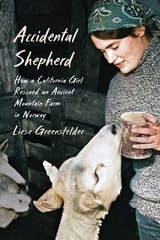
Accidental Shepherd
How a California Girl Rescued an Ancient Mountain Farm in NorwayLiese Greensfelder
University of Minnesota Press, 2024
A summer job turns serious when a young woman takes the reins on a remote farm—and learns far more than how to herd sheep
In May 1972, Liese Greensfelder arrived in the small Norwegian town of Øystese to startling news: Johannes, the farmer who hired her for the summer, had just been hospitalized after a stroke. Could she please watch over his place for a month or so, until he got back on his feet? Twenty years old and with no farming experience, Liese was dropped off the next day at a centuries-old mountain farm at the end of a dirt road high above the magnificent Hardanger Fjord—with 115 sheep, two cows, one calf, a draft horse, and a Norwegian herding dog to care for.
Armed with a command of Danish that enabled rudimentary communication, Liese began learning from neighbors who spoke an ancient Norwegian dialect—how to feed the animals, milk by hand, and supervise her first lambing. The farm was run in the old way: horses and wagons instead of tractors, haymaking in the rain, and hikes into the mountains to check on the sheep that ranged free over those wild peaks all summer. And, she was quick to discover, the farm was on the brink of ruin, for Johannes was a heartless man who had abused his animals and neglected his buildings and equipment for decades.
Although her employer had alienated his neighbors, they immediately welcomed the American newcomer and offered her help. As “a month or so” stretched to a year and Liese struggled for the survival of the farm, she joined this tight-knit enclave of farmers, learning their stories and history, adopting their dialect, and growing intimately familiar with the grass-based farming practices that had sustained them for generations.
From moments of levity, such as sampling a neighbor’s fruit wines, Christmas parties, and skiing; to soul-battering challenges, including the directive to kill a fox, sending sheep to slaughter, rotten silage, and vicious weather; to the yearnings of a young woman awash in a sea of masculinity, Accidental Shepherd is a candid account of Liese’s year in a remote farmhouse. Confronted with dangers and obstacles for which she was utterly unprepared, she tells a story of remarkable resilience and records the fascinating but rapidly vanishing traditions of the community that took her in.
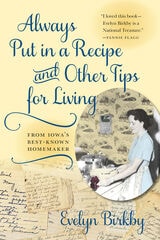
Always Put in a Recipe and Other Tips for Living from Iowa's Best-Known Homemaker
Evelyn Birkby
University of Iowa Press, 2012
Tales of separating cream on the back porch at Cottonwood Farm, raising a teddy bear of a puppy in addition to a menagerie of other animals, surviving an endless procession of Cub and Boy Scouts, appreciating a little boy’s need to take his toy tractor to church, blowing out eggs to make an Easter egg tree, shopping for bargains on the day before Christmas, camping in a converted Model T “house car,” and adjusting to the fact of one’s tenth decade of existence all merge to form a world composed of kindness and wisdom with just enough humor to keep it grounded. Recipes for such fare as Evelyn’s signature Hay Hand Rolls prove that the young woman who was daunted by her editor’s advice to “put in a recipe every week” became a talented cook. Each of the more than eighty columns in this warmhearted collection celebrates not a bygone era tinged with sentimentality but a continuing tradition of neighborliness, Midwest-nice and Midwest-sensible.

Anne & Alpheus, 1842–1882
Joe Survant
University of Arkansas Press, 1996
Chosen by Rachel Hadas as the winner of the Arkansas Poetry Award, Anne & Alpheus: 1842–1882 is a compelling duet of monologues between a frontier man and woman surviving the hardships and recording the small triumphs of life in rural nineteenth-century Kentucky.
Ambitious in breadth and scope, these poems chart the loves and losses of early marriage, the terrors of civilian life during the Civil War, and the universal sorrows of aging, loneliness, and death. Through the distinct voices of Anne and Alpheus Waters, Joe Survant has fashioned a collection with all the sweep of a novel, all the dramatic intensity, poem by poem, of short fiction, and all the earthy, human lyricism of the dramatic monologue. These poems take us into the tobacco sheds, put us behind the plow, let us smell the soil, and
carry us under the stars where Anne and Alpheus walked.